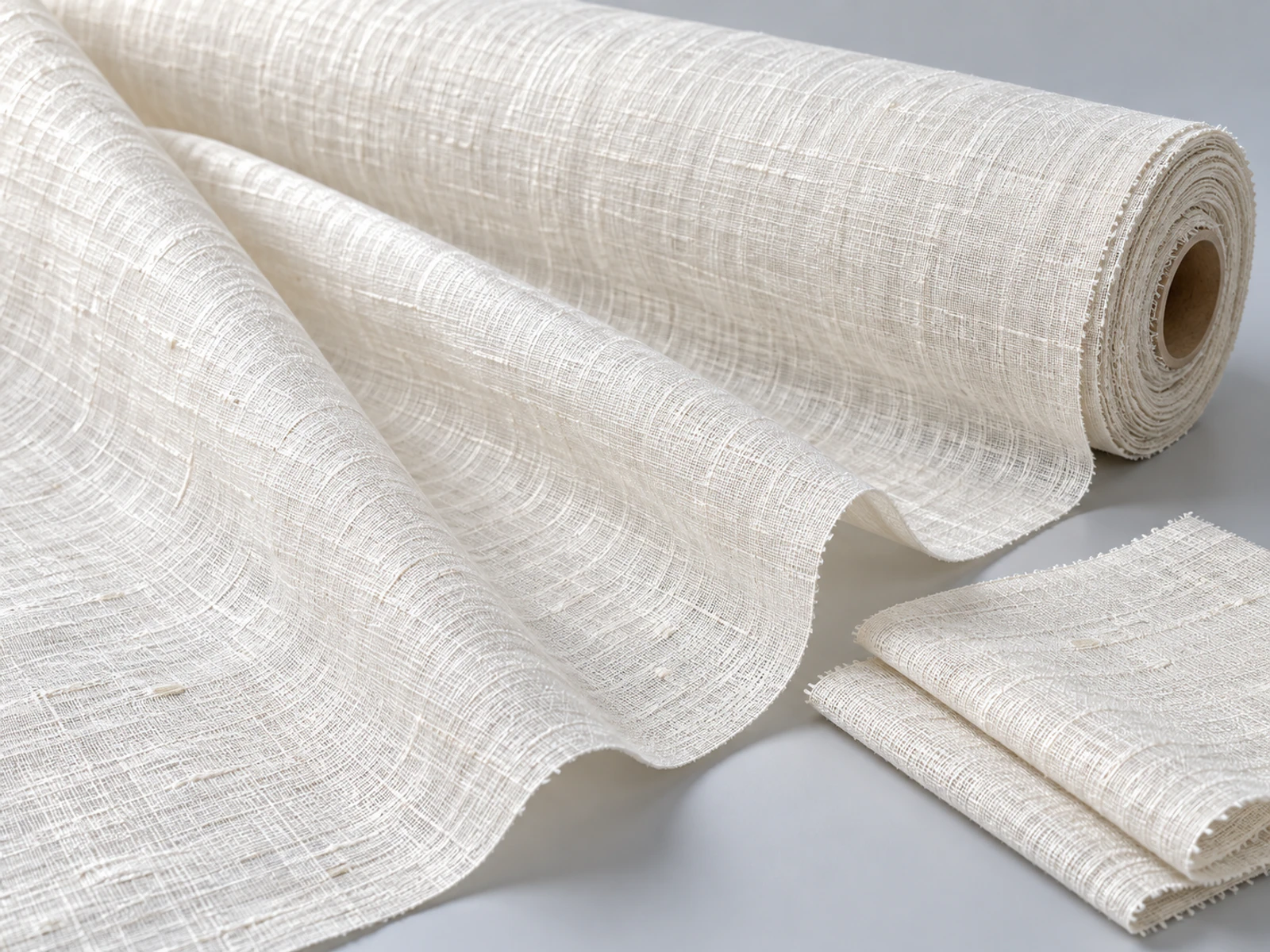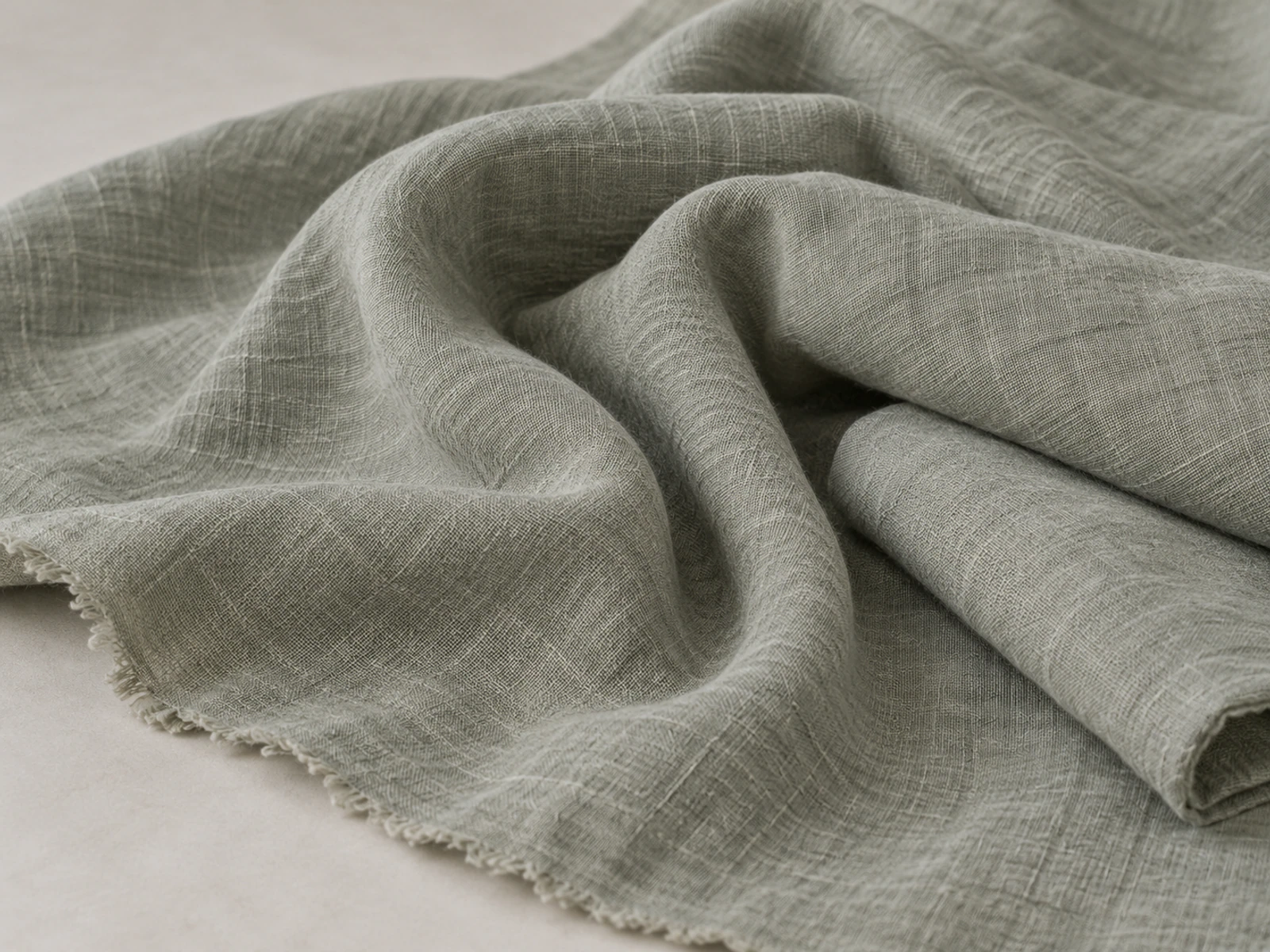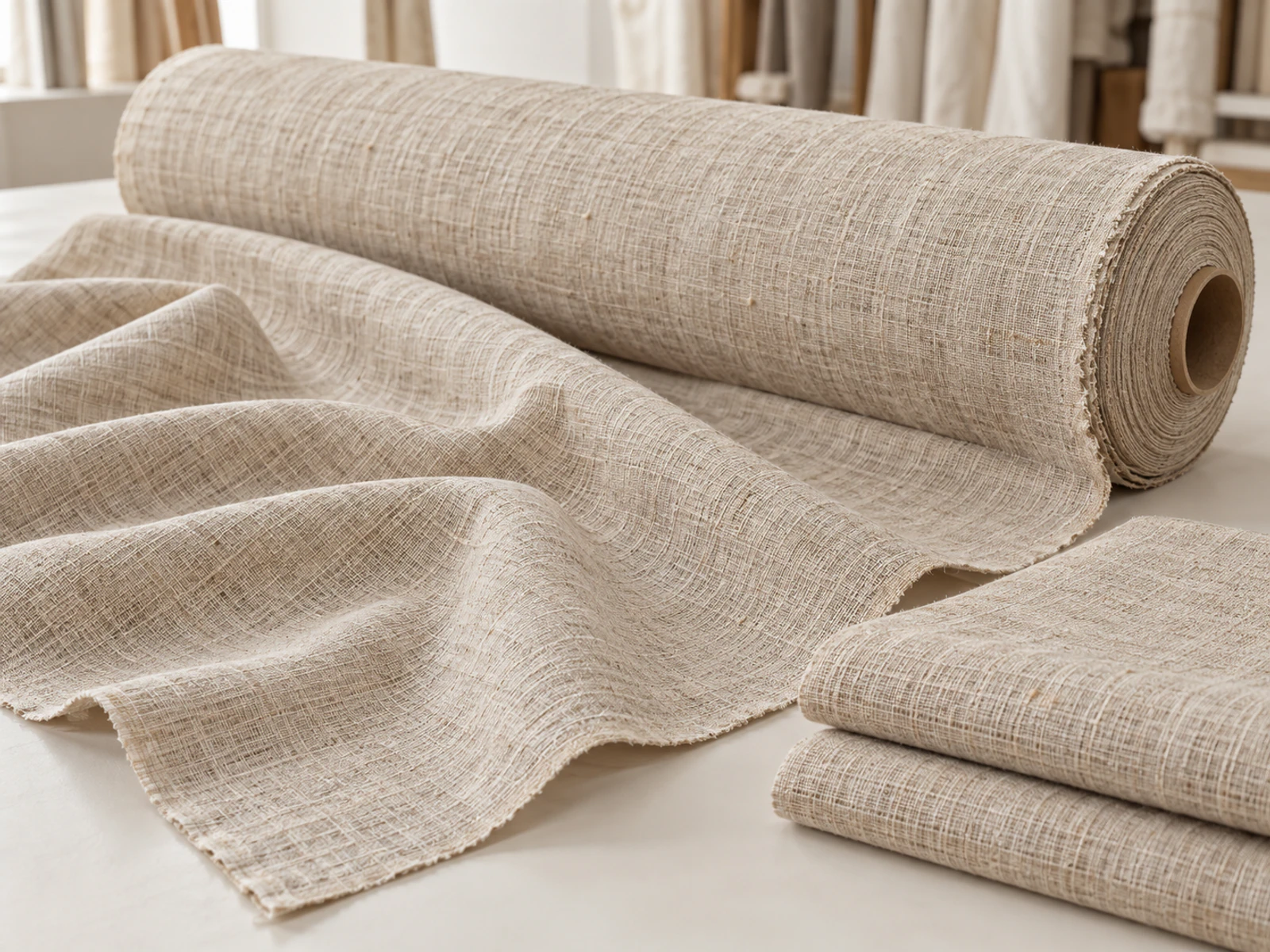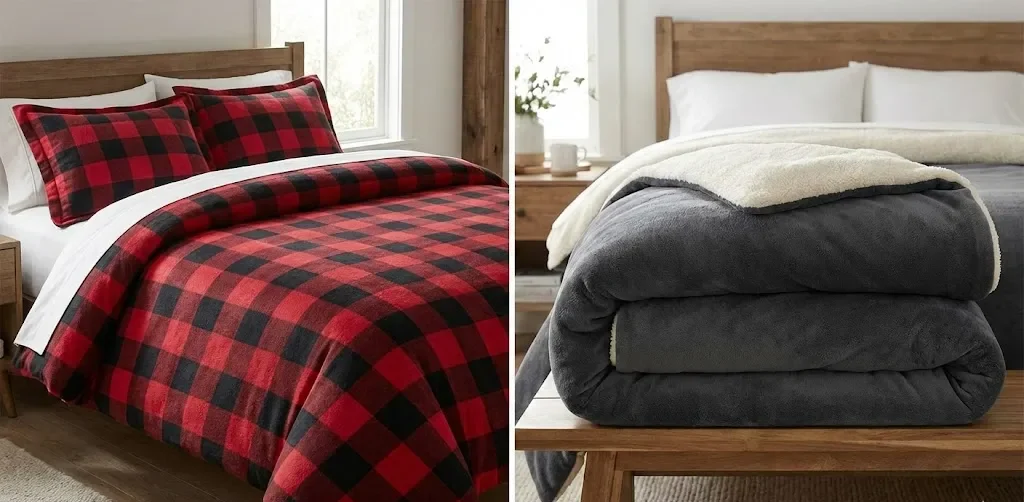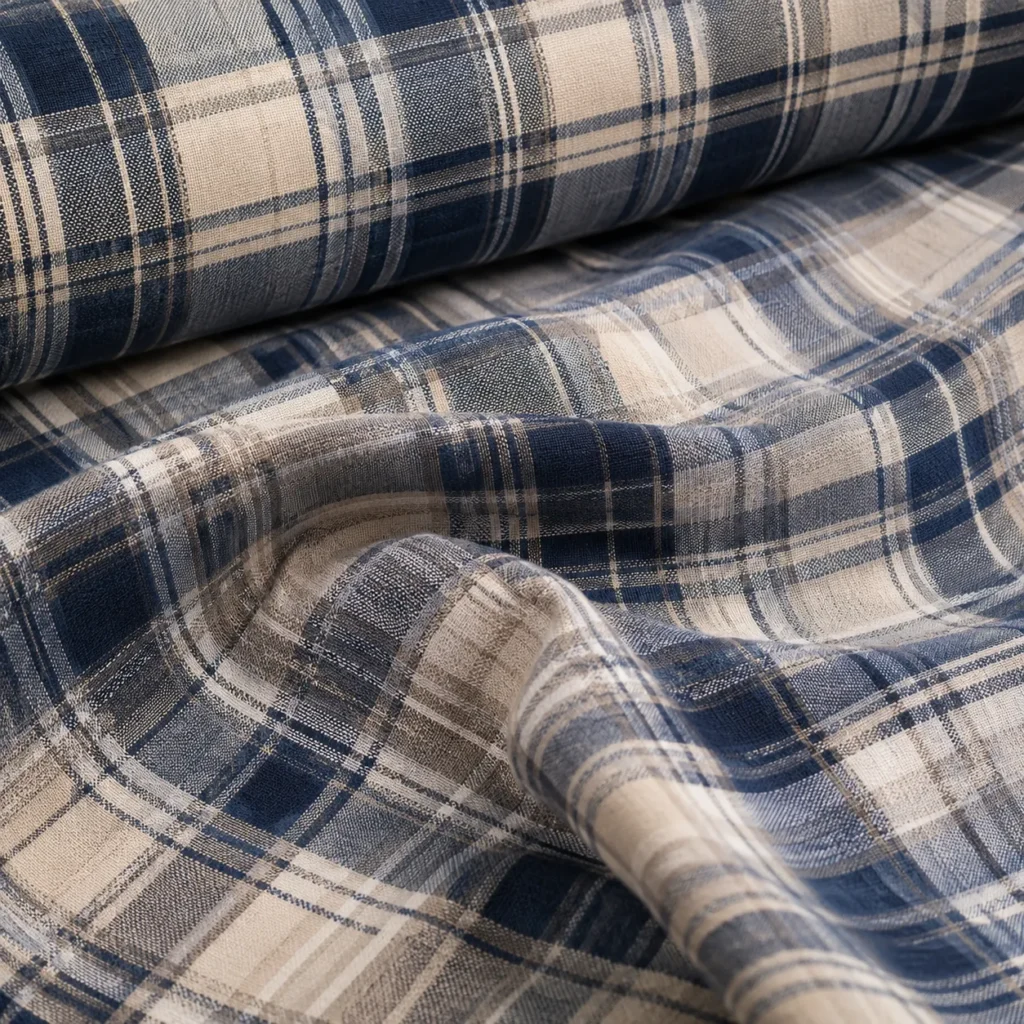

Yarn dyed vs piece dyed — and, increasingly, garment dyed or printed — is one of the first decisions in any woven fabric program, and one of the most expensive to get wrong. The coloring method decides what designs are possible, how the fabric looks on the back, how it holds color after washing, how much is wasted on the cutting table, and what the order costs.
Garment factories meet the question when they develop striped shirts, checked flannel or chambray. Home-textile manufacturers meet it when they choose between woven stripes and printed patterns for bedding, tablecloths and curtains. In both cases the answer depends on the design, the end use and the volume per color — not on which method sounds more premium.
The choice also shapes your supply chain: which mills can make the fabric, how much development is needed, and how easily the same product can be reordered next season with matching color.
This guide compares the main fabric dyeing methods — yarn dyeing, piece dyeing, garment dyeing, solution dyeing — and the two main printing routes, rotary screen and digital. For each, it explains how the method works, what it looks and feels like, how it affects colorfastness, cost, MOQ and lead time, and how to specify it in a purchase order.
Sợi nhuộm fabric is woven from yarns that were dyed first, so stripes, checks and plaids are built into the weave and look the same on both sides. Nhuộm từng mảnh fabric is woven first and dyed afterwards, which is the most efficient way to make solid colors. Garment-dyed products are sewn first and dyed as finished pieces. Đã in fabric has its pattern applied to the surface after weaving, by rotary screen or digital printing.
Choose yarn-dyed for woven stripes, checks and chambray; piece-dyed for solids; printed for multicolor and photographic designs; garment-dyed for a washed, lived-in look on finished garments.
Yarn Dyed vs Piece Dyed vs Printed: What Is the Difference?
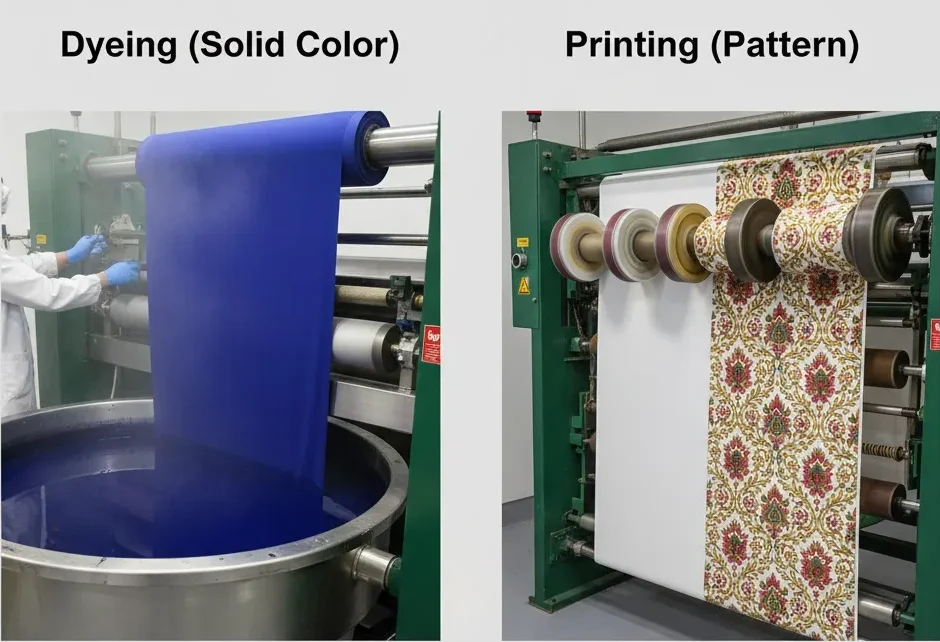
The difference between the methods is when color enters the textile. Color can be added to the fiber, the yarn, the woven fabric, the finished garment, or printed onto the fabric surface. The later the color is added, the more flexible the program — and the more the color sits on, rather than inside, the structure.
Yarn-Dyed: Color Before Weaving
Yarns are dyed first, then arranged in a planned color sequence in the warp and weft. The pattern is created by the weave itself, so a yarn-dyed check is the same on the front and the back, and colors run through the full thickness of each yarn.
Piece-Dyed: Color After Weaving
Undyed (greige) fabric is woven, prepared and then dyed as a whole “piece”. The result is usually a single solid color, with very even shade across long lengths. Piece dyeing is the most common and most economical way to make solid-color fabric.
Printed: Color on the Surface
A pattern is applied to prepared fabric by rotary screens or digital print heads, then fixed. Printing allows unlimited motifs, many colors and photographic images, but the color is mainly on the face; the back is lighter.
In short, the debate over yarn dyed vs piece dyed fabric is really a question about design: a woven pattern needs yarn dyeing, a solid needs piece dyeing, and a free-form motif needs printing. The table below summarizes the main types of fabric dyeing and printing used in woven production.
| Phương pháp | When color is added | Tốt nhất cho | Look on the back |
|---|---|---|---|
| Sợi nhuộm | Before weaving (yarn) | Stripes, checks, plaids, chambray | Same as the face |
| Nhuộm từng mảnh | After weaving (fabric) | Solid colors | Same color |
| Garment-dyed | After sewing (garment) | Washed, vintage solids | Same color; seams may vary |
| Đã in | On the fabric surface | Multicolor and photographic designs | Lighter or blank |
| Solution-dyed | In the polymer, before fiber | Synthetics needing extreme fastness | Same color |
What Is Yarn-Dyed Fabric?
What is yarn dyed fabric? Yarn dyed means the yarn was colored before it was woven. Yarn dyed fabric — sometimes called yarn-dyed cloth — therefore carries its design in the weave rather than on the surface. That is why shirting stripes, gingham, plaid flannel and chambray are traditionally yarn-dyed.
How Yarn-Dyed Fabric Is Made
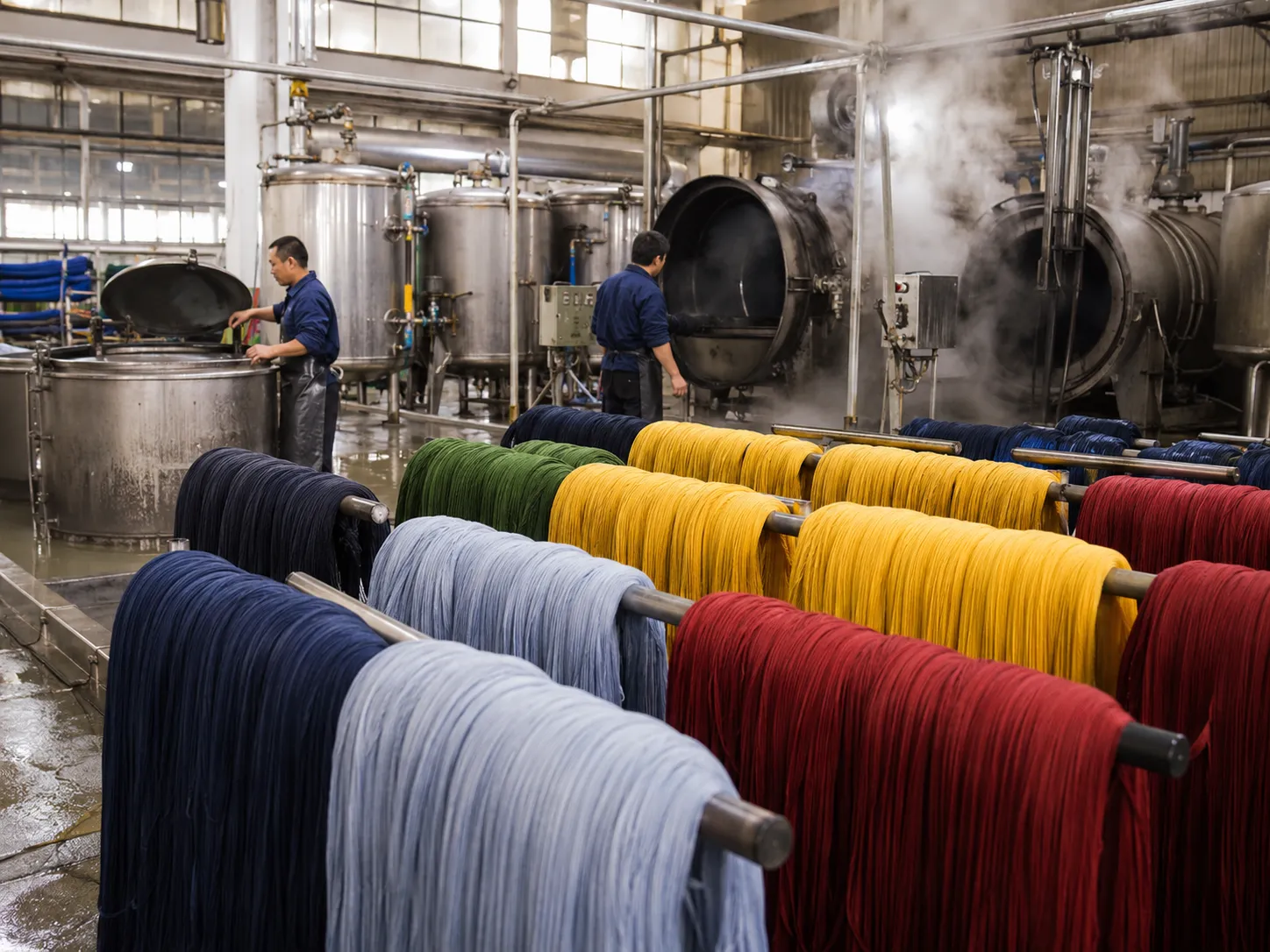
- Yarn dyeing: yarn is wound onto perforated cones (package dyeing) or skeins and dyed under pressure, usually with reactive or vat dyes for cotton.
- Warping and sizing: dyed yarns are arranged on the warp beam in the exact color sequence of the design, then sized for weaving.
- Weaving: weft colors are inserted in their planned order on dobby or jacquard looms; the pattern appears as the fabric is woven.
- Hoàn thiện: the fabric is washed, finished and inspected — including checking that stripes run straight and checks are square.
Stripes, Checks, Plaids and Chambray
Yarn dyed stripes are the simplest construction: colored yarns in the warp only. Checks and gingham add colored weft. A yarn dyed plaid uses several colors in both directions with different stripe widths. Chambray uses a colored warp and a white weft for a heathered, denim-like face. Seersucker, dobby and jacquard designs can also be yarn-dyed.
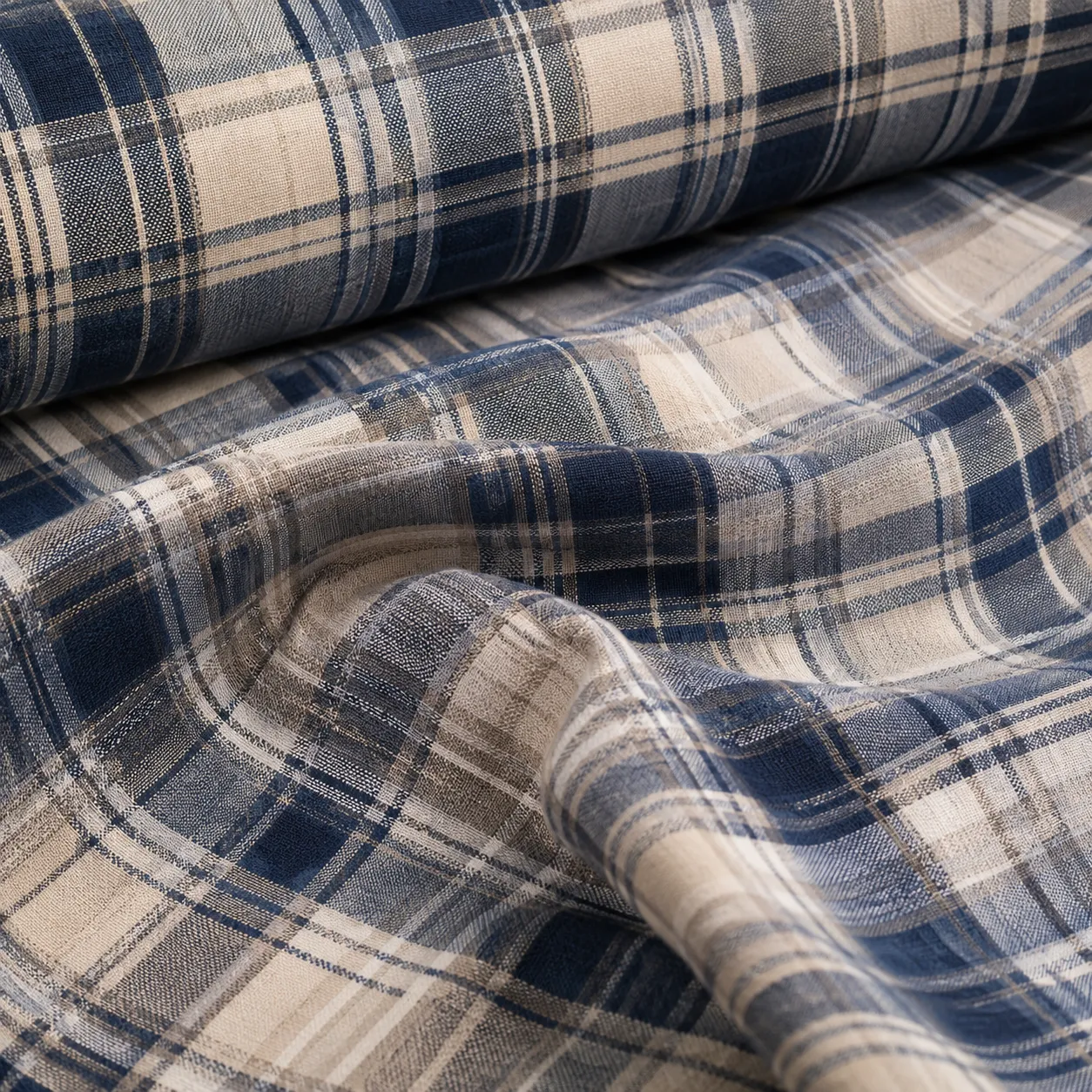
Common Yarn-Dyed Constructions
Most yarn dyed cotton fabric for apparel and home textiles falls into a few families. Typical weights are given as a starting point for development:
| Sự thi công | How the pattern is made | GSM điển hình | Ứng dụng điển hình |
|---|---|---|---|
| Yarn-dyed stripe shirting | Colored yarns in the warp | 100–140 | Shirts, blouses, pajamas |
| Gingham / check | Colored warp and weft in equal widths | 100–140 | Shirts, dresses, tablecloths |
| Plaid flannel | Multicolor warp and weft, then brushed | 150–220 | Shirts, jackets, bedding |
| Chambray | Colored warp, white weft | 110–160 | Shirts, dresses, light jackets |
| Seersucker | Puckered stripes from different warp tensions | 110–150 | Summer shirts, bedding |
| Dobby / jacquard | Woven figures with colored yarns | 120–250 | Shirting, table linen, upholstery |
How to Recognize Yarn-Dyed Fabric
- Look at the back: a woven check or stripe looks the same (or mirrored) on both sides; a printed one is pale or blank on the back.
- Pull a yarn: in yarn-dyed fabric, each yarn is colored all the way through; in printed fabric, the yarn core is often lighter.
- Check the edges of the pattern: woven stripes follow the yarns exactly; printed lines can sit slightly across them.
- Check the selvedge: yarn-dyed fabric often shows the colored warp yarns running into the selvedge.
Yarn-dyed constructions are where design and engineering meet. Our yarn-dyed fabric range covers stripes, checks, plaids, chambray, seersucker, dobby and jacquard for apparel and home textiles.
What Is Piece-Dyed Fabric?
Piece dyed fabric is woven in its natural state and dyed afterwards. The piece dyed meaning comes from the trade term for a length of cloth, a “piece”. Because the mill can weave one greige construction and dye it into many colors later, piece dyeing is fast, flexible and cost-effective for solid colors.
How Piece Dyeing Works
- Sự chuẩn bị: greige fabric is desized, scoured and bleached; cotton is often mercerized for luster and better dye uptake.
- Nhuộm: the fabric is dyed in jet, jigger or continuous pad-steam ranges, or by cold pad-batch for cotton, depending on construction and volume.
- Fixing and washing: unfixed dye is washed off to secure colorfastness.
- Hoàn thiện: softening, compacting or sanforizing to control shrinkage, and any functional finishes.
Dye Classes Matter as Much as the Method
For cotton and linen, piece dyeing usually uses reactive dyes for bright, wash-fast colors or vat dyes for the highest fastness; polyester uses disperse dyes. The dye class affects fastness and price more than the dyeing machine does. Our comparison of reactive, vat and pigment dyes explains when each is used.
Common Piece-Dyeing Problems and How Mills Prevent Them
- Listing (side-to-center shading): the edges dye differently from the middle; controlled by even preparation and dye-bath circulation, and checked by comparing selvedge and center.
- Ending (shade change along the length): controlled by stable process conditions on continuous ranges and checked by comparing the beginning and end of each roll.
- Crease and rope marks: from fabric folding in jet machines; prevented by machine loading and suitable constructions.
- Lot-to-lot variation: unavoidable to a degree; managed by shade-banding each dye lot and cutting garments from one band.
For buyers, the practical advantage of piece dyeing is speed. Because the mill can hold greige fabric and dye it to order, a new solid color usually needs only a lab dip approval before bulk dyeing starts, and repeat orders can be matched to the approved standard from the same base construction. That makes piece-dyed solids the easiest fabrics to reorder season after season.
Where Piece Dyeing Is the Best Choice
Solid-color shirts, uniforms, trousers, sheets, duvet covers and linings are almost always piece-dyed. It is also used for flannel, poplin, twill and canvas when a solid shade is needed quickly, because greige stock can be dyed to order.
| Ưu điểm | Limitation |
|---|---|
| Lowest cost for solid colors | Only solid colors (or tone-on-tone weaves) |
| Greige can be held and dyed to order | Shade can vary between dye lots |
| Very even color over long lengths | Dark shades may need extra washing for rubbing fastness |
| Wide choice of dye classes and finishes | Not suitable for woven stripes or checks |
What Is Garment-Dyed Fabric?
Garment dyed products are sewn from undyed fabric and dyed as finished garments. The method gives a soft, washed, slightly irregular color — popular for casual shirts, chinos, sweatshirts and premium basics — and lets brands decide colors late in the season. Buyers often compare garment dyed vs piece dyed when they want that washed character without losing control of size and shade.
PFD Fabric: What the Mill Supplies
For garment dyeing, mills supply PFD (prepared-for-dyeing) fabric: greige that has been desized, scoured and bleached so that it takes dye evenly, but has not been dyed or given finishes that would block dye. The garment factory cuts and sews the PFD fabric, and the garments are dyed in rotary or paddle machines.
What Garment Factories Must Control
- Co ngót: garments shrink in the dye bath, so patterns must allow for it and the PFD fabric’s residual shrinkage must be known in advance.
- Sewing thread: use 100% cotton thread to dye with the garment, or a polyester thread chosen deliberately for contrast.
- Trims and labels: zippers, buttons and labels must withstand the dye bath.
- Shade tolerance: garment dyeing is less uniform than piece dyeing; agree a tolerance band and approve shades on dyed garments, not swatches.
When to Choose Garment Dyeing
- You want a soft, washed, slightly irregular color as part of the product character.
- You need to decide colors late, after seeing early sales.
- You can accept wider shade tolerance and plan patterns for in-bath shrinkage.
- The product is a casual or premium-basic garment rather than a uniform that must match exactly.
Piece-dyed fabric gives more consistent color and size; garment dyeing gives the washed look and late color decisions. Many brands use piece-dyed fabric with a garment wash to get part of both.
What Is Printed Fabric? Rotary Screen, Digital, Reactive and Pigment Printing
Printing applies color to selected areas of prepared fabric. The two industrial routes are rotary screen printing and digital inkjet printing, and each can use different ink chemistry. We run both, so the choice is made per design and per volume rather than by what one machine can do.
Rotary Screen Printing
Rotary screen printing uses one engraved cylindrical screen per color. Fabric runs continuously beneath the screens, so the method is fast and very economical per meter once screens are made. Each additional color needs another screen, and the pattern repeat is fixed by the screen circumference. Rotary printing suits proven designs with a limited number of colors and large volumes per design.
Digital Textile Printing
Digital textile printing — digital printing on fabric with inkjet heads — needs no screens. Any number of colors, gradients and photographic images can be printed, the repeat can be any size, and design changes cost nothing in setup. The cost per meter is higher than rotary at large volumes, so digital suits multiple designs, many colorways and photographic artwork.
Reactive Printing vs Pigment Printing
Ink chemistry matters as much as the machine. Reactive printing bonds dye chemically to cellulose fibers; the fabric is pretreated, printed, steamed and washed, giving a soft hand and good wash fastness. Pigment printing uses colored pigments held on the surface by a binder; it needs no steaming or washing-off, is faster and suits many fibers, but gives a slightly firmer hand and lower rubbing fastness on dark colors. Polyester is printed with disperse dyes, including sublimation.
Print Defects to Check Before Bulk
Whether the base is printed cotton fabric, linen or polyester, the same defects come up in print inspection:
- Misregistration: colors not aligned with each other (rotary); check fine outlines and fits.
- Repeat joins: visible lines or shifts where the repeat meets itself.
- Poor penetration: white showing through the print on heavier or textured fabrics.
- Bleeding or haloing: color spreading beyond the motif, often from poor fixation or washing.
- Shade drift: print colors moving away from the approved strike-off across a long run.
| Printing route | Setup | Colors / detail | Cost per meter | Tốt nhất cho |
|---|---|---|---|---|
| Rotary screen | Screen per color | Limited colors; crisp flat color | Lowest at volume | Long runs of proven designs |
| Digital (reactive) | No screens | Unlimited colors, photographic | Cao hơn | Many designs, cotton/linen, soft hand |
| Digital (pigment) | No screens | Unlimited colors | Vừa phải | Fast turnaround, mixed fibers |
| Disperse / sublimation | Screens or digital | Bright colors | Varies | Polyester fabrics |
Look and Hand Feel Compared
The method shows in the finished fabric even before anyone reads the label.
| Tính năng | Sợi nhuộm | Nhuộm từng mảnh | Garment-dyed | Đã in |
|---|---|---|---|---|
| Mẫu | Woven stripes, checks | None (solid) | None (solid) | Any motif |
| Back of fabric | Same as face | Same color | Same color | Lighter or blank |
| Color depth | Rich, through the yarn | Even, full | Soft, washed | Depends on ink and coverage |
| Cảm giác khi cầm nắm | Often fuller, more body | Depends on finish | Soft, broken-in | Reactive: soft; pigment: firmer |
| Pattern edges | Follow the yarns | — | — | Can be sharper or finer than weaving allows |
Yarn-dyed fabrics often feel slightly fuller because each yarn is fully colored and the fabric is finished as a whole. Printed fabrics can achieve detail that weaving cannot, such as fine florals or photographic images, but large areas of pigment print can stiffen the hand. Garment-dyed products are prized for their soft, lived-in character.
How Finishing Changes the Result
Finishing can narrow or widen the differences between methods. Mercerizing gives cotton more luster and deeper color whether it is yarn-dyed or piece-dyed. Brushing softens prints and can lighten them slightly as the nap rises, while yarn-dyed flannel keeps its color through the nap. Enzyme and garment washes soften all methods and give a lived-in look, but they also lower color depth a little; if a washed finish is planned, approve color after the wash, not before. Resin and easy-care finishes can change shade slightly and should be included in lab-dip approval.
Colorfastness and Shade Consistency
Each method behaves differently in washing and rubbing, so colorfastness should be specified for the method you choose, not copied from another program.
How Each Method Performs
- Yarn-dyed: with reactive or vat dyes, generally very good wash fastness; check for bleeding of dark stripes into white grounds.
- Piece-dyed: reactive and vat dyes give good wash fastness; dark shades need thorough washing-off for wet rubbing.
- Garment-dyed: fastness depends on the dyes used and garment wash; shade varies more between batches.
- Printed: reactive prints wash well; pigment prints can show lower wet rubbing on dark colors; check print durability after washing.
How to Test Before Bulk Approval
- Test the approved lab dip, strike-off or yarn-dyed sample, not only the bulk.
- Run laundering fastness on dark and bright colors first, and check staining of white grounds in yarn-dyed checks.
- Run dry and wet rubbing, especially on dark piece-dyed shades and pigment prints.
- Wash a full-width piece and inspect for shade change, print durability and dimensional change.
- Record results with the lot number and keep the tested references.
Shade Consistency Between Lots
Yarn-dyed programs control shade at the yarn stage, so a single dye lot of yarn can serve a whole order. Piece-dyed fabric is shade-banded per dye lot. Printed fabric must match a strike-off. Whatever the method, approve color under D65 and a store light, set shade bands, and keep reference swatches. Our guide to tiêu chuẩn thử nghiệm độ bền màu lists the tests and grades to request.
Cost, MOQ and Lead Time Compared
Cost follows complexity. Yarn dyeing colors every yarn, needs a planned warp for each design and creates more waste at changeovers, so it usually costs most per meter. Piece dyeing is usually cheapest for solids. Printing sits between, depending on route and volume.
| Phương pháp | Relative cost per meter | What drives cost | Development step before bulk |
|---|---|---|---|
| Nhuộm từng mảnh | Lowest for solids | Dye class, shade depth, finish | Lab dip approval |
| Sợi nhuộm | Highest | Number of colors, warp changes, yarn count | Yarn lab dips + desk loom or strike-off sample |
| Rotary print | Low at volume | Screens per color, coverage | Phê duyệt xóa tên |
| Digital print | Trung bình đến cao | Ink, coverage, fabric pretreatment | Phê duyệt xóa tên |
| Garment-dyed | Varies (dyeing done at garment stage) | Garment dyeing and wash | Dyed garment approval |
MOQ and Lead Time
At our mill, the MOQ is 500 meters per order and bulk lead time is 20–35 days after sample approval for yarn-dyed, piece-dyed and printed fabric alike. What differs between methods is the development before bulk: lab dips for piece-dyed shades, yarn lab dips and a sample for yarn-dyed designs, and a strike-off for printed designs. Plan that development time into your calendar before the bulk clock starts.
How Volume per Design Changes the Best Method
The economics of each route depend on how many meters you need of each design or colorway:
| Tình huống | Usually most economical |
|---|---|
| One solid color, large volume | Nhuộm từng mảnh |
| Several solid colors from one base | Piece-dyed from the same greige |
| One woven stripe or check, repeated every season | Sợi nhuộm |
| Many printed designs, modest meters each | Digital print |
| A few printed designs, large meters each | Rotary screen print |
| Photographic or gradient artwork | Digital print |
How to Keep Cost Under Control
- Use piece-dyed solids wherever a woven pattern is not essential.
- Reduce the number of colors in a yarn-dyed design; each color adds yarn dyeing and warping complexity.
- For printing, use rotary for long runs of a few designs and digital for many designs or photographic art.
- Fix width and GSM early so the mill can plan yarn and greige efficiently.
Pattern Matching and Cutting Waste
A pattern that must line up across seams costs fabric. Plaids and checks — whether yarn-dyed or printed — need engineered markers so that fronts, pockets and plackets match. That means pieces cannot be nested as tightly as on a solid fabric.
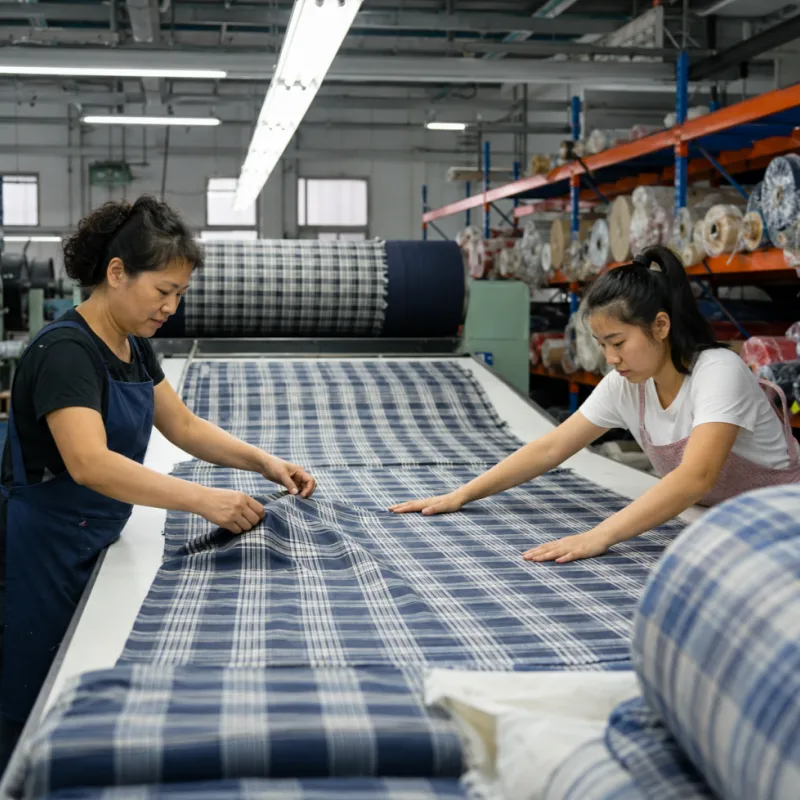
- Allowance: as a rule of thumb, allow roughly 10–15% extra consumption for a standard check and more for large repeats.
- Straightness: skew or bow in a checked fabric makes matching impossible; specify skew and bow limits.
- Repeat size: a larger repeat wastes more fabric; confirm repeat dimensions before marker making.
How to Control Matching on the Cutting Floor
- Measure skew and bow on every roll before cutting and set aside rolls outside the limit.
- Relax the fabric before spreading so the check does not move after cutting.
- Spread plies with pins or a matching table so checks align through the lay.
- Mark matching points on patterns — center front, pockets, yokes — and check the first bundle before cutting the rest.
Printed checks can be engineered to reduce matching difficulty, but they still need straight printing relative to the grain. If you are deciding between a woven and a printed plaid for flannel shirts, our article on vải nỉ so với vải kẻ caro explains the difference between the fabric and the pattern and what it means for cost.
Yarn-Dyed vs Printed Flannel
Flannel is where the choice between woven and printed checks comes up most often. A yarn dyed flannel plaid is woven from colored yarns and brushed after weaving; the color runs through the nap, the check is the same on both sides, and it stays crisp after many washes. Printed flannel fabric is printed on a solid flannel base, which allows novelty designs, florals and children’s prints, and usually lower development effort per design.
| Nhân tố | Yarn-dyed flannel | Printed flannel |
|---|---|---|
| Design | Plaids, checks, stripes | Any motif, novelty, florals, printed checks |
| Back | Same pattern | Lighter or solid |
| After brushing | Color goes through the nap | Print can soften as the nap rises |
| Tốt nhất cho | Shirts, jackets, premium plaids | Pajamas, children’s wear, seasonal bedding |
Brushing and Color
Brushing lifts fibers from the yarn surface. In yarn-dyed flannel those fibers are already colored, so the check stays clear. In printed flannel, the raised fibers can carry less color than the surface underneath, which slightly softens and lightens the print; mills compensate with print depth and brushing level. Approve printed flannel colors on brushed strike-offs, not on unbrushed fabric.
Both routes are standard in flannel shirts, pajamas and bedding. Our printed and yarn-dyed flannel range covers brushed cotton solids, woven plaids and printed designs for apparel and home textiles.
Solution-Dyed, Stock-Dyed and Other Methods
Two further methods appear on specification sheets and are worth recognizing.
Solution-Dyed (Dope-Dyed) Fibers
Solution dyed — also called dope dyed — fibers are colored by adding pigment to the polymer melt before the fiber is extruded. Color is locked inside the fiber, giving excellent light and wash fastness and saving water at the fabric stage. It is only possible for synthetics such as polyester, nylon and acrylic, and colors are fixed at fiber level, so minimums and lead times for new colors are larger. Buyers comparing piece dyed vs solution dyed polyester usually choose solution dyed for outdoor, automotive and contract fabrics where fading is critical.
Solution dyeing also uses far less water and energy at the fabric stage, because the fabric does not go through a dye bath. The trade-off is flexibility: a new color has to be produced at the fiber or yarn stage, so it suits long-running colors such as navy, black and grey in outdoor, automotive and contract textiles rather than seasonal fashion shades.
Stock Dyeing and Other Routes
Stock dyeing colors loose fiber before spinning, producing heathered or melange yarns. Top dyeing (dyeing combed slivers of wool) and space dyeing (dyeing sections of yarn in different colors) are niche routes used for specific effects. For most woven cotton, linen and polyester programs, the practical choice is still between yarn-dyed, piece-dyed and printed.
Which Method for Which Product?
Most yarn dyed vs piece dyed decisions follow the product. Garment factories and home-textile manufacturers can use the table below as a starting point. The final decision depends on design, volume per design and price target.
| Sản phẩm | Usual method | Tại sao |
|---|---|---|
| Striped and checked shirts | Sợi nhuộm | Crisp woven stripes, same on both sides |
| Solid shirts, uniforms, workwear | Nhuộm từng mảnh | Lowest cost, consistent shade |
| Chambray and denim-look shirting | Sợi nhuộm | Colored warp, white weft |
| Printed blouses and dresses | Digital or rotary print | Unlimited motifs |
| Plaid flannel shirts | Sợi nhuộm | Color through the nap |
| Flannel pajamas and kids’ sleepwear | Đã in | Novelty designs, many colorways |
| Striped bedding and duvet covers | Yarn-dyed or printed | Woven stripes for premium; print for variety |
| Solid sheets | Nhuộm từng mảnh | Even color across wide widths |
| Checked tablecloths and kitchen textiles | Sợi nhuộm | Durable woven checks |
| Washed casual garments | Garment-dyed (PFD fabric) | Soft, vintage color |
Dành cho các nhà máy may mặc
Shirt and dress makers usually work with all three methods in one season: yarn-dyed stripes and checks for the core range, piece-dyed solids for basics, and prints for fashion styles. Plan cutting allowances for checks, align fastness requirements across methods so a mixed order passes the same test plan, and approve every colorway before bulk.
For Home-Textile Manufacturers
Bedding and table-linen producers balance premium woven designs against print variety. Woven stripes and damask-style checks signal quality and last for years; printed duvet covers allow seasonal ranges at lower development cost. For wide-width bedding, confirm that the chosen method can be produced at the required width before designing the range.
How to Specify Each Method in Your PO
Whatever you decide on yarn dyed vs piece dyed vs printed, these six steps turn the choice into a purchase order a mill can execute without ambiguity.
Step 1 — Fix the Design and Colors
Decide whether the design is a solid, a woven stripe or check, or a printed motif, and count the colors. This alone narrows the choice to one or two methods.
Step 2 — Choose the Method and Dye Class
Consider how many meters each design or colorway needs, and how often it repeats. Match method to design and volume: yarn-dyed for woven patterns, piece-dyed for solids, rotary print for long runs, digital print for many designs, garment-dyed for washed solids. Specify the dye or ink class (reactive, vat, disperse, pigment).
Step 3 — Specify the Base Fabric
Write composition, construction, GSM, width and finish. If the program is cotton-based, our bán buôn vải cotton page lists standard bases that can be piece-dyed, printed or woven as yarn-dyed designs.
Step 4 — Approve Color Before Bulk
Approve lab dips for piece-dyed shades, yarn lab dips and a sample for yarn-dyed designs, or a strike-off for prints. Approve under D65 and a store light, and keep signed references.
Step 5 — Set Fastness, Shrinkage and Appearance Limits
Write washing and rubbing fastness grades with methods (for example AATCC TM61 and ISO 105-X12), dimensional change limits, and for checks, skew and bow limits.
Weight: 120 GSM ± 5% · Cuttable width: 145 cm
Colorfastness to laundering (AATCC TM61): color change ≥ 4, staining ≥ 3–4
Colorfastness to rubbing (ISO 105-X12): dry ≥ 4, wet ≥ 3
Skew/bow: per agreed limit · Shade: match approved sample under D65
Step 6 — Confirm MOQ, Lead Time and Sampling
Confirm MOQ, the development schedule (lab dips, yarn samples or strike-offs) and bulk lead time in writing, and agree who approves each stage and how quickly. Then approve a pre-production sample from the bulk process before production starts, and keep it sealed for inspection.
Free samples
Get Free Fabric Samples — Shipped Within 5 Days
Tell us the fabric you need and roughly how much. We reply within 24 hours and ship free samples within 5 days. Poplin, twill, combed, organic and yarn-dyed cotton · MOQ 500 m · bulk in 20–35 days.
Prefer chat? Message us on WhatsApp: +86 188-2515-3652
Frequently Asked Questions About Yarn Dyed, Piece Dyed and Printed Fabric
What does yarn dyed mean?
Yarn dyed means the yarn was colored before weaving. The pattern — stripes, checks or plaids — is created by arranging colored yarns in the weave, so it looks the same on both sides of the fabric.
What is the difference between yarn dyed and piece dyed?
Yarn-dyed fabric is woven from pre-dyed yarns and is used for woven patterns; piece-dyed fabric is woven first and then dyed as a whole, usually in a single solid color. Piece dyeing is cheaper and faster for solids; yarn dyeing is needed for woven stripes and checks.
Is yarn dyed better than printed?
Not always. Yarn-dyed patterns are woven in, look the same on both sides and resist fading, which suits shirts and flannel plaids. Printed fabric allows any design and many colors at lower development cost, which suits pajamas, dresses and seasonal bedding.
Why is yarn dyed fabric more expensive?
Every yarn must be dyed, each design needs its own warp color sequence, and changeovers create more waste. More colors in the design mean more complexity, so yarn-dyed fabric usually costs more per meter than piece-dyed solids.
Does yarn dyed fabric fade?
Yarn-dyed fabric made with good reactive or vat dyes has very good wash fastness, because the color runs through each yarn. Specify fastness grades and test methods, such as AATCC TM61 for laundering, to confirm performance.
What is the MOQ for yarn dyed fabric?
At our mill, the MOQ is 500 meters per order for yarn-dyed fabric, the same as for piece-dyed and printed fabric, with a 20–35 day bulk lead time after sample approval.
What is garment dyed vs piece dyed?
Piece-dyed fabric is dyed before cutting and sewing, giving consistent shade and size. Garment-dyed products are sewn from PFD fabric and dyed afterwards, giving a soft, washed look but more variation in shade and shrinkage.
What is the difference between digital and rotary screen printing?
Rotary screen printing uses one screen per color and is the most economical choice for long runs of a design. Digital printing needs no screens, prints unlimited colors and photographic images, and suits short runs and many designs.
How can I tell if a check is woven or printed?
Look at the back of the fabric. A woven, yarn-dyed check shows the same pattern on both sides and each yarn is colored through; a printed check is lighter or blank on the back and the color sits on the surface.
Can piece-dyed fabric have a pattern?
Only a woven texture or tone-on-tone effect. Because the whole fabric is dyed at once, piece dyeing produces one color; dobby or jacquard weaves can add pattern in the same shade, but multicolor designs need yarn dyeing or printing.
Which method is best for bedding?
Piece-dyed fabric is best for solid sheets, yarn-dyed fabric for premium woven stripes and checks, and printed fabric for patterned duvet covers and seasonal designs. Choose by design, volume per design and price target.
Choose the Right Coloring Method for Your Next Program
We produce yarn-dyed, piece-dyed and printed fabrics — with both rotary screen and digital printing — for garment factories and home-textile manufacturers. Send us your design, base fabric and quantity, and we will recommend the most suitable method with samples and a quotation.
Yarn-Dyed Fabric Supplier →Liên hệ với đội ngũ của chúng tôi