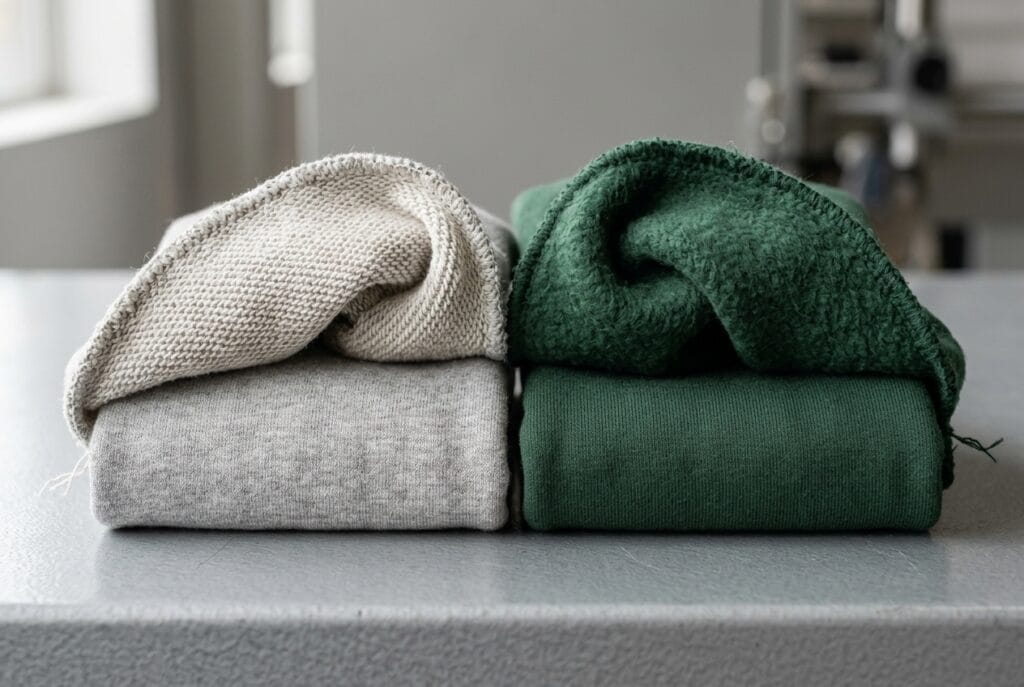

সংক্ষিপ্ত উত্তর: সাধারণ দৈনন্দিন হুডি ও ক্রু-নেকের জন্য সবচেয়ে ভালো কটন সুইটশার্ট ফ্যাব্রিক হলো 300–360 g/m² 3-এন্ড ফ্রেঞ্চ টেরি বা 3-এন্ড ব্রাশড ফ্লিস, যা 30s–32s কম্বড কটন ফেস ইয়ার্ন, 30s–32s কটন (বা 75D–100D পলিয়েস্টার) বাইন্ডার ইয়ার্ন এবং 10s–16s লুপ/পাইল ব্যাক ইয়ার্ন দিয়ে 175–185 cm ওপেন উইড্থে নিট করা. বসন্তের লেয়ারিং ও অ্যাথলেজার-এর জন্য 240–300 g/m² ফ্রেঞ্চ টেরি (165–180 cm ওপেন উইড্থ), বক্সি ওভারসাইজড স্ট্রিটওয়্যারের জন্য 380–460 g/m² 100% কটন 3-এন্ড ফ্লিস বা লুপব্যাক (180–195 cm ওপেন উইড্থ), আর কম সংকোচন ও লফট ধরে রাখা গুরুত্বপূর্ণ হলে 80/20 কটন-পলিয়েস্টার (CVC) 3-এন্ড ফ্লিস বেছে নিন। ব্রাশিং ও কম্প্যাক্টিংয়ের পর ফিনিশড GSM, ব্যবহারযোগ্য কাটেবল উইড্থ, ভেতরের শেডিং প্রতিরোধ এবং মিলে যাওয়া 380–480 g/m² 1×1 বা 2×2 রিব ট্রিম (বডি ফ্যাব্রিকের ওজনের 12–15% হিসেবে অর্ডার করুন) বাল্ক অর্ডার দেওয়ার আগে একটি প্রোডাকশন স্যাম্পলে নিশ্চিত করুন।
কটন হুডি ফ্যাব্রিক শুরু হয় সেখান থেকেই যেখানে হেভিওয়েট টি-শার্ট জার্সি শেষ হয়। যদিও কটন টি-শার্ট ফ্যাব্রিক একটি একক ইয়ার্ন ফিড দিয়ে 150–280 g/m² সিঙ্গেল জার্সি নিট করে, একটি হুডি বা সুইটশার্টের জন্য প্রয়োজন মাল্টি-ইয়ার্ন লুপ বা ব্রাশড পাইল কনস্ট্রাকশন 240–480 g/m² হুডের আকৃতি ধরে রাখা, ক্যাঙ্গারু পকেটকে সাপোর্ট দেওয়া এবং শরীরকে উষ্ণ রাখা—এসবই এর কাজ। দুটি কাপড়কে একইভাবে “100% cotton 350 GSM fleece” লেবেল দেওয়া যেতে পারে, তবুও একটি প্রতিটি আন্ডারশার্টে লিন্ট ফেলে দেয় এবং লম্বালম্বিভাবে 7% সঙ্কুচিত হয়, অন্যটি দশবার ধোয়ার পরেও পরিষ্কার, সমতল এবং সাইজ অনুযায়ী অটুট থাকে।
এই ক্রেতা-নির্দেশিকা একটি গার্মেন্ট ডিজাইন ব্রিফকে মিল-রেডি হুডি ফ্যাব্রিক স্পেসিফিকেশনে রূপান্তর করে। এতে রয়েছে ফ্রেঞ্চ টেরি বনাম ব্রাশড ফ্লিস, 2-end বনাম 3-end নিটিং, GSM স্তর, মাল্টি-ইয়ার্ন কাউন্ট রেসিপি (ফেস, বাইন্ডার এবং লুপ/পাইল), ফাইবার ব্লেন্ড, 165–195 cm ওপেন-উইডথ মার্কার হিসাব, মিলানো রিব ট্রিম অনুপাত, কোয়ালিটি টেস্ট এবং কপি-রেডি PO টেমপ্লেট। বৃহত্তর 14-গার্মেন্ট রেফারেন্স চার্টের জন্য দেখুন অ্যাপ্লিকেশন অনুযায়ী সুতি কাপড়ের স্পেসিফিকেশন; লুপের মৌলিক বিষয়ের জন্য দেখুন আমাদের নিটেড সুতি কাপড়ের গাইড; ওজন ও কাউন্টের তত্ত্বের জন্য দেখুন কাপড়ের ওজন ও ইয়ার্ন কাউন্ট ব্যাখ্যা.
হুডি ও সোয়েটশার্টের জন্য সেরা সুতি কাপড় কোনটি?
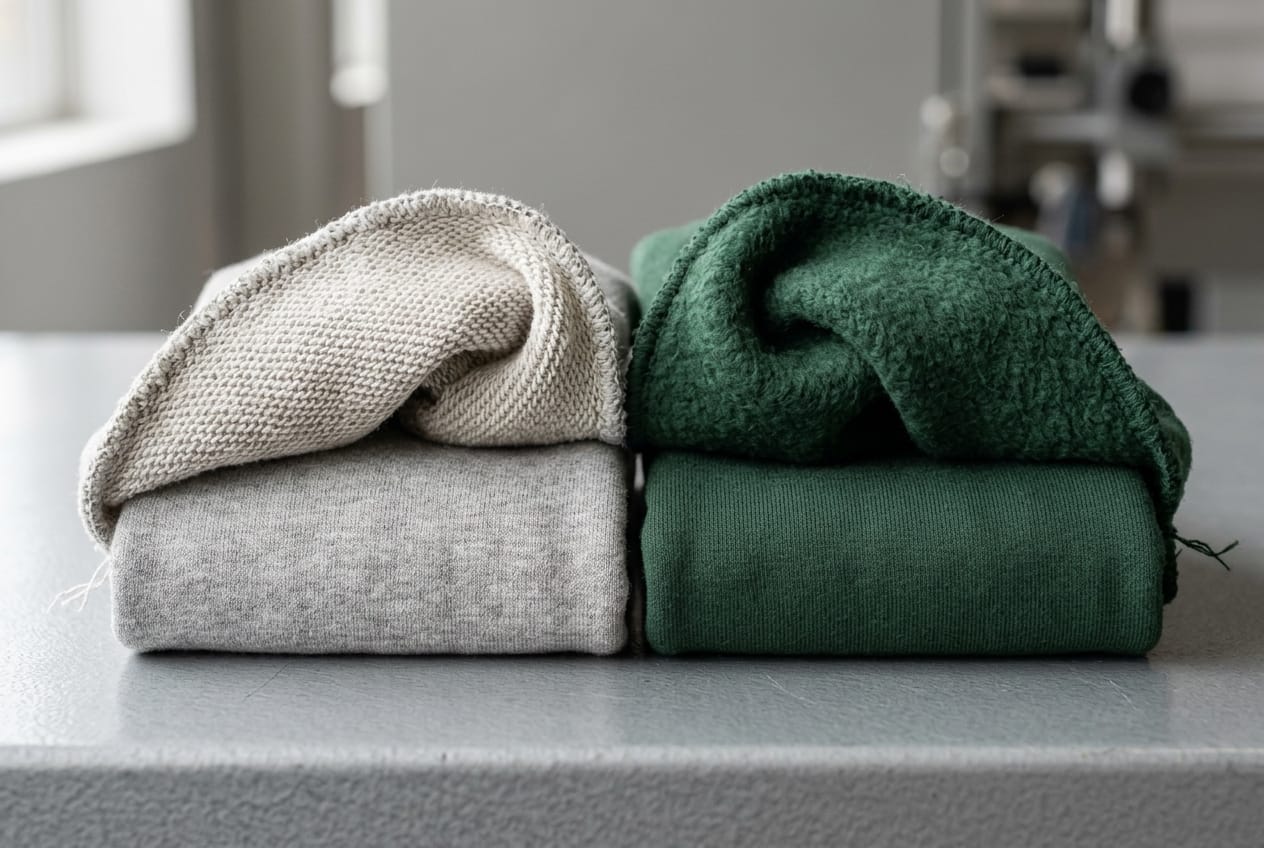
সরাসরি উত্তর: 175–185 cm ওপেন উইড্থে 300–360 g/m² 3-end ফ্রেঞ্চ টেরি (সারা বছর ব্যবহারযোগ্য, স্ট্রাকচার্ড হুডিের জন্য) এবং 320–380 g/m² 3-end ব্রাশড ফ্লিস (উষ্ণ শরৎ/শীতের হুডিের জন্য) হলো সেরা অল-রাউন্ড কটন হুডি ফ্যাব্রিক। এগুলোতে 30s–32s কম্বড কটনের মসৃণ বাইরের প্রিন্ট সারফেসের সঙ্গে 10s–16s-এর যথেষ্ট পুরু ভেতরের লুপ বা ন্যাপ থাকে। বক্সি স্ট্রিটওয়্যার সিলুয়েটের জন্য 185–195 cm ওপেন উইড্থে 21s বা 16s ফেস ইয়ার্নসহ 380–460 g/m²-এ যান।
জলবায়ু, সিলুয়েট ও ওয়াশিং পদ্ধতি না জেনে কোনো একক “সেরা” হুডি ফ্যাব্রিক নেই। যে 440 g/m² ব্রাশড ফ্লিস দিয়ে দারুণ একটি $120-এর শীতকালীন স্ট্রিটওয়্যার হুডি তৈরি হয়, সেটিই বসন্তকালীন অ্যাথলেজার লাইনে দম বন্ধকারী মনে হবে এবং $25-এর প্রোমোশনাল ক্রু-নেকের জন্য অতিরিক্ত ব্যয়বহুল হবে। সঠিক স্পেসিফিকেশন ভারসাম্য রাখে বাইরের হ্যান্ড-ফিল, ভেতরের লফট, হুডের স্ট্রাকচার, সংকোচন স্থিতিশীলতা এবং প্রতি টনে ইল্ড.
কেন ফ্রেঞ্চ টেরি ও 3-End ফ্লিস দুটি ইন্ডাস্ট্রি স্ট্যান্ডার্ড
আমাদের কটন টি-শার্ট ফ্যাব্রিক গাইডে, আমরা দেখিয়েছি যে সিঙ্গেল জার্সি সর্বোচ্চ প্রায় 240–280 g/m² পর্যন্ত পৌঁছায়, মোটা 20s বা 16s ইয়ার্ন ব্যবহার করে। সিঙ্গেল জার্সিকে 350 g/m² পর্যন্ত নেওয়ার চেষ্টা করতে এমন মোটা ইয়ার্ন লাগে যে ফ্যাব্রিকটি শক্ত, খসখসে হয়ে যায় এবং সাইড-সিমে তীব্র মোচড় (স্পাইরালিটি) দেখা দেয়।
হুডি ও সোয়েটশার্ট ফ্যাব্রিক এ সমস্যার সমাধান করে এভাবে যে সেগুলো নিট করা হয় একসঙ্গে দুটি বা তিনটি আলাদা ইয়ার্ন ফিড দিয়ে সিঙ্কার লুপযুক্ত একটি সার্কুলার নিটিং মেশিনে:
- একটি সূক্ষ্ম ফেস ইয়ার্ন বাইরের দিকে থাকে, যাতে মসৃণ ও ঘন জার্সির মতো চেহারা তৈরি হয়, যা স্ক্রিন প্রিন্টিং, DTG ও এমব্রয়ডারির জন্য উপযুক্ত।
- একটি ভারী লুপ বা পাইল ইয়ার্ন ভেতরের দিকে বসে ওজন (240–480 g/m²), পুরুত্ব ও উষ্ণতা তৈরি করে, বাইরের পৃষ্ঠকে খসখসে না করে।
- একটি মধ্যস্থ বাইন্ডার (টাই-ইন) সুতা (3-এন্ড গঠনে) সামনের ও পেছনের অংশকে একসাথে আটকে রাখে, যাতে ভেতরের লুপগুলো সামনের দিকে টেনে বের হতে না পারে বা ব্রাশিংয়ের সময় খুলে না যায়।
যখন ভেতরের লুপগুলো কাটা হয় না, তখন ফ্যাব্রিকটি হয় ফ্রেঞ্চ টেরি (লুপব্যাক). যখন ওই লুপগুলো যান্ত্রিকভাবে ব্রাশ ও শিয়ার করে নরম তন্তুময় ন্যাপে পরিণত করা হয়, তখন ফ্যাব্রিকটি হয় ব্রাশড সোয়েটশার্ট ফ্লিস.
হুডির জন্য কখন 100% কটন বনাম কটন-পলিয়েস্টার (CVC) বেছে নেবেন
পছন্দ করা ১০০১টিপি৩টি তুলা যখন ব্র্যান্ডের গল্পে প্রাকৃতিক, শুষ্ক-স্পর্শ স্ট্রিটওয়্যার ড্রেপ, উচ্চ শ্বাসপ্রশ্বাসযোগ্যতা বা সেলাই-পরবর্তী ভেজা প্রসেসিং যেমন গার্মেন্ট ডাইং, পিগমেন্ট ওয়াশিং, এনজাইম স্টোন ওয়াশিং বা অ্যাসিড ওয়াশিং. প্রয়োজন হয়। যেহেতু প্রতিটি সুতা ফিড (ফেস, বাইন্ডার ও লুপ) সেলুলোজ, তাই সম্পূর্ণ ফ্যাব্রিকটি রিঅ্যাকটিভ বা পিগমেন্ট ডাই সমানভাবে শোষণ করে। এর বিনিময়ে কাঁচামালের খরচ বেশি, ভেজা অবস্থায় ওজন বেশি এবং প্রাকৃতিক সংকোচন বেশি (যা ওপেন-উইড্থ কম্প্যাক্টিংয়ের মাধ্যমে নিয়ন্ত্রণ করতে হয়)।
বেছে নিন কটন-সমৃদ্ধ CVC ব্লেন্ড (সাধারণত 80/20 বা 70/30 কটন/পলিয়েস্টার) যখন আপনি 100% কটনের বাইরের হ্যান্ড-ফিলের সাথে কম সংকোচন, ভালো লফট ধরে রাখা এবং কম খরচ চান। সঠিকভাবে ইঞ্জিনিয়ার করা 80/20 3-এন্ড ফ্লিসে, বাইরের ফেস সুতা ও ভেতরের পাইল সুতা এখনও 100% কটন থাকে, আর 20% পলিয়েস্টার সম্পূর্ণভাবে মধ্যস্থ বাইন্ডার সুতায় লুকানো থাকে. পরিধানকারী ও প্রিন্টার কেবল কটন স্পর্শ করেন, অথচ ভেতরের পলিয়েস্টার গ্রিড মাত্রিক সংকোচন 3%-এর নিচে রাখে।
বিভিন্ন হুডি স্টাইলের জন্য প্রস্তাবিত সুতি কাপড়
হালকা ওজনের ট্রানজিশনাল হুডির জন্য 240–280 g/m² ওজনের 2-end বা 3-end ফ্রেঞ্চ টেরি ব্যবহার করুন, যেখানে সুতা হবে 32s+16s। প্রতিদিনের রিটেইল পুলওভার ও ক্রু-নেকের জন্য ব্যবহার করুন 300–360 g/m² ওজনের 3-end ফ্রেঞ্চ টেরি বা ব্রাশড ফ্লিস, সুতা 32s+32s+10s (অথবা 32s+75D+10s CVC), ওপেন উইডথ 175–185 cm। স্ট্রাকচার্ড স্ট্রিটওয়্যার হুডির জন্য ব্যবহার করুন 380–460 g/m² ওজনের 100% সুতি 3-end লুপব্যাক বা ফ্লিস, সুতা 21s+21s+10s বা 16s+32s+10s, ওপেন উইডথ 185–195 cm। ফিটেড অ্যাথলেটিক জিপ-আপের জন্য ব্যবহার করুন 260–320 g/m² ওজনের 95/5 সুতি-স্প্যানডেক্স ফ্রেঞ্চ টেরি।
| হুডিতে ব্যবহার | প্রস্তাবিত নিট কনস্ট্রাকশন | ফিনিশড GSM | সুতার রেসিপি (ফেস / বাইন্ডার / ব্যাক) | ফিনিশড ওপেন উইডথ | কেন এটি কাজ করে |
|---|---|---|---|---|---|
| হালকা ওজন / বসন্তকালীন হুডি | 2-end বা 3-end ফ্রেঞ্চ টেরি | 240–280 | 32s + 16s (অথবা 32s + 32s + 16s) | 165–180 cm | শ্বাসপ্রশ্বাসযোগ্য লুপব্যাক; 240 GSM হেভিওয়েট টি-শার্ট থেকে সরাসরি সংযোগ |
| প্রতিদিনের রিটেইল হুডি ও ক্রু-নেক | 3-end ফ্রেঞ্চ টেরি বা 3-end ব্রাশড ফ্লিস | 300–360 | 32s + 32s + 10s (অথবা 32s + 75D + 10s CVC) | 175–185 cm | মসৃণ প্রিন্ট সারফেস, হুডের সুন্দর ড্রেপ, উষ্ণতা ও খরচের ভারসাম্য |
| হেভিওয়েট / বক্সি স্ট্রিটওয়্যার | 100% সুতি 3-end ফ্লিস বা হেভি লুপব্যাক | 380–450 | 21s + 21s + 10s (অথবা 16s + 32s + 10s) | 185–195 cm | স্বনির্ভর হুড, স্ট্রাকচার্ড বক্সি ফিট, ওয়াইড মার্কার নেস্টিং |
| আল্ট্রা-হেভি লাক্সারি ড্রপ | 100% কটন 3-এন্ড ভারী লুপব্যাক / ফ্লিস | 450–500+ | 16s + 21s + 8s (অথবা 10s) | 185–195 cm | সর্বোচ্চ গঠন ও শীতকালীন উষ্ণতা; ভারী-শুল্ক সেলাই প্রয়োজন |
| অ্যাথলেটিক / ফিটেড জিপ-আপ হুডি | স্ট্রেচ ফ্রেঞ্চ টেরি বা ডাবল-ফেস ইন্টারলক | 260–320 | 32s + 16s + 40D স্প্যানডেক্স | 170–180 সেমি | চার-মুখী রিকভারি, মসৃণ ভেতরের পৃষ্ঠ, কম উল্লম্ব জিপার সংকোচন |
| প্রমোশনাল / ইউনিফর্ম হুডি | 3-এন্ড CVC (60/40) বা TC (65/35) ব্রাশড ফ্লিস | 280–330 | 30s TC + 100D পলি + 12s TC | 175–185 cm | কম সংকোচন, দ্রুত শুকানো, উচ্চ ঘর্ষণ টেকসইতা এবং কম খরচ |
উপরের কটন হুডি ফ্যাব্রিক সুপারিশগুলো বাণিজ্যিক সূচনা বিন্দু। কাটিংয়ের আগে ব্রাশিং ও কম্প্যাক্টিংয়ের পর চূড়ান্ত GSM, ব্যবহারযোগ্য কাটেবল প্রস্থ এবং বাল্ক-প্রোডাকশন নমুনায় সংকোচন নিশ্চিত করুন।
ফ্রেঞ্চ টেরি বনাম ব্রাশড ফ্লিস: হুডির জন্য কোন ধরনের নিট স্ট্রাকচার ব্যবহার করা হয়?
সরাসরি উত্তর: চারটি মূল বডি স্ট্রাকচার এবং একটি ট্রিম স্ট্রাকচার বাণিজ্যিক কটন হুডি উৎপাদন কভার করে: স্ট্রাকচার্ড সারা বছরব্যাপী হুডির জন্য 3-এন্ড ফ্রেঞ্চ টেরি (লুপব্যাক), উষ্ণ শীতকালীন হুডির জন্য 3-এন্ড ব্রাশড ফ্লিস, হালকা বা স্ট্রেচ স্টাইলের জন্য 2-এন্ড ফ্রেঞ্চ টেরি, আধুনিক টেকনিক্যাল হুডির জন্য ভারী ডাবল-নিট ইন্টারলক/স্পেসার, এবং মিলে যাওয়া কাফ, ওয়েস্টব্যান্ড ও সাইড প্যানেলের জন্য 380–500 g/m² 1×1 বা 2×2 রিব নিট।
নিট আর্কিটেকচার নির্ধারণ করে একটি নির্দিষ্ট GSM-এ হুডি কতটা উষ্ণ অনুভূত হবে, ভেতরের অংশ সাদা টি-শার্টে লিন্ট ফেলবে কি না, এবং ঘাড়ের চারপাশে হুড কতটা খাড়া থাকবে। ওভেন ব্রাশড শার্টিং এবং নিটেড সোয়েটশার্ট পাইলের মধ্যে তুলনার জন্য দেখুন ফ্লানেল বনাম ফ্লিস.
সারা বছর ব্যবহারযোগ্য ও স্ট্রাকচার্ড স্ট্রিটওয়্যার হুডির জন্য ফ্রেঞ্চ টেরি (লুপব্যাক)
ফ্রেঞ্চ টেরির বাইরের দিকটি মসৃণ সিঙ্গেল-জার্সি ফেস এবং ভেতরের দিকটি পরিপাটি, কাটা হয়নি এমন অর্ধবৃত্তাকার লুপ (যাকে প্রায়ই “ফিশ-স্কেল লুপ” বা লুপব্যাক বলা হয়)। লুপগুলো অক্ষত থাকায় বাতাস সহজে চলাচল করে এবং ঘাম ত্বক থেকে দূরে সরিয়ে নেয়। একই GSM-এ ফ্রেঞ্চ টেরি ব্রাশড ফ্লিসের চেয়ে বেশি ঠান্ডা ও শুষ্ক অনুভূত হয়, আরও তীক্ষ্ণ আর্কিটেকচারাল লাইনে ড্রেপ করে, এবং ভেতরের ফাজ ঝরে না। এটি বসন্ত/শরৎকালীন হুডি, ভিন্টেজ গার্মেন্ট-ডাইড সোয়েটশার্ট এবং বিলাসবহুল স্ট্রিটওয়্যার ব্র্যান্ডগুলোর জন্য পছন্দের—যারা এমন ভারী 380–440 g/m² গার্মেন্ট চায় যা গ্রাহক ঘরের ভেতরে অতিরিক্ত গরম না হয়েই পরতে পারেন।
উষ্ণতা ও প্লাশ লফটের জন্য 3-এন্ড ব্রাশড ফ্লিস
3-এন্ড ব্রাশড ফ্লিস সার্কুলার নিটিং মেশিনে 3-ইয়ার্ন লুপব্যাক স্ট্রাকচার হিসেবে শুরু হয়, তারপর সূক্ষ্ম তারের দাঁতযুক্ত মেকানিক্যাল ন্যাপিং রোলারের মধ্য দিয়ে যায়। রোলারগুলো ভেতরের কটন লুপগুলোকে আঁচড়ে ও ছিঁড়ে ঘন, উঁচু পাইল তৈরি করে, এরপর একটি রোটারি শিয়ারিং ব্লেড পাইলটিকে সমান উচ্চতায় ছেঁটে দেয়। ওই আটকে থাকা বাতাসের স্তরের কারণে 350 g/m² ব্রাশড ফ্লিস 30–50% বেশি মোটা ও উল্লেখযোগ্যভাবে বেশি উষ্ণ অনুভূত হয় 350 g/m² ফ্রেঞ্চ টেরির তুলনায়। এটি শরৎ/শীতকালীন পুলওভার, ক্যাম্পাস সোয়েটশার্ট ও ঠান্ডা আবহাওয়ার স্ট্রিটওয়্যারের ক্লাসিক কনস্ট্রাকশন।
2-এন্ড বনাম 3-এন্ড কনস্ট্রাকশন: বাইন্ডার ইয়ার্ন কেন গুরুত্বপূর্ণ
মিলের পরিভাষায়, “এন্ড” বলতে প্রতিটি স্টিচ কোর্সে নিট করা ইয়ার্ন ফিডের সংখ্যা বোঝায়:
- 2-এন্ড কনস্ট্রাকশন (ফেস ইয়ার্ন + লুপ ইয়ার্ন): দুটি ইয়ার্ন ব্যবহার করা হয়। ব্যাক লুপ ইয়ার্নটি সরাসরি ফেস জার্সি স্টিচে টাক করা হয়। এতে আনব্রাশড ফ্রেঞ্চ টেরি (বিশেষত 240–300 g/m² বা স্প্যানডেক্স-মিশ্রিত টেরি), 2-end কনস্ট্রাকশন ভালো কাজ করে এবং ভালো অনুভূমিক স্ট্রেচ দেয়। তবে, যদি আপনি একটি 2-end ফ্যাব্রিক ব্রাশ করে ফ্লিস বানান, তাহলে ওয়্যার রোলারগুলো ফ্যাব্রিককে একসাথে ধরে রাখা স্ট্রাকচারাল লুপগুলো ছিঁড়ে ফেলে। ফলাফল হলো একটি দুর্বল, অস্থির ফ্লিস, যা পরিধানকারীর আন্ডারশার্টে প্রচুর লোম ঝরায় এবং সামনের ফেসে ব্রাশিংয়ের দাগ দেখা যায়।
- 3-End কনস্ট্রাকশন (ফেস ইয়ার্ন + বাইন্ডার ইয়ার্ন + লুপ/পাইল ইয়ার্ন): ফেস ও ব্যাক পাইলের মাঝে একটি তৃতীয় মধ্যবর্তী ইয়ার্ন যোগ করে— বাইন্ডার (টাই-ইন) ইয়ার্ন—। বাইন্ডার ইয়ার্ন একটি আঁটসাঁট বাধা তৈরি করে যা ভারী ব্যাক লুপগুলোকে জায়গায় আটকে রাখে এবং সামনের ফেসকে আলাদা রাখে। ব্যাক ব্রাশ করার সময় ওয়্যার দাঁতগুলো কেবল উন্মুক্ত পাইল ইয়ার্নে ন্যাপ তোলে, ফেস স্টিচে কোনো ব্যাঘাত ঘটায় না।
কাফ, ওয়েস্টব্যান্ড ও নেকলাইনের জন্য মিলানো 1×1 এবং 2×2 রিব নিট
একটি হুডির স্পেসিফিকেশন তার ম্যাচিং রিব ট্রিম ছাড়া অসম্পূর্ণ। একটি টি-শার্টের বিপরীতে (যেখানে একটি সরু নেকব্যান্ড মোট ফ্যাব্রিক ওজনের মাত্র 4–6% ব্যবহার করে), একটি হুডি কাফ, নিচের ওয়েস্টব্যান্ড, নেকলাইন এবং কখনও কখনও সাইড গাসেটে চওড়া ডাবল-ফোল্ডেড রিব ব্যবহার করে—যা মোট অর্ডার ওজনের 12% থেকে 18% খরচ করে.
- গঠন: 2×2 রিব (দুটি ফেস ওয়েলের পর দুটি রিভার্স ওয়েল) বেশি মোটা, ভারী এবং উচ্চতর ইলাস্টিক রিকভারি সম্পন্ন, যা 340–460 g/m² হুডির জন্য স্ট্যান্ডার্ড। 1×1 রিব এর সূক্ষ্ম, সমতল রিব চেহারা 240–340 g/m² ক্রু-নেক এবং জিপ হুডির জন্য উপযুক্ত।
- গঠন: সর্বদা উল্লেখ করুন 95% কম্বড কটন / 5% স্প্যানডেক্স (অথবা 97/3) হুডি রিবের জন্য। ইলাস্টেন ছাড়া 100% কটন রিব এক সপ্তাহ পরিধানের পর কব্জি ও কোমরে ফুলে যাবে।
- GSM নিয়ম: হুডি রিবের GSM হওয়া উচিত বডি ফ্যাব্রিকের GSM-এর 1.15× থেকে 1.3×. 300 g/m² বডির সাথে 360–400 g/m² রিব মিলান; 360–420 g/m² বডির সাথে মিলান 440–500 g/m² রিব.
| নিটের ধরন | ইয়ার্ন ফিড | ভেতরের পৃষ্ঠ | সাধারণ জিএসএম | উষ্ণতা ও লফট | ভেতরে শেডিংয়ের ঝুঁকি | সর্বোত্তম ব্যবহার |
|---|---|---|---|---|---|---|
| 2-এন্ড ফ্রেঞ্চ টেরি | 2 (ফেস + লুপ) | কাটা হয়নি এমন লুপ; হালকা ও স্ট্রেচি | 220–300 | হালকা, শ্বাসপ্রশ্বাসযোগ্য | খুব কম | স্প্রিং হুডি, স্ট্রেচ অ্যাথলেজার, লাউঞ্জওয়্যার |
| 3-এন্ড ফ্রেঞ্চ টেরি | 3 (ফেস + বাইন্ডার + লুপ) | ঘন, সমান, কাটা হয়নি এমন ফিশ-স্কেল লুপ | 300–450 | মাঝারি, স্ট্রাকচার্ড ড্রেপ | খুব কম | সারা বছর বিক্রির হুডি, গার্মেন্ট-ডাইড স্ট্রিটওয়্যার |
| 3-এন্ড ব্রাশড ফ্লিস | 3 (ফেস + বাইন্ডার + পাইল) | নরম, শিয়ার করা তন্তুময় ন্যাপ | 300–480 | উচ্চ উষ্ণতা, মোটা ক্যালিপার | কম (শিয়ার ও ডিডাস্ট করার পর) | শরৎ/শীতের হুডি, বক্সি স্ট্রিটওয়্যার, ক্রু-নেক |
| 2-এন্ড ব্রাশড ফ্লিস | 2 (ফেস + পাইল) | আলগা ব্রাশড ফাজ | 240–320 | মাঝারি | উচ্চ (রিটেইলের জন্য এড়িয়ে চলুন) | শুধুমাত্র কম খরচের প্রমোশনাল গিভঅ্যাওয়ে |
| ডাবল-ফেস ইন্টারলক / স্পেসার | 2–3 (দুটি নিডল বেড) | দুই পাশেই মসৃণ জার্সি | 280–380 | মসৃণ, আধুনিক টেকনিক্যাল ফিল | কোনোটিই না | টেক-ওয়্যার হুডি, স্লিক ট্রাভেল জিপ-আপ |
| ম্যাচিং 1×1 বা 2×2 রিব | 1–2 + স্প্যানডেক্স | দুই পাশেই উল্লম্ব রিবড ওয়েল | 360–500 | উচ্চ স্ট্রেচ ও কব্জি রিকভারি | কোনোটিই না | হুডি কাফ, ওয়েস্টব্যান্ড, ক্রু নেকলাইন, সাইড প্যানেল |
কটন হুডি ও সোয়েটশার্টের জন্য কোন GSM সবচেয়ে ভালো?
সরাসরি উত্তর: প্রতিদিনের রিটেইল হুডি ও ক্রু-নেকের জন্য 300–360 g/m² হলো সেরা সর্বাঙ্গীণ GSM। হালকা বসন্তকালীন ও লেয়ারিং হুডির জন্য 240–280 g/m² ফ্রেঞ্চ টেরি ব্যবহার করুন, প্রিমিয়াম স্ট্রাকচার্ড স্ট্রিটওয়্যারের জন্য 360–420 g/m², এবং আল্ট্রা-হেভি বক্সি শীতকালীন সিলুয়েটের জন্য 420–500 g/m²। সর্বদা উল্লেখ করুন ব্রাশিং ও কম্প্যাক্টিংয়ের পর চূড়ান্ত GSM, গ্রিজ ওজন নয়।
আমাদের সুতি কাপড়ের স্পেসিফিকেশন টেবিল, সুতির টি-শার্ট 150–220 g/m² (হেভিওয়েট টি-শার্টের ক্ষেত্রে 280 g/m² পর্যন্ত) এবং হুডি 240–450+ g/m². পর্যন্ত হয়ে থাকে। এই 240–280 g/m² ওভারল্যাপ অঞ্চলেই দুটি ক্যাটাগরি মিলিত হয়—এবং এখানেই ক্রেতাদের বুঝতে হবে কীভাবে গঠন ওজনের অনুভূতি বদলে দেয়।
240–280 GSM: হালকা ওজনের ও বসন্ত/গ্রীষ্মকালীন ট্রানজিশনাল হুডি
240–280 g/m² ওজনে একটি ফ্রেঞ্চ টেরি হুডির প্রতি বর্গমিটারের ওজন প্রায় একটি হেভিওয়েট ওভারসাইজড টি-শার্টের সমান, তবুও এর আচরণ ভিন্ন। যেহেতু ভর একটি সূক্ষ্ম 32s বাইরের স্তর ও একটি 16s লুপব্যাক ভেতরের স্তরের মধ্যে বিভক্ত, তাই 260 g/m² ফ্রেঞ্চ টেরি 260 g/m² 20s সিঙ্গেল জার্সির চেয়ে নরম, বেশি শোষণক্ষম ও কম শক্ত। এটি উষ্ণ আবহাওয়ার উপকূলীয় হুডি, জিম ওয়ার্ম-আপ, জিপ-আপ লেয়ারিং পিস এবং নারীদের লাউঞ্জ সেটের জন্য আদর্শ। এর সীমাবদ্ধতা হুডের গঠনে: একক স্তরের 260 g/m² হুড কাঁধে সমতলভাবে ঝুলে পড়বে, তাই এই ওজন স্তরে সর্বদা একটি সেলফ-ফ্যাব্রিক ডাবল-লাইনড হুড নির্দিষ্ট করুন।
300–360 GSM: প্রতিদিনের রিটেইল হুডি ও ক্রুনেক
এটি সোয়েটশার্ট বাজারের বাণিজ্যিক মেরুদণ্ড (প্রায় 9–10.6 oz/yd²)। 320–350 g/m², ওজনে একটি 3-এন্ড ফ্রেঞ্চ টেরি বা 3-এন্ড ব্রাশড ফ্লিসে যথেষ্ট বডি থাকে যাতে একটি পরিচ্ছন্ন সিলুয়েট ও পূর্ণ ক্যাঙ্গারু পকেট শক্ত বা ঘরের ভেতরে অতিরিক্ত গরম অনুভূত না হয়ে ধরে রাখা যায়। 340 g/m² কাপড়ে একটি প্রাপ্তবয়স্ক Large হুডির ওজন প্রায় 600–680 গ্রাম ফিনিশড—খুচরা হ্যাঙ্গারে গ্রাহকের হাতে যথেষ্ট ভারী অনুভূত হয়, গার্হস্থ্য ওয়াশিং মেশিনে সহজে ধোয়া যায় এবং বিমান বা সমুদ্রপথে পরিবহনে সাশ্রয়ী।
380–450+ GSM: হেভিওয়েট, বক্সি ও ওভারসাইজড স্ট্রিটওয়্যার হুডি
380 g/m² (11.2–14+ oz/yd²)-এর উপরে গেলে ফ্যাব্রিক সত্যিকারের হেভিওয়েট স্ট্রিটওয়্যার শ্রেণিতে প্রবেশ করে। 21s বা 16s ফেস ইয়ার্ন এবং 10s বা 8s ব্যাক ইয়ার্ন দিয়ে নিট করা হলে, 400–460 g/m² ফ্লিস বা লুপব্যাক শরীর থেকে দূরে থাকে, ভেতরের পোশাক সম্পূর্ণ ঢেকে রাখে এবং ড্রস্ট্রিং ছাড়াই খাড়া থাকা একটি ভাস্কর্য-like, ত্রিমাত্রিক হুড সমর্থন করে।
আপনি যদি 420–480 g/m² নির্ধারণ করেন, তাহলে আপনার কাট-অ্যান্ড-সিউ কারখানাকে আগেই সতর্ক করুন: ডাবল-লাইনড হুডে 450 g/m² ফ্লিসের দুই স্তর সমান 900 g/m² কলার সিমে, যা প্যাটার্ন মেকার নেক ড্রপ সমন্বয় না করলে সামনের নেকলাইনকে পেছনের দিকে টেনে নিতে পারে। ওভারলক ও ফ্ল্যাটলক মেশিনেও ভারী বলপয়েন্ট নিডল (মেট্রিক 90/14 থেকে 100/16) প্রয়োজন, যাতে মোটা ক্যাঙ্গারু-পকেটের কোণে সেলাই বাদ না পড়ে।
কেন 350 GSM ফ্লিস 350 GSM ফ্রেঞ্চ টেরির চেয়ে মোটা অনুভূত হয়
ক্রেতারা প্রায়ই 350 g/m² ফ্রেঞ্চ টেরির সোয়াচের পাশে 350 g/m² ব্রাশড ফ্লিসের সোয়াচ ধরে অনুমান করেন যে ফ্লিসটি 420 g/m²। GSM প্রতি বর্গমিটারের ভর মাপে, ক্যালিপার (মিলিমিটারে বেধ) নয়। যখন একটি 3-এন্ড ফ্যাব্রিক ন্যাপিং রোলারের মধ্য দিয়ে যায়, তখন তারের দাঁতগুলো কম্প্যাক্ট ইয়ার্ন টুইস্ট থেকে ফাইবার টেনে বের করে এনে সেগুলোকে 2.5–3.5 mm উঁচু পাইলে ফুলিয়ে তোলে। ফ্যাব্রিকটি বাতাস ধরে রাখে এবং হাতে অনেক বেশি মোটা ও উষ্ণ লাগে—যদিও ল্যাবরেটরি স্কেলে ঠিক একই 350 গ্রাম প্রতি বর্গমিটার দেখায়।
GSM কীভাবে প্রতি টনে ইল্ডকে প্রভাবিত করে (কিলোগ্রাম থেকে মিটার হিসাব)
টি-শার্ট জার্সির মতো, সার্কুলার-নিটেড হুডি ফ্যাব্রিকও ডাই করা, কোট করা এবং বিক্রি করা হয় কিলোগ্রাম (kg) হিসেবে. GSM বাড়ার সাথে সাথে, 1,000 kg (1-টন) ডাই লট থেকে আপনি যে লিনিয়ার মিটার পান তা তীব্রভাবে কমে যায়: প্রতি লিনিয়ার মিটারে ওজন (g) = GSM × সম্পূর্ণ প্রস্থ (m). Look at how yield changes across the four hoodie GSM tiers at a standard 185 cm (1.85 m) ফিনিশড ওপেন উইডথ:
| GSM ব্যান্ড | প্রতি লিনিয়ার মিটারে ওজন (185 cm প্রস্থে) | প্রতি 1,000 kg-এ লিনিয়ার মিটার | প্রতি 1,000 kg-এ সাধারণ প্রাপ্তবয়স্ক হুডি (15% রিব সহ) | সেরা গার্মেন্ট পজিশনিং |
|---|---|---|---|---|
| 260 g/m² (হালকা টেরি) | 481 g/m | ~2,079 m | ~1,300–1,450 পিস | স্প্রিং জিপ-আপ, অ্যাথলেজার, লেয়ারিং |
| 340 g/m² (প্রতিদিনের রিটেইল) | 629 g/m | ~1,589 m | ~1,000–1,120 পিস | কোর DTC পুলওভার, ক্রু-নেক, মার্চ |
| 400 g/m² (হেভি স্ট্রিটওয়্যার) | 740 g/m | ~1,351 m | ~820–920 পিস | ওভারসাইজড ড্রপ-শোল্ডার স্ট্রিটওয়্যার হুডি |
| 460 g/m² (আল্ট্রা-হেভি বক্সি) | 851 g/m | ~1,175 m | ~700–780 পিস | শীতকালীন প্রিমিয়াম ড্রপ, স্ট্রাকচার্ড বক্সি ফিট |
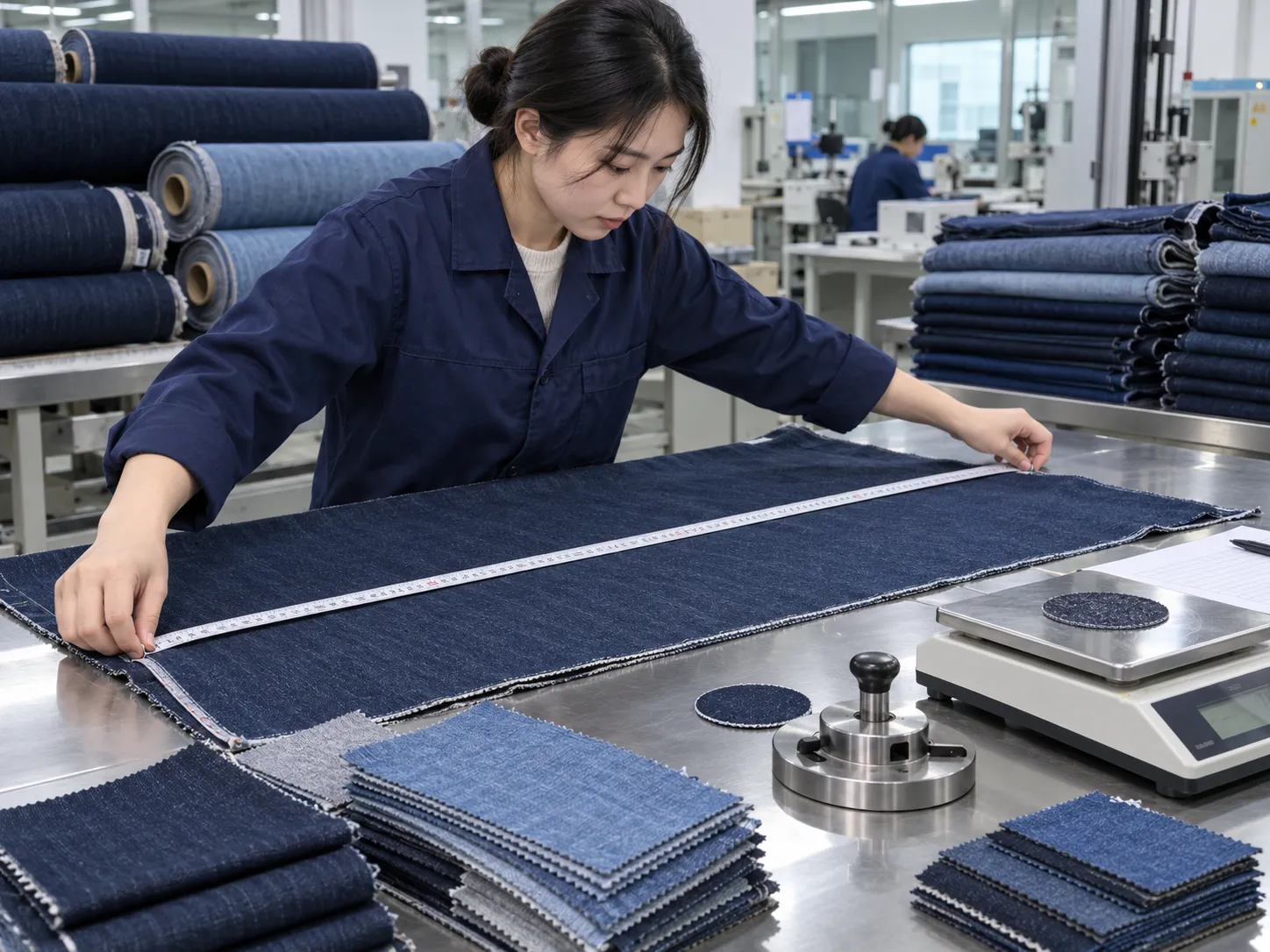
ব্রাশিং প্রক্রিয়ায় ফাইবার অপসারিত হয়। যখন গ্রেজ 3-এন্ড লুপব্যাক ন্যাপিং ও রোটারি শিয়ারিং মেশিনের মধ্য দিয়ে যায়, 5% to 8% of the fiber mass is brushed off as lint, আর লম্বালম্বি টান রোলটিকে প্রসারিত করে। এরপর কম্প্যাক্টিং কাপড়ের ওজন আবার সংকুচিত করে। সর্বদা উল্লেখ করুন “finished, relaxed GSM after brushing, shearing and compacting (±5%)” পরীক্ষিত এএসটিএম ডি৩৭৭৬ অথবা আইএসও ৩৮০১—কখনোই ব্রাশিং-পূর্ব গ্রেজ ওজনের ভিত্তিতে ক্রয় করবেন না।
g/m² এবং oz/yd²-এর মধ্যে রূপান্তর এবং স্ট্যান্ডার্ড টেস্ট মেথডের জন্য দেখুন ফ্যাব্রিক ওজন (GSM) ব্যাখ্যা. দ্রুত রেফারেন্স হিসেবে, 1 oz/yd² প্রায় 33.9 g/m²।
কটন হুডি ফ্যাব্রিকের জন্য কোন ইয়ার্ন কাউন্ট কম্বিনেশন সবচেয়ে ভালো?
সরাসরি উত্তর: তিনটি সংখ্যার ইয়ার্ন রেসিপি উল্লেখ করুন (ফেস ইয়ার্ন + বাইন্ডার ইয়ার্ন + লুপ/পাইল ইয়ার্ন), একক ইয়ার্ন কাউন্ট নয়। 320–360 g/m² রিটেইল হুডির বাণিজ্যিক বেঞ্চমার্ক হলো 32s কম্বড কটন ফেস + 32s কটন (বা 75D–100D পলিয়েস্টার) বাইন্ডার + 10s কটন লুপ/পাইল একটি 20G সার্কুলার মেশিনে। 380–460 g/m² ড্রাই-হ্যান্ড স্ট্রিটওয়্যার হুডির জন্য 21s বা 16s ফেস + 21s/32s বাইন্ডার + 10s/8s ব্যাক on a 16G–18G machine for 380–460 g/m² dry-hand streetwear hoodies.
হুডি টেক প্যাকে আমরা যে সবচেয়ে সাধারণ ভুলটি দেখি তা হলো “100% কটন 360 GSM ফ্লিস, 30s ইয়ার্ন” লেখা। একটি একক 30s ইয়ার্ন দিয়ে 360 g/m² সোয়েটশার্ট ফ্যাব্রিক তৈরি করা সম্ভব নয়। মাল্টি-ফিড সোয়েটশার্ট নিটে প্রতিটি ইয়ার্ন স্তরের আলাদা কাজ এবং আলাদা ইংরেজি কটন কাউন্ট (Ne) থাকে।
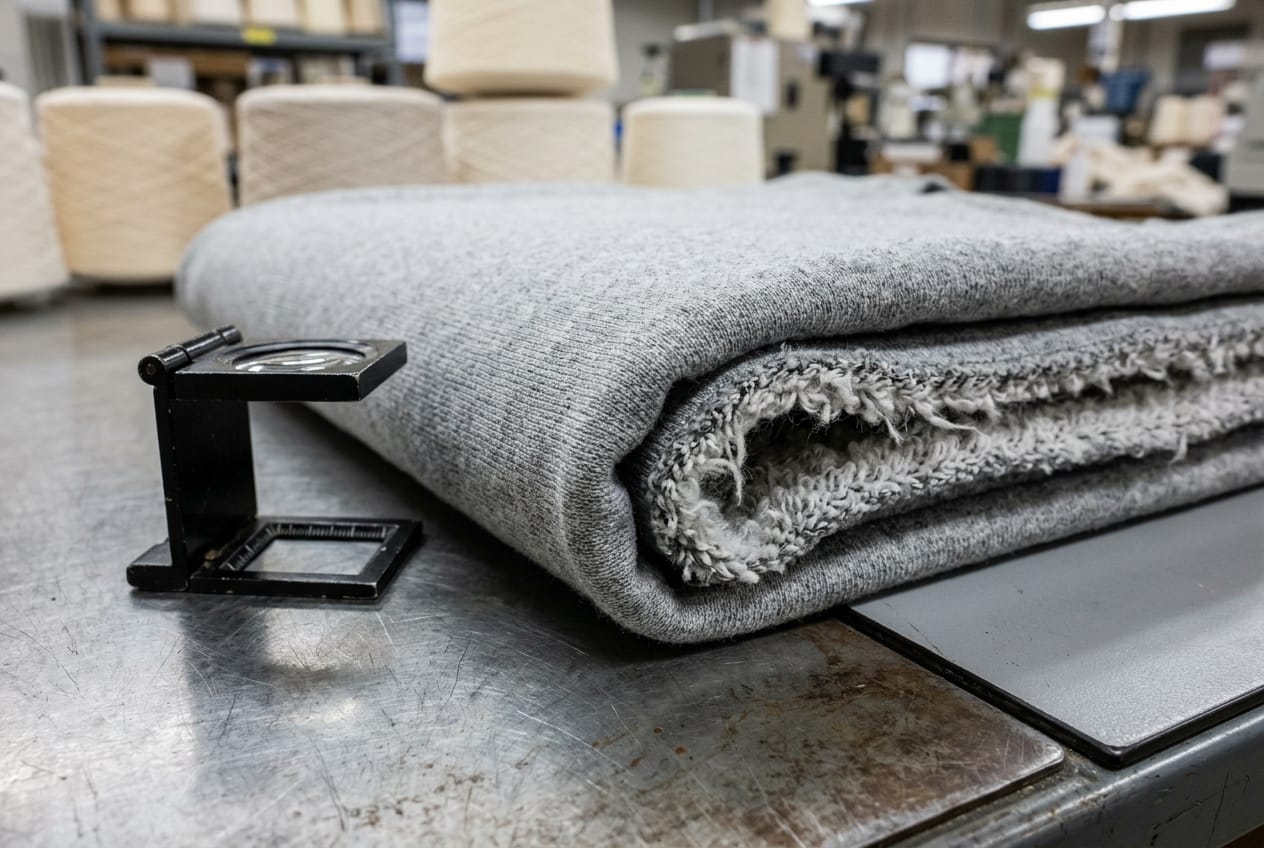
ফেস ইয়ার্ন, বাইন্ডার ইয়ার্ন ও লুপ/পাইল ইয়ার্ন ব্যাখ্যা
- ফেস ইয়ার্ন (বাইরের পৃষ্ঠ — সাধারণত 20s থেকে 40s Ne): দৃশ্যমান বাইরের জার্সি স্টিচ তৈরি করে এবং এর মসৃণতা, পিলিং প্রতিরোধ ক্ষমতা ও প্রিন্টের স্পষ্টতা নির্ধারণ করে। 30s–32s কম্বড কটন পরিচ্ছন্ন স্ক্রিন প্রিন্টিং, DTG এবং খুচরা বিক্রয়ের কোমলতার জন্য সর্বোত্তম মান; 20s–21s বা 16s কটন ভারী স্ট্রিটওয়্যার ব্র্যান্ডগুলোর পছন্দনীয় ঘনতর, শুষ্ক ভিনটেজ হ্যান্ড দেয়।
- বাইন্ডার / টাই-ইন ইয়ার্ন (মধ্যস্তর — সাধারণত 30s–40s কটন বা 75D–100D পলিয়েস্টার ফিলামেন্ট): 3-এন্ড কনস্ট্রাকশনে ফেস স্টিচকে ভারী ব্যাক লুপের সঙ্গে সংযুক্ত করে। এটি সূক্ষ্ম ও মজবুত হতে হবে, যাতে সামনের পৃষ্ঠে কোনো উঁচু দাগ না দেখিয়ে কাঠামোটি আটকে রাখে।
- লুপ / পাইল ইয়ার্ন (ভেতরের পিঠ — সাধারণত 8s, 10s, 12s বা 16s Ne): একটি মোটা, কম-টুইস্ট ইয়ার্ন, যা ফ্রেঞ্চ টেরিতে মাছের আঁশের মতো লুপ তৈরি করে বা ফ্লিসে ব্রাশ করে খোলা হয়। যেহেতু ইংরেজি কটন কাউন্ট (Ne) একটি পরোক্ষ পরিমাপ, কম সংখ্যা মানে মোটা ইয়ার্ন: একটি 10s ইয়ার্ন প্রতি রৈখিক মিটারে 30s ইয়ার্নের চেয়ে তিন গুণ ভারী, যা কাপড়ের GSM ও লফটের মূল ভর জোগায়।
সাধারণ মিল কম্বিনেশন (32s+10s, 32s+32s+10s, 21s+21s+10s, 16s+10s)
অনুমান না করে, আপনার সরবরাহকারীকে ব্রিফ করার সময় নিচের মিল-পরীক্ষিত রেসিপিগুলো ব্যবহার করুন:
| লক্ষ্য চূড়ান্ত GSM | নিট স্ট্রাকচার | ফেস ইয়ার্ন (বাইরে) | বাইন্ডার ইয়ার্ন (মধ্য) | লুপ / পাইল ইয়ার্ন (পিছনে) | সার্কুলার গেজ | পৃষ্ঠের বৈশিষ্ট্য ও সর্বোত্তম ব্যবহার |
|---|---|---|---|---|---|---|
| 240–270 g/m² | 2-এন্ড ফ্রেঞ্চ টেরি | 32s কম্বড | — (কোনোটি নয়) | 16s কম্বড/কার্ডেড | 22G–24G | মসৃণ, সূক্ষ্ম, শ্বাসপ্রশ্বাসযোগ্য; স্প্রিং হুডি ও জগার |
| 280–310 g/m² | 3-end ফ্রেঞ্চ টেরি | 32s কম্বড | 32s কটন | 16s কটন | 20G–22G | পরিষ্কার ফেস, সুন্দর মাঝারি লুপ; ট্রানজিশনাল ক্রু-নেক |
| 320–360 g/m² | 3-এন্ড ফ্রেঞ্চ টেরি বা ফ্লিস | 32s কম্বড | 32s কটন (অথবা 75D পলি) | 10s কটন | 20G | শিল্পের মূল ভরসা: মসৃণ প্রিন্ট ফেস, প্লাশ 340–350 GSM বডি |
| 360–400 g/m² | 3-এন্ড ফ্রেঞ্চ টেরি বা ফ্লিস | 26s বা 21s কম্বড | 32s বা 21s কটন | 10s কটন | 18G–20G | ঘনতর ফেস, ভারী ড্রেপ; প্রিমিয়াম স্ট্রিটওয়্যার হুডি |
| 400–450 g/m² | 3-এন্ড ভারী লুপব্যাক / ফ্লিস | 21s বা 16s কম্বড | 21s বা 32s কটন | 10s বা 8s কটন | 16G–18G | শুষ্ক, মজবুত, ভিনটেজ ভারী হ্যান্ডফিল; বক্সি ওভারসাইজড হুডি |
| 460–500 g/m² | 3-এন্ড এক্সট্রা-হেভি লুপব্যাক | 16s বা 32s/2 প্লাইড | 21s কটন | 8s (বা ডাবল 10s) | 14G–16G | আর্মার-সদৃশ বক্সি স্ট্রাকচার; আল্ট্রা-হেভি শীতকালীন ক্যাপসুল ড্রপ |
কম্বড বনাম কার্ডেড বনাম ওপেন-এন্ড ইয়ার্ন: কোথায় বিনিয়োগ করবেন আর কোথায় সাশ্রয় করবেন
তিনটি ইয়ার্ন ফিডেই একই স্পিনিং গ্রেড প্রয়োজন হয় না:
- Always use Combed Ring-Spun (or Combed Compact) yarn on the Face: The outer surface takes all the friction from jacket linings, seatbelts, backpacks and washing machine drums. Using carded or open-end yarn on the face of a $70 retail hoodie leads to surface fuzzing and pilling within five washes. (Only use open-end face yarn if you are intentionally chasing a rough, dry vintage 1990s Americana texture on a 420 g/m² heavyweight piece.)
- Smart Cost Engineering on the Back Yarn: ভিতরে brushed fleece, the back 10s or 12s pile yarn is going to be torn open by wire brushing rollers anyway—in fact, a carded or open-end 10s cotton yarn often brushes out into a loftier, fuller nap than a tightly twisted combed yarn, while saving 8–12% on yarn cost. In আনব্রাশড ফ্রেঞ্চ টেরি, however, the interior loops remain visible and touch the skin directly; for premium retail French terry, specifying combed cotton on both the face and the back loop gives cleaner, crisper fish-scale loops that do not fuzz after washing.
For test differences between yarn types, see কম্বড কটন বনাম কার্ডেড কটন এবং রিংস্পান বনাম ওপেন-এন্ড বনাম কমপ্যাক্ট.
100% Cotton vs CVC (80/20) vs Cotton-Spandex for Hoodies
সরাসরি উত্তর: choose 100% cotton for garment-dyed, vintage-washed and luxury natural-positioned hoodies (especially French terry). Choose 80/20 or 70/30 CVC (cotton-rich cotton/polyester) for brushed fleece hoodies that need lower shrinkage, higher loft retention and less inner shedding. Choose 95/5 cotton-spandex for fitted athletic hoodies and all cuff/waistband rib trim.
While T-shirts are usually knitted from a single homogeneous yarn blend, 3-end hoodie fabrics allow the mill to place different fibers in different layers of the fabric. Understanding where the polyester or spandex sits prevents expensive dyeing disasters.
100% Cotton for Garment Dyeing, Acid Wash and Premium French Terry
In a 100% cotton 3-end French terry or fleece (for example, 32s cotton + 32s cotton + 10s cotton), every layer is pure cellulose. This is mandatory when your factory sews greige or PFD (prepared-for-dyeing) hoodies and runs pigment dye, reactive garment dye, enzyme wash, stone wash or acid wash. If a supplier sneaks a 75D or 100D polyester binder yarn into the middle layer, that polyester binder will refuse cotton dye. After garment dyeing, tiny white or undyed polyester dots will “grin through” at the seam lines and stretch points, ruining the batch.
80/20 and 70/30 CVC Blends: The “Hidden Polyester Binder” Advantage
For piece-dyed brushed fleece hoodies, 80% Cotton / 20% Polyester (or 85/15) is often a smarter engineering choice than 100% cotton—provided you specify how the 20% polyester is used:
- Layered 80/20 CVC (100% Cotton Face + 100% Polyester Binder + 100% Cotton Pile): Because the face yarn (32s combed cotton) accounts for ~38% of the fabric weight, the back pile yarn (10s cotton) accounts for ~45%, and the middle binder yarn (75D or 100D polyester filament) accounts for ~17%, the overall fiber composition tests at roughly 83% cotton / 17% polyester (commonly labeled 80/20 CVC).
- Why brands love this structure: The outside of the hoodie is 100% pure combed cotton (so DTG, water-based screen printing and hand-feel behave exactly like a 100% cotton garment), and the brushed inside against the skin is also 100% cotton. Meanwhile, the continuous polyester filament binder in the core acts like an invisible structural grid: it cuts lengthwise wash shrinkage in half, locks the brushed cotton pile tightly to reduce inner lint shedding, and increases bursting strength.
- Blended-Yarn CVC / TC (60/40 CVC or 65/35 TC): Here, cotton and polyester staple fibers are blended inside the yarn itself. This lowers cost and dries fast for school uniforms, workwear and promotional hoodies, but polyester fibers on the outer face can pill if abraded. Always require an ISO 12945-2 pilling grade ≥3.5–4 on blended-face fleece.
Cotton-Spandex French Terry for Stretch and Recovery
Adding 4–6% elastane (typically plating a 30D or 40D spandex filament into a 240–320 g/m² French terry) creates a 4-way stretch sweatshirt fabric. It is ideal for slim-fit athletic hoodies, travel zip-ups and tapered joggers where the elbows and knees must not bag out. Avoid high heat during screen-print curing (keep dryer temperatures below 150–160°C) so the elastane does not lose recovery.
| গঠন | Layer architecture | Garment-dye compatible? | Wash shrinkage (compacted) | Printability (DTG / Screen) | খরচ | এর জন্য সেরা |
|---|---|---|---|---|---|---|
| 100% Cotton (3-End) | Cotton face + Cotton binder + Cotton loop/pile | হাঁ (mandatory for pigment/garment dye) | Medium (≤3.5–4%) | চমৎকার | Medium–High | Luxury streetwear, French terry, vintage wash programs |
| 80/20 CVC (Hidden Poly Binder) | 100% Cotton face + Poly filament binder + Cotton pile | না (binder will grin through if garment-dyed) | Low (≤2.5–3%) | Excellent (face is 100% cotton) | মাঝারি | Everyday retail brushed fleece hoodies & crewnecks |
| 60/40 CVC (Intimate blend) | CVC blended face + Poly binder + CVC pile | No (requires two-bath piece dyeing) | Very low (≤2.5%) | Good (use low-bleed inks) | Low–Medium | Teamwear, campus merch, workwear hoodies |
| 65/35 TC (Poly-rich) | TC face + Poly binder + TC pile | না | Minimal (≤2%) | Needs dye-blocker / low-cure ink | কম | Promotional hoodies, outdoor work uniforms |
| 95/5 Cotton-Spandex | Combed cotton + 30D/40D elastane | Not recommended for high-temp wash | Medium (≤3.5–4%) | Good with stretch additives | Medium–High | Fitted athleisure hoodies, joggers, all rib trim |
সরাসরি ফাইবার তুলনার জন্য দেখুন তুলা বনাম পলিয়েস্টার.
What Fabric Width Is Best for Cotton Hoodies? (165–195 cm Open Width)
সরাসরি উত্তর: 175–185 cm finished open width (delivering 168–178 cm usable cuttable width) is the best standard width for cotton hoodie fabric. Choose 185–195 cm open width for oversized, drop-shoulder and plus-size streetwear hoodies, and 165–170 cm only for fitted crewnecks or youth programs. Always specify both full width and minimum cuttable width on the PO, because thick fleece loses 6–10 cm at the stenter edges.
আমাদের T-shirt fabric guide, 160–180 cm open width was the sweet spot. When you move up to hoodies and sweatshirts, your marker needs an extra 10–15 cm of width to keep fabric waste under control.
Why Hoodie Markers Demand Wider Fabric Than T-Shirts (175–195 cm vs 160–180 cm)
A T-shirt marker only has four main pattern pieces: front body, back body and two short sleeves. A pullover hoodie marker has wide front and back body panels (often 62–70 cm wide per half-panel on a drop-shoulder cut), two long wide sleeves, four large hood panels (two outer hood pieces + two inner hood lining pieces), and a large kangaroo pocket.
As we demonstrated in How to Choose Fabric Width and Calculate Consumption, pattern pieces fit across a fabric roll in whole columns. On a 160 cm roll (only ~152 cm cuttable), two oversized hoodie body panels (65 cm + 65 cm = 130 cm) leave a 22 cm strip down the side—too narrow to fit a sleeve or a hood panel. That 22 cm strip becomes cutting-room waste, dropping marker efficiency below 75%. Moving to a 185 cm roll (~177 cm cuttable) অথবা 190 cm roll (~182 cm cuttable) gives the pattern maker an extra 25–30 cm column so the hood panels, kangaroo pocket and sleeves nest cleanly beside the body panels, cutting total fabric consumption per hoodie by 10% to 16%.
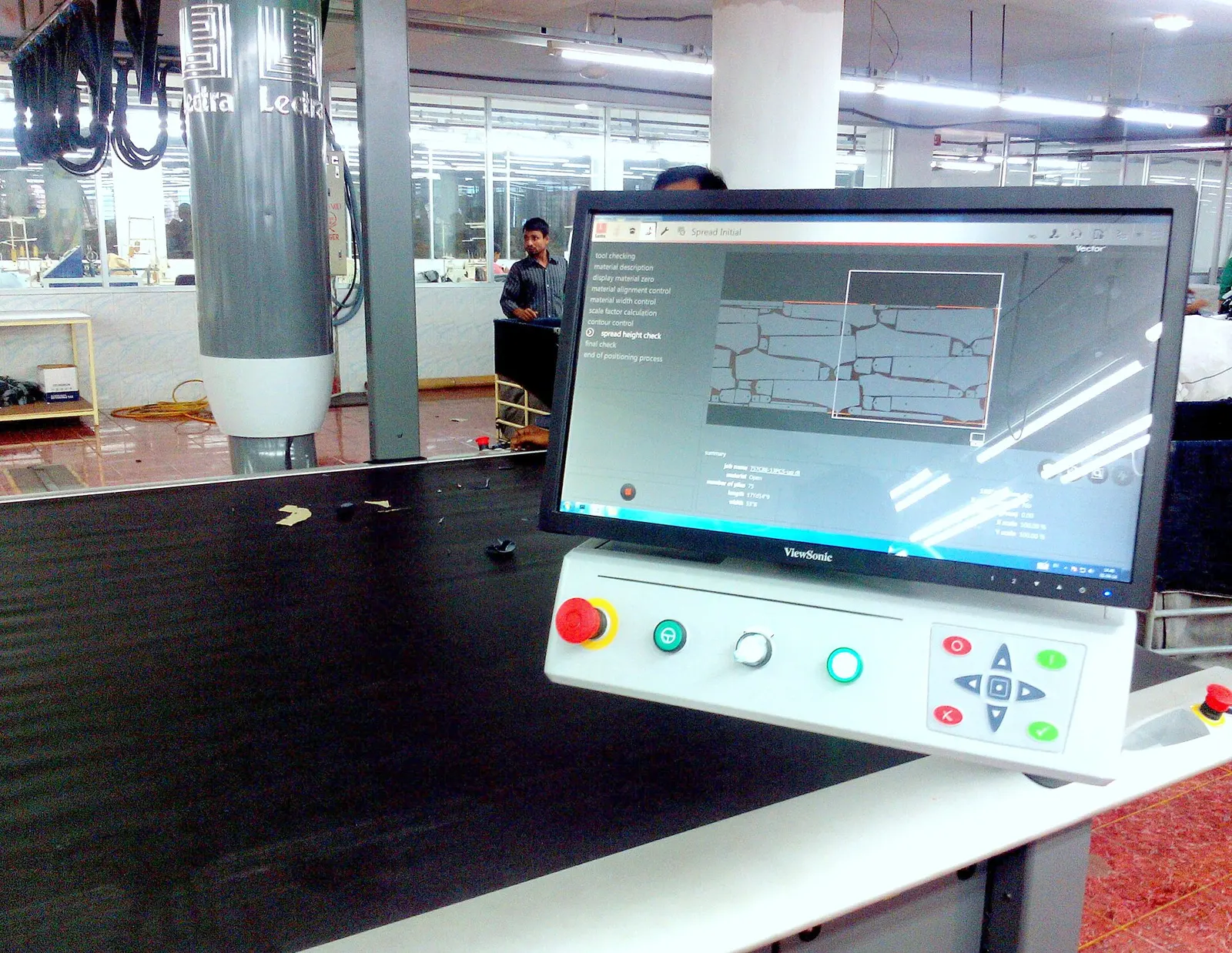
Full Width vs Cuttable Width on Thick Fleece (Why Fleece Loses 6–10 cm)
On lightweight 180 g/m² T-shirt jersey, selvedge trim and stenter pin holes usually take away only 3–5 cm of width. On 340–460 g/m² brushed fleece, edge loss is larger—typically 6 to 10 cm:
- Heavy Stenter Clamping & Pin Holes: Thick, wet loopback requires deeper pin-frame engagement in the stenter dryer to hold width and set shrinkage, leaving a wider perforated border on both edges.
- Unbrushed Selvedge Guard Margin: The wire napping rollers cannot brush right to the extreme selvedge without tearing the fabric edge, so the outer 2–3 cm on each side remains unbrushed and slightly thinner.
- এজ কার্লিং: High-weight single-knit loopback curls toward the face at the cut edges unless gummed and trimmed.
Open-Width vs Tubular Hoodie Fabric
While basic promotional T-shirts often use tubular jersey to skip side seams, over 90% of commercial retail hoodies use open-width fabric. A hoodie requires precise grainline alignment for the kangaroo pocket, center-front zipper and hood attachment. Slitting the fabric open after dyeing and finishing it flat through an open-width stenter and open-width compactor straightens the wale and course lines, preventing the kangaroo pocket from twisting sideways after washing.
Hoodie Fabric Consumption & Rib Ratio per 1,000 kg Order
Because hoodie orders require both body fabric and matching rib trim dyed in the same shade lot, you must split your total kilogram order between the two constructions. Here is a worked bulk order calculation for a 360 g/m² everyday retail hoodie cut on 185 cm full open width (178 cm cuttable width):
- Linear weight of body fabric: 360 g/m² × 1.85 m = 666 g per linear meter (0.666 kg/m).
- Average marker consumption per hoodie (S–XL size ratio, including double hood & kangaroo pocket + 3.5% shrinkage allowance): ~1.25 linear meters of body fabric per hoodie.
- Body fabric weight per hoodie: 1.25 m × 0.666 kg/m = 0.833 kg per hoodie (including cutting waste).
- Matching 440 g/m² 2×2 rib consumption (cuffs + waistband): ~0.135 kg per hoodie (~14% of total garment fabric weight).
- Total fabric needed per hoodie (Body + Rib): 0.833 kg + 0.135 kg = 0.968 kg per hoodie.
- What a 1,000 kg (1-ton) combined order produces: Split as 860 kg Body Fleece (360 GSM × 185 cm) + 140 kg Matching 2×2 Rib (440 GSM), yielding ~1,030 finished adult hoodies (or ~935 hoodies after a 10% roll-end and defect margin).
| Full open width | Typical usable cuttable width (−6 to −8 cm) | Weight per running meter (at 360 GSM) | Best hoodie & sweatshirt application | Cutting & marker notes |
|---|---|---|---|---|
| 165–170 cm | 158–163 cm | 594–612 g/m | Youth hoodies, fitted women’s crewnecks, raglan basics | Too narrow for adult drop-shoulder body + hood nesting |
| 175–180 cm | 168–173 cm | 630–648 g/m | Standard retail pullovers, crewnecks, classic zip hoodies | Fits standard S–XL chest widths comfortably |
| 185 cm | 177–179 cm | 666 g/m | Commercial sweet spot: modern relaxed hoodies & streetwear | Allows side-by-side body + hood/sleeve nesting across sizes |
| 190–195 cm | 182–187 cm | 684–702 g/m | Oversized boxy drop-shoulder hoodies, 2XL–4XL plus-size programs | Prevents column breaks on 65–72 cm half-chest panels; confirm machine diameter |
How to Choose Cotton Fabric for Different Hoodie & Sweatshirt Styles
সরাসরি উত্তর: match the garment silhouette and post-sewing wash route to a specific 3-end recipe. Boxy streetwear hoodies use 380–460 g/m² 100% cotton 3-end loopback or fleece (21s/16s face, 185–195 cm); everyday DTC pullovers use 320–360 g/m² combed 3-end fleece or CVC (32s face, 175–185 cm); garment-dyed hoodies must use 100% cotton 3-end French terry (340–420 g/m²); and zip-up hoodies require low-shrinkage (≤3%) 260–340 g/m² compacted terry or fleece so the zipper stays flat.
Boxy & Oversized Streetwear Hoodies
We recommend 100% cotton 3-end brushed fleece or heavy 3-end French terry at 380–460 g/m², knitted with a 21s or 16s combed cotton face + 21s/32s cotton binder + 10s or 8s cotton back at 185–195 cm open width. Pair with a 450–500 g/m² 2×2 cotton-spandex rib. The coarser 21s/16s face yarn delivers the dry, substantial vintage texture streetwear buyers expect, while the 185–195 cm width handles wide drop-shoulder patterns without wasting fabric. Specify open-width compacting with shrinkage ≤3.5%.
Everyday Retail Pullover & Crewneck Sweatshirts
We recommend 320–360 g/m² 3-end brushed fleece or French terry, knitted with a 32s combed ring-spun cotton face + 32s cotton (or 75D polyester in 80/20 CVC) binder + 10s cotton pile at 175–185 cm open width. Pair with a 400–440 g/m² 1×1 or 2×2 cotton-spandex rib. The 32s combed face provides an ultra-smooth, low-hairiness canvas for detailed screen printing and DTG graphics, while the 340 g/m² mid-heavy weight works across three seasons.
Vintage-Washed & Garment-Dyed Hoodies
We recommend 100% cotton 3-end French terry at 340–420 g/m², knitted in PFD (prepared-for-dyeing) quality with 26s or 21s combed cotton face + 32s cotton binder + 10s cotton loop at 180–190 cm open width. Because the sewn garment will be tumbled in hot dye baths, enzyme baths or acid-wash cycles, zero polyester is allowed in the binder yarn, and the greige fabric must be pre-relaxed so garment sizing remains predictable after the dye-house tumble dryer.
Zip-Up & Athleisure Hoodies
We recommend 260–340 g/m² combed 3-end French terry or 95/5 cotton-spandex French terry at 175–185 cm open width, compacted to a strict lengthwise shrinkage of ≤2.5–3.0%. Zip-up hoodies have a structural vulnerability: a metal or molded plastic zipper tape shrinks almost 0% in the wash. If the cotton hoodie body shrinks 5–6% lengthwise, the longer zipper is forced to buckle into an S-curve (“wavy zipper syndrome”). Pre-shrinking both the fabric and the zipper tape before sewing is essential.
Workwear, Teamwear & Corporate Uniform Hoodies
We recommend 300–350 g/m² 3-end CVC (60/40) or hidden-binder 80/20 fleece at 175–185 cm open width, with reactive dyeing for cotton and disperse dyeing for polyester. Prioritize Martindale pilling resistance ≥Grade 4 (ISO 12945-2), washing colorfastness ≥Grade 4 (ISO 105-C06), and low tumble-dry shrinkage so the uniform survives weekly laundering.
What Quality Problems Should Hoodie Fabric Buyers Check?
সরাসরি উত্তর: cotton hoodie fabric buyers must inspect six high-risk defects before bulk cutting: inner fleece shedding (linting onto undershirts), lengthwise wash shrinkage (wavy zippers), body-to-rib shade mismatch, surface pilling, post-brushing GSM drops, এবং spirality. Require lab test reports on the finished, brushed and compacted fabric—never on unbrushed greige.
Inner Fleece Shedding and Linting on Undershirts
Nothing triggers customer returns faster than a black brushed-fleece hoodie that covers the wearer’s white T-shirt in black fuzz. Inner shedding comes from three mill shortcuts: using a 2-end construction without a middle binder yarn to anchor the pile; spinning the 10s back pile yarn from short-staple waste cotton with insufficient twist; or brushing aggressively to fake a thicker hand-feel and skipping rotary shearing and air-tumbler dedusting. Specify 3-end construction with shearing and suction dedusting, and run a wet/dry adhesive tape rub test on the inside of the pre-production sample before approving bulk.
Shrinkage After Washing (And the “Wavy Zipper” Problem)
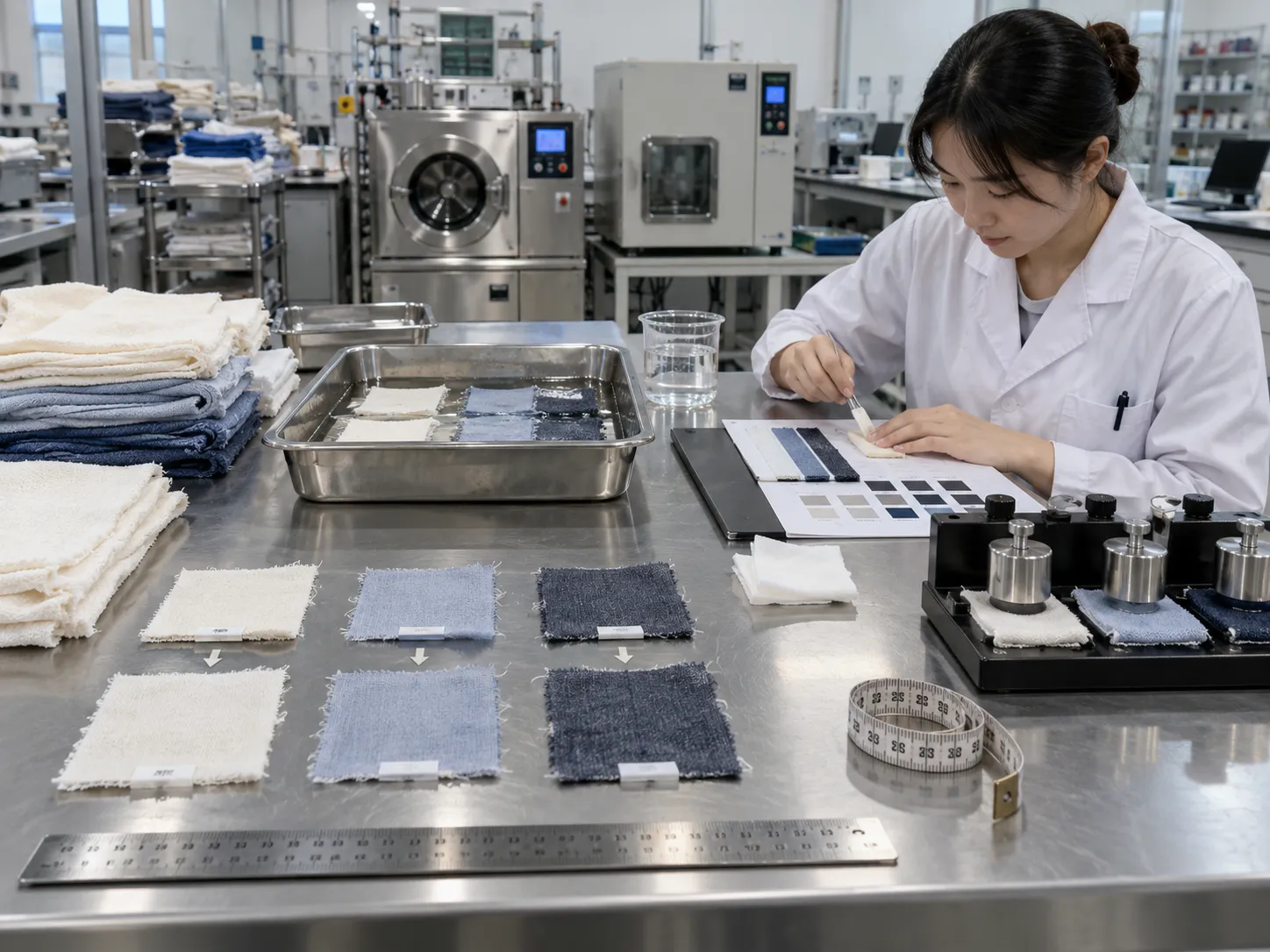
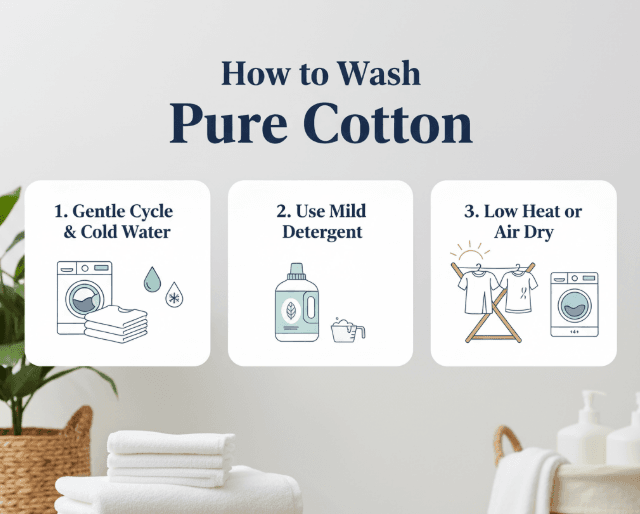
During mechanical brushing, the napping rollers pull the fabric under high lengthwise tension, stretching the knit loops vertically. If the mill rolls the fabric right off the stenter without running it through an open-width compressive shrinking machine (compactor), that stored lengthwise tension snaps back during the customer’s first home wash—causing 6% to 9% length shrinkage. Specify AATCC 135 সম্পর্কে অথবা আইএসও 6330 shrinkage ≤3.5% (or ≤3.0% for zip hoodies) after three washes. For end-user care recommendations, see our pure cotton washing and care guide.
Shade Difference Between Body Fleece and Rib Trim
Even when dyed in the same factory, a 360 g/m² 80/20 CVC body fleece এবং একটি 440 g/m² 95/5 cotton-spandex 2×2 rib contain different fiber ratios and surface textures. If dyed in separate batches without recipe adjustment, the cuffs and waistband will look noticeably greener, redder or darker than the sleeves under retail store LED lighting (metamerism). Require the body fabric and matching rib to be dyed in the same dye vat (for 100% cotton body + cotton/spandex rib) or color-matched side by side under D65 and TL84 light boxes with a spectrophotometer tolerance of ΔE ≤ 1.0 before shipping.
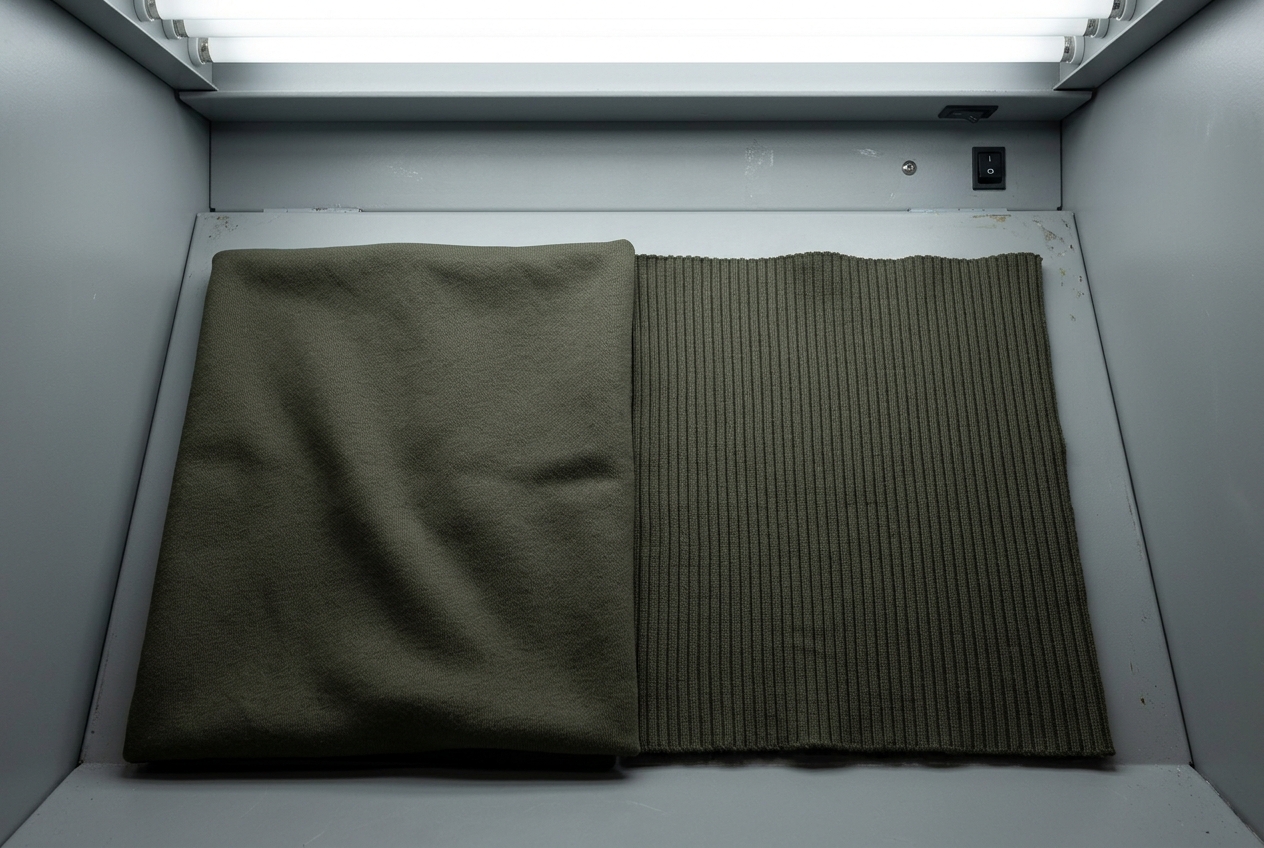
Surface Pilling and Abrasion
Heavy hoodies experience constant friction under the arms and along the lower torso. Test the outer jersey face using ISO 12945-2 (Martindale) or ASTM D4970 for 2,000 cycles, requiring Grade ≥3.5 or ≥4. Using 32s or 21s combed ring-spun yarn on the face combined with cellulase enzyme bio-polishing removes the fuzzy surface hairs that tangle into pills.
Brushing Weight Loss and Finished GSM Variation
Because napping and shearing strip away 5–8% of the fabric’s mass, measure GSM using এএসটিএম ডি৩৭৭৬ / আইএসও ৩৮০১ on a conditioned, relaxed cut taken at least 3 meters inside the finished roll—never from the stretched roll end. Set a PO tolerance of ±5% on finished GSM.
| মানের সমস্যা | Root cause in production | Standard test method | Recommended PO pass limit |
|---|---|---|---|
| Inner fleece shedding / linting | 2-end knit, short-staple pile yarn, over-brushing without shearing & dedusting | Adhesive tape / domestic wash transfer test with contrasting undershirt | Minimal loose fiber transfer after 1 wash; 3-end sheared construction mandatory |
| Lengthwise shrinkage & wavy zippers | High lengthwise tension during brushing not relaxed by open-width compacting | AATCC 135 / ISO 6330 (3 home washes) | ≤3.5% length & width (≤3.0% length for zip-up hoodies) |
| Body-to-rib shade mismatch | Different fiber uptake (CVC body vs cotton-spandex rib) or separate dye lots | D65 & TL84 light box visual check + Spectrophotometer (CMC 2:1) | ΔE ≤ 1.0 between body roll and matching rib roll; Grade ≥4–5 gray scale |
| Outer surface pilling | Carded/open-end face yarn, loose stitch density, skipped bio-polishing | ISO 12945-2 (Martindale 2,000 rubs) / ASTM D4970 | Grade ≥3.5–4.0 before and after washing |
| Spirality (side-seam torque) | Unbalanced yarn twist, circular machine feed skew, uneven stenter framing | AATCC 179 / ISO 16322-2 | ≤3.0%–4.0% on open-width compacted fleece/terry |
| Colorfastness to washing & rubbing | Unfixed reactive dye on dark shades (black, navy, burgundy) | ISO 105-C06 / AATCC 61 (wash); ISO 105-X12 / AATCC 8 (crocking) | ধোয়া ≥Grade 4; Dry rubbing ≥Grade 4; Wet rubbing ≥Grade 3–3.5 |
For detailed laboratory procedures, see তুলার মান পরীক্ষা এবং রঙ স্থায়িত্ব পরীক্ষার মানদণ্ড.
How Do Dyeing, Brushing and Finishing Affect Hoodie Fabric Quality?
সরাসরি উত্তর: finishing turns raw circular-knitted loopback into a stable, plush sweatshirt fabric. The sequence—enzyme bio-polishing, reactive dyeing, multi-pass mechanical brushing, rotary shearing, hydrophilic softening and open-width compacting—controls hand-feel, inner lint shedding, shrinkage and print ink adhesion. Specify the finishing route on the PO alongside the knit construction.
Mechanical Brushing (Napping), Shearing and Dedusting
High-grade 3-end fleece is never brushed in a single heavy pass. Dragging the loops across the wire rollers all at once snaps the yarn and creates bald spots. Instead, our finishing line runs 3 to 5 light, progressive brushing passes, gradually teasing out a dense, even micro-nap, followed by rotary shearing (which levels the pile height) and high-suction air tumbling to clear out loose lint. If you want a vintage “loop-and-nap” texture, you can also specify lightly brushed French terry (1–2 light passes).
Enzyme Bio-Polishing and Softener Selection for Print Programs
Before or during dyeing, a cellulase enzyme wash (bio-polishing) singes off microscopic cotton fuzz from the outer face yarn, keeping the jersey surface crisp and pill-free after dozens of washes. When choosing the final chemical softener, coordinate with your garment printer: heavy hydrophobic amino-silicone acts like a non-stick coating on the face yarn and can cause water-based DTG pre-treatment or plastisol inks to peel after washing. For print-heavy hoodie programs, specify hydrophilic silicone or mild enzyme softening.
Open-Width Slitting and Compressive Compacting
After dyeing and drying, the tubular roll is slit open along a drop-stitch guide line, optically straightened so the courses run perpendicular to the selvedge, and fed through a felt-belt or shoe open-width compactor. According to technical guidelines on knit shrinkage control from কটন ইনকর্পোরেটেড, mechanical compacting compresses the stretched loops lengthwise so residual wash shrinkage stays stable without formaldehyde resins.
For a comparison of reactive, vat and pigment dye performance on cotton, see সুতি কাপড় ডাইং পদ্ধতি.
How to Specify Cotton Hoodie Fabric for Bulk Production (6-Step Guide & PO Template)
সরাসরি উত্তর: specify cotton hoodie fabric in six steps: define the silhouette and wash/print route, lock the 3-end yarn recipe and gauge, set finished post-brushed GSM and cuttable width, pair the matching rib GSM and weight ratio (12–15%), set shrinkage/shedding/colorfastness test limits, and approve matched body-and-rib bulk samples. Put both the body fabric and the rib trim on the same purchase order.
Step 1 — Define the Hoodie Silhouette, Season and Post-Sewing Route
Document whether the style is a spring pullover, an everyday retail crewneck, a zip-up hoodie, or a 440 g/m² boxy streetwear drop, and note whether it will be screen-printed, DTG-printed, embroidered or garment-dyed. Add required certifications (OEKO-TEX স্ট্যান্ডার্ড 100 অথবা GOTS সম্পর্কে) upfront.
Step 2 — Lock the Knit Construction and Multi-Yarn Recipe
উল্লেখ করুন 2-end French terry, 3-end French terry, or 3-end brushed fleece, and write out all three yarn feeds plus the machine gauge—for example: 32s combed ring-spun cotton face + 32s cotton binder + 10s cotton pile, 20G.
Step 3 — Confirm Finished GSM and Usable Cuttable Width
State the finished GSM (±5%) measured after brushing, shearing and compacting, alongside both the full open width এবং minimum usable cuttable width (for example: 185 cm full open width / 178 cm min cuttable width).
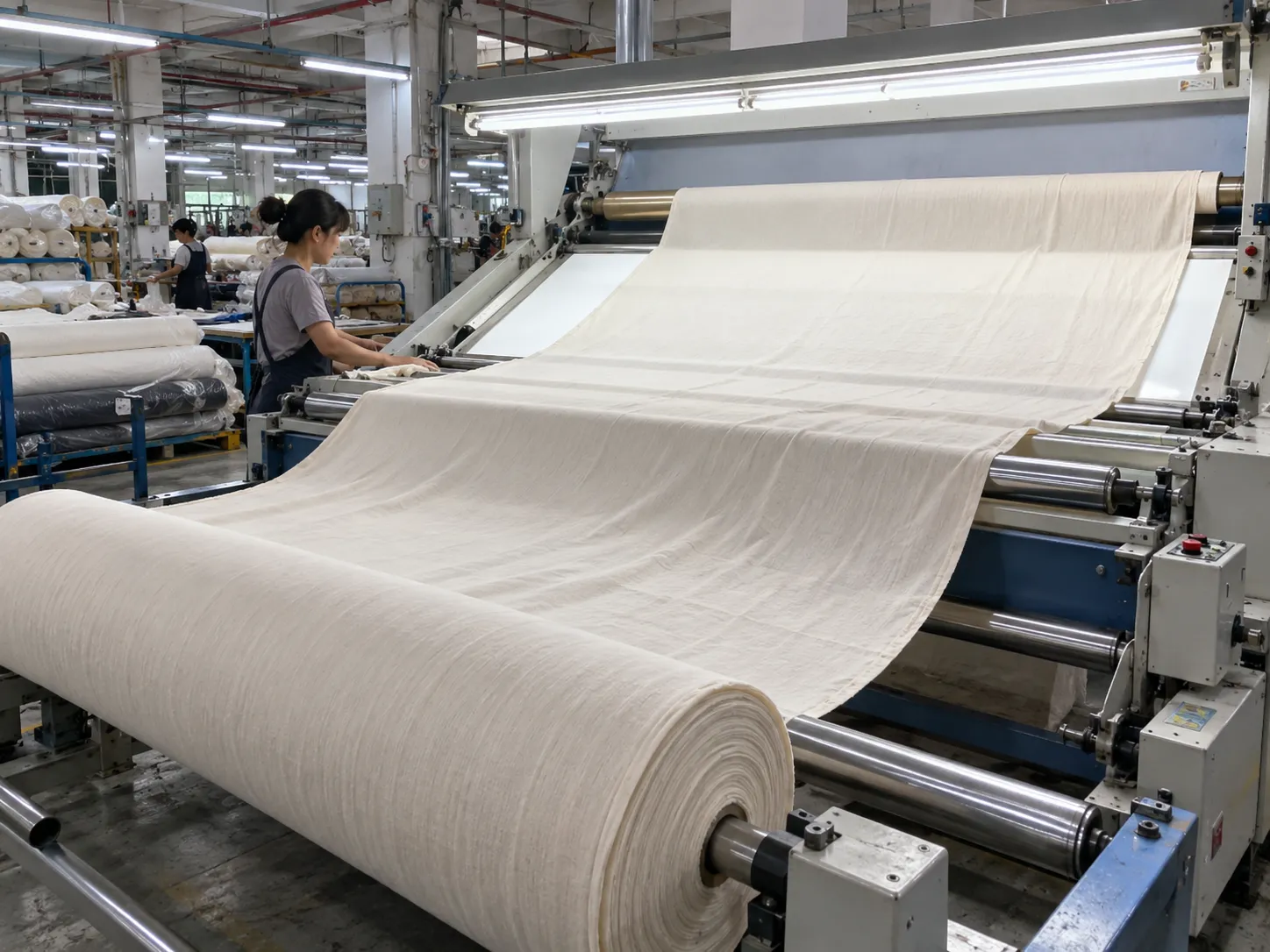
Step 4 — Specify Matching Rib Trim (Construction, GSM & Weight Ratio)
Add the cuff and waistband rib directly below the body fabric on the same spec sheet: for example, 440 g/m² 2×2 rib, 95% combed cotton / 5% spandex, shade-lot matched to body fabric under D65 (ΔE ≤ 1.0), ordered at 14–15% of body fabric weight.
Step 5 — Set Shrinkage, Shedding, Pilling and Colorfastness Limits
Write the exact test standards on the PO: shrinkage ≤3.5% L×W (AATCC 135, 3 washes), spirality ≤3.5% (AATCC 179), Martindale pilling ≥Grade 3.5–4 (ISO 12945-2), wash fastness ≥Grade 4 (ISO 105-C06), and sheared/dedusted low-shed inner pile.
Step 6 — Approve Matched Lab Dips, Counter Samples and Inspection Terms
Approve the body fabric and 2×2 rib lab dips together on one continuity card, test a 5–10 kg pre-production sample roll on your actual hoodie pattern and print line, and confirm the 4-point inspection standard, roll weight (typically 22–28 kg/roll) and packing.
| Specification field | Part A: Hoodie Body Fabric (PO Example) | Part B: Matching Cuff & Hem Rib (PO Example) |
|---|---|---|
| নিট কনস্ট্রাকশন | 3-End Brushed Fleece (or 3-End French Terry) | 2×2 Rib Knit (Tubular or Open Width) |
| ফাইবার গঠন | 100% Cotton (or 80% Combed Cotton Face & Pile / 20% Polyester Binder) | 95% Combed Cotton / 5% Spandex (Elastane) |
| Yarn count & gauge | 32s Combed Ring-Spun Face + 32s Binder + 10s Pile · 20G | 32s/1 × 2 Combed Cotton + 40D Spandex · 14G/16G |
| Finished weight (GSM) | 360 g/m² ±5% (relaxed, after brushing, shearing & compacting) | 440 g/m² ±5% (relaxed, finished) |
| ফিনিশড প্রস্থ | 185 cm full open width / 178 cm min cuttable width (−0/+3 cm) | 125–135 cm usable open width (or 60–65 cm×2 tubular) |
| Finishing route | Bio-polished face, 4-pass brushed, sheared, tumble-dedusted, hydrophilic soft, open-width compacted | Bio-polished, heat-set, compacted, matched hand-feel |
| ধোয়ার সংকোচন | ≤3.5% length × ≤3.5% width (AATCC 135, 3 home washes) | ≤4.0% length × ≤4.0% width with ≥92% elastic recovery |
| Spirality & pilling | Spirality ≤3.5% (AATCC 179); Pilling ≥Grade 3.5–4 (ISO 12945-2) | Pilling ≥Grade 3.5–4 (ISO 12945-2) |
| Colorfastness & shade | Wash ≥4 (ISO 105-C06); Dry rub ≥4, Wet rub ≥3–3.5 (ISO 105-X12) | Shade-lot matched to Part A under D65 & TL84 (ΔE ≤ 1.0) |
| Certification | OEKO-TEX Standard 100 Class II | OEKO-TEX Standard 100 Class II |
| Order quantity split | 860 kg (~1,290 linear meters; ~35 rolls at ~25 kg/roll) | 140 kg (~14% of total 1,000 kg order, dyed per Part A shade lot) |
This is an engineering RFQ template for buyer reference, not a fixed stock sheet. Final shrinkage, brushing loft and body-to-rib shade matching must be verified on a physical production sample.
For our full supplier vetting and QC workflow, see the সুতি কাপড়ের সোর্সিং গাইড or browse our সুতির কাপড়ের পাইকারি রেঞ্জ দেখুন।.
How to Choose a Reliable Cotton Hoodie Fabric Supplier
সরাসরি উত্তর: evaluate a cotton hoodie fabric supplier on four production capabilities: multi-feed 16G–22G circular knitting machines, controlled multi-pass brushing and shearing lines, simultaneous body-and-rib shade matching, এবং open-width post-brushed compacting. A mill that knits loopback well but subcontracts brushing and rib dyeing without QC will struggle with lint shedding, shrinkage and cuff color mismatch.
Check 3-End Circular Knitting, Brushing and Shearing Capabilities
Ask which cylinder diameters (typically 30″, 34″ and 38″ for wide open-width fleece) and gauges (16G, 18G, 20G, 22G) the mill runs, and inspect their napping room. A reliable fleece mill controls the number of brushing passes, sharpens its rotary shearing blades on schedule, and runs suction/tumble dedusting so the inner nap is lofty but clean.
Verify Simultaneous Body Fabric and 2×2 Rib Dyeing
Never buy body fleece from one supplier and cuff rib from a market stockist if color consistency matters. Confirm that your supplier knits and dyes the matching 1×1 or 2×2 cotton-spandex rib alongside your body rolls, and ask to see D65 light-box continuity cards showing body-to-rib swatches side by side for every dye lot.
Request Post-Brushed, Compacted Samples and Lab Reports
Insist on testing a finished sample taken after the full brushing, shearing and compacting sequence. Check that the lab report states the exact test standards (ASTM D3776 for weight, ASTM D3774 for width, AATCC 135 for shrinkage, ISO 12945-2 for pilling) and that the usable width inside the stenter pin holes meets your cutting table’s marker width.
Cotton Hoodie & Sweatshirt Fabric Supplier Evaluation Checklist
- ☐ 3-end knitting capability confirmed across 16G–22G with wide cylinder diameters for 180–195 cm open width.
- ☐ Full 3-yarn recipe disclosed (face yarn count & combing grade, binder yarn fiber/count, loop/pile yarn count).
- ☐ Controlled brushing, rotary shearing and dedusting route verified on brushed fleece qualities.
- ☐ In-house or co-dyed matching 1×1 and 2×2 cotton-spandex rib (380–500 g/m²) with ΔE ≤ 1.0 under D65 light.
- ☐ Open-width compacting after brushing confirmed, with AATCC 135 / ISO 6330 shrinkage test reports (≤3.5%).
- ☐ Both full open width and minimum cuttable width (inside pin holes/unbrushed edges) guaranteed in writing.
- ☐ Print-compatible softener route (hydrophilic or enzyme finish) available for DTG and screen-printed programs.
- ☐ MOQ per color, body-to-rib ratio (e.g. 86:14), roll weight and 4-point inspection standard written into the PO.
Request Cotton Hoodie Fabric Samples and Bulk Pricing
Send us your hoodie or sweatshirt style brief, target GSM, knit construction (French terry or 3-end brushed fleece), yarn count preference, finished width, quantity and matching rib requirements. We will recommend the exact 3-end construction, ship a physical production sample with matching rib, and quote bulk pricing against your approved specification.
- Available Sweatshirt & Hoodie Knits: 2-end & 3-end French terry (loopback), 3-end brushed fleece, lightly brushed vintage terry, heavy double-knit interlock, and matching 1×1 / 2×2 cotton-spandex rib.
- Custom GSM, Yarn Count & Wide Open Widths: 240–500 g/m², 32s+32s+10s to 16s+21s+8s, 165–195 cm finished open width (with guaranteed cuttable width).
- Fiber Compositions: 100% combed/carded cotton (piece-dyed or PFD for garment dyeing), 80/20 hidden-binder CVC, 60/40 CVC, 65/35 TC, and 95/5 cotton-spandex.
- Sample & Bulk Lead Times: Free quality swatch samples ship in 3–5 days; bulk production is typically 20–30 days after lab-dip and sample approval.
Ready to match a cotton French terry or 3-end fleece to your hoodie program? Send your tech pack or target GSM and width. We will send a finished sample with measured GSM, cuttable width, shrinkage data and matching 2×2 rib swatch for your approval.
কটন ফ্যাব্রিক পাইকারি · মূল্য উল্লেখের অনুরোধ করুন · ক্রেতারা কেন আমাদের কাছ থেকে অর্ডার করেন
Frequently Asked Questions About Cotton Hoodie & Sweatshirt Fabric
What is the best GSM for a cotton hoodie?
300–360 g/m² is the best all-round GSM for everyday retail hoodies and crewnecks, offering a balanced drape, durable warmth and a finished garment weight around 600–680 g. Use 240–280 g/m² French terry for lightweight spring hoodies, and 380–460+ g/m² 3-end fleece or loopback for heavyweight, boxy streetwear hoodies with self-supporting hoods.
Is French terry or brushed fleece better for hoodies?
Neither is universally better; choose by season and silhouette. French terry has uncut interior loops, breathes better, never sheds inner lint, and holds a cleaner, more structured drape—making it ideal for year-round wear and garment-dyed streetwear. 3-end brushed fleece has a mechanically napped interior pile that traps air, making it 30–50% loftier and much warmer for autumn and winter collections at the same GSM.
What is the difference between 2-end and 3-end hoodie fleece?
2-end knit uses only a face yarn and a back loop yarn; if brushed into fleece, the wire rollers damage the structural loops, causing heavy inner lint shedding and poor dimensional stability. 3-end fleece adds a middle binder (tie-in) yarn that locks the pile yarn securely and separates it from the smooth front face. Always specify 3-end construction for brushed fleece hoodies.
What yarn count is used for 350–400 GSM hoodie fabric?
Unlike T-shirt jersey, hoodie fabric combines three yarn counts (Face + Binder + Loop/Pile). For 320–360 g/m² hoodies, the standard mill recipe is 32s combed cotton face + 32s cotton (or 75D polyester) binder + 10s cotton pile on a 20G machine. For 380–440 g/m² heavyweight streetwear hoodies, mills typically use 21s or 16s combed cotton face + 21s/32s binder + 10s or 8s cotton back on a 16G–18G machine.
What fabric width is best for oversized hoodies?
185–195 cm finished open width (providing 177–187 cm usable cuttable width after removing stenter pin holes and unbrushed edges) is best for oversized and drop-shoulder hoodies. Because hoodie patterns include wide body panels plus four hood panels, long sleeves and a kangaroo pocket, 185–195 cm rolls eliminate column breaks and save 10–16% in fabric consumption compared with 160 cm rolls.
How many hoodies can 1,000 kg of 360 GSM fabric make?
At 360 g/m² and 185 cm open width, one linear meter of body fabric weighs 666 grams, yielding about 1,501 linear meters per 1,000 kg. In a realistic production order split into 860 kg body fabric (360 GSM) + 140 kg matching 2×2 rib (440 GSM), 1,000 kg total fabric produces roughly 930 to 1,030 adult hoodies depending on size grading and cutting waste.
What GSM rib knit should match a 350 GSM hoodie?
Pair a 340–360 g/m² hoodie body with a 400–450 g/m² 1×1 or 2×2 rib knit made from 95% combed cotton / 5% spandex (about 1.2× the body GSM). Allocate 12% to 15% of your total order weight to matching rib, and require the mill to dye the rib and body fabric to the same shade lot (ΔE ≤ 1.0 under D65 light).
Is 100% cotton or 80/20 cotton-polyester better for hoodies?
Choose 100% cotton if the hoodie will be garment-dyed, pigment-washed, acid-washed, or marketed as a pure-cotton luxury loopback piece. Choose 80/20 CVC 3-end fleece (with 100% cotton on the face and pile, and 20% polyester hidden in the middle binder yarn) for piece-dyed retail hoodies when you want a pure-cotton print surface with lower shrinkage (≤3%) and reduced inner lint shedding.
Why does my hoodie fleece shed fuzz onto T-shirts?
Inner fleece shedding happens when a factory uses a 2-end knit without a binder yarn, spins the back pile from short-staple waste fibers, or skips rotary shearing and suction/tumble dedusting after brushing. Specify 3-end combed-face fleece with shearing and tumble dedusting on your PO to stop inner linting.
Why do zip-up hoodie zippers wave or buckle after washing?
A wavy zipper occurs when the cotton hoodie body shrinks 5–7% lengthwise in the wash while the synthetic zipper tape shrinks near 0%. To prevent it, specify open-width compacted fabric with lengthwise shrinkage ≤2.5–3.0% (AATCC 135) and pre-shrink the zipper tape before sewing.
এখনও কনস্ট্রাকশন তুলনা করছেন? Send us the style, target GSM, quantity and cotton hoodie fabric requirements. We will recommend a knit, 3-end yarn recipe and width, then send a finished sample with measured GSM, cuttable width, shrinkage and matching 2×2 rib for your approval.
Specification ranges in this guide are B2B sourcing references, not stock guarantees. Final composition, multi-yarn counts, finished GSM, usable cuttable width, shrinkage, pilling and body-to-rib shade matching must be confirmed by a production sample and test report for the specific construction and finishing route.