I am the founder of China fabric supply chain, with 20 years of fabric manufacturing experience. Our mill holds ISO 9001, OEKO-TEX Standard 100, and GOTS certifications, and we were awarded China Best Fabric Manufacturer Award for quality and reliability.
Explore regional denim characteristics from China, USA, Japan, Turkey and Italy. Our Denim Origin Guide compares quality, style & sourcing implications.
Denim Origin Guide: Why Where Your Denim Comes From Matters
You’ve heard it used for wine, perhaps for coffee – the concept of terroir, the idea that the unique environment where something is grown or made imparts distinct characteristics. Does denim have terroir? Absolutely.
Pictures Of Denim Production Areas
As a textile professional who has sourced and developed denim from mills across the globe, I can assure you that the place where your denim fabric originates – its history, its technological landscape, its cultural approach to craftsmanship – profoundly shapes its final character. Understanding these regional denim characteristics is key to making informed sourcing decisions that align perfectly with your brand’s identity and product goals.
This guide is designed as an expert tour, exploring the nuanced differences in denim produced in the world’s key manufacturing hubs. We’ll move beyond simple country labels to understand the why behind the quality, aesthetic, and performance variations. This isn’t just about geography; it’s about leveraging global expertise to build a better product.
Comparative Summary: Key Regional Strengths at a Glance
Before we dive deep into each region, here’s a quick overview of their primary strengths and market positions. This table serves as a high-level map for navigating the global denim landscape.
Region
Primary Strength
Known For
Target Market
USA
Heritage & Durability
Classic Workwear Feel, Made-in-USA Legacy
Heritage, Mid-to-Premium
China
Scale & Cost
Mass Production, Price Competitiveness, Versatility
USA: The Birthplace of Blue Jeans – Heritage and Durability
No discussion of denim can begin anywhere else. The United States is where the blue jean was born and transformed from rugged workwear into a global cultural icon.
Brief History/Introduction
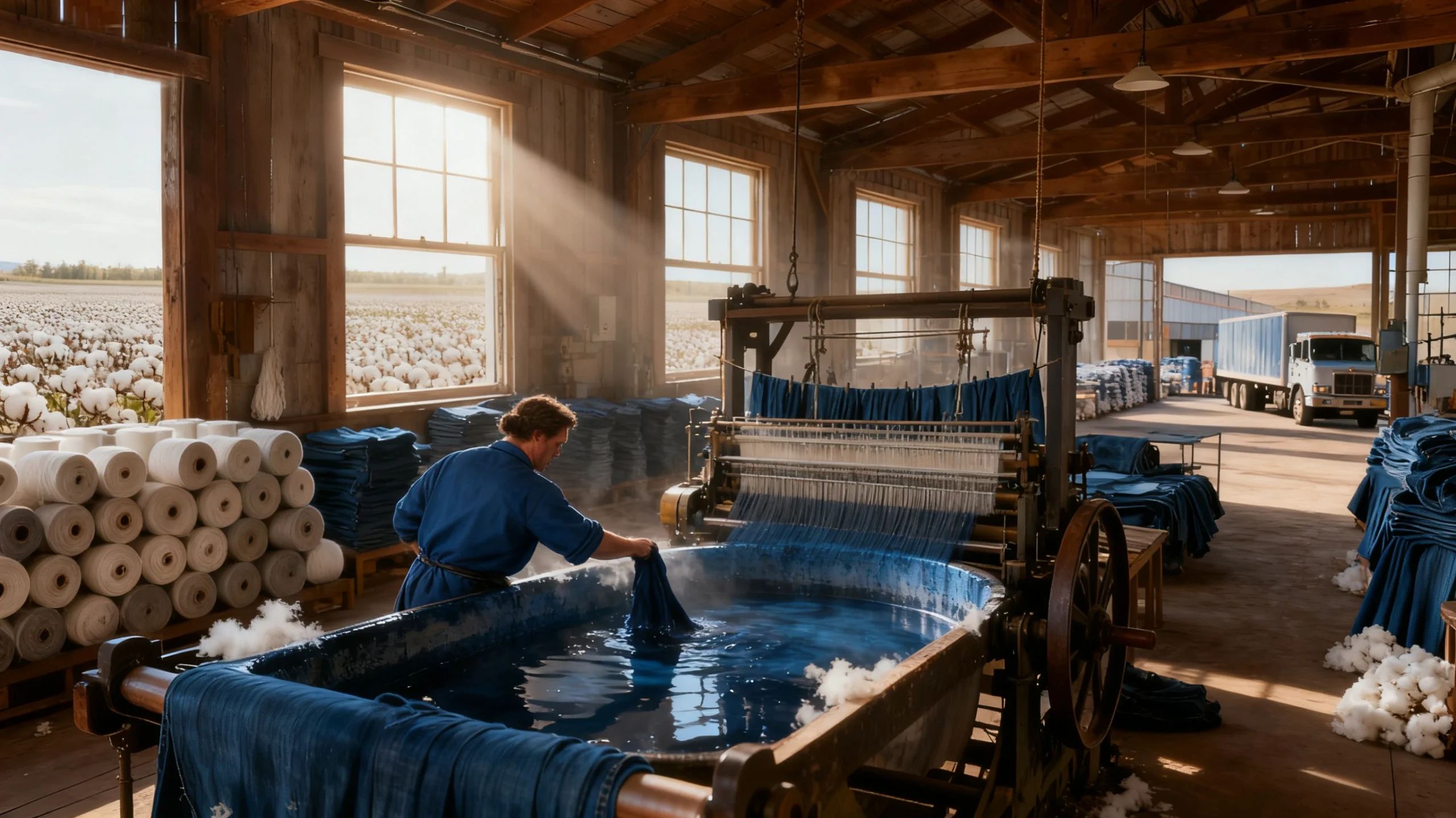
Bavarian Immigrant Levi Strauss Partners With Tailor Jacob Davis In San Francisco During The Gold Rush, Reinforcing Sturdy Cotton Work Pants With Copper Rivets.
The story is legendary: Bavarian immigrant Levi Strauss partners with tailor Jacob Davis in San Francisco during the Gold Rush, reinforcing sturdy cotton work pants with copper rivets. The fabric they used, initially sourced from mills like Amoskeag Manufacturing Company, and later iconically from Cone Mills’ White Oak plant in North Carolina, defined the standard for American denim. Cone Mills denim history is intertwined with the rise of American workwear and youth culture. You can explore artifacts from this era via resources like the Smithsonian National Museum of American History’s collection. While the legendary White Oak plant closed in 2017, its legacy profoundly influences the perception and production of American denim today.
Factory Advantages
American mills, particularly those with a heritage lineage, possess deep expertise in producing consistent, durable, mid-weight denim. There’s a strong focus on replicating the authentic feel and performance characteristics of classic American workwear fabrics. Quality control and adherence to standards are typically robust.
Core Production Areas
Historically centered in the Southeast (North Carolina, Georgia), denim production in the US is now more geographically dispersed, though smaller craft mills often maintain ties to these traditional regions. California also remains a significant hub, particularly for washing and finishing due to its historical link to surf and skate culture.
Style Positioning
American denim is synonymous with authenticity, durability, and a classic, often rugged aesthetic. Think timeless five-pocket jeans, sturdy trucker jackets, and garments built to last. The focus is less on ephemeral fashion trends and more on enduring quality and character.
Price Range
Made in USA denim carries a premium due to higher labor costs and its heritage Appeal.
Basic vintage styles (regular long-staple cotton, traditional vat dyeing, standard woven): $11-16.85/meter Representative: Non-collaborative Cone Mills basic collection, suitable for mid-range vintage brands.
High-end, rare styles (Pima long-staple cotton, woven on vintage looms, vintage ring-dyed effect): $16.85-28/meter Representative: Levi’s Vintage Clothing collaboration fabrics, popular styles in the “Cattle Farming” circle.
Note: Delivery time is generally 45-60 days, and the minimum order quantity is often 500 meters or more.
Representative Brands (Examples)
Heritage lines from Levi’s and Wrangler, numerous niche brands focusing on Made in USA production (e.g., Raleigh Denim Workshop, Tellason), and suppliers to workwear labels.
Ideal Users/Brands
Brands focused on heritage narratives, workwear aesthetics, “Made in USA” marketing angles, or those seeking reliably durable, classic mid-weight denim for core programs.
Factory Insight : The Feel of American Mid-Weight
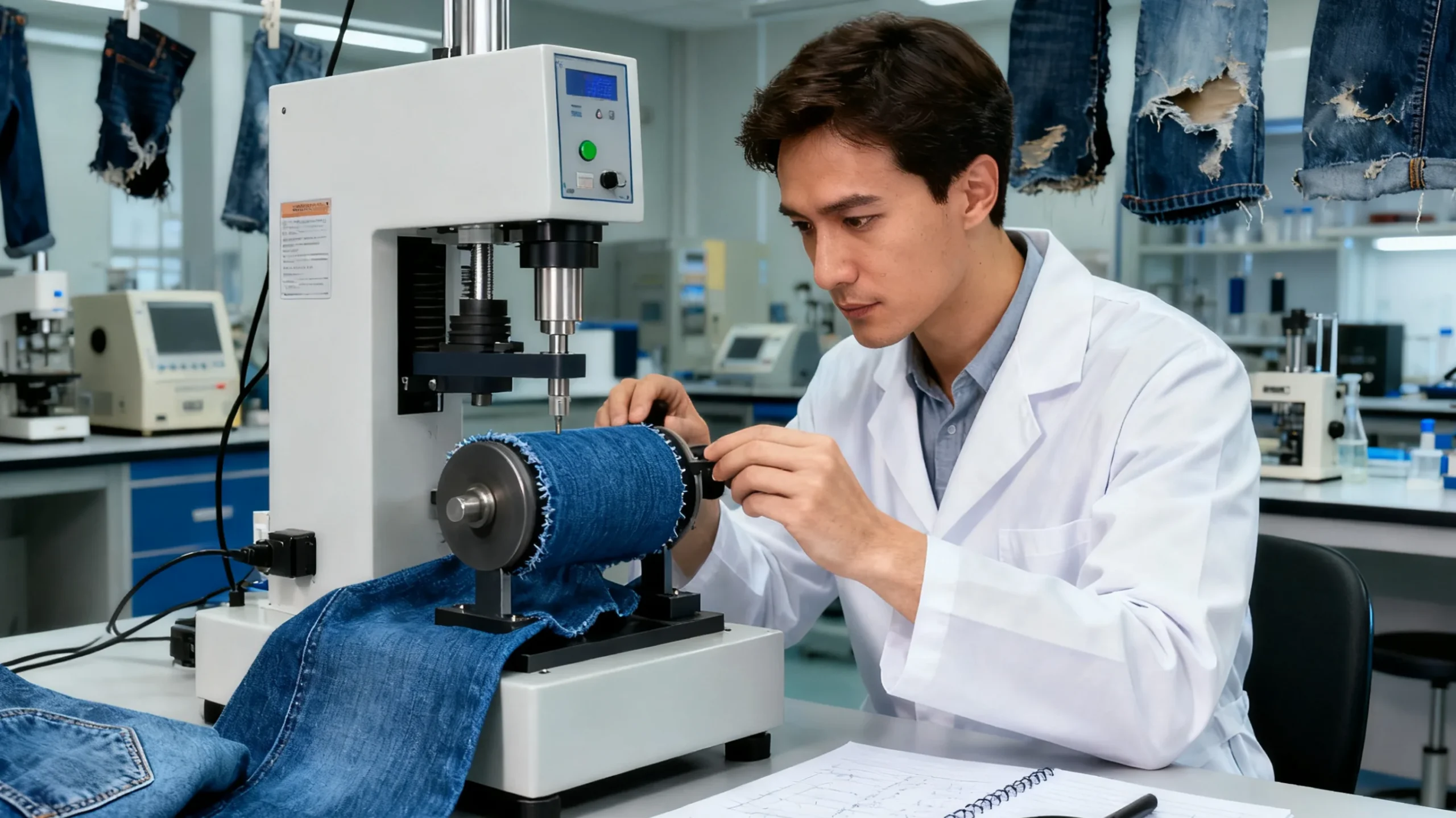
Our Internal Experimenters Are Testing The Potential Of Traditional Denim
In our development lab, when clients ask for that classic American jean feel, they’re usually referring to a 12.5oz to 14.5oz, 100% cotton, 3×1 right-hand twill. It has a certain solid, dependable hand-feel – not overly soft, not board-stiff. Getting the construction just right to achieve that balance is key.
We often run trials adjusting loom tension and yarn twist slightly, because even small changes can impact that characteristic break-in potential that defines heritage American denim. Understanding the nuances of our raw-to-washed denim process is vital here.
China: The Engine of Global Scale and Efficiency
China’s role in the global denim market is undeniable, primarily characterized by its immense scale and manufacturing prowess.
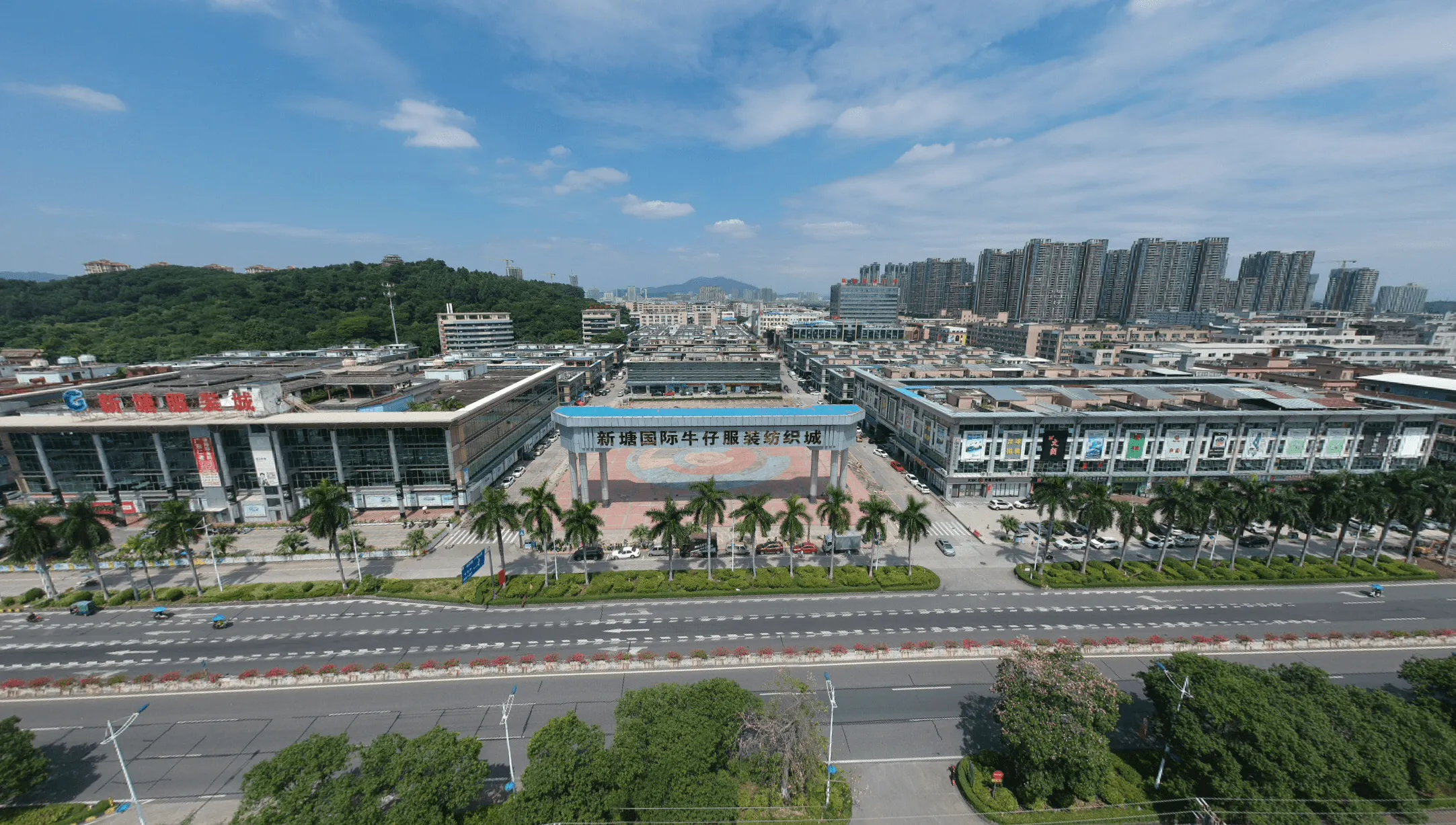
Denim Production Base In Xintang, Guangzhou, China
Brief History/Introduction
China’s denim industry experienced exponential growth starting in the late 20th century, rapidly becoming the world’s largest producer. This growth was fueled by massive investments in infrastructure, technology, and workforce development, creating sprawling textile manufacturing zones.
Factory Advantages
The primary advantage lies in unmatched production scale and capacity. Many Chinese denim manufacturers offer complete vertical integration, from spinning and dyeing to weaving, finishing, and even garment manufacturing. This creates significant efficiencies and cost advantages. Furthermore, the sheer number of mills fosters intense competition, driving innovation in cost-effective production methods.
Core Production Areas
Major hubs include Guangdong province (particularly Xintang, often called the “Denim Capital of the World,” though undergoing significant environmental restructuring), Shandong, and Jiangsu provinces. These regions boast vast clusters of mills and supporting industries.
Style Positioning
Highly versatile. Chinese mills are capable of producing the full spectrum of denim types, weights, and finishes, effectively replicating styles and qualities found elsewhere. They are incredibly adept at quickly responding to global mass-market trends. While sometimes perceived as lower quality, many top-tier Chinese mills produce exceptional, premium denim for international luxury brands.
Price Range
Ranges from highly competitive, depending on the mill’s quality level, certifications, and the complexity of the fabric. Offers the most accessible price points for large-volume orders.
Basic mass-production styles (cotton-polyester/pure cotton, standard dyeing and finishing, no special processing): $2.81-7.02/meter Representative: Fabrics in stock from the Xintang production area in Guangdong, suitable for fast fashion basics.
Mid-to-high-end replica styles (imitation imported craftsmanship, combed cotton, selvedge/slub designs): $7.02-14.04/meter Representative: Brand-produced fabrics such as narrow-width fabrics, replicating American and Japanese vintage styles.
Top-tier functional styles (eco-friendly dyeing and finishing, recycled fibers, technical stretch): $14.04-21.06/meter Representative: Functional fabrics with cooling/warmth technologies, with a lead time of as short as 7-15 days.
Representative Brands (Examples)
China is the primary sourcing hub for countless global mass-market retailers, fast-fashion giants (like Shein, Temu, Primark), and large department store private labels. Many well-known Western brands also utilize Chinese mills for parts of their production.
Ideal Users/Brands
High-volume retailers, brands competing primarily on price, private label programs, and companies needing a wide variety of denim styles produced efficiently and affordably.
Turkey: The Hub of Volume, Speed, and Sustainable Innovation
Turkey has strategically positioned itself as a major force in the denim world, particularly for the European and American markets, balancing volume with quality and a strong focus on sustainability.
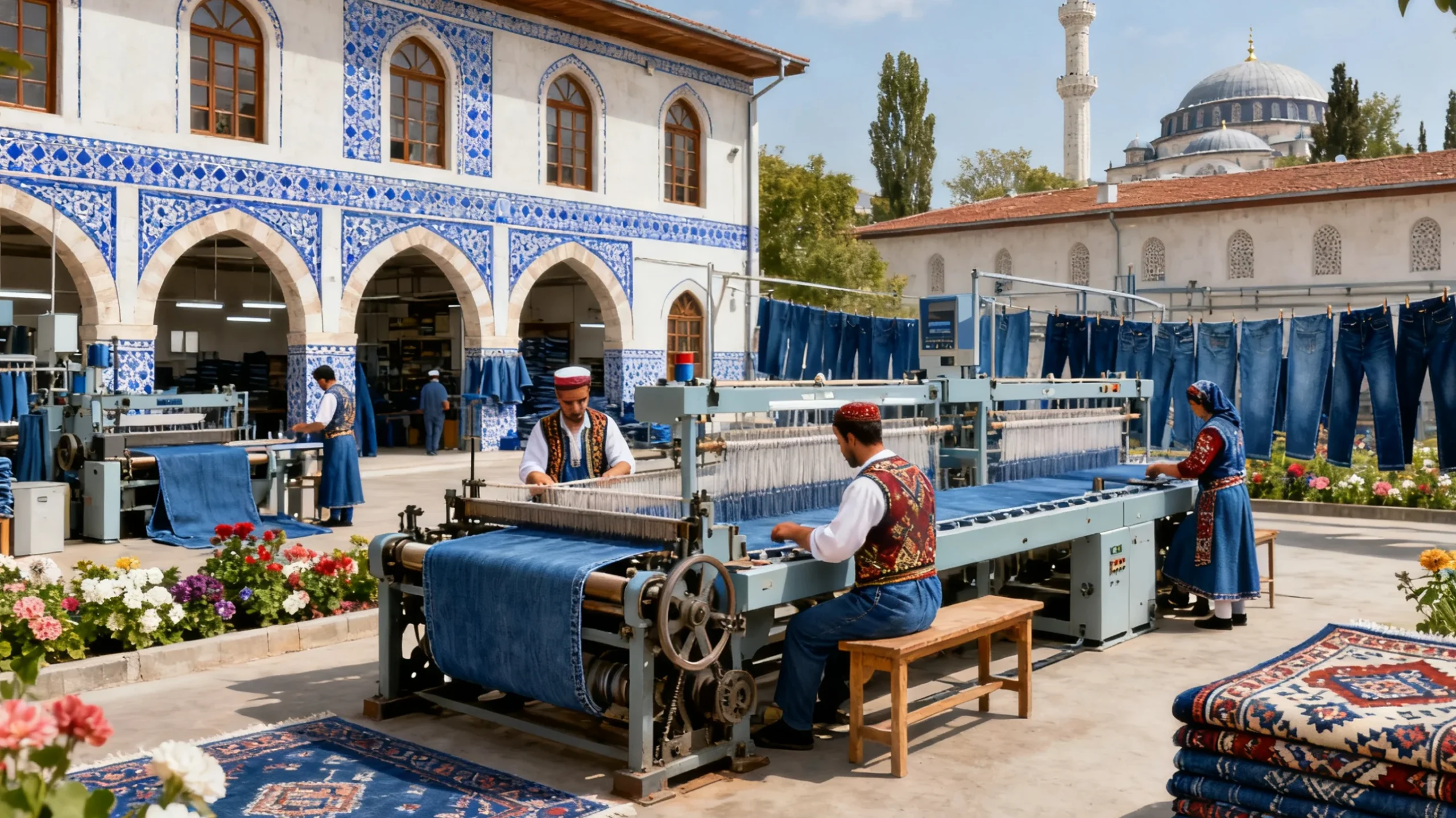
Workers In A Turkish Denim Factory Are Making Denim
Brief History/Introduction
Turkey’s denim industry saw significant growth in the late 20th and early 21st centuries, leveraging its geographic proximity to Europe, a skilled textile workforce, and government support. Many Turkish mills invested heavily in modern technology and vertical integration.
Factory Advantages
Turkish mills are known for high-volume, high-quality production with relatively fast lead times. They have developed strong expertise in sophisticated washing and finishing techniques. Crucially, many leading Turkish mills are pioneers in sustainable denim production, heavily investing in water-saving technologies (ozone, laser), eco-friendly chemicals, and transparent processes. Their vertical integration (fabric + garment) offers streamlined supply chains.
Core Production Areas
The industry is concentrated around Istanbul, Corlu (in the Thrace region), and Adana in the south.
Style Positioning
Turkish denim excels in producing both classic and highly fashionable washes. They are known for their ability to efficiently replicate complex European wash aesthetics. Their emphasis on sustainability is also a key part of their market positioning.
Price Range
Typically falls in the mid-range ($$), offering a competitive balance between European quality/innovation and Asian cost structures.
Basic export styles (cotton-polyester blend, conventional dyeing, mass-produced): $5.62-9.83 per meter Representative: The basic Bossa fabric series, suitable for bulk orders for European and American fast fashion.
Mid-to-high-end quality styles (100% cotton, selvedge, slub texture): $9.83-16.85 per meter Representative: 10.7oz cotton twill denim, offering both quality and value.
Specialty items (stretch optimization, eco-friendly dyeing and finishing): $16.85-22.47/meter
Note: With a strong export orientation, bulk orders (over 3,000 meters) may see a 10%-15% price reduction.
Representative Brands (Examples)
A primary sourcing location for many major European and American mid-market and fast-fashion brands (like Zara, H&M, Mango) as well as some premium labels seeking quality, speed, and sustainable options.
Ideal Users/Brands
Major global brands requiring large volumes, mid-market retailers needing a balance of quality and price, brands prioritizing sustainability and innovative washes, and companies looking for efficient full-package (fabric + garment) production.
Factory Insight: Turkey’s Edge in Finishing
When we work with Turkish partners, their expertise in the laundry is often remarkable. They’ve embraced technologies like laser and ozone very quickly. A client might bring us a complex Italian wash reference, and the Turkish laundry can often achieve 90% of the look at a more competitive price and faster lead time.
They are particularly strong in developing sophisticated denim washing recipes that meet strict environmental standards.
Italy: The Innovator of Fashion Finishes and Stretch
Italian denim production is synonymous with luxury, high fashion, and technical innovation, particularly in finishing and performance fabrics.
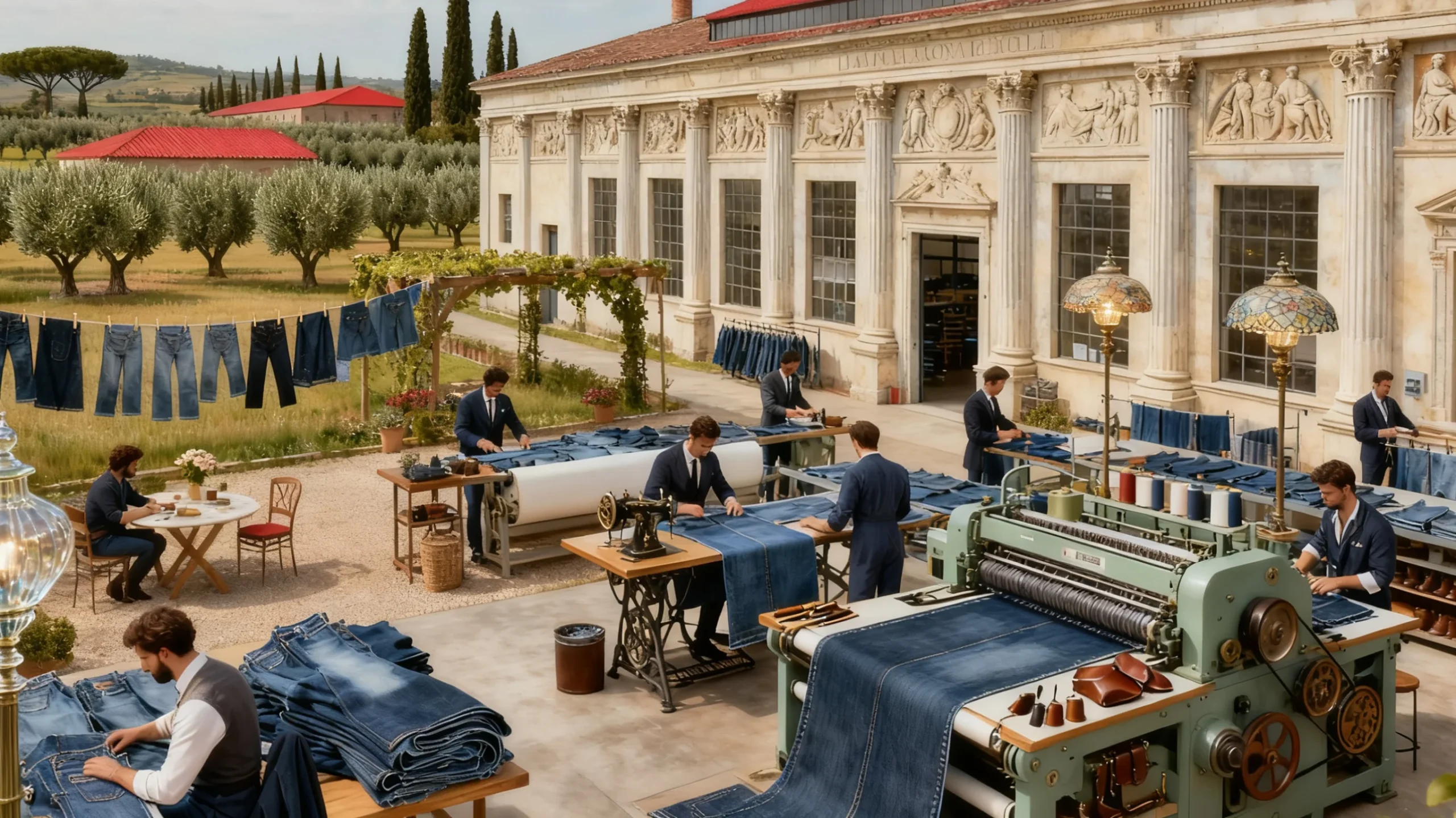
Workers In An Italian Denim Factory Are Making Italian-Style Denim
Brief History/Introduction
Italy’s prominence in denim rose alongside its high-fashion industry in the 1970s and 1980s. Italian mills focused not just on the fabric itself, but on pioneering washing, dyeing, and finishing techniques to create unique, fashion-forward aesthetics.
Factory Advantages
Unparalleled expertise in creative and advanced washing and finishing. They are masters of sophisticated dyeing techniques, coatings, and treatments. Italy is also a leader in developing high-performance stretch denim with excellent recovery and unique textures. Quality control is typically meticulous, aligning with luxury market expectations. Reputable mills like Candiani Denim are globally recognized for both innovation and sustainability.
Core Production Areas
Primarily concentrated in Northern Italy, particularly the Veneto region.
Style Positioning
Luxury, high-fashion, innovative, sophisticated. Italian denim often features unique colors, bold washes, premium stretch capabilities, and a focus on luxurious hand-feel.
Price Range
The price of Italian denim varies significantly depending on the brand and craftsmanship. Denim from some high-end fashion brands can be very expensive, such as Gucci’s jeans, where the fabric costs far more than regular denim.
While regular Italian denim generally costs $5-10 per meter,
high-end or specially crafted denim can cost $10-20 per meter or even more.
Representative Brands (Examples)
The preferred sourcing choice for many global luxury and designer brands (e.g., Diesel originated many Italian finishing techniques; high-end brands like Gucci, Prada often utilize Italian-made fabrics).
Ideal Users/Brands
Designer labels, premium and luxury market brands, companies seeking cutting-edge stretch fabrics, unique fashion washes, sophisticated colors, and the highest perceived quality.
Japan: The Artisanal Master of Indigo and Texture
Japanese denim holds a legendary status among denim purists, revered for its artisanal production methods, unique textures, and unparalleled indigo depth. Answering what’s special about Japanese denim? requires looking at its dedication to craft.
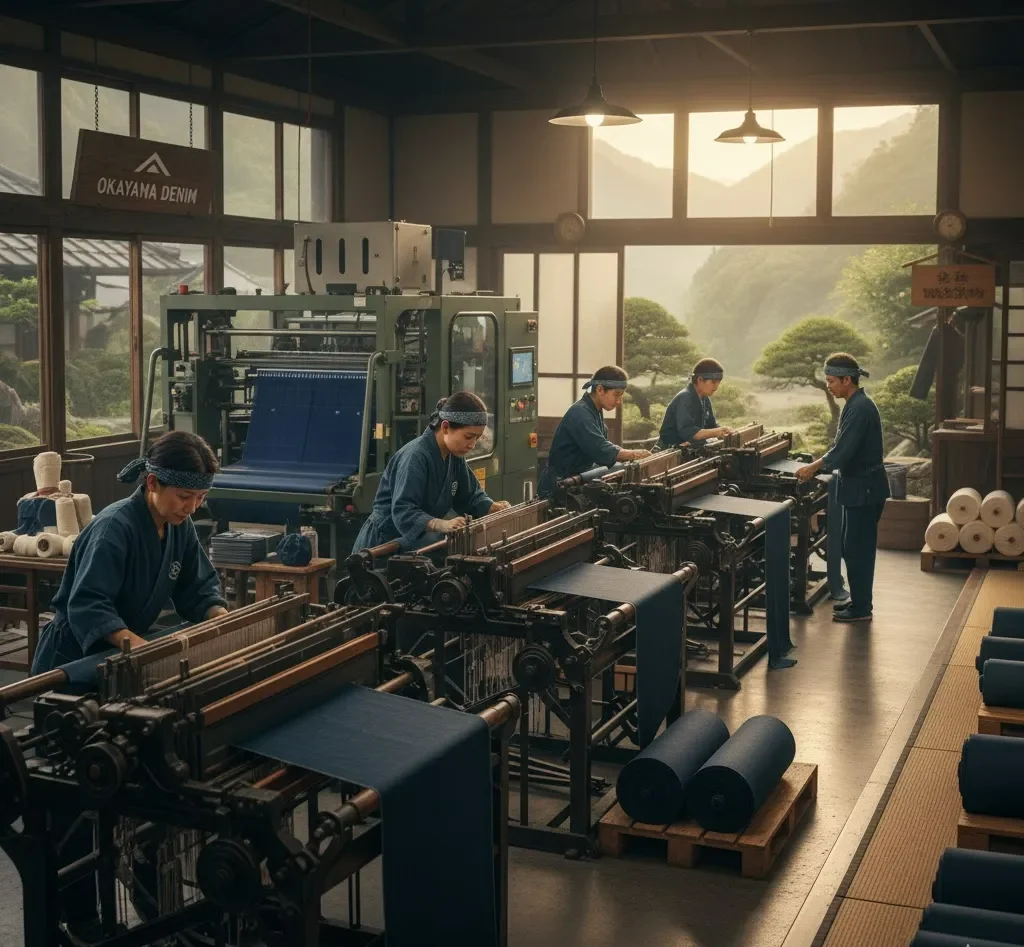
Workers At A Japanese Denim Factory Are Making Denim
Brief History/Introduction
Japan’s love affair with denim began post-WWII with the influx of American jeans. Rather than simply imitating, Japanese artisans meticulously studied vintage American production methods, acquired old shuttle looms, and focused on perfecting traditional techniques like rope dyeing, often elevating them to an art form. The Okayama prefecture became the epicenter of this craft.
Factory Advantages
Unmatched skill in selvedge weaving on vintage shuttle looms, creating fabrics with unique character. Deep expertise in natural indigo and rope dyeing techniques, resulting in incredibly rich and nuanced shades of blue that fade beautifully. A focus on creating unique textures (slubby, neppy, irregular) are considered desirable characteristics.
Core Production Areas
Okayama prefecture, particularly the Kojima district, is the heartland of artisanal Japanese denim.
Style Positioning
Artisanal, heritage, vintage reproduction, textured, often raw/unwashed. Japanese denim prioritizes craftsmanship, character, and the potential for beautiful, personalized fading over mass-market uniformity.
Price Range
Mid-range quality (high-quality cotton, improved dyeing, conventional precision weaving): $14.04-21.06 per meter Representative: Non-separated full-count basic fabric, suitable for light luxury apparel.
High-end separable (Zimbabwean/Sea Island cotton, naturally dyed, traditional loom bamboo knot craftsmanship): $21.06-42.13 per meter Representative: Evisu and Japan Blue core series, with outstanding color fastness and texture details.
Premium Custom (Limited Weave + Plant-Based Dyeing and Finishing): $42.13/meter and up
Note: Stretch fabric boasts industry-leading rebound. Regular order lead time is 30-45 days.
Representative Brands (Examples)
Numerous highly respected Japanese denim brands themselves (e.g., Momotaro, Studio D’Artisan, Pure Blue Japan) and key fabric suppliers to niche luxury and heritage brands worldwide.
Ideal Users/Brands
Denim purists, heritage brands focused on authenticity, niche luxury labels, brands prioritizing unique fabric character and craftsmanship above all else.
Sourcing Implications: Matching the Origin to Your Brand
Understanding these regional denim characteristics is not just academic; it’s a strategic sourcing skill.
Brand Positioning
Align Origin with Brand Identity
A brand focused on rugged American heritage should explore US mills. A high-fashion label needs the innovation from Italy. A brand targeting denim purists must consider Japan.
Balance Quality, Cost, and Volume
China offers scale and cost-efficiency. Turkey provides a strong balance of quality, speed, and sustainability for major brands. Italy and Japan cater to the premium/luxury segments where cost is secondary to uniqueness.
Consider Lead Times & MOQs
Artisanal Japanese production involves long lead times and high MOQs. Chinese and Turkish mills generally offer faster turnaround and more flexible minimums.
Factor in Logistics
Proximity matters. European brands often favor Turkey or Italy for shorter shipping times. US brands might prioritize domestic or North American options alongside Asian hubs.
Choosing the right region is a complex equation. For a detailed framework on navigating supplier selection, negotiation, and quality control, refer to our comprehensive Denim Fabric Sourcing Guide.
Our Commitment to Global Expertise & Transparency
As an ISO 9001:2015 certified partner with OEKO-TEX® Standard 100 capabilities, we navigate the complexities of global sourcing daily. The insights in this guide are based on years of direct experience working with mills across these key regions, combined with data cross-verified against industry benchmarks and reputable trade publications.
We believe in transparency; the goal is to empower you to make the best sourcing decisions for your brand.
Conclusion: Denim’s Global Tapestry
Denim is a truly global fabric, but its character is undeniably shaped by its origin – its terroir. From the artisanal textures of Okayama to the high-fashion finishes of Italy, the heritage feel of the USA, the sustainable scale of Turkey, and the immense capacity of China, each region offers unique strengths.
The expert sourcer understands these nuances and leverages them strategically. We hope this global guide provides a valuable map for your sourcing journey.
Explore our curated selection of denim fabrics sourced globally, or better yet, let our expertise guide you.
Our team spans sourcing from all major global denim hubs. Contact us to discuss how we can find the perfect denim for your brand’s unique needs.
FAQ – Frequently Asked Questions for Buyers
What’s special about Japanese denim?
Japanese denim is special primarily due to its artisanal production methods, often using vintage shuttle looms (creating selvedge), meticulous rope dyeing techniques for deep indigo shades, and a focus on creating unique, irregular textures (slub and nep). This results in fabric prized for its character and fading potential.
What is the difference between Japanese and American denim?
Historically, classic American denim (like Cone Mills) focused on durable, consistent, mid-weight fabrics with a relatively uniform weave, designed for workwear. Japanese denim often emphasizes unique textures, irregularities, deeper indigo dyeing methods, and selvedge construction, catering more to denim enthusiasts and heritage aesthetics.
Is Italian denim good quality?
Yes, Italian denim is generally considered very high quality, particularly excelling in innovation. They are renowned for sophisticated washing and finishing techniques, advanced stretch fabrics with excellent recovery, unique colors, and overall premium feel suitable for the luxury fashion market.
What is Turkish denim known for?
Turkish denim is known for offering a strong combination of high-volume production, good quality, relatively fast lead times, competitive pricing (especially compared to Italy/Japan), and a significant focus on sustainable manufacturing technologies (water/chemical reduction).
Why is Chinese denim production so large?
Chinese denim production is vast due to massive investments in textile infrastructure, a large and skilled workforce, efficient vertical supply chains (from cotton to garment), economies of scale, and the ability to cater to the enormous volume demands of global mass-market retailers at competitive prices.
What are the characteristics of Okayama denim?
Okayama denim, particularly from the Kojima district, is the heartland of Japanese artisanal denim. Its key characteristics include selvedge construction (woven on shuttle looms), deep indigo color from rope dyeing, often irregular textures (slubby, neppy), typically heavier weights, and a focus on quality and fading potential appreciated by denim purists.
What is Cone Mills denim history known for?
Cone Mills, especially its White Oak plant in North Carolina (now closed), is legendary in American denim history. It was the exclusive supplier of selvedge denim to Levi’s for decades, defining the look and feel of the iconic 501 jean. Its heritage is synonymous with durable, high-quality, American-made workwear denim.
Which is the best country for sourcing selvedge denim?
Japan is widely considered the best country for sourcing high-quality, artisanal selvedge denim due to its concentration of vintage shuttle looms and expertise in traditional techniques. However, selvedge denim is also produced in the USA, Italy, and Turkey, often with different characteristics.
Where do fashion brands source denim?
It varies greatly depending on the brand’s market tier and aesthetic:
Luxury/Designer Brands: Often source from Italy (for fashion finishes, stretch) or Japan (for artisanal selvedge, unique textures).
Major Global/Mid-Market Brands: Frequently source large volumes from Turkey (balancing quality, sustainability, speed) and China (for scale and cost-effectiveness).
Heritage/Niche Brands: May prioritize Japan (artisanal) or the USA (heritage, Made-in-USA).
Can you explain denim “terroir”?
Denim “terroir” uses the wine analogy to explain how the specific conditions of a denim mill’s location—including the local water, the specific machinery used (vintage vs. modern), the workforce’s traditional skills, the cultural approach to quality, and even the climate—can subtly influence the final character, texture, color, and fading properties of the denim fabric produced there, just as soil and climate affect grapes.
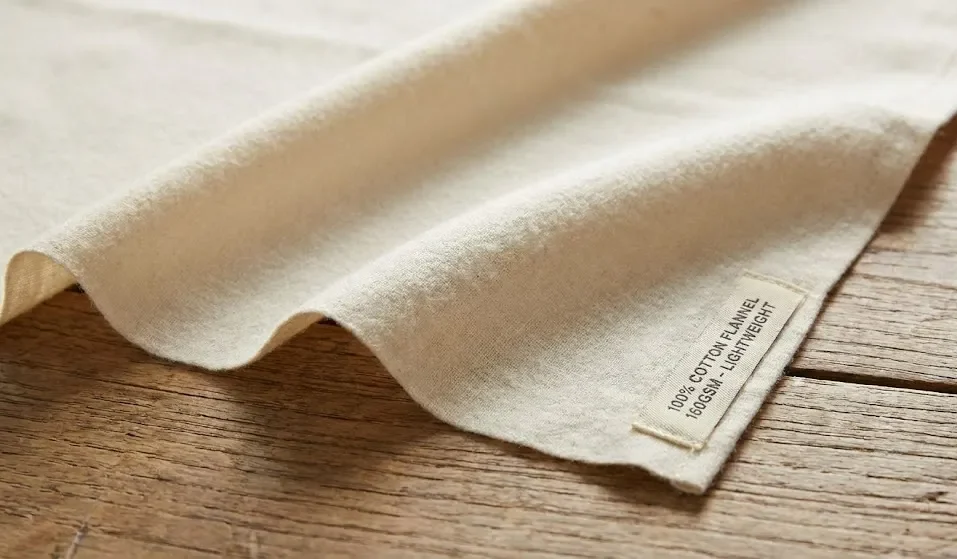
Don’t rely on GSM alone. Our factory guide explains how to read flannel specs (yarn count, density, brushing) to predict pilling, warmth, and durability.