🚫 Introduction: The Most Common Textile Confusion
In my years managing textile supply chains, I’ve seen countless purchase orders delayed or rejected for one simple reason: terminology confusion.
⚠️ The most frequent offender?
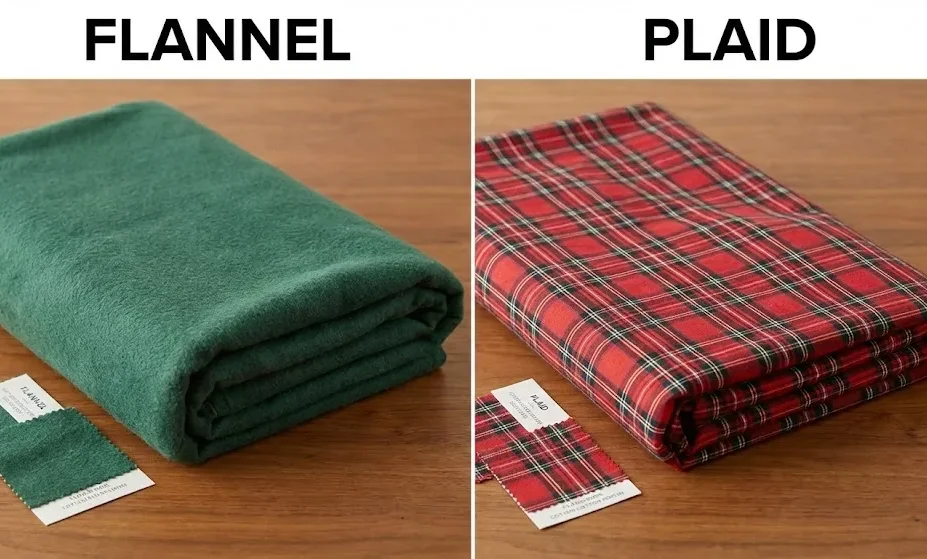
The mix-up between flannel vs plaid.
This is common because some newcomers to the industry don’t understand the difference; they simply assume that all flannel fabrics have plaid patterns.
However, the difference between plaid vs flannel is actually quite significant. Today, we’ll provide a comprehensive analysis of the differences from a fabric manufacturer’s perspective.
We will not only define the difference between plaid and flannel but also dive into the operational implications of each choice—from lead times and costs to the hidden waste factors in cutting.
(To understand the full technical scope of flannel manufacturing, please refer to our deep-dive guide: what-is-flannel-fabric-guide)
🧶 What is Flannel?
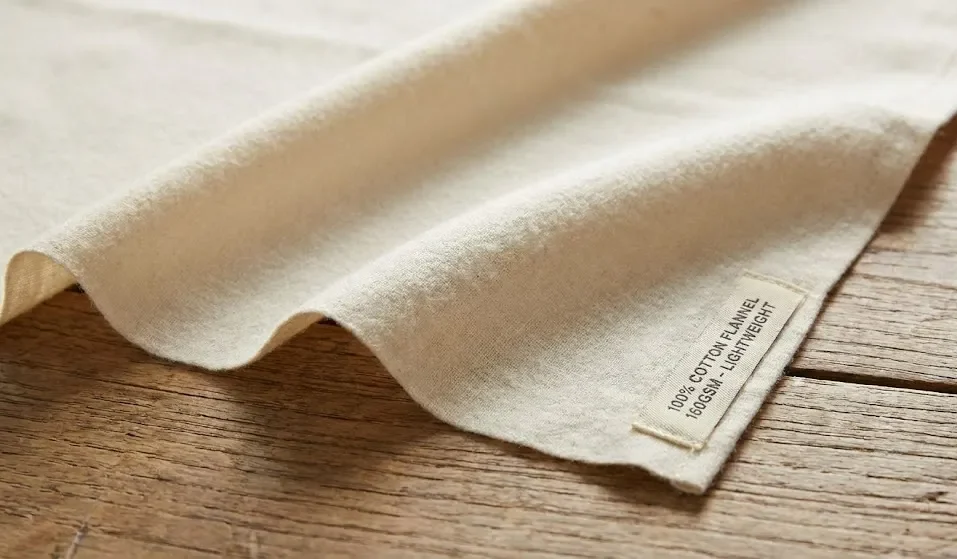
Flannel is a woven fabric—typically cotton, wool, or synthetic—that has undergone a mechanical finishing process called napping or brushing.
Unlike smooth fabrics like poplin, flannel is passed under metal rollers with fine wires that tease fiber ends out of the yarn. This creates a fuzzy surface (“nap”) that traps air and provides insulation.
Whether it is dyed a solid navy blue, printed with polka dots, or woven with checks, if it has that fuzzy nap, it is flannel.
🏭 (Factory Insight)
In our mill, we categorize flannel purely by its finishing route.
A fabric ticket might read “30s/2 Twill – Double Brushed.”
It’s important to note that the brushing machine doesn’t care whether the fabric is plaid or solid-color; its sole purpose is to give the fabric a soft feel and warmth.
If you want that cozy winter touch, you are sourcing flannel, regardless of the print.
🎨 What is Plaid?
Now, let’s look at the visual side. Plaid is a pattern, defined by intersecting lines.

The Visual Definition
In the textile world, plaid (often used interchangeably with “tartan” or “check”) refers to a design of crossing horizontal and vertical bands in two or more colors.
Is plaid a fabric or a pattern? It is strictly a pattern. You can have a “plaid” design on a plastic tablecloth, a silk tie, a wool suit, or a cotton sheet. The pattern itself has no texture, no warmth, and no weight.
🧵 Yarn-Dyed vs. Printed Plaid
For B2B buyers, this is the critical distinction:
- Yarn-Dyed Plaid: The yarns are dyed specific colors before weaving. The pattern is created by the loom interlacing these colored yarns. This means the design is visible on both the front and back of the fabric (plaid color penetration yarn dyed both sides). This is the premium standard for heritage shirts.
- Printed Plaid: The fabric is woven white (or a base color) and the grid pattern is printed onto the surface later. The back is usually lighter or white.
⚖️ Flannel vs Plaid: The 8-Point Operational Comparison
To help you make the right sourcing decision, we’ve broken down the flannel vs plaid operational comparison into eight critical business dimensions.
| Dimension | Flannel | Plaid |
|---|---|---|
| 1. Essence | Fabric | Pattern |
| 2. Process Focus | Finishing: Mechanical brushing/raising after weaving. | Pre-Weaving/Printing: Yarn dyeing or surface printing. |
| 3. Primary Sense | Touch: Softness, warmth, fuzzy hand-feel. | Sight: Color combinations, scale of check. |
| 4. Independence | Stand-Alone: Can be solid, printed, or yarn-dyed. | Stand-Alone: Can be on poplin, silk, wool, or flannel. |
| 5. Lead Time | Fast to Medium: Mainly dependent on weaving & finishing. | Slow (if Yarn-Dyed): Requires yarn dyeing & complex warping. |
| 6. QC Focus | Physical Specs: Pilling, shrinkage, nap consistency. | Visual Specs: Pattern matching, repeat size, skewing. |
| 7. Seasonality | Winter/Fall: Primarily for warmth. | All Seasons: E.g., light plaid madras for summer. |
| 8. Cost Driver | Processing: Cost of brushing & fiber loss. | Complexity: Cost of dyed yarn & pattern setup. |
1. Essence
Flannel: This is defined strictly by its physical state. It is a fabric that has been mechanically altered to create a fuzzy surface (“nap”). If you close your eyes and touch it, you know it’s flannel because of the raised fibers that trap heat.
Plaid: This is defined strictly by its visual arrangement. It is a geometric design of intersecting vertical and horizontal bands of color. It has no texture of its own; it is purely an aesthetic choice applied to a substrate.
(Factory Experience: The “Blind Test”)
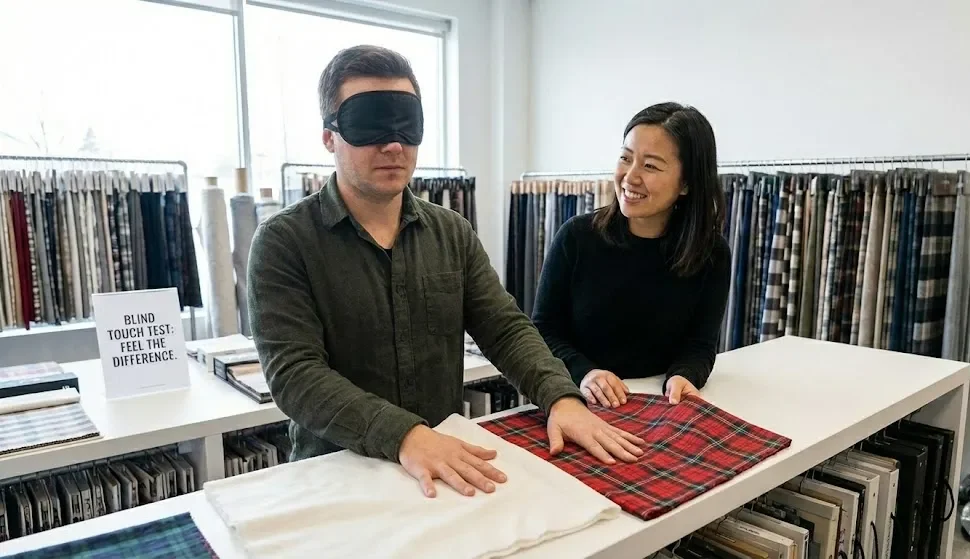
In our showroom, we often perform a “blind touch test” for new buyers. We hand them a solid white brushed fabric and a printed plaid poplin. Without looking, they identify the white fabric as “flannel” instantly. This proves that for the consumer, flannel is a feeling, not a look.
2. Process Focus
Flannel: The critical manufacturing step happens in finishing (Post-Weaving). The fabric passes through a napping machine where wire-covered rollers scratch the surface. The quality depends on the precision of this mechanical brushing—too little and it’s rough; too much and it weakens the fabric strength.
Plaid: The critical step happens before weaving (Pre-Weaving). For authentic plaid, yarns must be dyed specific colors first (Yarn-Dyed). The loom then weaves them according to a complex pattern map. The focus is on color arrangement, not surface texture.
3. Primary Sense
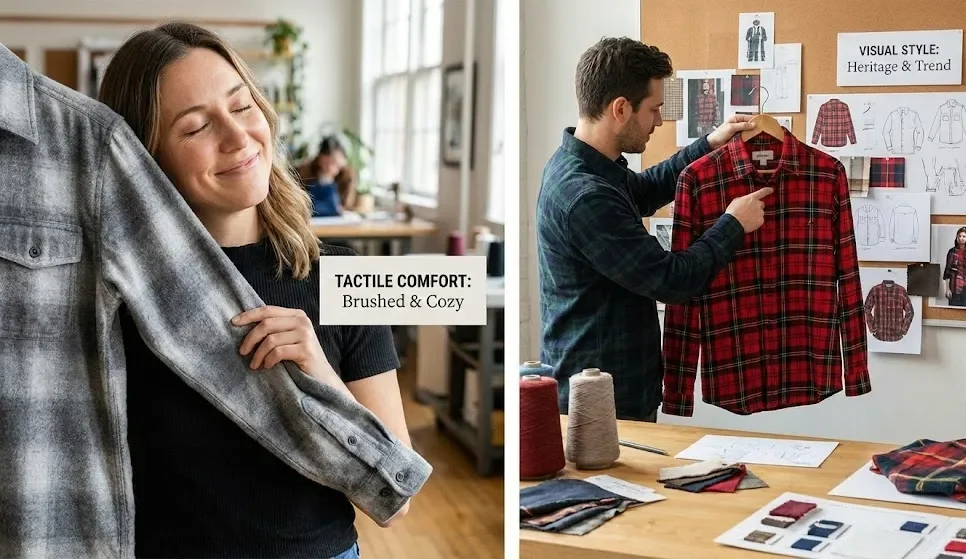
Flannel: Marketing focuses on Tactile Comfort. Brands sell flannel using words like “soft,” “cozy,” “warm,” and “brushed.” It appeals to the customer’s desire for physical comfort in cold weather.
Plaid: Marketing focuses on Visual Style. Brands sell plaid based on heritage (e.g., “Scottish Tartan”) or trends (e.g., “90s Grunge Buffalo Check”). It appeals to the customer’s aesthetic identity.
4. Independence
Flannel: Can exist without plaid. Solid Flannel (dyed one color, then brushed) is a massive category for luxury bedding and minimalist loungewear, relying solely on texture.
Plaid: Can exist without flannel. Plaid Poplin or Plaid Seersucker are common summer fabrics that feature the check pattern but remain crisp, cool, and smooth without any fuzz.
5. Lead Time
Flannel: Generally faster. We can keep “greige” (unfinished) cloth in stock and simply dye and brush it as needed. Lead times are typically 30-40 days.
Plaid: Significantly slower, especially for Yarn-Dyed Plaid. We must dye the yarn first, then warp the beams, and then weave. This adds considerable time, pushing lead times to 50-70 days.
(Industry Data: Lead Time Impact)
Standard industry benchmarks show that developing a custom Yarn-Dyed Plaid requires an extra 15-20 days compared to piece-dyed Solid Flannel. This is due to the “Lab Dip” approval process for multiple yarn colors and the slower weaving speed of complex patterns.
6. QC Focus
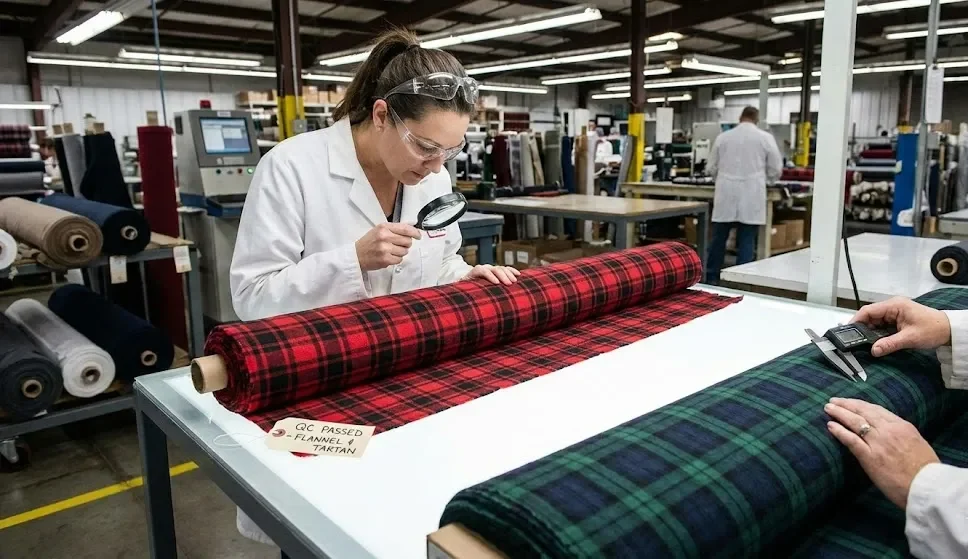
Flannel: Quality Control focuses on physical performance. The brushing process damages fibers, so we must rigorously test for Pilling Resistance (ISO 12945) and Tear Strength. If the fabric is over-brushed, it will fall apart or pill immediately.
Plaid: Quality Control focuses on visual alignment. Inspectors check for “Pattern Skewing” (if the lines aren’t straight) and “Pattern Repeat Accuracy.” If the plaid grid is crooked, the garment cannot be cut properly.
7. Seasonality
Flannel: Strictly a Autumn/Winter fabric. Its defining feature (the nap) is designed to trap body heat. Selling flannel in summer is virtually impossible unless it is a micro-weight.
Plaid: A year-round design element. While dark plaids are “wintery,” light-colored “Madras Plaids” on breathable cotton are staples of Spring/Summer collections.
8. Cost Driver
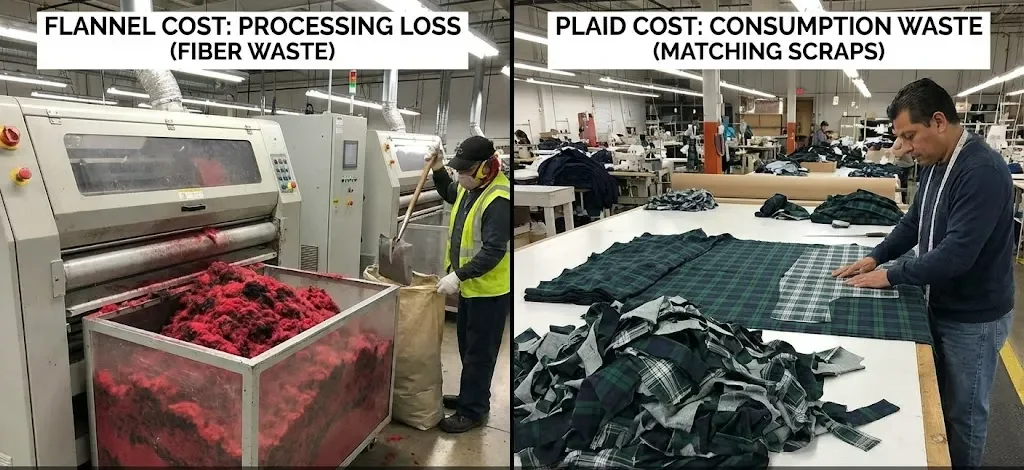
Flannel: The cost comes from processing loss. The napping process literally scrapes fibers off the fabric (creating fluff dust), reducing the final weight. To achieve a 200gsm flannel, we might need to start with 220gsm of yarn input.
Plaid: The cost comes from consumption waste. When garment factories cut plaid fabrics, they must align the checks at the seams (matching front left to front right). This “matching waste” increases fabric consumption by 10% to 15% compared to solid fabrics.
⚠️ (Factory Experience: The “Hidden” Cost)
We advise all clients: when budgeting for a Plaid Shirt, do not just look at the fabric price per meter. You must factor in the Marker Efficiency. A solid flannel shirt might use 1.4 meters of fabric; a matched plaid shirt of the same size often requires 1.6 meters to align the pattern correctly. That is a 14% increase in raw material cost per garment.
🚀 Applications: Uses in Apparel and Home Textiles
How do these distinctions play out in your product line?
🧵 Flannel (The Fabric Choice)
For Garment Factories
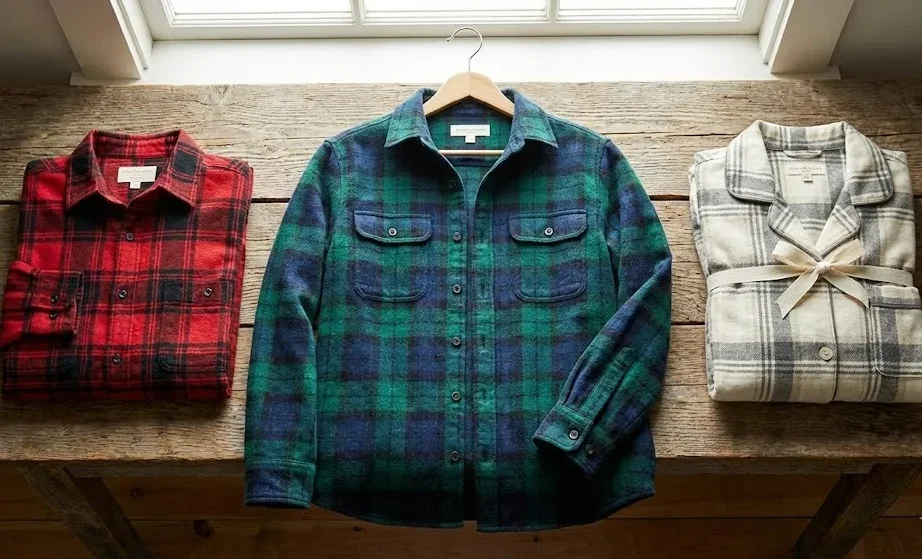
- Shirts: 170–190 gsm double-brushed cotton flannel is the global standard for winter casual shirts.
- Jackets/Overshirts: Heavier 250–300 gsm flannel (often bonded or quilted) is used for “Shackets.”
- Pajamas: Softness is king. Factories prioritize hand-feel over structural strength here.
For Home Textile Factories
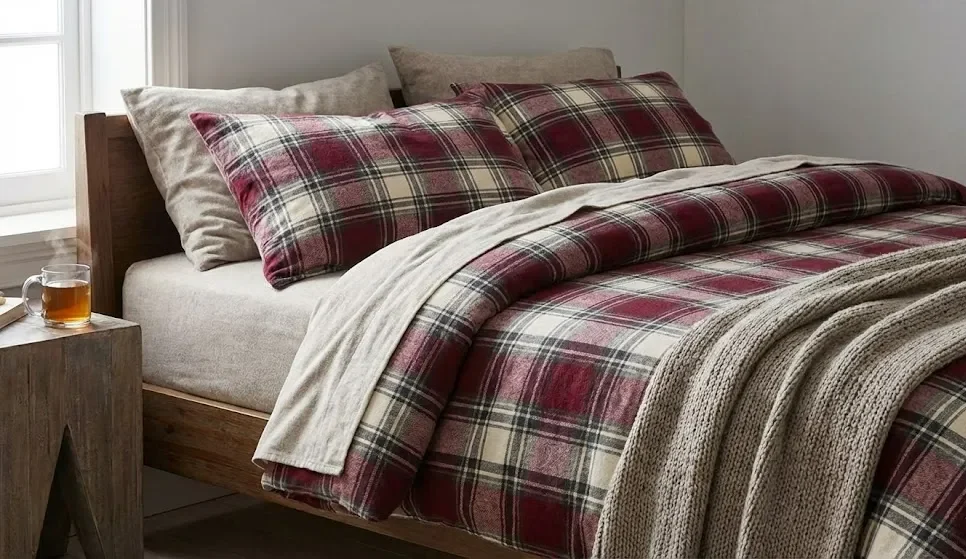
Bedding: Double sided flannel sheets rely entirely on the fabric’s insulating properties. The focus here is on width (wide loom) and pilling resistance.
🎨 Plaid (The Pattern Choice)
For Garment Factories
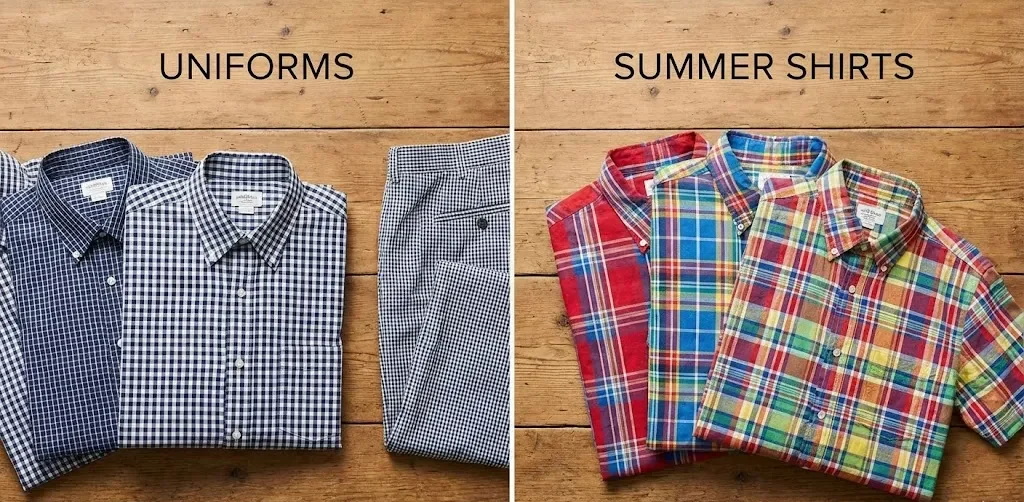
- Uniforms: School uniforms often use plaid patterns but on durable, non-flannel fabrics like poly-viscose twill to avoid pilling.
- Summer Shirts: Brands use plaid poplin or madras for the look of a check without the heat of flannel.
For Home Textile Factories
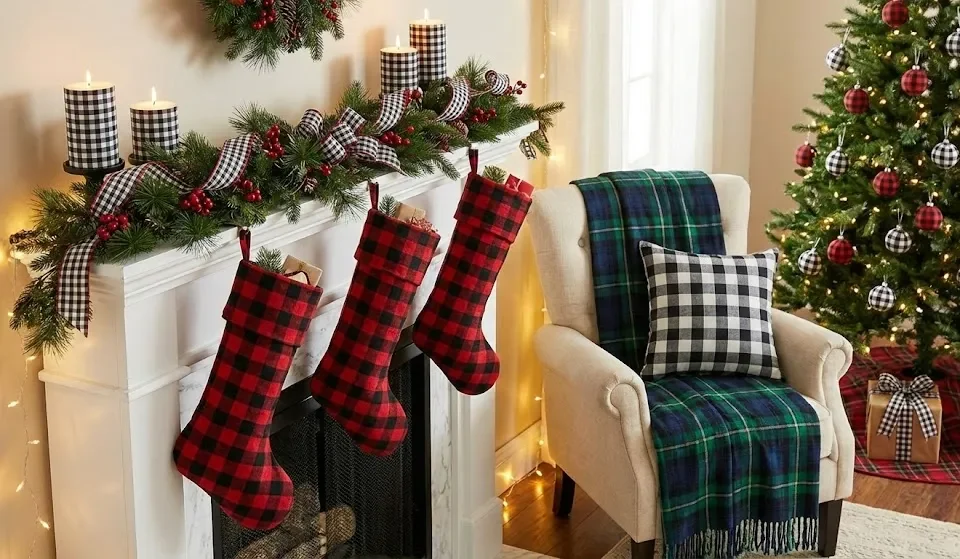
Holiday Decor: Plaid is a seasonal staple for Christmas throws and pillows. Here, the pattern does the selling, often printed on cheaper fleece or micro-flannel.
📈 Market Analysis for Manufacturers: Demand Trends
(Market Intelligence)
Based on our order data from the last three seasons, here are the critical shifts in demand:
1. Vintage Plaid Flannel Trend (2025 B2B)
We are seeing a surge in demand for blurred or ombre plaids. This requires a specific brushing technique on yarn-dyed flannel to soften the lines of the check, merging the pattern and fabric definition.
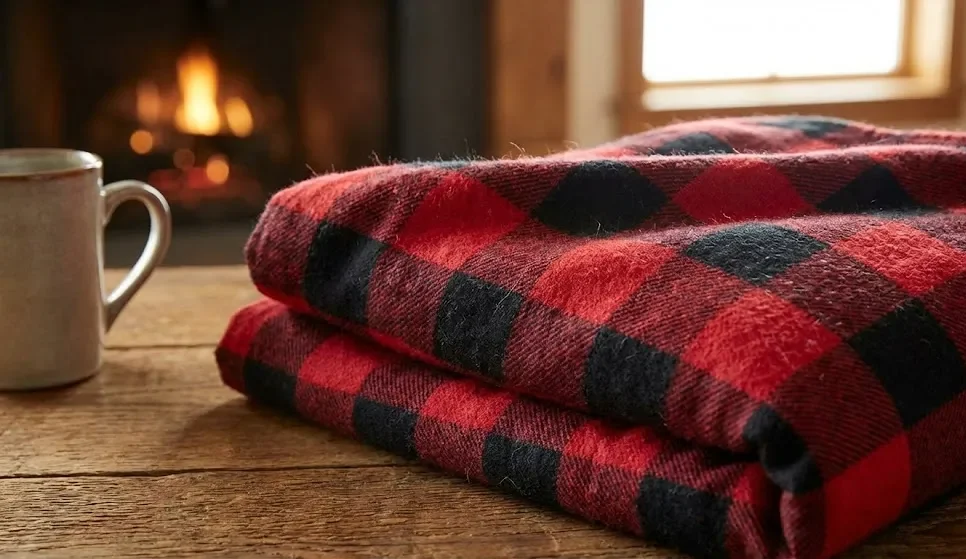
2. Buffalo Check Demand
This classic red/black pattern remains the volume driver for Q4 (Winter) retail, specifically in heavyweight shacket flannel categories.
3. Solid Flannel Growth
Minimalist bedding brands are shifting volume towards high-quality, solid-color flannels (greys, creams, earth tones) to compete with linen in the winter market.
💸 Sourcing Risks: The Hidden Costs You Must Know
This is the section that saves you money.
1. The Matching Waste”\ Factor (Plaid Only)
If you choose Plaid, you must account for pattern matching waste.
- The Issue: When cutting a plaid shirt, the front pockets must align with the body, and the left front must align with the right front.
- The Cost: This requires engineered markers (cutting layouts). You cannot nest pieces as tightly as with solid fabrics.
📏 The Rule of Thumb
For a standard check (4-6cm repeat), add 10–15% to your fabric consumption. For large repeats (10cm+), add 15-20%.
Advice: Use a pattern matching waste calculator before ordering fabric.
2. MOQ Differences
- Solid Flannel: Lower MOQ. Mills often dye greige goods in batches.
- Yarn-Dyed Plaid: Higher MOQ (often 3000m+ per pattern) because the mill must dye specific yarn colors and warp a specific beam for your design.
- Printed Plaid: Moderate MOQ, but setup costs for screens can be high unless using digital print.
🏁 Are You Ready to Choose?
Selecting the right material is about aligning your aesthetic goal with your functional need.
- Choose Solid Flannel IF: Your priority is warmth, softness, and a minimalist aesthetic. You want lower consumption waste.
- Choose Yarn-Dyed Plaid Flannel IF: You want the quintessential “heritage” look, premium quality (double-sided color), and winter warmth. You accept higher MOQs and cutting waste.
- Choose Printed Plaid Flannel IF: You need a budget-friendly fashion item with complex colors, and hand-feel is secondary.
- Choose Plaid Poplin IF: You want the check look for Spring/Summer collections or office wear.
[Still deciding on the right weave? Read our fabric-weave-types-explained guide.]
🏁 Conclusion
In the end, flannel is the “body”—it provides the comfort, warmth, and texture. Plaid is the “face”—it provides the style, heritage, and visual identity. The most successful winter products often combine them, but they are distinct choices with distinct costs.
💡 The Buyer’s Formula
As a buyer, knowing the difference allows you to communicate precisely. You don’t just order “plaid”; you order:
“Yarn-Dyed, Double-Brushed Cotton Flannel in a Buffalo Check pattern.”
That precision prevents errors and ensures quality.
Ready to source the perfect winter fabric?
Whether you need a custom yarn-dyed check or a luxurious solid flannel, our team can engineer the perfect weight and finish for your brand. contact-us to request our new season’s swatch book.
❓ FAQ (Frequently Asked Questions)
Is all plaid flannel?
No. Plaid is just a pattern. You can have plaid patterns on silk, polyester, poplin, or wool. Plaid flannel is just one specific combination.
Is flannel warmer than plaid?
This question compares a fabric to a pattern, so it’s technically a category error. However, flannel fabric is inherently warmer than a standard non-brushed fabric (like poplin) printed with a plaid pattern, because the flannel’s nap traps body heat.
What is the difference between “Buffalo Plaid” and “Buffalo Check”?
They are usually the same thing. “Buffalo Check” typically refers to a simple two-color plaid with large blocks (usually red and black). It is a specific subset of the broader “Plaid” category.
Can flannel be plaid and solid?
Yes. Flannel refers to the brushed finish. It can be dyed a single solid color (Solid Flannel) or woven/printed with a check design (Plaid Flannel).
Plaid flannel vs solid flannel — which sells better?
Historically, plaid flannel dominates the casual menswear and shacket market. However, solid flannel is the leader in the bedding and luxury loungewear markets due to its versatile, modern aesthetic.