

⚖️ Introduction: The Weight of Flannel
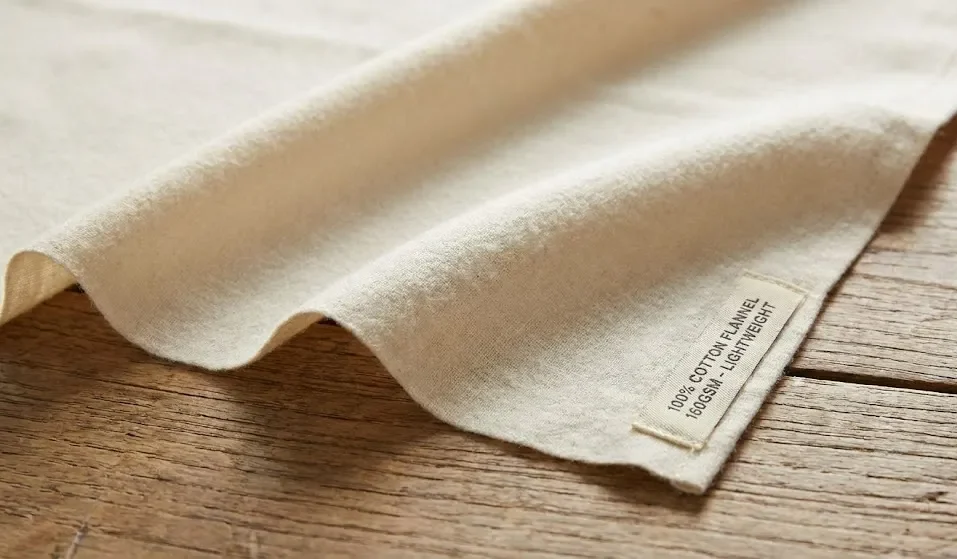
In the world of flannel, weight is not just a number on a spec sheet—it is the direct indicator of warmth, drape, and durability. Whether you are sourcing for a winter shirt collection or a luxury bedding line, getting the flannel weight (GSM) right is critical.
⚠️ The Sourcing Challenge
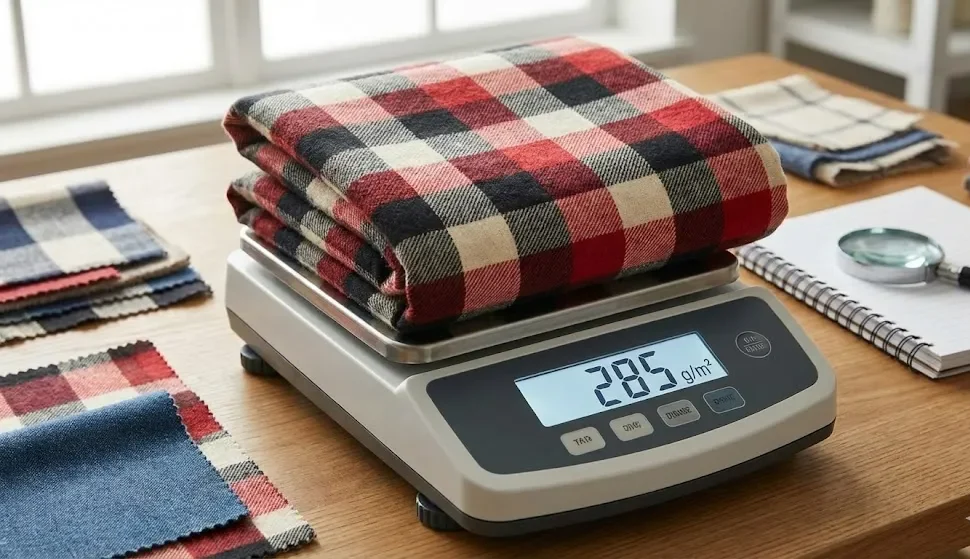
However, flannel sourcing is tricky. A 200 GSM twill might feel completely different from a 200 GSM brushed flannel weight due to the napping process.
Buyers often ask: “What is the best GSM for flannel shirts?” or “How do I convert flannel oz/yd² to grams?”
✅ What This Guide Covers
This guide moves beyond basic definitions. Drawing from our factory floor experience, we will provide a definitive flannel weight guide, precise conversion charts, and a B2B sourcing strategy to help you lock in the perfect specs for shirts, pajamas, and bedding.
📏 What Does GSM Mean for Flannel?
GSM means “grams per square meter,” a direct measure of how much a flannel fabric weighs over a fixed area.
In sourcing, GSM helps buyers compare warmth, drape, and durability across different flannel options. For flannel, GSM works best when you also confirm brushing (nap), fiber content, and shrinkage targets—because weight alone doesn’t tell the whole story.
Why GSM Is Not the Only Factor
While “what does GSM mean for fabric” is a standard question, for napped flannel fabric, the answer is nuanced.
☁️ Perceived Volume
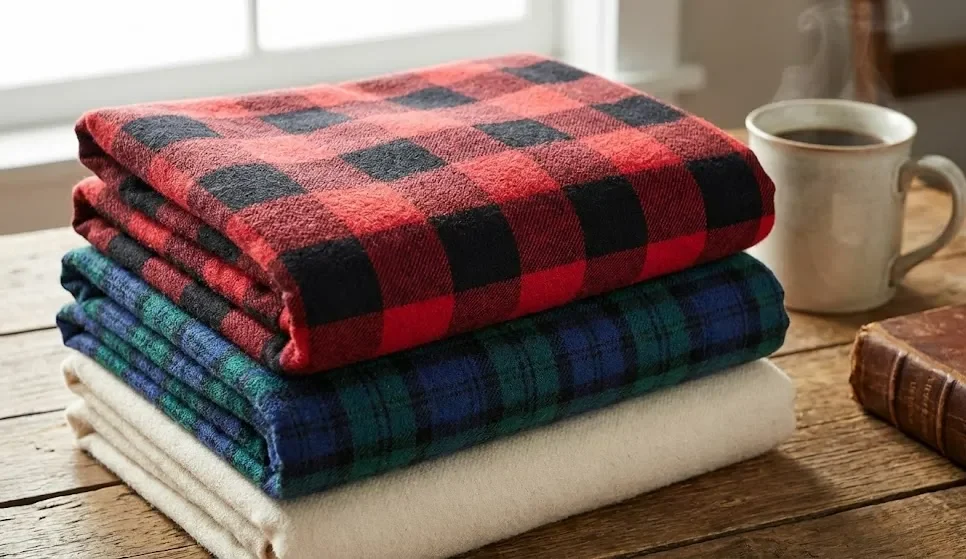
A double brushed flannel will feel thicker and warmer than a single brushed fabric of the exact same GSM. The “loft” created by the wire brushes traps air, simulating volume without adding mass.
⚠️ The “Handfeel” Trap
In B2B sourcing, we often see buyers reject a higher quality, denser 180 GSM flannel in favor of a 160 GSM option simply because the lighter one was brushed more aggressively and felt “softer” initially. Be aware that aggressive brushing reduces tensile strength.
🧥 Drape vs. Warmth
A high GSM (e.g., 300 GSM) offers structure for a “shacket,” while a lower GSM (e.g., 140 GSM) provides the drape needed for women’s loungewear.
🔄 GSM vs oz/yd²: How to Convert?
GSM and oz/yd² measure the same thing—fabric weight—just in different units.
🧮 The Conversion Formula
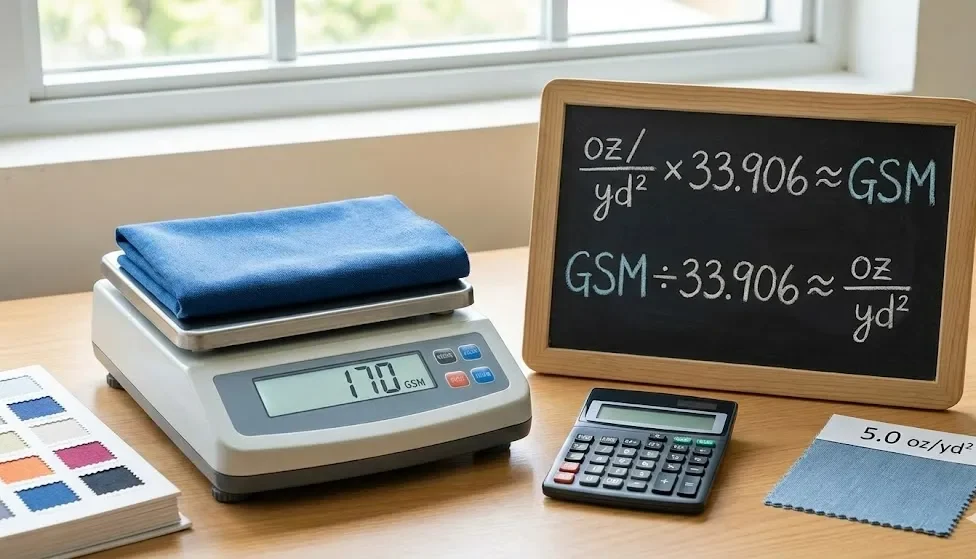
oz/yd² × 33.906 ≈ GSM
GSM ÷ 33.906 ≈ oz/yd²
💡 Quick Sourcing Anchor: Keep one number in mind—5 oz/yd² is roughly 170 GSM, a common reference point for bedding-grade flannel.
📊 Flannel Weight Conversion Chart
Use this chart to instantly translate supplier quotes:
| GSM Target | oz/yd² Target | Common Usage |
|---|---|---|
| 102 GSM | ≈ 3.00 oz/yd² | Very Lightweight |
| 120 GSM | ≈ 3.54 oz/yd² | Summer Shirting |
| 136 GSM | ≈ 4.00 oz/yd² | Standard Shirting |
| 150 GSM | ≈ 4.42 oz/yd² | Heavy Shirt / Light Pajama |
| 170 GSM | ≈ 5.00 oz/yd² | Standard Bedding (Anchor) |
| 200 GSM | ≈ 5.90 oz/yd² | Heavy Pajama / Winter Sheet |
| 220 GSM | ≈ 6.49 oz/yd² | Jacket / Blanket |
| 237 GSM | ≈ 7.00 oz/yd² | Heavy Outerwear |
⚠️ Why You Need a Tolerance
When writing your flannel PO spec template, always include a flannel GSM tolerance (usually +/- 5%).
Factory Reality: Because brushing physically pulls fibers out of the yarn (creating lint), the weight can fluctuate slightly from roll to roll. A 170 GSM target might result in rolls ranging from 165 to 175 GSM. This is normal.
🎯 What GSM Is Best for Flannel (Shirts, Pajamas, Bedding)?
Choosing the right weight depends entirely on the end-use. Here is the breakdown by category.
👔 What GSM Is Best for Flannel Shirts?
For flannel shirts, many buyers start with a “light-to-mid” range that keeps the fabric breathable and easy to sew while still feeling cozy. A practical approach is to sample across two brackets—one lighter for layering and one heavier for outerwear shirts—then lock the final GSM together with brushing level and shrinkage spec in your PO.
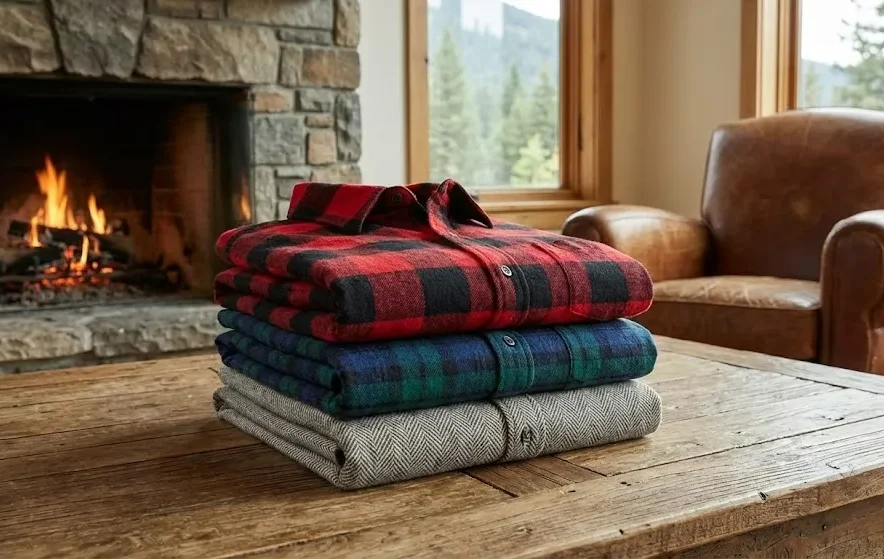
- Lightweight (120-140 GSM): Best for flannel shirt GSM in spring/summer collections or women’s blouses. It drapes well and isn’t bulky.
- Mid-weight (150-170 GSM): The best weight for flannel shirts (classic plaid style). It offers warmth but fits comfortably under a jacket.
- Heavyweight (200+ GSM): Ideal for “Shackets” (Shirt-Jackets). It holds structure and acts as outerwear.
💡 Note: At the same GSM, a double brushed flannel will feel thicker and warmer than a single brushed one.
🛌 What GSM Is Best for Flannel Pajamas?

For pajamas, the “best” flannel weight is the one that feels warm without becoming stiff or bulky after washing. Most sleepwear buyers prioritize softness (brushing/nap) and skin comfort first, then choose a GSM that gives enough warmth for the target climate. If you sell to mixed climates, offer two weights rather than one “universal” spec.
The Comfort Zone: Best GSM for flannel pajamas is typically 150-170 GSM.
Why? Anything heavier (like 200 GSM) can feel suffocating under a duvet. Anything lighter (130 GSM) might be too sheer or drape poorly.
Priorities: Focus on flannel pilling test results and flannel shrinkage allowance. Pajamas are washed frequently; low-quality heavy flannel will pill quickly.
🛏️ What GSM Is Best for Flannel Sheets/Bedding?
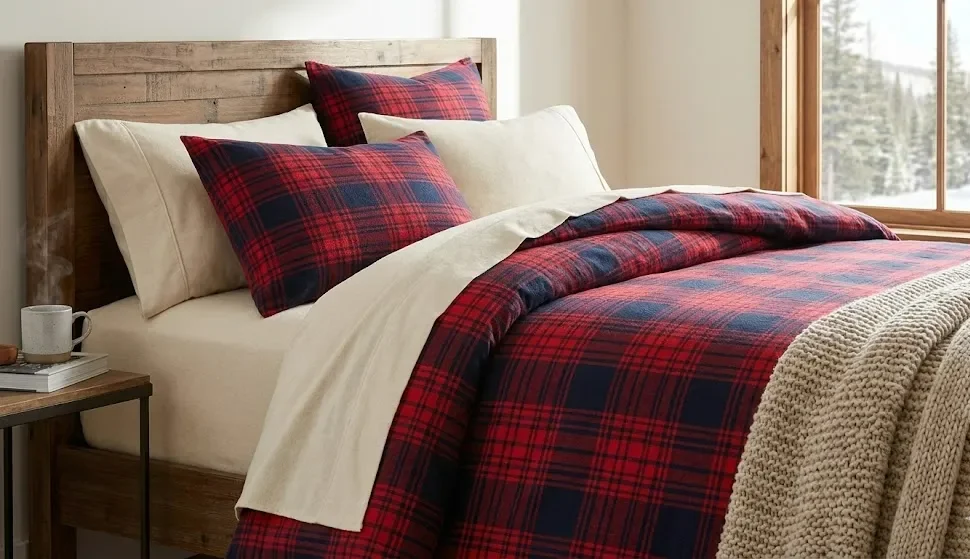
For flannel bedding, weight is a stronger predictor of warmth than thread count. Many tested-bedding guides treat around 5 oz/yd² (about 170 GSM) as a solid baseline, with heavier options feeling warmer and denser. Still, buyers should confirm brushing quality, lint shedding, and pilling performance—because “heavier” can also mean more fuzz and more shedding.
- The Baseline: Flannel sheets GSM usually starts at 160-170 GSM (approx 5 oz).
- Premium: 190-200 GSM is considered luxury heavy-weight bedding.
- Warning: Is 170 GSM flannel warm enough? Yes, for most sleepers. Heavier weights (6 oz+) are for very cold climates but can be too hot for some.
- Key Risk: Bedding has a high friction area. You must control pilling grade for flannel in your specs.
Industry data reference: Many articles on choosing bedding consider 5 oz/yd² ≈ 170 GSM as a benchmark for good quality flannel bedding.
📊 Table: End Use → Recommended Weight Range
| End use | Buyer goal | Practical starting point | Notes to lock in PO |
|---|---|---|---|
| Shirts | Breathable + Easy Sewing | Sample 2 weights (Light: 130 GSM & Mid: 160 GSM) | Brushing level, shrinkage, skew, flannel nap direction |
| Pajamas | Soft + Cozy (No Bulk) | Sample “Comfort” bracket (150-170 GSM) | Pilling grade, handfeel, shrinkage, flannel pajama fabric weight |
| Bedding | Warm + Dense | ~5 oz/yd² ≈ 170 GSM Baseline | Shedding, pilling, brushing consistency, flannel bedding weight GSM |
🌡️ Is Heavier Flannel Always Warmer?
Heavier flannel is often warmer, but it’s not a guarantee. Warmth depends on how much still air the fabric traps, which is influenced by GSM, yarn structure, density, and especially the raised nap from brushing. A well-brushed mid-weight flannel can feel warmer than a heavier but less-napped fabric, while some heavy flannels overheat hot sleepers.

🧪 The Physics: Dead Air Space
Is heavier flannel always warmer? Not necessarily. Warmth comes from “Dead Air Space.”
A lofty, 160 GSM raised nap flannel traps more air than a flat, dense 180 GSM canvas-like fabric.
⚠️ Trade-offs
Does flannel pill more when heavier? Often, yes. Heavier flannels often use thicker, softer yarns that are more prone to shedding and pilling compared to tighter, lighter weaves.
🏭 Factory Experience
In bulk production, we’ve seen mid-weight flannel feel noticeably warmer after a stronger double-side brushing because the nap traps more air.
The Sourcing Rule: That’s why we never approve flannel only by GSM—we approve by GSM + brushing sample + wash test together.
🧣 How Brushing Process Changes “Warmth” Without Changing GSM Much
Brushing (also called raising or napping) lifts fiber ends from the yarn to create a fuzzy surface layer. That nap increases perceived softness and helps trap air, so the fabric can feel warmer even if GSM stays similar. However, heavier napping may also increase lint shedding and pilling risk, so buyers should specify both brushing level and performance tests in the PO.
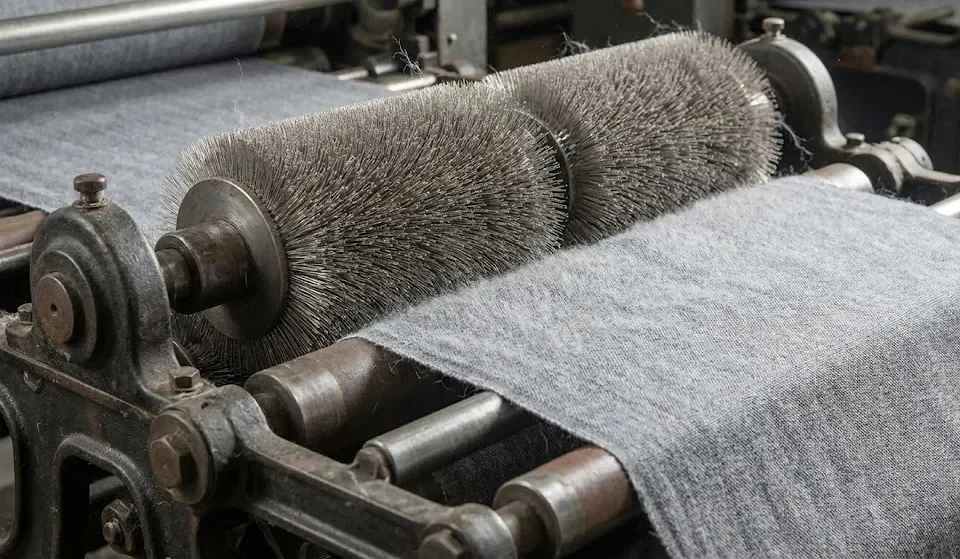
⚙️ The Mechanism
- The Process: Flannel brushing process involves passing the fabric over rotating wire brushes (raising cards). These hooks pull fiber ends out of the twisted yarn.
- The Effect: This creates the raised nap flannel surface that traps heat.
⚠️ The Sourcing Tip: Spotting “Fake” Volume
How brushing affects warmth is significant, but it can be misleading. When comparing samples, check if the GSM difference is real yarn weight or just “fluff.”
Red Flag: A sample that loses 10% of its weight after one wash (due to lint loss) was likely “over-brushed” to fake a heavy handfeel.
🔄 What’s the Difference Between Single-Brushed and Double-Brushed Flannel?
Single-brushed flannel is brushed on one side to raise a nap, while the other side remains smoother. Double-brushed flannel is brushed on both sides, usually feeling softer and warmer against the skin.
🧥 Single Brushed
Often used for shirts where you want the pattern to be crisp on the outside but soft on the inside.
🧸 Double Brushed
Standard for bedding (double brushed flannel GSM) and pajamas. It maximizes comfort and warmth retention.
💡 B2B Sourcing Tip
For B2B orders, the key is consistency: specify which side is brushed, target handfeel, and how you’ll judge nap uniformity across rolls—not just “single” or “double.”
⚠️ The Lint Risk
Does double brushed flannel shed lint? Yes, more than single.
The brushing process breaks fibers to create fuzz. You must require a pre-wash or “lint check” in your QC protocols to prevent customer complaints about shedding.
📉 How Much Shrinkage Should Buyers Allow for Flannel?
Flannel shrinkage varies because brushing relaxes fibers and the fabric often uses softer, looser yarn structures. For buyers, the safest approach is to define shrinkage limits by end use (shirts vs sleepwear vs bedding) and verify them with a standardized wash method before approving bulk. If shrinkage is critical, request pre-shrinking or finishing options and write the test method directly into your PO.
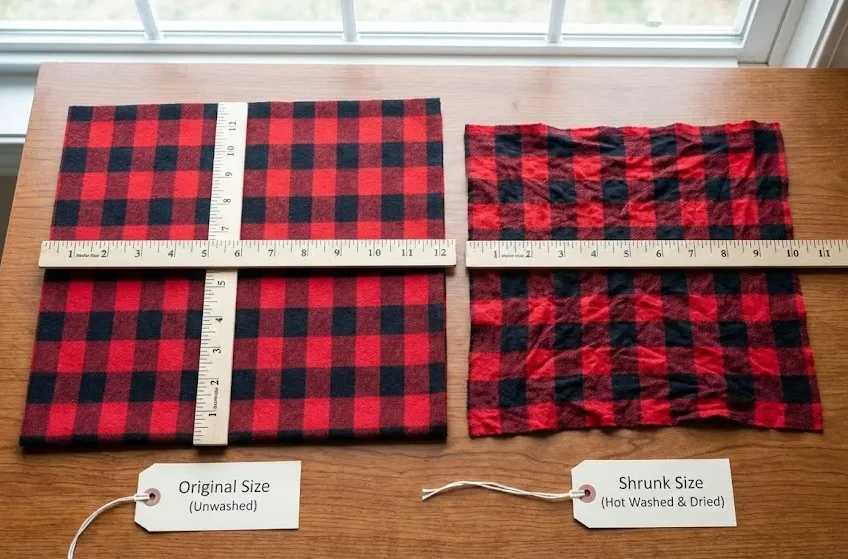
⚠️ The Reality & The Spec
- The Reality: Does brushed flannel shrink more? Often yes, because the yarn structure is loosened to allow for brushing.
- The Spec: Standard flannel shrinkage allowance is often -5% to -6%. For high-end, you can request Sanforizing to get it under -3%.
🧪 Industry Reference (Cotton Incorporated)
In Cotton Incorporated’s Product Evaluation Laboratory bulletin, they describe running standard textile tests aligned with AATCC and ASTM methods (and comparable to ISO methods) for fabric performance evaluation.
Pro Tip: This is why we recommend writing the specific test method into the PO, not just a shrinkage number.
⚠️ Common Quality Problems at Different Weights (Pilling, Skew, Shade)
Flannel quality issues don’t disappear with heavier weight—they just change. Lighter flannels may show skew or seam twisting more easily, while heavily brushed or heavier flannels can shed lint, pill faster, or show shade variation between lots. To reduce claims, buyers should match the risk to the end use and require the right tests (pilling, dimensional stability, shade control) before bulk cutting.
📊 Table: Issue → Cause → Sourcing Fix
| Issue | More likely when… | What buyers should do |
|---|---|---|
| Pilling | Heavy nap / Softer yarn / Abrasion | Set pilling grade for flannel + wash & rub test |
| Skew / Twisting | Relaxed structure / Poor finishing | Add flannel skew / twisting tolerance + wash test |
| Shade Variation | Lot change / Dye inconsistency | Lab dip approval + flannel shade banding |
| Lint Shedding | Aggressive brushing (Double Brushed) | Specify pre-wash + lint check |
🔬 Why Pilling Matters (Industry Context)
A Beltwide Cotton Conference paper lists appearance, colorfastness, and dimensional stability among key performance attributes and discusses objective pill grading—reinforcing why pilling should be specified and tested, not guessed.
📋 How to Inspect Flannel Rolls (Quick QC Checklist)
To inspect flannel rolls properly, don’t start by eyeballing the surface—start by defining the standard you’ll judge against. Buyers should confirm the approved sample, target GSM tolerance, brushing side, shade standard, and shrinkage method first. Then inspect roll-to-roll consistency (shade, nap, defects) and finally verify weight and shrinkage with measured tests before signing off bulk.
Use this flannel fabric inspection checklist:
✅ The Quick Inspection Checklist
- Weight Check: Use a GSM cutter. Is it within tolerance (e.g., 170 +/- 5%)?
- Shade Check: Compare Center-to-Selvedge (CSV) and Head-to-Tail. Flannel shade banding is critical for sleepwear sets.
- Nap Check: Is the brushing even? Is the flannel nap direction consistent?
- Defect Check: Use the 4-point fabric inspection system (flannel). Look for “bare spots” where brushing missed.
🏭 Case from Our Production: The Shade Banding Lesson
One sleepwear client approved a soft double-brushed sample but skipped shade banding in bulk. When cutting started, panels from two dye lots looked different under store lighting.
The Fix: We re-grouped rolls into shade bands and re-approved the “sellable range.” Now, we always require shade-band approval before bulk cutting.
📝 PO Spec Template for Flannel
A flannel PO should describe what you want in measurable terms, not just “soft flannel.” Include fabric type (cotton flannel), brushing requirement (single/double and which side), target GSM with tolerance, width, yarn/count or density, shrinkage limits with a test method, and performance targets like pilling and colorfastness. A clear PO prevents rework, delays, and claim disputes.
Copy this flannel PO spec template to professionalize your sourcing:
| Item | Spec |
|---|---|
| Fabric | Cotton Flannel GSM (Single/Double Brushed; Brushed Side: ___) |
| Weight | ___ GSM (Tolerance ± ___ %) |
| Width | ___ inches (Cuttable) |
| Yarn Count / Density | ___ (e.g., flannel yarn count for bedding 20s/10s) |
| Shrinkage | Warp ___% / Weft ___% (Test Method: ISO/AATCC) |
| Pilling | Grade ___ after ___ cycles (Method: ___) |
| Colorfastness | Wash/Rub/Sweat: Grade ___ (Method: ___) |
| Inspection | 4-point fabric inspection system; Max points per 100 yd/m: ___ |
| Shade | Approved Lab Dip + Shade Banding Rule: ___ |
| Packaging | Roll Length ___; Polybag + Label Info ___ |
⚖️ Conclusion: The Flannel Balancing Act
Sourcing the right flannel is a balancing act.
Too light?
It feels cheap.
Too heavy?
It pills and sheds.
The Sweet Spot
Usually 160-170 GSM for versatility.
💡 The Golden Rule
But remember, the number on the scale is just the start. The real quality comes from the yarn, the weave, and the brushing precision.
Always buy by spec, not just by touch.
Ready to verify your specs? Check our guide on textile-testing-standards-guide
 English
  Arabic
  Spanish
  French
  German
  Azerbaijani
  Vietnamese
  Bengali
  Japanese
  Hindi
Hindi  Turkish
  Russian