I am the founder of China fabric supply chain, with 20 years of fabric manufacturing experience. Our mill holds ISO 9001, OEKO-TEX Standard 100, and GOTS certifications, and we were awarded China Best Fabric Manufacturer Award for quality and reliability.
A factory expert compares cotton dyeing methods: Reactive vs Vat vs Pigment. Learn the pros, cons, costs, and eco-impact to choose the right dye for your product
Introduction: A B2B Guide to Cotton Dyeing
Color is the first thing a customer notices. But as a cotton fabric manufacturer, we know very well that the choice of dyeing method for cotton fabrics is not something that can be done arbitrarily. Because whether it’s reactive dyeing, vat dyeing, or pigment dyeing, it will directly determine the final product’s feel, durability, cost, and sustainability.
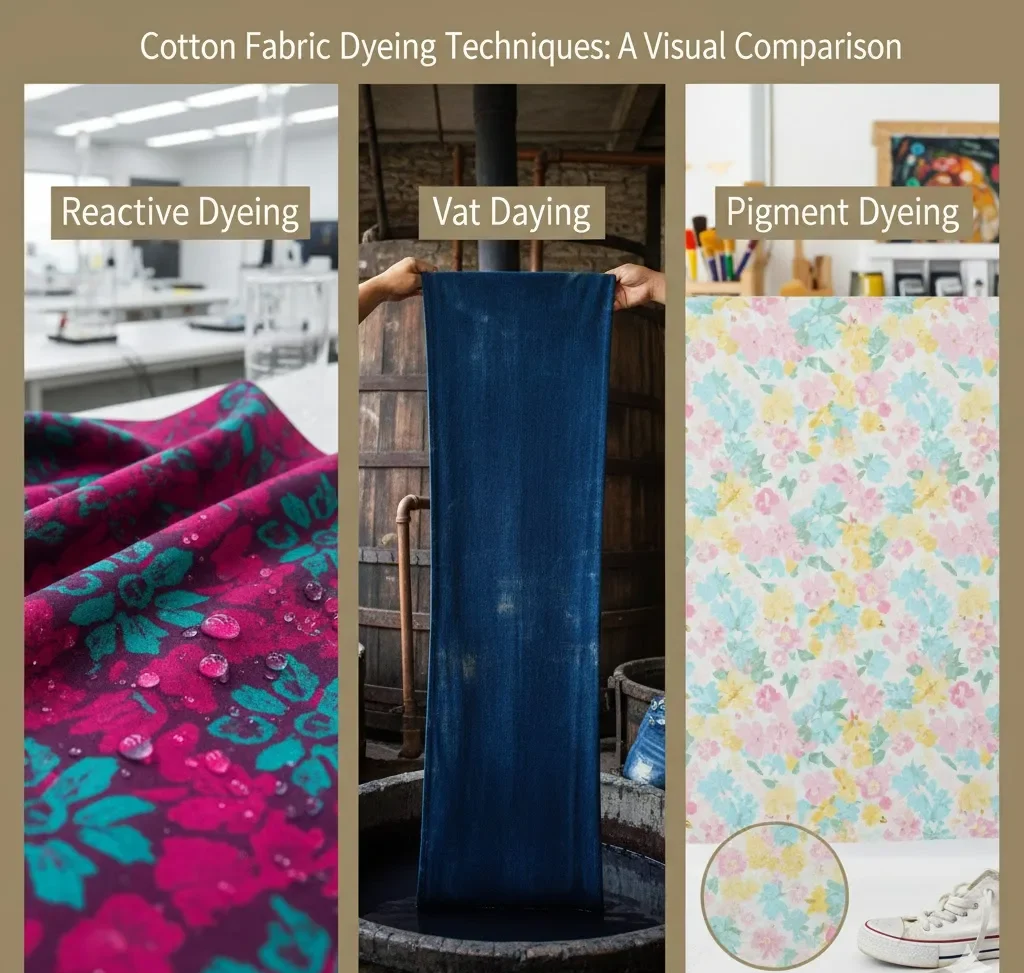
Cotton Fabric Dyeing Methods: Reactive Vs Vat Vs Pigment
This guide is designed to take you inside the dyehouse. I will explain, from an engineer’s perspective, the practical differences between these three core processes. We’ll compare their chemical principles, their real-world performance, and their cost implications. This guide won’t just define them; it will give you a clear framework for making the most informed, profitable, and product-appropriate sourcing decision.
(If you want to know how cotton is turned into cotton cloth step by step, you can read our guide on the cotton fabric process, which explains in detail the process of turning cotton into cotton cloth)
The 3 Core Dyeing Methods: Foundational Definitions
First, let’s establish a clear baseline for what each process is.
What is Reactive Dyeing?
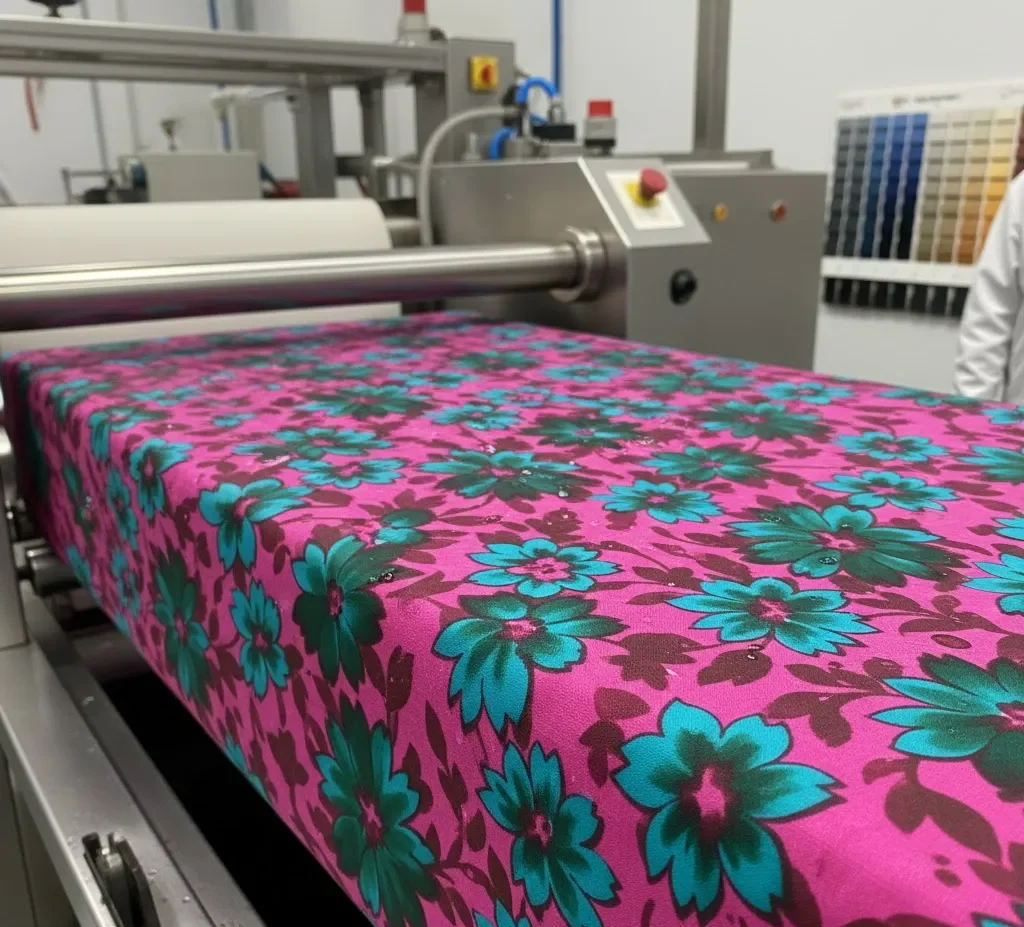
The Staining Process Of Reactive Dyeing
Reactive dyeing is a modern, high-quality dyeing process where the dye molecules form a covalent bond—a direct chemical bond—with the cellulose fibers of the cotton.
The How-It-Works Analogy: Think of the dye molecule and the fiber molecule as two LEGO bricks. The reactive process clicks them together permanently. The dye becomes a part of the fiber itself.
Factory POV:
In our factory, the vast majority of our bedding, babywear, and premium Cotton Fabric orders are processed with reactive dyeing. The reason is simple: the covalent bond, when combined with a thorough soaping wash, ensures the color is stable through a 60°C home laundry (per AATCC TM61 / ISO 105-C06 standards) and, crucially, the fabric’s natural, soft hand-feel isn’t masked by a surface film. For any client prioritizing softness and skin-friendly properties, this is the most effective and high-value path.
What is Vat Dyeing?
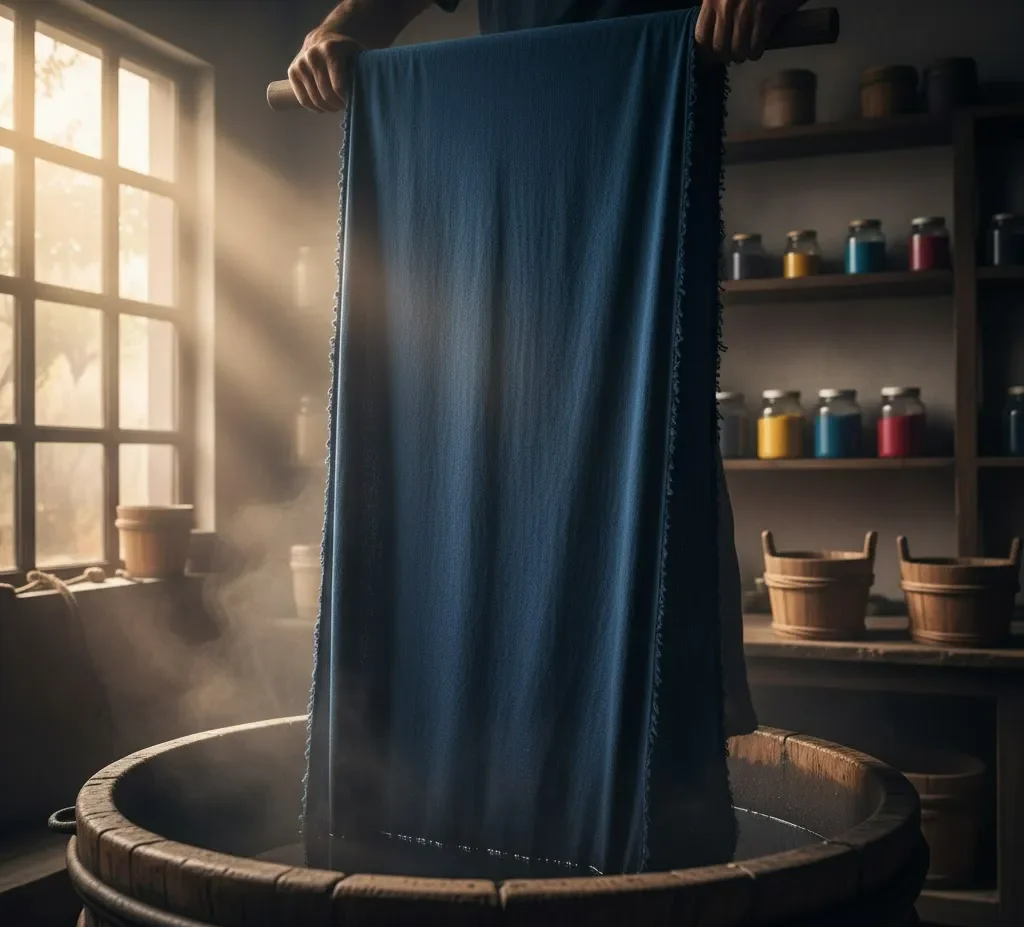
The Staining Process Of Vat Dyeing
Vat dyeing is an ancient, incredibly robust process. It involves using a large molecule dye (a “vat dye”) that is insoluble in water. The dye is first chemically reduced into a smaller, soluble leuco form, which can then penetrate the cotton fiber.
The How-It-Works Analogy: This is like building a ship in a bottle. We first disassemble the dye (the ship) into small, soluble pieces to get them inside the fiber (the bottle). Once inside, we oxidize them, reassembling them into a massive, insoluble pigment molecule that is now physically trapped within the fiber structure.
What is Pigment Dyeing?
The Staining Process Of Pigment Dyeing
Technically, this is not a true dyeing process but rather a coloring or coating process. It uses pigments—which are fine, insoluble color particles—that are mixed with a binder (a glue or resin) and applied to the fabric’s surface.
The How-It-Works Analogy: This is like painting. The pigment particles are simply glued onto the surface of the fibers with a pigment dye binder mechanism. The fabric is then passed through a high-heat oven (curing) to lock the binder in place.
Core Dimensions Comparison: Reactive vs Vat vs Pigment
This table provides a quick overview for busy buyers. We will explore each of these dimensions in the deep-dive that follows.
Feature
Reactive Dyeing
Vat Dyeing
Pigment Dyeing
Chemical Principle
Covalent Bond (Becomes one with fiber)
Mechanical Trapping (Locked inside fiber)
Physical Adhesion (Glued to fiber surface)
Process Steps
Complex (Dye, Fix, Soap, Rinse)
Very Complex (Reduce, Dye, Oxidize, Soap)
Simple (Pad, Dry, Cure)
Hand-Feel
Excellent. No change to cotton’s natural softness.
Very Good. Minimal change; fabric feels sturdy.
Fair to Poor. Can feel stiff or “coated” from binder.
Color Fastness
Excellent (Wash) / Fair (Chlorine)
Superior (Excellent wash, light, and chlorine fastness)
Fair to Poor (Will fade/crock, not colorfast)
Color Brightness
Excellent. Brightest, widest range of colors.
Good. Deep, rich shades (e.g., navy, black).
Good. Opaque, good coverage.
Eco-Impact
High water/salt/alkali use (traditional).
High chemical use (reducing/oxidizing agents).
Low water/energy use.
Cost
Medium – High
High – Very High
Low
Primary Use
Premium T-Shirts, Bedding, Babywear
Workwear, Uniforms, Towels, Denim (Indigo)
Vintage-look T-Shirts, Garment Dyeing
Process Steps Explained
Reactive dyeing step by step (exhaust method): This is a common reactive dyeing recipe cotton suppliers use.
Dyeing: Fabric is added to a bath with dye and a large amount of salt (e.g., 50-80 g/L) to help the dye move toward the fiber.
Fixation: A strong alkali (like soda ash) is added, raising the pH and triggering the covalent bond reaction.
Soaping: A critical, multi-stage hot wash to remove all unfixed, hydrolyzed dye.
Note:Factory Insight: This step is key to good fastness and preventing future bleeding.
Vat dyeing step by step:
Reduction: The insoluble dye is dissolved in an alkaline bath with a reducing agent.
Dyeing: The cotton is immersed in this “leuco” dye solution.
Oxidation: The fabric is removed and exposed to air (or a chemical oxidizer) to turn the dye back into its insoluble, colored state.
Soaping: A very hot boil wash to remove surface dye and fully develop the color and fastness.
Pigment dyeing step by step:
Padding: The fabric is passed through a bath containing the pigment, binder, and other chemicals.
Drying: The fabric is dried at a low temperature.
Curing: This is the most critical step. The fabric is passed through a high-temperature oven (e.g., 150-170°C for 3-5 minutes) to “cure” the binder, cross-linking it and locking the pigment to the fabric.
Industry White Paper Reference :
As a supplier, I can’t overstate the importance of the curing step in pigment dyeing. The final color fastness is entirely dependent on the binder’s film-forming properties and the exact curing time/temperature curve. An under-cured fabric will have terrible wash fastness. We often reference technical guides from bodies like Cotton Incorporated which detail the importance of binder selection and curing parameters. For garment dye programs, we insist on including the binder data sheet and the exact baking SOP as an appendix to the Purchase Order (PO).
Hand-Feel Characteristics Explained
Reactive: The best. The process does not add any foreign materials to the fabric surface. It leaves the cotton feeling exactly as it should: soft, natural, and breathable. This is why it’s the standard for reactive dyeing for babywear fabrics.
Vat: Very good. The dye particle is trapped inside the fiber, not on the surface, so the hand-feel is largely unchanged. The fabric feels strong and sturdy.
Pigment: This is the biggest trade-off. The binder system is essentially a thin layer of resin, which can make the fabric feel stiffer, less breathable, and slightly plasticky or coated. This is why how to soften pigment dyed cotton is a major focus, often requiring heavy doses of silicone softeners in the final rinse.
Color Fastness Explained (Wash, Rub, Light)
Comparison Of Color Fastness Of Different Dyeing Methods
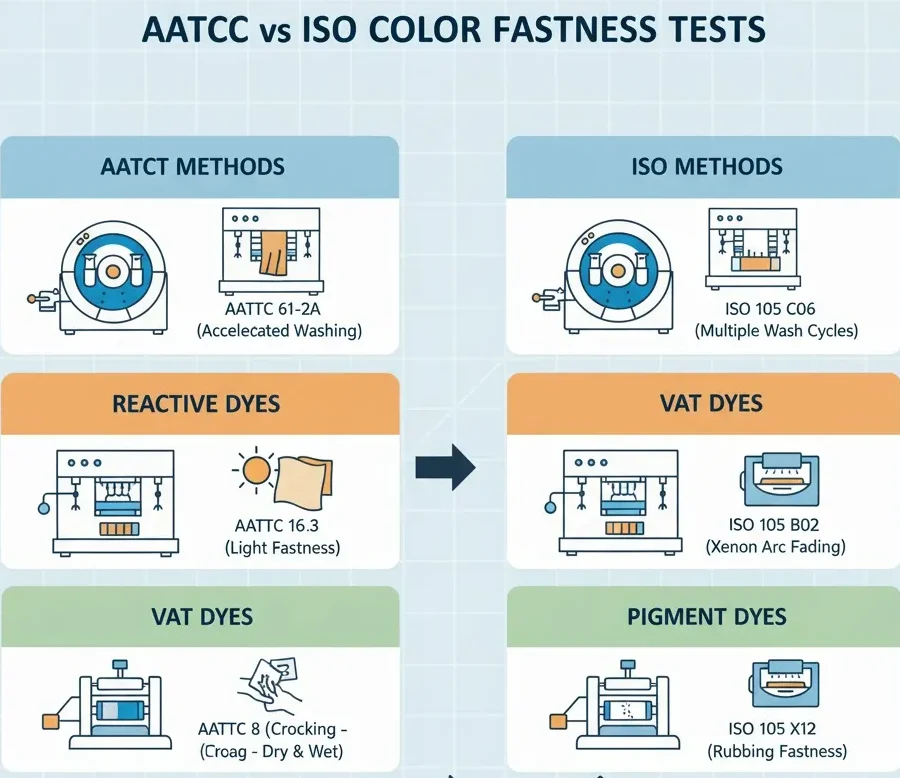
This is a core performance metric, often tested using AATCC vs ISO color fastness tests.
Reactive: Excellent wash fastness (Grade 4-5 on the ISO 105-C06 scale) because the dye is chemically bonded. However, it has poor fastness to chlorine bleach.
Vat: Superior overall fastness. It has excellent wash fastness (Grade 4-5) and, critically, is resistant to chlorine bleach and has the highest light fastness. This makes it ideal for outdoor workwear and hotel towels that require harsh laundering.
Pigment: Fair to Poor wash fastness. The binder will slowly abrade with washing, causing the color to fade or crock rub off. This is a bug for performance textiles but a feature for pigment garment dyeing for t-shirts vintage look.
Color Brightness & Range Explained
Reactive: The winner for brightness. Reactive dyes offer the widest and most brilliant color palette available, including deep, brightest colors with reactive dyes on cotton like bright reds, turquoises, and fluorescent shades (with special types).
Vat: The color range is more limited and tends to be more subdued or classic (e.g., navy, olive, deep reds). It is exceptional for vat black vs vat navy for workwear where depth and fastness are key.
Pigment: Good, opaque colors. A key advantage is that pigments can color any fiber (even blends) and can easily achieve a light color on a dark background.
Environmental Impact Explained
The Influence Of Environment On Staining Methods
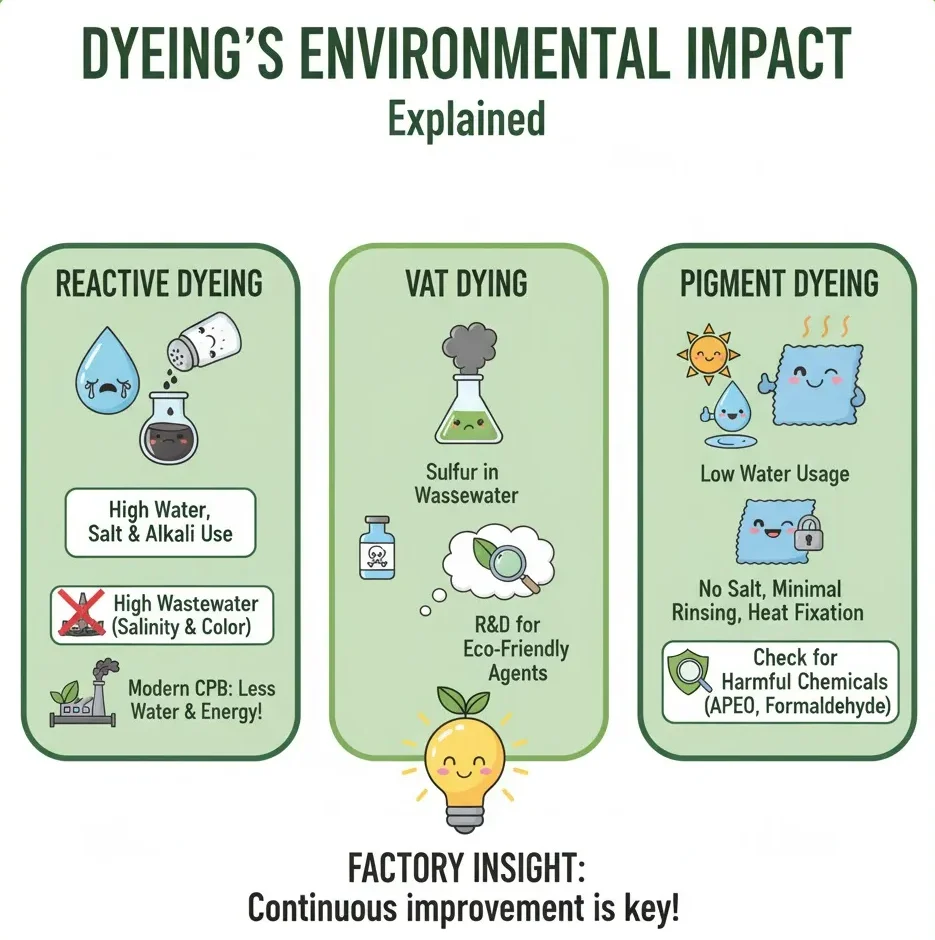
Reactive: Traditional reactive exhaust dyeing recipe cotton uses high amounts of water (for soaping), salt, and alkali. This results in high wastewater (effluent) with high salinity and color. Modern processes like cold pad batch reactive dyeing (CPB) use far less water and energy.
Vat: The traditional reducing agent, sodium dithionite (hydrosulfite), creates high sulfur content in wastewater. Modern eco-friendly alternatives are a key area of R&D.
Pigment: This is often cited as the most eco-friendly due to its pigment dyeing low water usage. The process requires no water for fixation (just heat), no salt, and minimal rinsing. The main concern is ensuring the binders and pigments themselves are free of harmful substances (APEO, formaldehyde).
In-House Data Snapshot (Fabric-Supplier, 2024):
We ran a comparative test on three common fabric requests:
Fabric Spec
Wash Fastness (ISO 105-C06)
Rub Fastness (AATCC TM8)
Hand-Feel Rating (1-5)
Reactive Dye (180 gsm jersey)
Grade 4 to 4/5
4 (Dry) / 3-3.5 (Wet)
4.5 (Softest)
Vat Dye (12 oz denim, Indigo)
Grade 4-5
3.5 (Dry) / 2.5-3 (Wet)
4.0 (Sturdy)
Pigment Dye (170 gsm print)
Grade 3-4
3.5 (Dry) / 3 (Wet)
3.0 (Stiffer, pre-softener)
Methodology: Tests were performed per ISO 105-C06 (S-2A) and AATCC TM8. Our environmental compliance for all processes is benchmarked against the ZDHC Wastewater Guidelines.
Cost Structure Explained
Reactive: Medium-High. The dyes themselves are moderately expensive, but the long, complex process (requiring salt, alkali, high-temp soaping) increases energy, water, and labor costs.
Vat: Very High. The dyes are expensive, and the complex vat dyeing procedure (requiring both reduction and oxidation steps) is slow and technically demanding.
Pigment: Low. The pigment dyeing process is simple (pad-dry-cure), fast, and energy-efficient, making it the lowest-cost method.
Primary Uses & Applications Explained
Best Uses Of Different Staining Methods
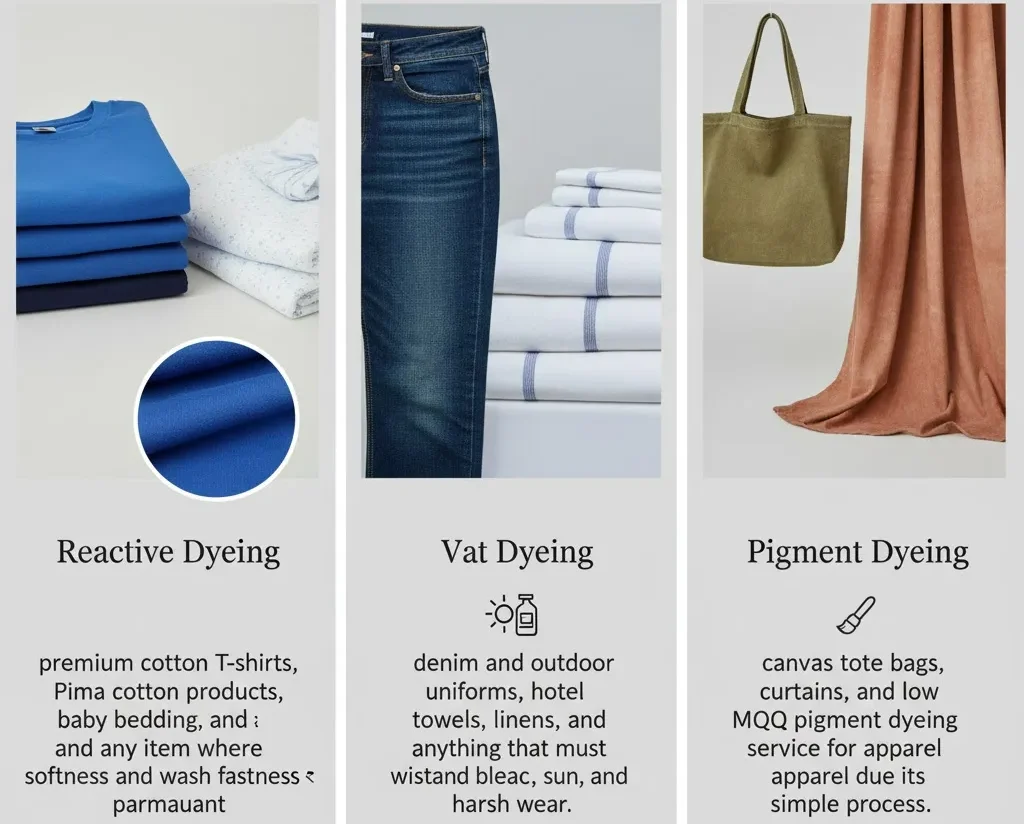
Reactive: The go-to for quality. Best for premium cotton T-shirts, Pima cotton products, baby bedding, and any item where softness and wash fastness are paramount.
Vat: The durability champion. Best for vat dyeing for denim and outdoor uniforms, hotel towels, linens, and anything that must withstand bleach, sun, and harsh wear.
Pigment: The style and value choice. Best for garment dyeing (vintage-look tees), canvas tote bags, curtains, and low MOQ pigment dyeing service for apparel due to its simple process.
How to Choose the Right Dyeing Method for Your Needs
This is the key takeaway for a buyer. Your choice is a trade-off.
Need 1: Intimate Apparel / Babywear → Choose REACTIVE
Why: You are solving for softest hand-feel + proven safety. Reactive dyes are chemically bonded, so they don’t leave a surface film, and they are easily certified to OEKO-TEX® standards for babywear.
Need 2: Workwear / Hotel Linens → Choose VAT
Why: You are solving for extreme durability + chlorine bleach resistance. The vat dyeing for deep navy workwear uniforms or hotel towels is the only process that can withstand repeated industrial laundering with bleach without fading.
Why: You are solving for low cost + fast production + specific style. The pigment garment dyeing for low cost fashion tees is highly efficient, and its tendency to fade gracefully is a desired aesthetic feature, not a bug.
Case Study:
We once had a Philippines workwear client struggling with complaints about their dark navy trousers fading. Their original spec was for a deep reactive dye. After analyzing their needs, we proposed a switch to a vat dye (Vat Navy).
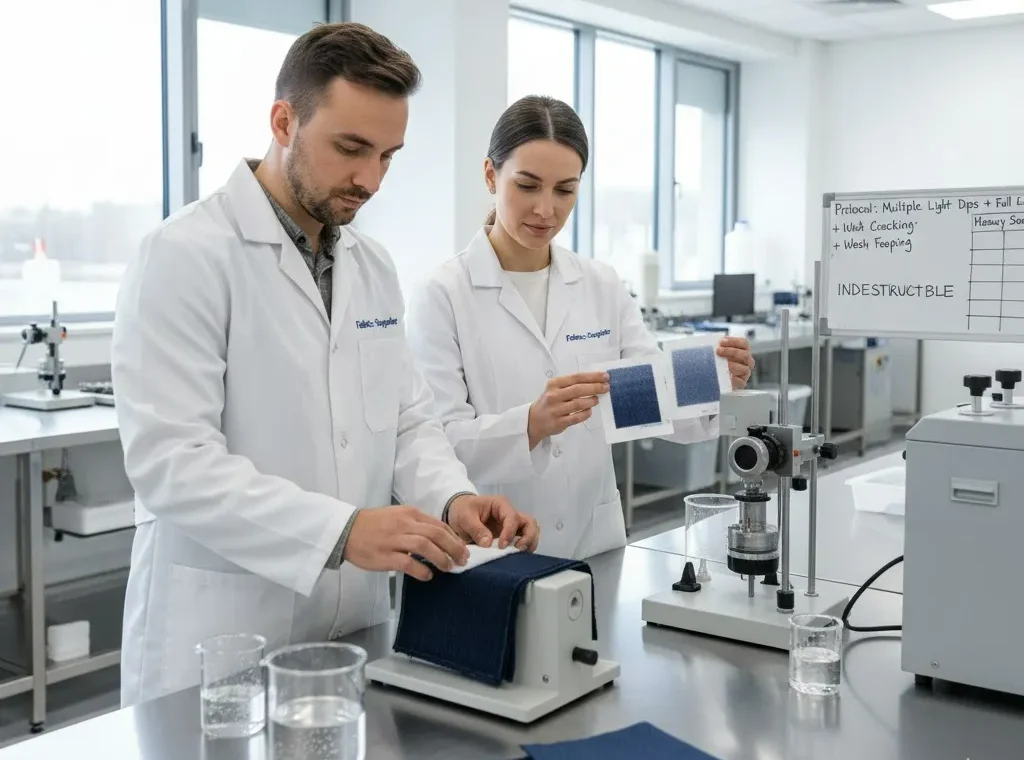
Our Researchers Are Conducting Tests.
We ran a small lab trial and showed them the wet crocking fastness (rub test) improved from a 2.5 to a 3-3.5, and the wash fastness was virtually indestructible. The unit cost was higher, but the product returns and customer complaints dropped to zero, saving them money in the long run. We implemented a multiple light dips + full oxidation + heavy soaping protocol to achieve this. This is the kind of practical problem-solving we do every day.
How to Judge If the Dyeing Process is Qualified? (Simple Buyer Tests)
When you receive a sample, here are a few simple tests you can perform without a lab.
How to Test Reactive Dyeing (Test for Fastness)
【Tools】: Sample, mild detergent, warm water (50-60°C), a white cloth.
Tools Needed To Determine If Reactive Dyeing Meets The Standards
Wash Test:
Cut a 20x20cm swatch and place it in a bowl of warm water with a small amount of detergent.
Let it soak for 30 minutes, then agitate and rub it vigorously between your hands 10 times.
Rinse, let dry, and compare to the original. A qualified reactive dye will show no significant color loss or bleeding onto other areas.
Evenness (Levelness) Test:
Hold the dry sample up to a bright, natural light (like a window).
Look for any patchy, cloudy, or streaky areas.
Run your hand over the surface; it should feel uniformly soft, with no hard or “crispy” spots.
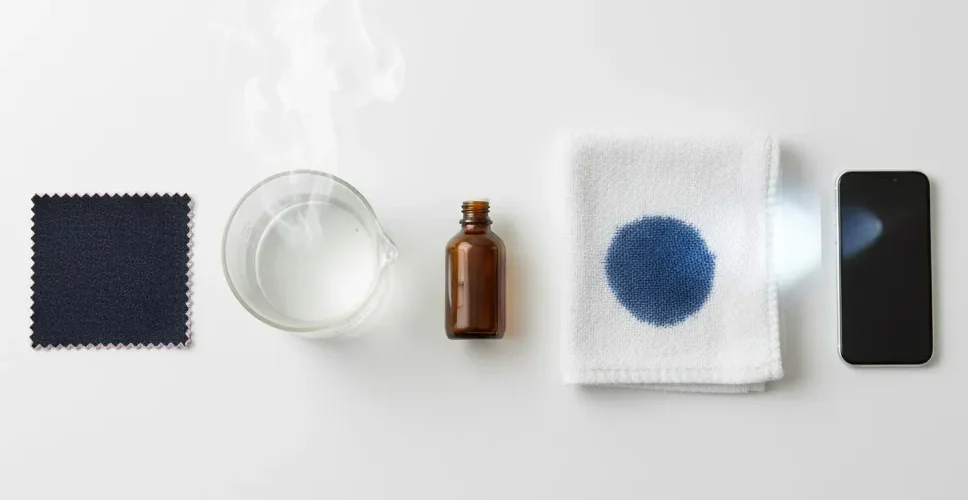
How to Test Vat Dyeing (Test for Oxidation & Depth)
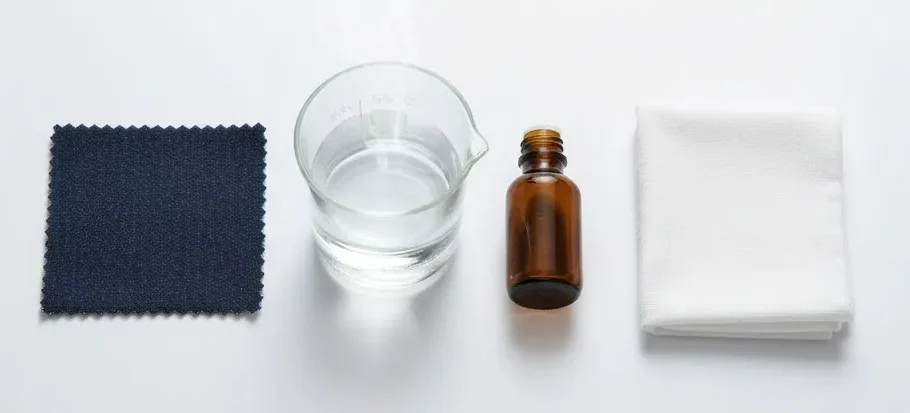
【Tools】: Sample (dark color), boiling water, clear glass, a white towel, phone flashlight.
Tools Needed To Determine If Vat Dyeing Meets Standards
Oxidation & Bleed Test:
Place a 10x10cm swatch in the clear glass and pour boiling water over it.
Let it sit for 10 minutes. A fully oxidized and properly soaped vat dye will not bleed. The water should remain clear.
Press the wet swatch firmly between a folded white towel. The towel should show little to no color transfer.
Color Depth Test:
Fold the dark fabric over on itself (double layer).
Press your phone’s flashlight directly against the folded fabric.
A deep, true vat dye (like vat black) should be almost completely opaque and show minimal light “grinning” through the fibers.
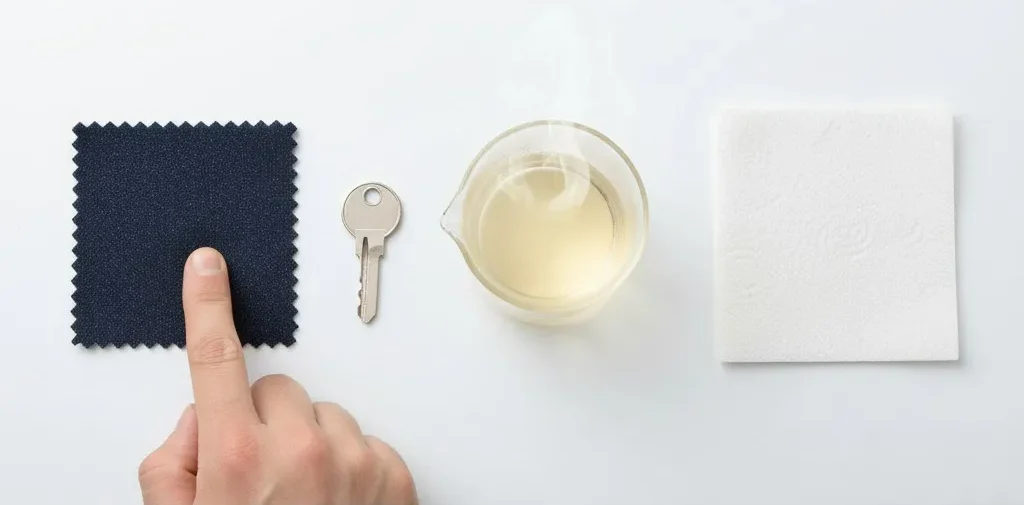
How to Test Pigment Dyeing (Test for Binder Quality)
【Tools】: Sample, your fingernail (or a key), warm water, a white paper towel.
Tools Needed To Determine If Pingment Dyeing Meets The Standards
Binder Fixation Test (Crocking & Flaking):
Use your fingernail to scratch the fabric surface 3 times with firm pressure.
Wipe the scratched area with the white paper towel. If you see a chalky powder or pigment flakes, the binder is weak or was improperly cured. This is known as poor crocking fastness.
Soak the sample in warm water for 20 minutes and rub it. If the water becomes very cloudy or you see pigment particles, the binder has poor wash fastness.
Hand-Feel Test:
Crumple the fabric tightly in your fist for 5 seconds, then release.
A good pigment dye with proper softeners should bounce back. If it stays heavily creased or feels stiff, the binder concentration is too high.
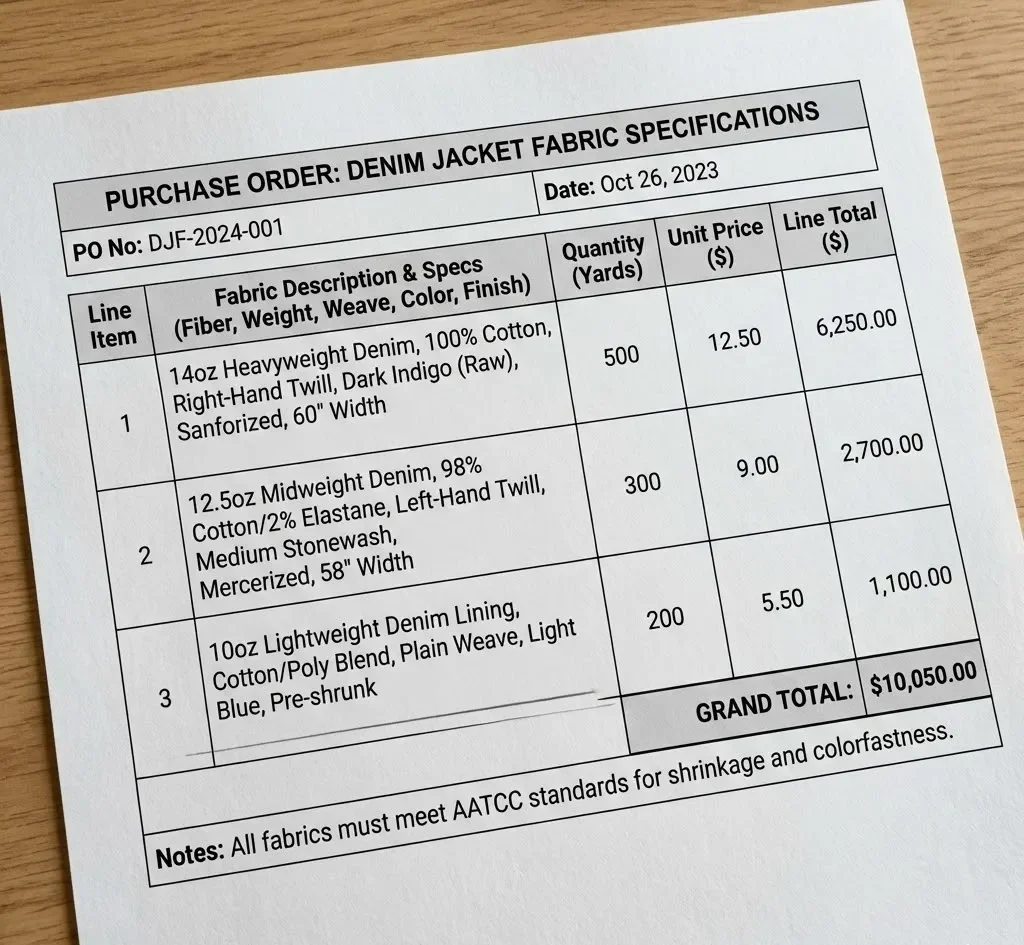
How to Specify in a PO?
To protect yourself, we recommend adding clear, measurable standards to your Purchase Orders:
“Wash Fastness (ISO 105-C06) must be ≥ Grade 3-4 (based on color depth).”
“Rubbing Fastness (AATCC TM8) must be ≥ Grade 4 (Dry) / 3 (Wet).”
“Pigment-dyed items must include binder technical data sheet & curing curve.”
“Supplier must provide quarterly 3rd-party test reports confirming ZDHC compliance.”
The choice of cotton dyeing methods—Reactive vs Vat vs Pigment—is a strategic decision that defines your product.
Reactive Dyes offer the best combination of softness and vibrant, lasting color for premium goods.
Vat Dyes offer unparalleled durability for items that must endure harsh conditions.
Pigment Dyes offer a low-cost, efficient path to achieving specific vintage aesthetics.
As your manufacturing partner, our job is to help you select the precise process that aligns with your brand, your product, and your cost target. Understanding these differences is the first step to sourcing with true expertise.
(Ready to develop your next custom color program? Contact us to speak with our dyehouse specialists.)
FAQ
Which dyeing method is most eco-friendly?
Each has pros and cons. Pigment dyeing uses the least water and energy as it’s a simple pad-dry-cure process. However, modern Reactive processes (like Cold Pad Batch) have dramatically reduced water and energy use. The key is to partner with a factory that is ZDHC compliant and invests in modern, water-saving machinery.
Which dye is best for cotton t-shirts?
It depends on your market. For a premium, soft, long-lasting t-shirt, Reactive Dyeing is the best choice. For a vintage-look, garment-dyed t-shirt with a slightly faded look, Pigment Dyeing is the standard.
Is Vat Dye the same as Indigo?
Yes, Indigo—the classic dye used for blue jeans—is the most famous and oldest member of the Vat Dye family. They share the same chemical principle: they are insoluble, must be reduced to be applied, and then “oxidized” to be locked into the fiber.
Why is my t-shirt fading after washing?
There are two likely reasons: 1) It was pigment-dyed, and this gentle fading is a normal, intended characteristic of the style. 2) It was reactively-dyed but manufactured poorly, and the factory failed to “soap” or wash out all the unfixed dye, so you are seeing the excess dye wash away.
Garment dyeing is when a completed, sewn garment (like a blank t-shirt) is dyed, rather than dyeing the fabric first. This method is excellent for creating a soft, slightly washed-out look with subtle color variations at the seams. It most commonly uses Pigment Dyes or Reactive Dyes.
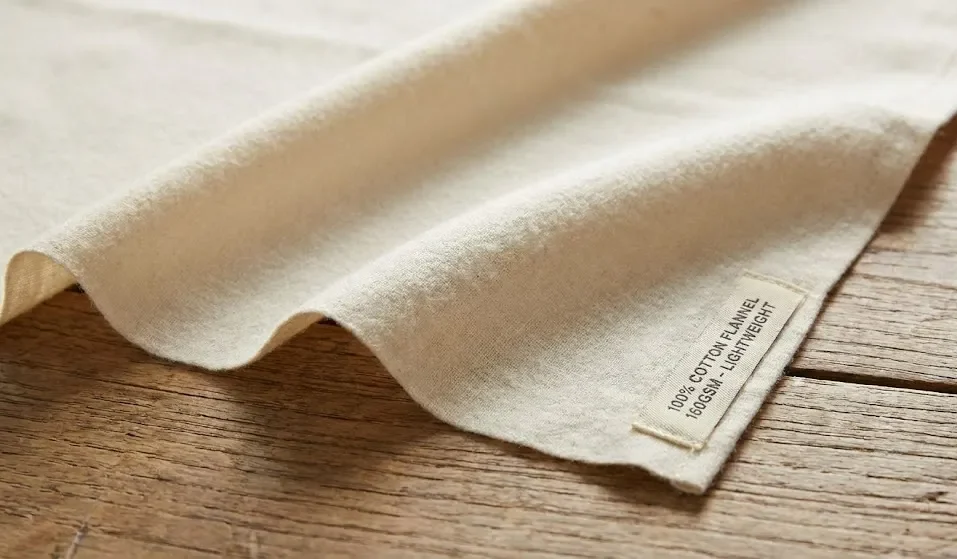
Don’t rely on GSM alone. Our factory guide explains how to read flannel specs (yarn count, density, brushing) to predict pilling, warmth, and durability.



 English
  Arabic
  Spanish
  French
  German
  Azerbaijani
  Vietnamese
  Bengali
  Japanese
  Hindi
Hindi  Turkish
  Russian