I am the founder of China fabric supply chain, with 20 years of fabric manufacturing experience. Our mill holds ISO 9001, OEKO-TEX Standard 100, and GOTS certifications, and we were awarded China Best Fabric Manufacturer Award for quality and reliability.
What is Ringspun vs Open-End vs Compact? Our factory expert guide compares 7 key differences in softness, strength, and cost to help you choose the right yarn.
Introduction: Why the Spin Matters as Much as the Fiber
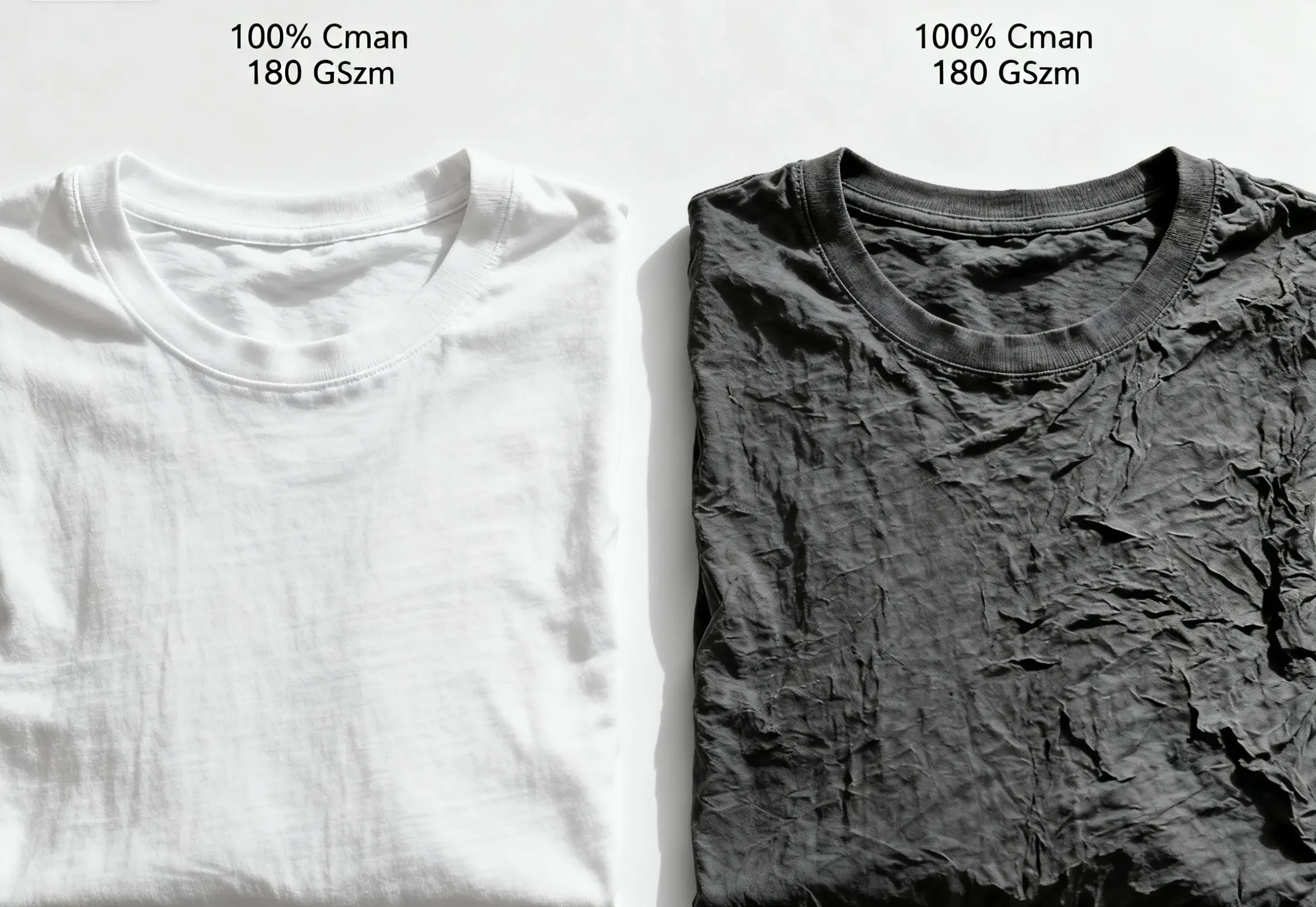
In my two decades as a textile supplier, I’ve had countless buyers come to me confused. They’ll say: I have two t-shirt samples, both are 100% cotton and 180 GSM, but one feels incredibly soft and smooth, while the other feels rough and stiff. Why?
I Have Two T-Shirt Samples, Both Are 100% Cotton And 180 Gsm, But One Feels Incredibly Soft And Smooth, While The Other Feels Rough And Stiff.
The answer, almost always, lies in the spinning process.
In fabric development, we always encounter the question of which method—Ringspun vs Open-End vs Compact—to optimize fabric performance. Different spinning methods significantly influence fabric feel, durability, pilling resistance, production speed, and cost.
This article will explain these technologies from a fabric factory’s perspective. I’ll also use our factory’s experimental data and real-world customer examples to illustrate the differences between various spinning methods!
(This guide is a deep dive into yarn processing. For a broader overview of all cotton types, we recommend starting with our pillar page, Combed vs. Carded Cotton Guide first, as it directly impacts the final yarn quality.)
What is Ringspun Cotton?
In short, ring spinning uses rings and spindles to continuously draw and tightly twist fibers, ultimately forming yarn. This makes the fibers in the yarn more parallel and denser, resulting in higher strength and a smoother feel.
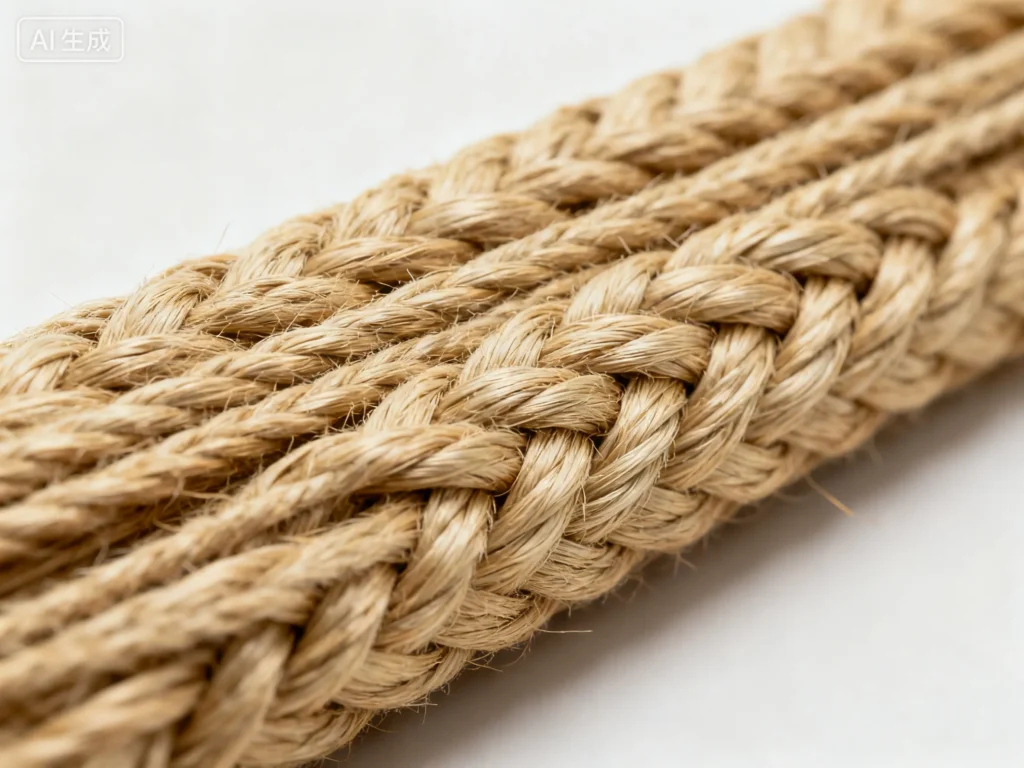
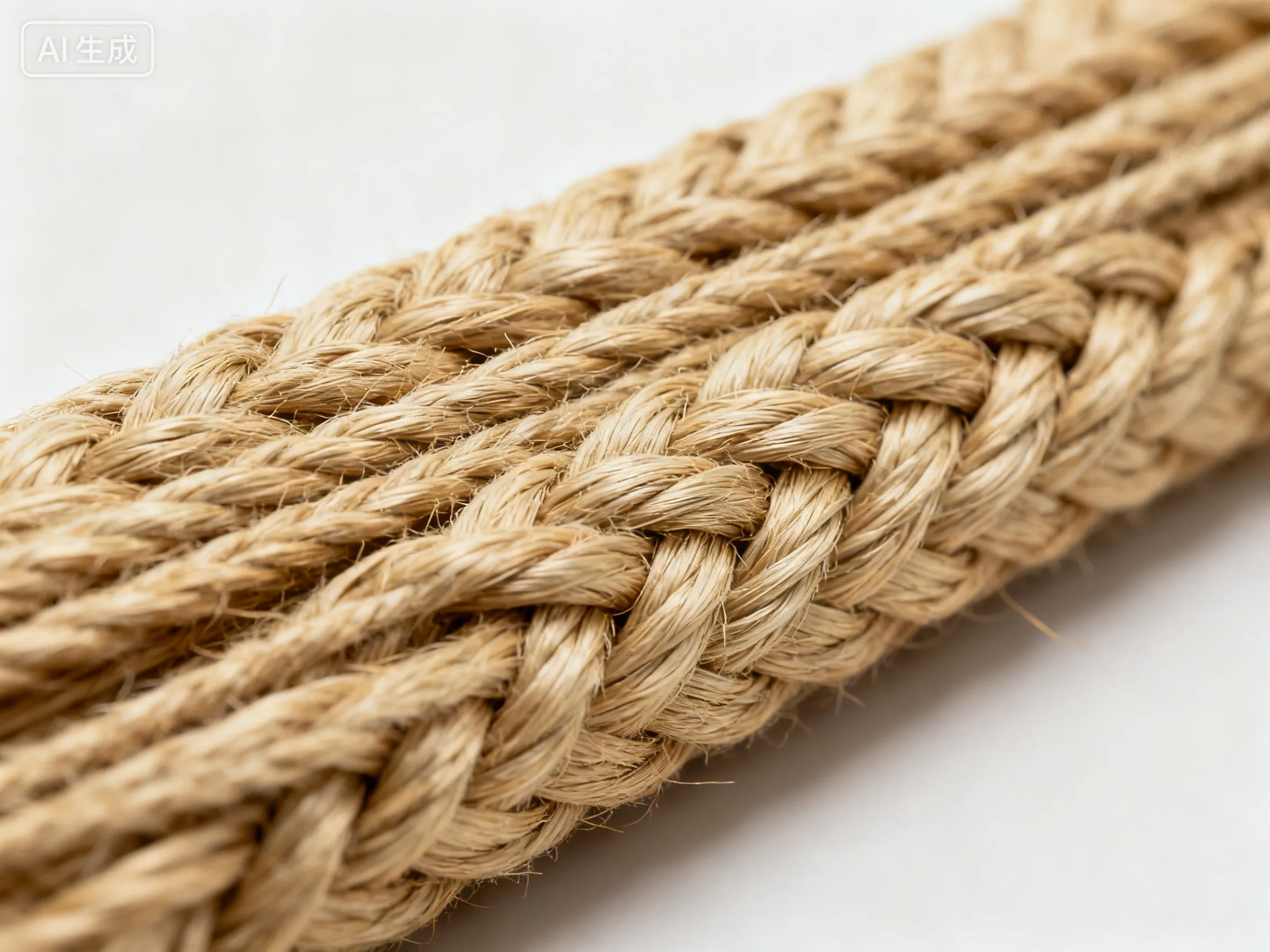
The Process Of Hand-Twisting Rope
You can imagine you are hand-twisting a rope. You take a bundle of long fibers, align them perfectly parallel, and then twist them tightly and uniformly from one end to the other. This creates a very strong, smooth, and compact rope.
What Is Open-End Cotton?
Open-End spinning (rotor spinning) uses a high-speed rotor and airflow to blow fibers into the rotor, where they freely entangle and form yarn. It has a short process, high speed, and low cost, but the yarn is more fluffy and has a looser structure, and its strength and fineness are usually not as good as ring spinning.
This is the Open-End spinning, more economical counterpart to ring spinning, developed to increase production efficiency.
A Dryer Lint Trap.
You can imagine a dryer lint trap. As the clothes tumble, loose fibers fly off and are collected in the trap, matting together in a somewhat random, jumbled way. Open-end spinning works on a similar “fiber collection” principle, but in a highly controlled, high-speed process.
What Is Compact Spinning?
What is compact spinning? This is not a third, separate system. It is a “Ringspun 2.0”—a critical upgrade to the traditional ring-spinning process.
Compact Spinning Struct
The Relationship:
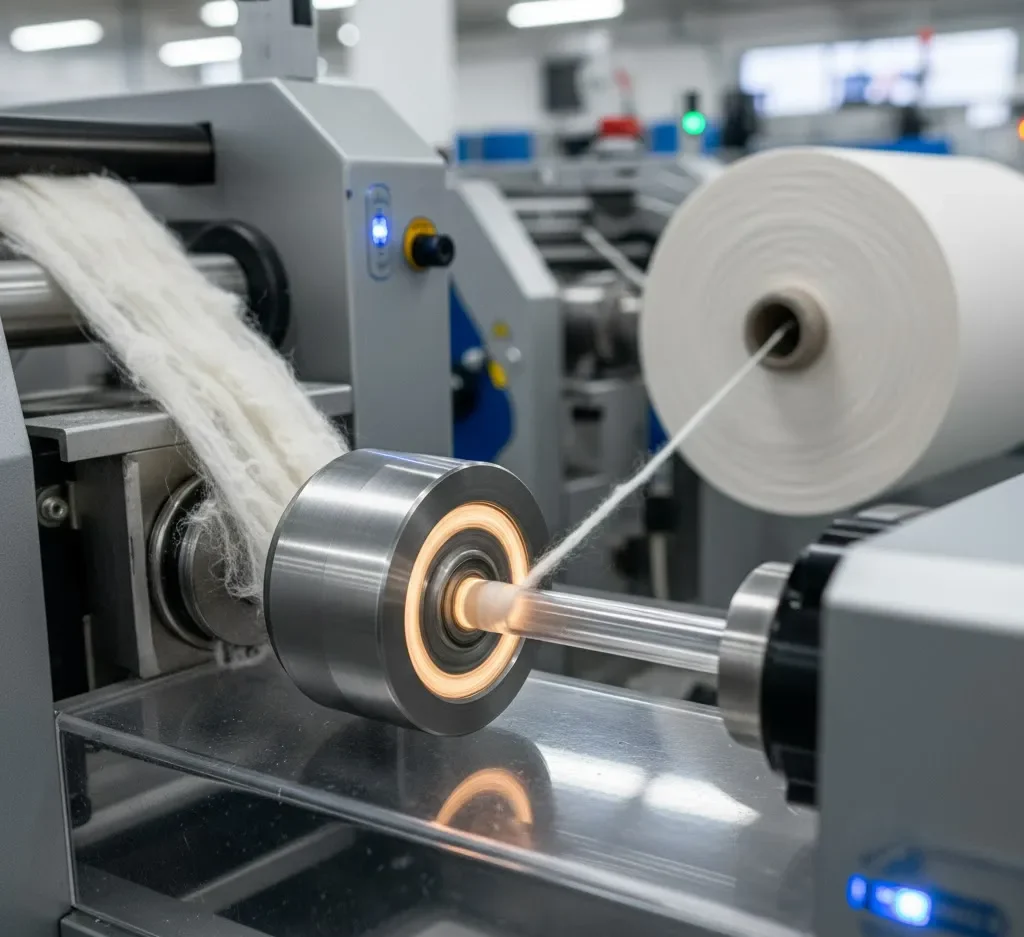
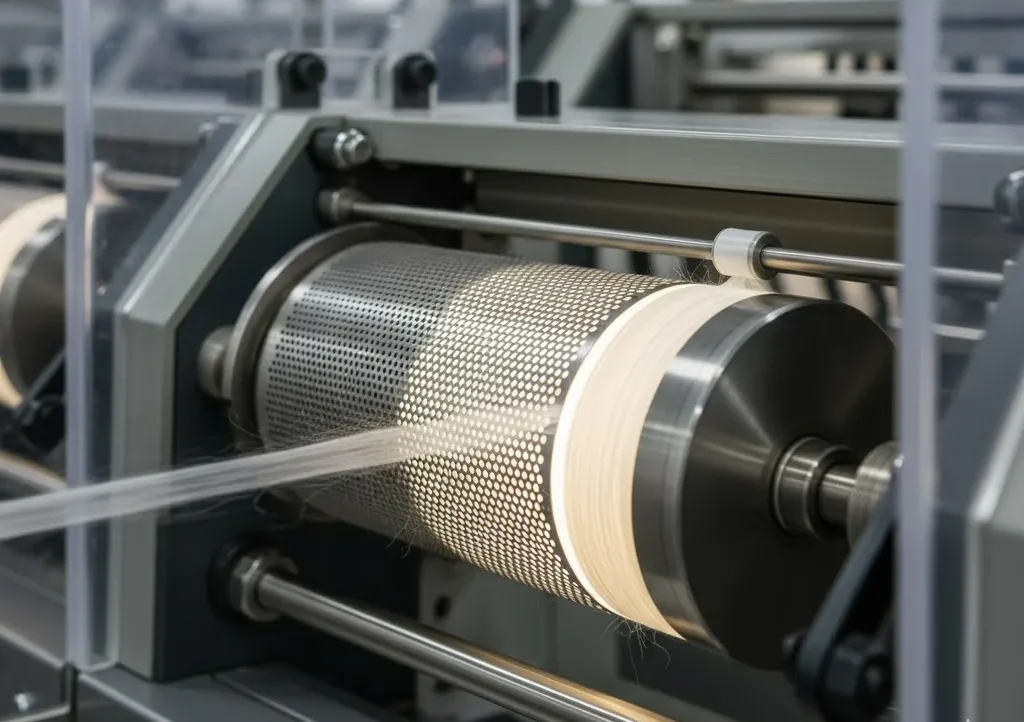
Compact spinning adds one crucial step before the final twist on a ring-spinning frame. After the fibers are drafted (thinned out) but before they hit the twisting spindle, they pass through a compacting zone.
This zone uses a perforated drum and suction airflow (like a tiny, precise vacuum cleaner) to pneumatically condense the strand of fibers. This process corrals almost all of the “stray” fibers, or hairiness, and packs them neatly into the yarn’s core. Only then is this highly condensed strand twisted.
The result is a yarn that has all the benefits of ringspun, but is even smoother, stronger, and cleaner.
Ringspun vs Open-End vs Compact: Head-to-Head Comparison
For a busy buyer, this table breaks down the fundamental trade-offs.
Feature
Ringspun Cotton (Standard)
Open-End (Rotor) Cotton
Compact Cotton (Premium)
Fiber Alignment
Parallel, twisted tightly
Random, loose, wrapper fibers
Extremely parallel, highly condensed
Yarn Hairiness
Low (smooth)
High (very fuzzy/hairy)
Extremely Low (very clean surface)
Hand-Feel
Soft, smooth
Coarser, stiffer, drier
Exceptionally soft, silky, smooth
Strength
High
Lower (fibers less aligned)
Very High (+10-15% over Ringspun)
Pilling Resistance
Good
Poor to Fair
Excellent
Production Cost
Medium (Approx. +20-30%)
Low (Baseline)
High (Approx. +40-60%)
Production Speed
Slow
Very High (3-5x faster)
Slow (same as Ringspun)
Deep Dive: Fiber Alignment
Ringspun: The fibers are well-aligned and twisted in a uniform helix, like a quality rope.
Open-End: The fibers are more jumbled. The spinning action creates a core of fibers, but many fibers wrap around this core in a more random pattern, creating the classic hairy yarn.
Compact: This process forces nearly all fibers into a perfectly parallel and dense bundle before twisting, resulting in the most uniform alignment possible.
Conclusion: Compact spinning provides the most superior fiber alignment, which is the foundation for all its other benefits.
Deep Dive: Yarn Hairiness
Ringspun: Has a low level of hairiness. The twisting process locks most fibers in, but some ends still protrude.
Open-End: Has a high level of hairiness. The blowing and collecting process leaves many fiber ends sticking out, creating a fuzzy, linty open end fabric.
Compact: Has the lowest hairiness. The pneumatic condensing step sucks in almost all stray fibers, creating an incredibly clean yarn.
Conclusion: This is one of the most visible differences. Less hairiness (Compact/Ringspun) leads to a cleaner fabric surface, better print quality, and less pilling.
Deep Dive: Hand-Feel
Ringspun: This is the standard for a soft-hand feel. What is 100 ringspun cotton? It’s a garment that feels noticeably softer and smoother than a basic, scratchy tee.
Open-End: The fabric feels stiffer, drier, and coarser due to the high hairiness and jumbled fiber structure.
Compact: This provides the most luxurious, silky, and smooth hand-feel, often described as “buttery” or “peachy.”
Conclusion: For any product where hand-feel is a primary selling point (like premium tees or bedding), Ringspun or Compact is essential.
Deep Dive: Durability (Tensile Strength)
Ringspun: The tight, uniform twist creates a strong, durable yarn.
Open-End: The looser, more random fiber arrangement makes the yarn weaker. Its strength comes from the bulk of the fibers, not the integrity of the structure.
Compact: This is the strongest. The high-density fiber bundle, combined with the ring-spinning twist, creates a yarn with significantly higher tensile strength.
Conclusion: For items needing durability and softness (like hotel sheets or premium tees), Ringspun/Compact is superior. For items where bulk durability is sufficient and cost is key (like heavy work flannels), Open-End is acceptable.
Industry White Paper: Strength Metrics
This isn’t just a subjective feeling. Industry-leading spinning machinery manufacturers like Rieter publish technical data that quantifies this. Their white papers often show that, for the same yarn count, a compact spun yarn can have 10-15% higher tensile strength than a conventional ringspun yarn, and significantly higher than an open-end yarn. This data is critical for us when developing fabrics for high-stress applications like hospitality linens or premium workwear.
Deep Dive: Pilling Resistance
Ringspun:Good pilling resistance. The fibers are well-secured.
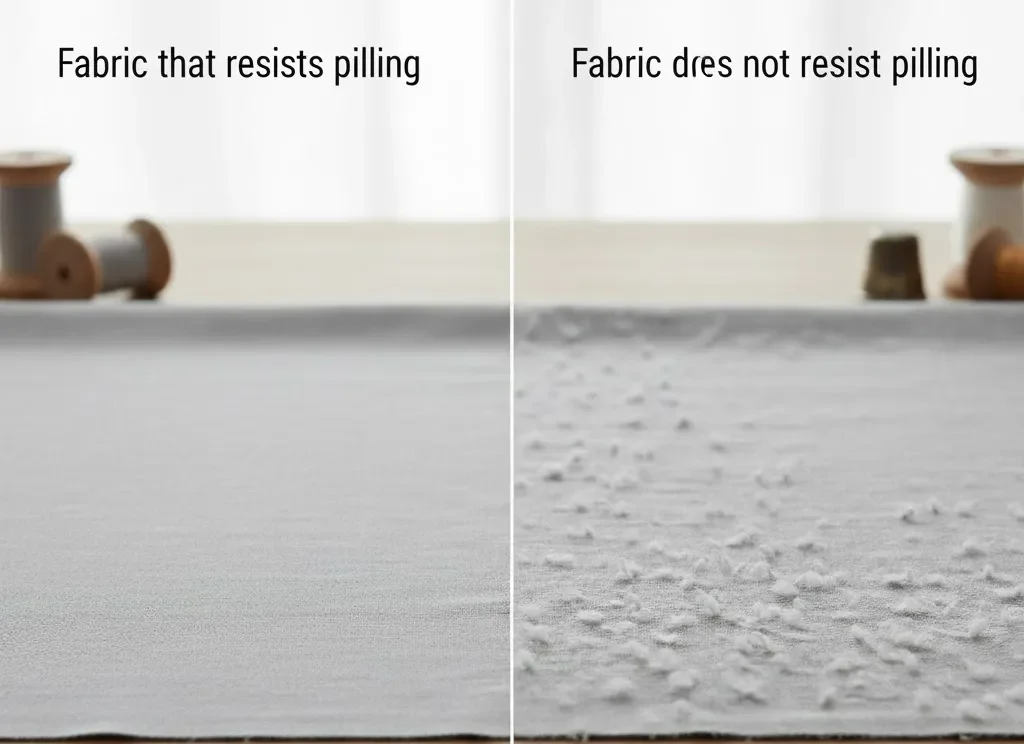
Open-End:Poor pilling resistance. The abundant short, loose fibers on the surface tangle easily during washing, forming pills.
Compact:Excellent pilling resistance. There are virtually no loose fibers to begin the pilling process.
Conclusion: This is a major long-term quality indicator. Open-end fabrics will look “old” much faster than ringspun or compact fabrics.
Fabric Anti-Pilling Properties
Factory Experience: The T-Shirt Pilling Test
As a supplier, pilling is one of our clients’ biggest concerns. We often show them a simple test. We take a ringspun cotton t shirt and a standard open-end t-shirt and rub them together vigorously for 30 seconds. The open-end shirt will immediately show noticeable fuzzing and the start of pilling. The ringspun shirt will look almost unchanged. This simple, tangible demonstration instantly shows them the long-term value of the ringspun process and why it’s worth the extra cost.
Deep Dive: Production Cost
Ringspun:Medium cost. The process is slower, more labor-intensive, and uses more energy.
Open-End:Low cost. The process is 3-5 times faster than ring spinning, uses less energy, and requires fewer steps, making it the cheapest spinning method.
Compact:High cost. It involves all the costs of ring spinning, plus the added expense of the compacting machinery and associated licensing/royalties.
Conclusion: Open-End is the Efficiency choice. Ringspun is the Quality choice. Compact is the Luxury choice.
Deep Dive: Production Speed
Ringspun:Slow. The speed is limited by the physical traveler moving around the ring.
Open-End:Extremely fast. The rotor can spin at speeds well over 100,000 rpm.
Compact:Slow. The production speed is the same as conventional ring spinning.
Conclusion: Open-End’s speed is its primary economic advantage, allowing for massive-scale, low-cost production.
Best Applications for Each Spinning Type
Best Uses for Ringspun Cotton
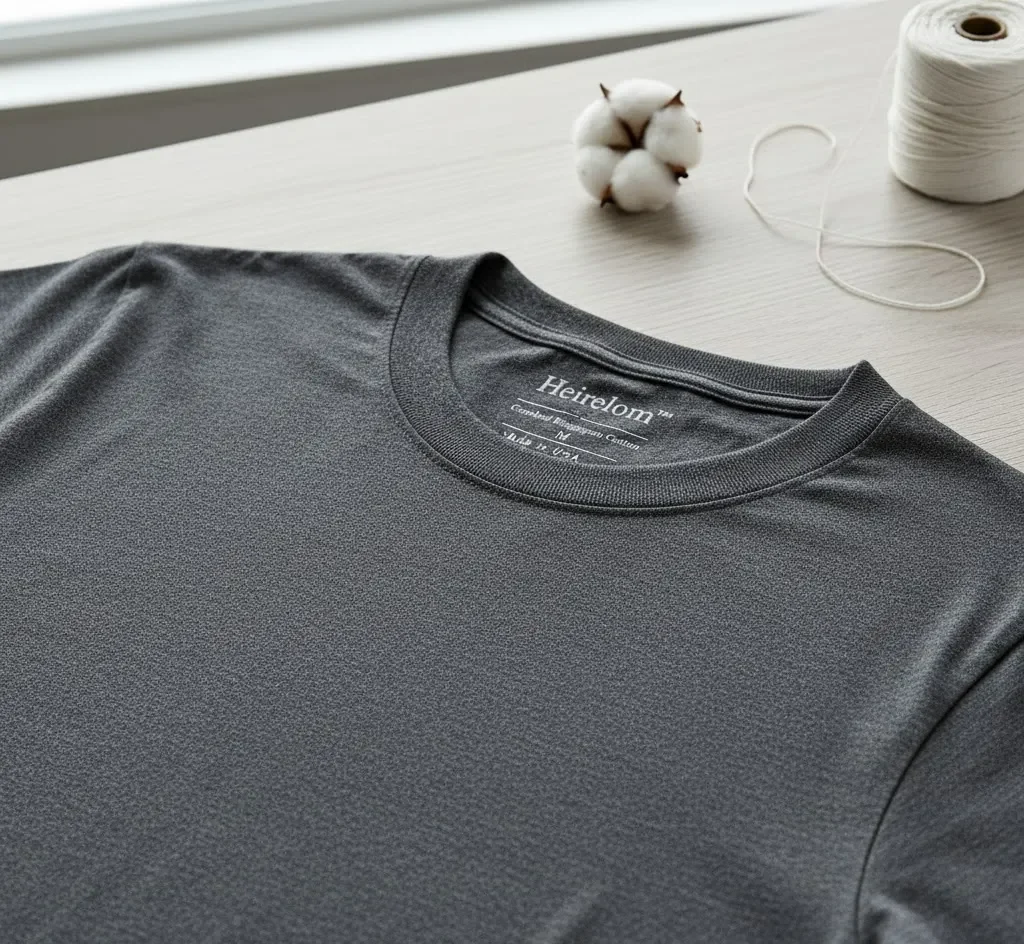
Premium Retail T-Shirts (Ringspun Cotton T Shirts)
What for: The industry standard for any product where quality, softness, and durability are key selling points.
Products: Premium Retail T-shirts (ringspun cotton t shirts), Polo Shirts, Premium Hoodies, Bed Sheets, Towels, Underwear.
Why: It offers the best balance of quality, softness, and cost for the mid-to-premium market.
Best Uses for Open-End Cotton
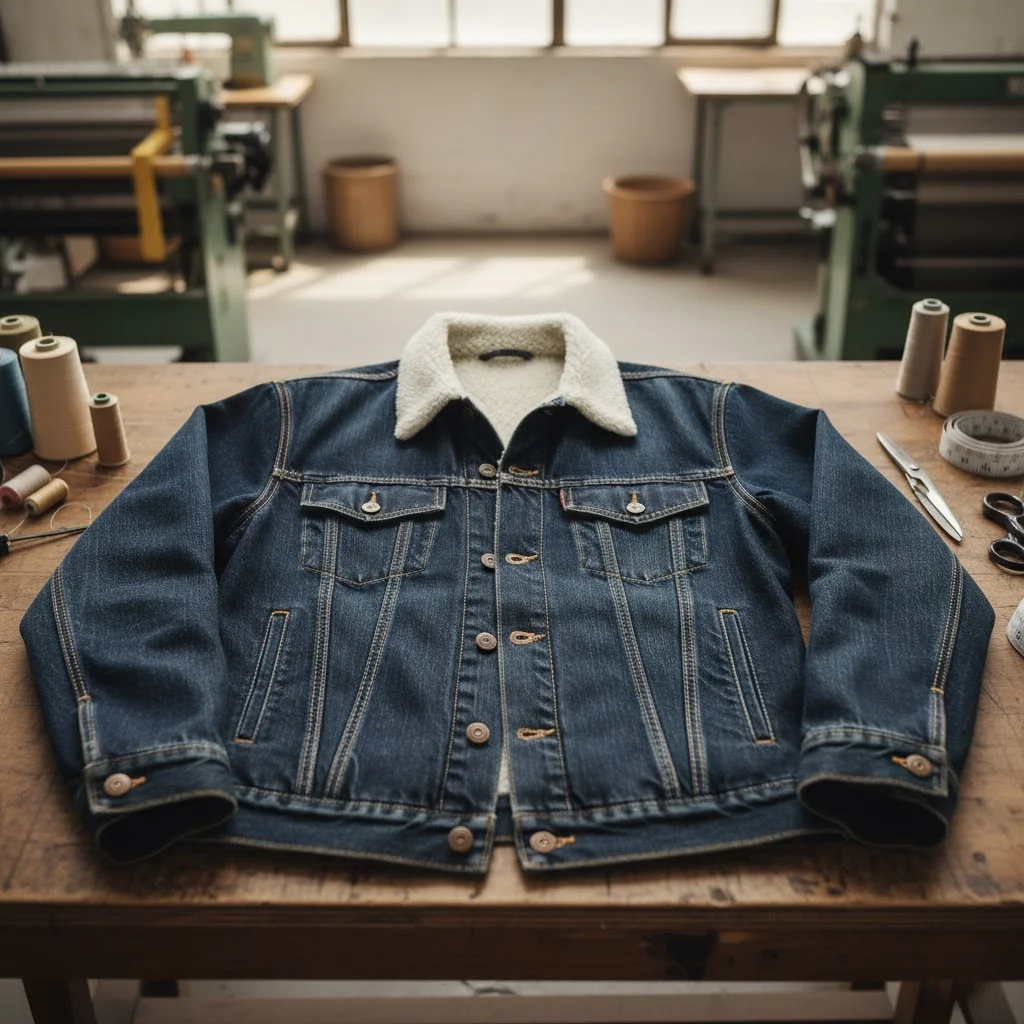
Heavy Denim Jackets Laid Out On A Table
What for: Ideal for products where cost-effectiveness and durability-through-bulk are the primary drivers.
Match the Spin to the Product. Don’t pay for Compact spinning if your product is a promotional giveaway. Conversely, don’t use Open-End yarn for a luxury baby blanket.
Request Samples. The difference in hand-feel between Ringspun and Open-End is not subtle. It is the single most effective sales tool. Always get samples.
Put it in Your Tech Pack. Be precise. Specify 30s Combed Ringspun or 20s Carded Open-End. This prevents a factory from substituting a cheaper yarn to save costs.
Case Study: Upgrading a Workwear Shirting Spec
We had a European workwear brand client who specified “100% cotton carded, 150-160 gsm” for their shirts. After one season, they had complaints about pilling and a scratchy feel. We analyzed the shirts and confirmed they were carded open-end.
We proposed they upgrade the spec to Combed Ringspun in the same weight. The unit cost increased by about $0.40 per shirt. However, their customer complaints dropped to zero, and their re-order rate increased by 30% the next season. The “Combed Ringspun” spec, combined with data from standards like ISO 12945-2 (Pilling Test), provided a clear ROI by enhancing the product’s long-term value and brand perception.
(For more on how to build a complete spec sheet and manage suppliers, see our comprehensive Strategic Cotton Sourcing Guide.)
Conclusion: The Spin is the Soul of the Fabric
In the ringspun vs open-end vs compact debate, there is no single winner. There is only the right choice for your specific product, brand, and cost target.
Open-End is the engine of Efficiency.
Ringspun is the foundation of Quality.
Compact Spinning is the pinnacle of Perfection.
As an expert buyer, your job is to understand these trade-offs. By moving beyond just fiber and weight, and specifying the spinning process, you are taking full control of your product’s final feel, performance, and quality.
(Ready to source the right yarn for your next collection? Contact us and our textile specialists will help you analyze your needs and provide the perfect fabric solution.)
FAQ (Frequently Asked Questions)
What is 100% ringspun cotton?
100% ringspun cotton means the garment is made entirely from cotton fibers that have been processed on a ring-spinning frame. This guarantees a level of softness and durability superior to standard, non-ringspun (typically open-end) cotton garments.
Does ringspun cotton shrink?
Yes, all 100% cotton fabrics can shrink, regardless of the spinning method. Does ringspun cotton shrink less? Not necessarily, as shrinkage is more dependent on the fabric’s construction (knit/weave) and how it’s finished (sanforized/pre-shrunk). However, a ringspun fabric’s structure will remain more stable and less prone to pilling or distortion after washing.
Combed ringspun vs carded ringspun — what’s the difference?
They both use the same spinning process (ring spinning). The difference is the preparation. Combed yarn is made from fibers that have been both carded AND combed, removing all short fibers (premium). Carded yarn is made from fibers that have only been carded (standard). Combed ringspun is therefore superior in softness and smoothness to carded ringspun.
What is airlume combed and ring-spun cotton?
Airlume combed and ring-spun cotton is a proprietary trademarked term by the brand Bella+Canvas. It refers to their specific process of using only high-quality, extra-long-staple cotton, which is then put through an intensive combing and ring-spinning process to create what they market as one of the softest, cleanest yarns in the industry. It’s essentially a brand name for a very high grade of combed ringspun cotton.
Is open-end fabric good for hoodies?
Yes, it’s very common for mid-weight to heavyweight hoodies, especially those with a vintage or workwear feel. The slightly rougher, “hairy” texture of an open end fabric and its lower cost make it a suitable choice for this type of casual, durable garment.
Don’t rely on GSM alone. Our factory guide explains how to read flannel specs (yarn count, density, brushing) to predict pilling, warmth, and durability.



 English
  Arabic
  Spanish
  French
  German
  Azerbaijani
  Vietnamese
  Bengali
  Japanese
  Hindi
Hindi  Turkish
  Russian