I am the founder of China fabric supply chain, with 20 years of fabric manufacturing experience. Our mill holds ISO 9001, OEKO-TEX Standard 100, and GOTS certifications, and we were awarded China Best Fabric Manufacturer Award for quality and reliability.
What is Pima cotton & why choose Supima®? Our expert guide covers ELS fiber benefits (softness, strength), sourcing insights & how it compares.
Introduction: Unpacking the Pima Cotton Promise
Pima cotton is an Extra-Long Staple (ELS) cotton from the Gossypium barbadense species. In plain language: it grows naturally longer, finer individual fibers than regular cotton. That fiber length is why Pima cotton is known for exceptional softness, high tensile strength, color retention, and resistance to pilling.
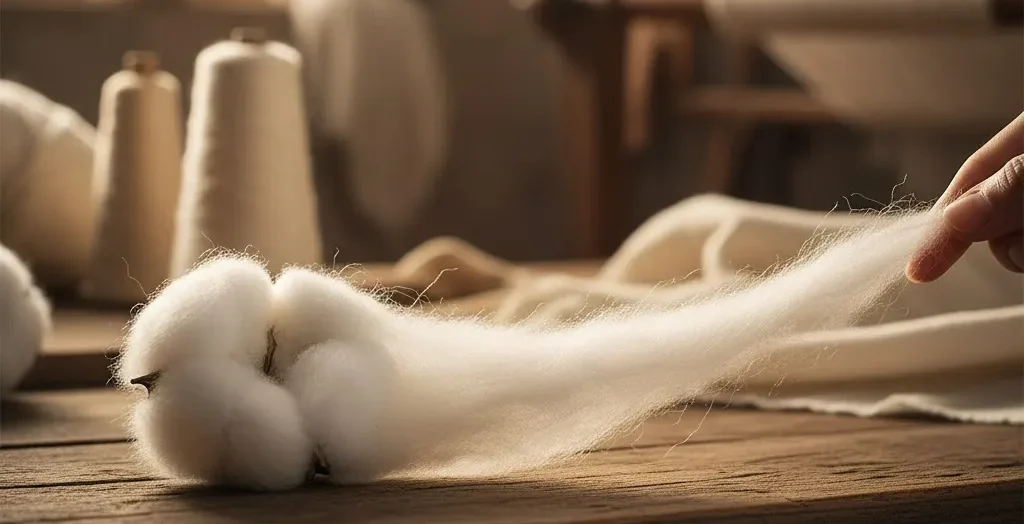
Images Of Cotton Fibers Being Stretched Into Filaments.
Now, here’s the part most people don’t hear in marketing copy: just seeing “Pima” on a label doesn’t automatically guarantee you’re getting that level of performance. As someone who has worked with mills, spinners, and finishing plants across apparel and home textiles, I’ve seen “Pima” used as both a true technical description and, honestly, as a sales word.
This guide is built to be a definitive reference. We’ll cover:
where Pima cotton actually comes from,
what makes its fiber structure different,
how it compares to regular cotton,
why Pima cotton on its own can still be risky if you’re sourcing at scale,
and how Supima® steps in as a controlled, verifiable standard.
If you’re making product decisions — whether you’re building a premium T-shirt line, sourcing hotel-grade bedding, or presenting a fabric story to a retail buyer — you’re about to get the version of what is Pima cotton? that factories actually use when evaluating suppliers.
(Pima belongs to the larger cotton family. For a broader overview of cotton structure and fiber behavior in general, see our foundational guide: What is Cotton Fiber?)
The Origins & History of Pima Cotton: An American Success Story
Understanding Pima’s roots helps appreciate its value.
Botanical Roots
Technically, Pima cotton belongs to the species Gossypium barbadense. This is the same species as other renowned Extra-Long Staple (ELS) cottons, including Egyptian Cotton. These ELS cottons trace their lineage back centuries, likely originating in South America.
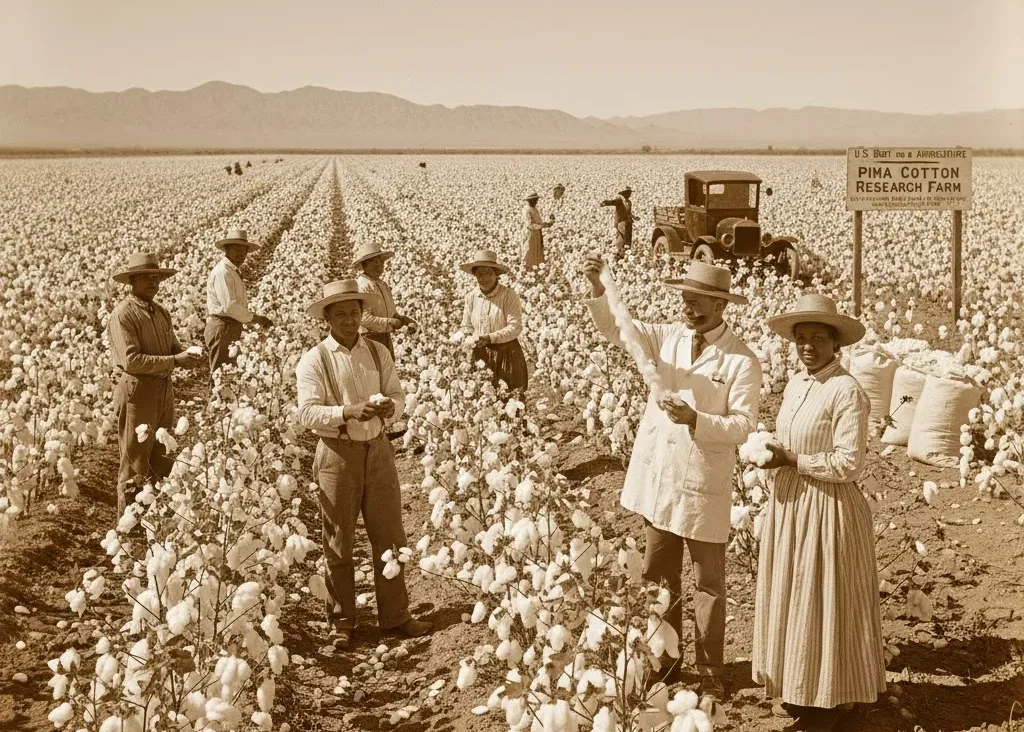
Images From The Early 20Th Century Show The U.s. Department Of Agriculture Cultivating Cotton In The Arid Climate Of The West, Eventually Harvesting Pima Cotton Seeds.
Development in the USA
The Pima cotton we know today, however, is largely an American success story. In the early 20th century, the U.S. Department of Agriculture began experimental breeding programs in the American Southwest (Arizona, primarily) using Egyptian cotton seeds. Their goal was to develop a superior ELS cotton ideally suited to the arid climate. Through careful cross-breeding and selection, they cultivated a variety with exceptional fiber length, strength, and fineness. This new American ELS cotton was eventually named “Pima” in honor of the Pima Native Americans who were instrumental in cultivating it on experimental farms in Arizona.
What Makes Pima Cotton Special? The Extra-Long Staple (ELS) Advantage
The magic of Pima cotton lies entirely in the physical properties of its fibers, specifically its classification as an Extra-Long Staple (ELS) cotton.
Defining ELS
Staple length refers to the average length of the individual cotton fibers within a sample. This single metric is the most critical determinant of cotton quality.
While typical American Upland cotton (making up ~90% of global production) has fibers measuring around 1 inch or 25-30mm, Pima cotton is defined by its Extra-Long Staple length, consistently measuring over 1 3/8 inches (approx. 35mm).
Factory Experience:
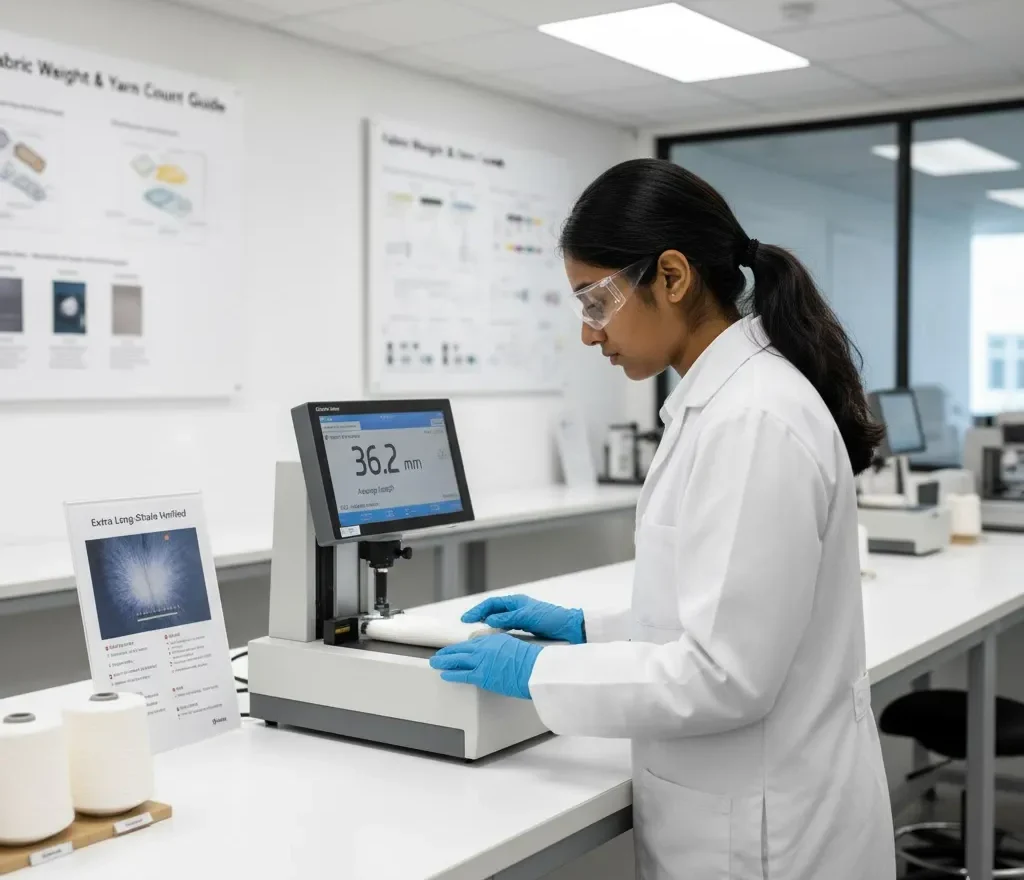
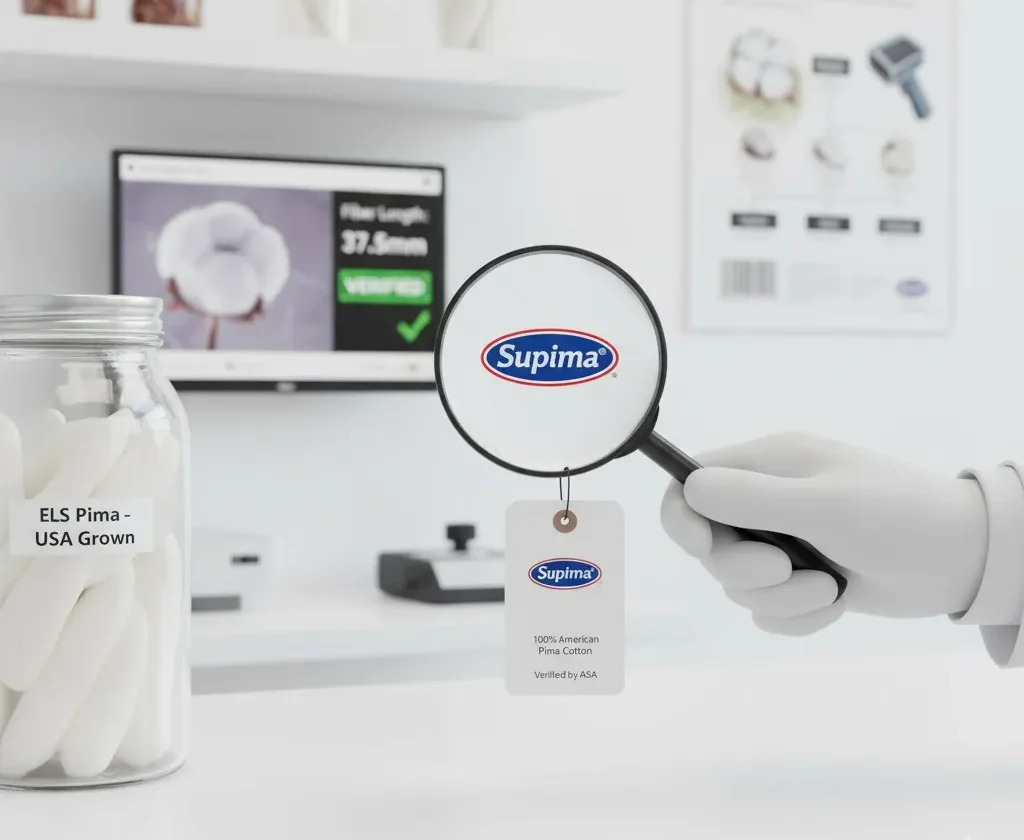
In The Quality Control Laboratory, Testers Are Inspecting Supima® Pima Cotton Fibers.
In our own quality control lab when we test incoming yarn lots, we routinely see verified Supima® Pima fibers averaging in the 35-38mm range. This extra 5-8mm might not sound like much, but in the world of spinning, it’s a massive difference. It’s the physical reason why Pima can be spun into incredibly fine yet remarkably strong 40s, 60s, and even 80s count yarns without sacrificing tensile strength. For more on how yarn count impacts fabric, see our Fabric Weight & Yarn Count Guide.
Key Benefits Derived from ELS Fibers
These longer fibers directly translate into tangible benefits in the final fabric:
Superior Softness: Is Pima cotton soft? Exceptionally so. Longer fibers can be spun into smoother, finer yarns with fewer protruding fiber ends (“hairiness”). Imagine trying to make a smooth thread from short, choppy pieces versus long, continuous strands. The longer strands create a much smoother surface, resulting in a noticeably softer, silkier feel against the skin.
Increased Strength & Durability: Longer fibers intertwine more securely when spun into yarn. This creates a stronger thread that is significantly more resistant to pilling, tearing, and general wear and tear.
Tips:This isn’t just about feeling sturdy. When we supply Pima/Supima® for high-end hospitality clients (like luxury hotels needing durable pima cotton sheets), their technical specifications often demand warp tensile strength (tested via methods like ASTM D5034) that is 8-12% higher than the standard for regular long-staple cotton. They pay a premium not just for perceived softness, but for the proven ability to withstand hundreds of harsh commercial laundry cycles without degrading.
To Better Showcase The Characteristics Of Els (Extra Long Staple) Cotton Fibers.
Richer, Longer-Lasting Color: The ELS fibers of Pima cotton have a greater surface area and absorb dyes more deeply and evenly than shorter fibers. This results in more vibrant, saturated colors that remain brilliant wash after wash, resisting fading significantly better than ordinary cotton.
Pilling Resistance: Pilling occurs when short fiber ends tangle together. Since Pima cotton has significantly longer fibers and fewer exposed ends in the yarn, fabrics made from it are much less prone to pilling, maintaining a smooth appearance for longer.
Tips:For brands selling premium pima cotton t shirts or pima cotton shirts, this resistance to pilling is a major quality signal. It translates directly to fewer customer complaints about garments looking ‘old’ after just a few washes, protecting brand image and reducing returns.
Pima Cotton vs Regular Cotton: A Clear Quality Difference
It’s crucial to understand the significant leap in quality Pima cotton vs cotton (specifically Upland cotton) represents. While both are cotton, the difference in staple length creates vastly different end products.
Regular cotton’s shorter fibers result in yarns that are coarser, weaker, and more prone to pilling and fading.
Pima cotton fabric is demonstrably softer, stronger, holds color better, and lasts longer.
This answers the question is pima cotton better than cotton? – from a fiber quality perspective, definitively yes.
The Challenge with Pima Cotton: Why the Label Alone Can Be Confusing
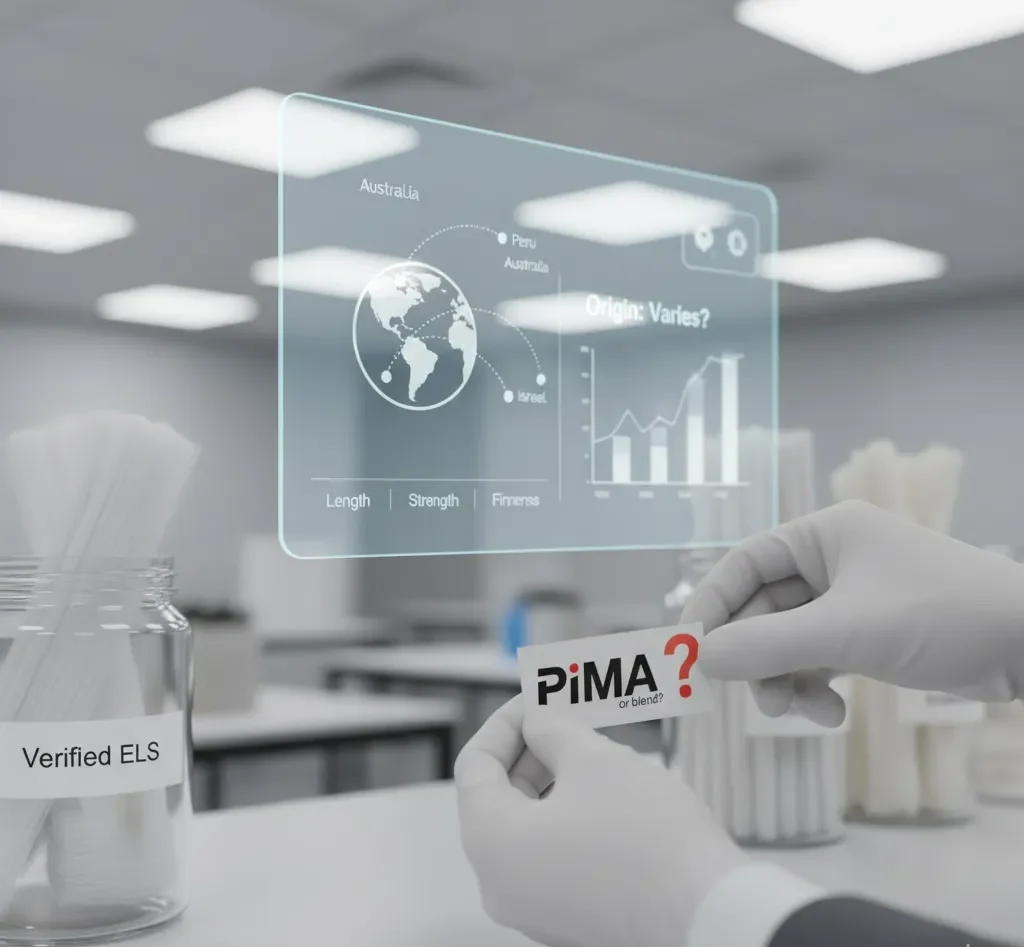
Here’s where things get tricky for buyers and consumers. While Pima correctly denotes the ELS fiber type, the label itself, when used generically, doesn’t guarantee:
Specific Fiber Quality Metrics: Fiber length, strength, fineness, and uniformity can still vary significantly between different Pima harvests, origins, and processing standards.
100% Purity: Products labeled Pima might sometimes be blends containing cheaper, shorter-staple cotton, yet still use the premium “Pima” name misleadingly.
Origin: While developed in the USA, Pima cotton is now grown in other countries too (like Peru, Australia, Israel). The term “Pima” alone doesn’t specify the origin.
This Highlights Potential Issues With Generic Pima Cotton Labeling
Factory Experience:
In my years sourcing globally, I’ve received countless Pima samples. Some are exceptional, others barely distinguishable from good Upland cotton. Relying solely on the Pima name without further verification is risky. I’ve seen brands burned by inconsistent quality across production runs.
Several red flags should immediately raise concerns when evaluating generic Pima claims:
Unrealistic Pricing: Quotes significantly below the established market rate for genuine ELS cotton, especially if the supplier is hesitant to provide independent fiber test reports or certificates of origin.
Incorrect Hand-Feel: Fabric feeling unexpectedly dry, scratchy, lacking the characteristic buttery smoothness, or having noticeable surface hairiness.
Batch Inconsistency: Significant variations in feel, color, or weight between different sample swatches or production rolls supposedly from the same 100% Pima batch – often a sign of undeclared blending.
Enter Supima®: Setting the Gold Standard for Pima Cotton
It was precisely to combat this market confusion and guarantee quality that the Supima® organization was formed by American Pima cotton growers in 1954.
What Exactly is Supima®?
Supima® Is A Licensed Trademark Representing The Authenticity And Superior Quality Of 100% American-Grown Pima Cotton, And Implying Its Rigorous Verification System.
Supima® is not a type of cotton. It is a licensed trademark owned by the non-profit American Supima Association (ASA). This trademark is selectively granted to brands and manufacturers whose final products are verified to be made with 100% American-grown Pima cotton that meets Supima’s rigorous quality standards. Think of it as a seal of authenticity and premium quality, backed by a robust verification system. For the official definition, visit the Official Supima® Website.
The Supima® Guarantee: Verification and Traceability
What is the difference between pima and supima cotton? It boils down to verification. Supima employs a comprehensive system to ensure authenticity throughout the supply chain:
Licensing: Only approved spinners, weavers, knitters, manufacturers, and brands can use the Supima® trademark.
Auditing: Regular audits are conducted at licensed facilities.
DNA Forensic Technology: Supima utilizes Oritain’s scientific traceability technology, which can analyze the unique “chemical fingerprint” of cotton fibers to verify their origin back to the specific growing regions in the USA. This provides irrefutable proof of authenticity.
Industry Data:
The demand for verified quality is growing. According to reports cited by industry publications like Sourcing Journal, consumer awareness of fiber quality and origin is increasing, with a significant percentage willing to pay a premium for certified materials like Supima®, seeing it as a guarantee against greenwashing or misleading claims.
The Brand Value of the Supima® Trademark
Crucially for brands, securing a Supima® license isn’t just about sourcing quality fiber; it’s about acquiring a powerful marketing asset.
The license allows legal use of the globally recognized Supima® logo on hangtags, labels, packaging, and advertising.
This instantly communicates premium quality and justifies a higher retail price point.
It leverages Supima’s own global marketing efforts and established reputation for luxury. It allows brands to sell a verifiable “ingredient story.”
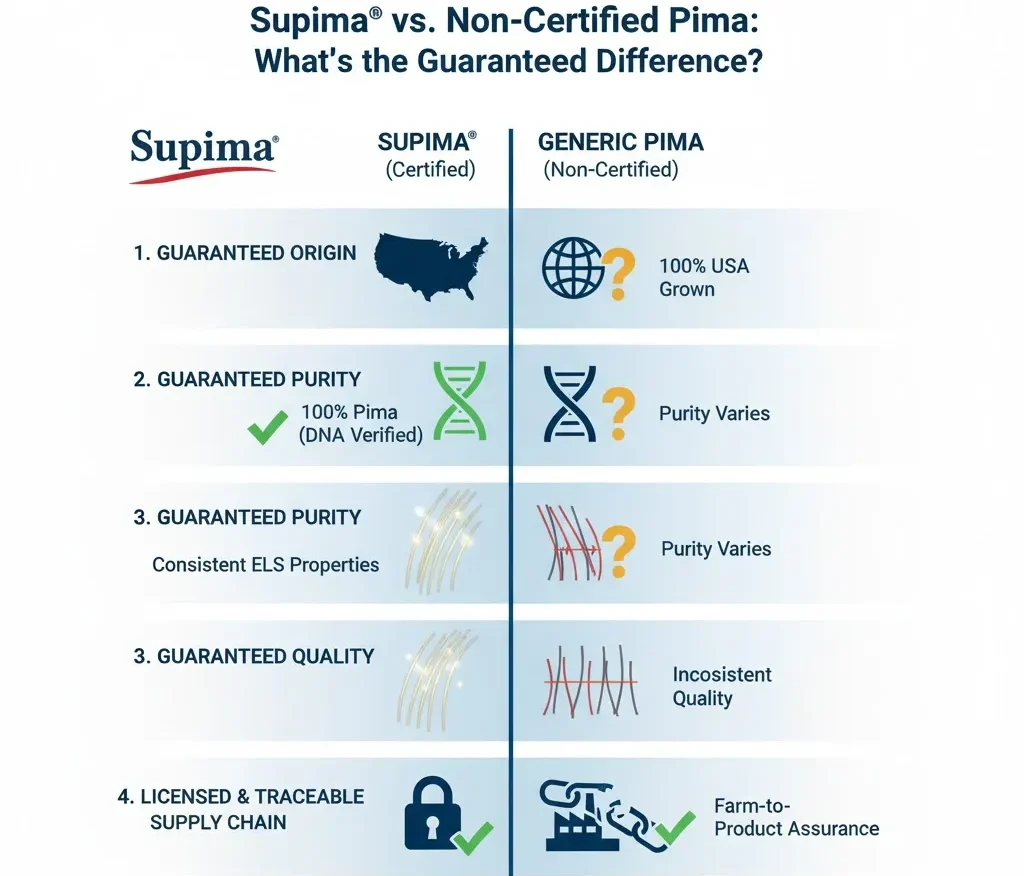
Supima® vs. Non-Certified Pima: What’s the Guaranteed Difference?
Supima® Vs. Non-Certified Pima
So, when you choose Supima®, what specific advantages are you guaranteed compared to a generic Pima label?
Guaranteed Origin
100% USA Grown Pima Cotton.
Guaranteed Purity
100% Pima Cotton content (verified by DNA).
Guaranteed Quality
Consistent ELS fiber properties (length, strength, fineness, uniformity) meeting Supima high standards.
Licensed & Traceable Supply Chain
Assurance that the quality was maintained from farm to finished product.
Are there Downsides? (Pros & Cons of Premium Pima/Supima®)
Let’s maintain a balanced perspective.
Pros:
Recap the superior softness, strength, color retention, durability, pilling resistance. Add the crucial benefits of trust, consistency, and marketing value provided by the Supima® certification.
Cons:
Primarily the higher cost due to the superior fiber quality, lower yield, rigorous verification process, and licensing fees. Like all cotton, it can wrinkle (though less than shorter staples) and requires proper care.
Who Invests in Pima/Supima® and Why? (Commercial Rationale)
Understanding who values Pima/Supima® helps you position it correctly. It’s not just about what products it’s used for, but why specific segments pay the premium.
Premium Apparel Brands (T-Shirts, Polos, Shirts)
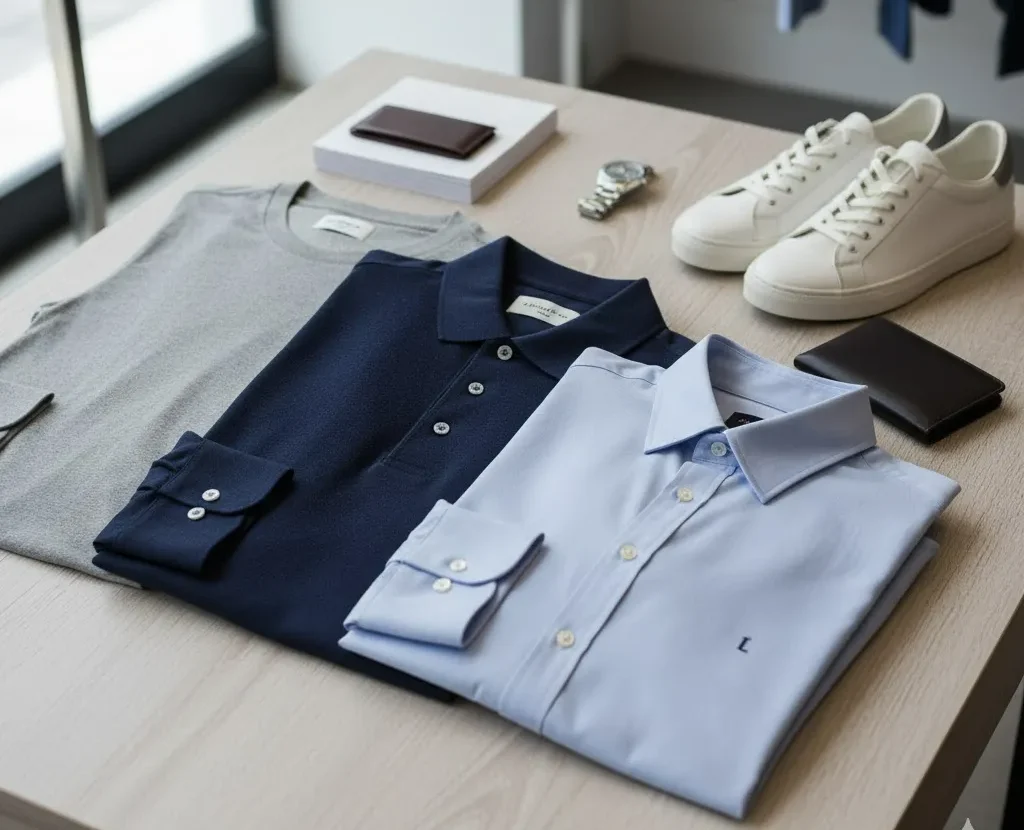
Premium Apparel Brands (T-Shirts, Polo Shirts, Shirts) Were Placed In The Very Center Of The Table.
They invest because the pima cotton t shirts or pima cotton shirts offer a noticeably superior hand-feel, better color vibrancy, and significantly longer lifespan (less pilling, holds shape better). This justifies a higher retail price and builds customer loyalty based on tangible quality.
Luxury Hospitality (Bed Linens, Towels)
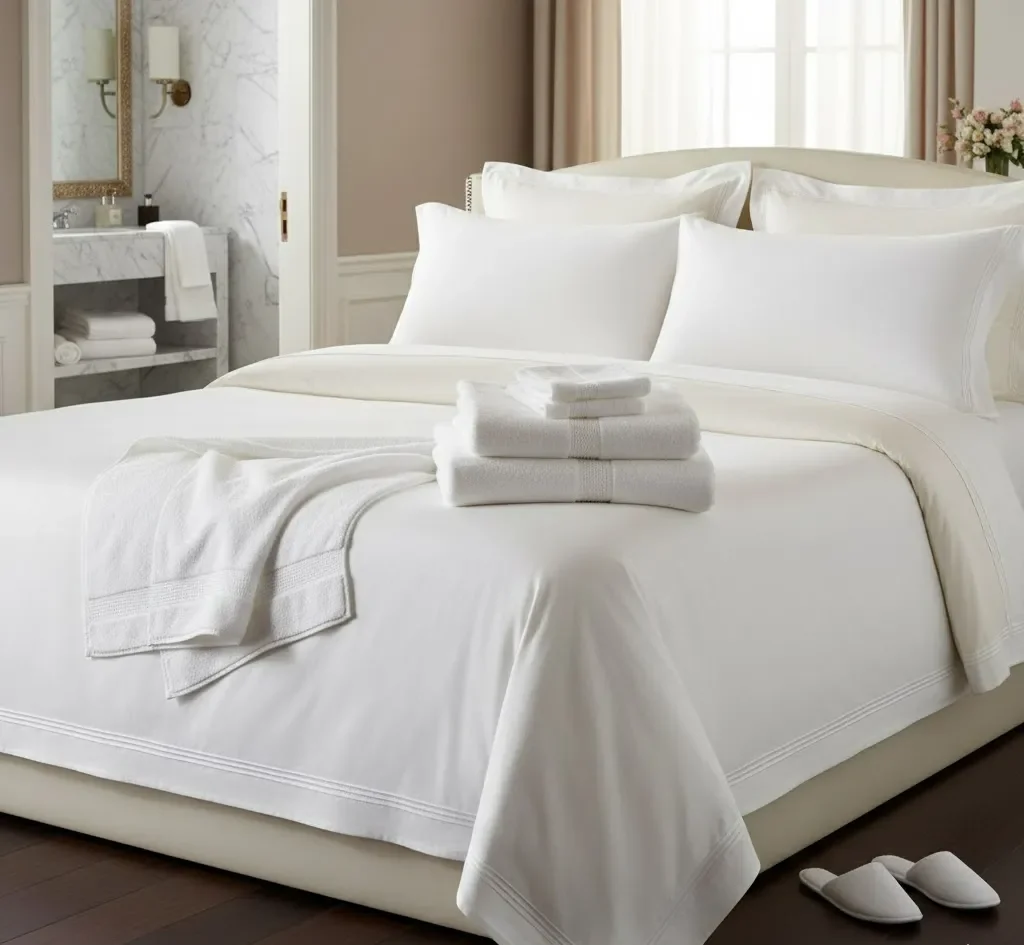
Luxury Hospitality In Upscale Hotels (Bed Linens, Towels)
Hotels invest in pima cotton sheets and towels because Supima® offers proven durability under intense commercial laundering while maintaining exceptional softness and brightness, enhancing the guest experience.
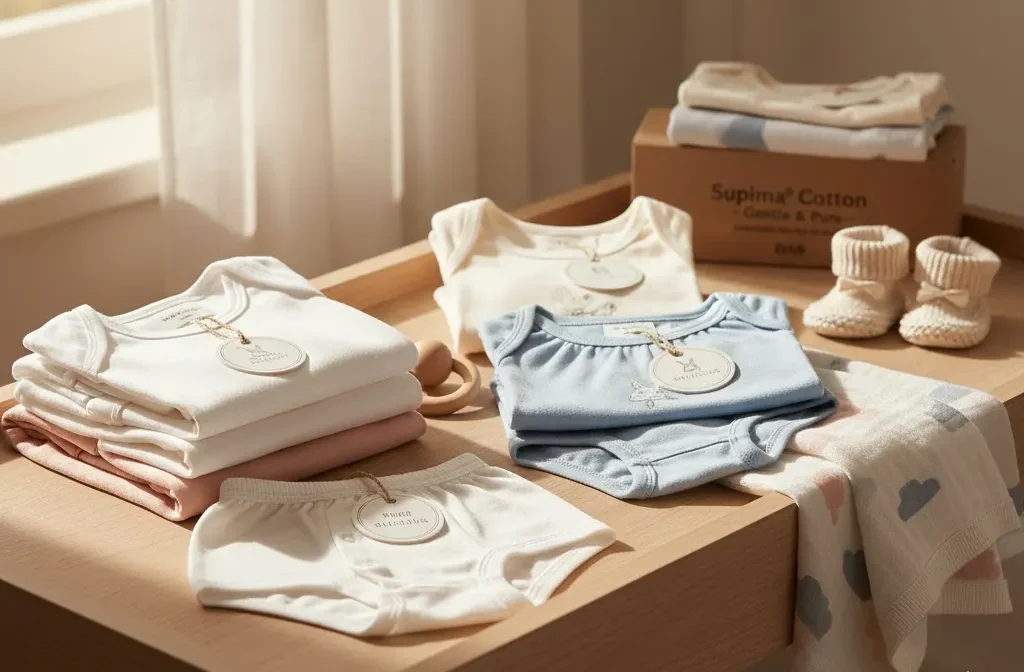
High-End Babywear & Underwear Brands
High-End Babywear &Amp; Underwear Brands
These brands choose Pima/Supima® for its guaranteed purity, natural softness, breathability, and hypoallergenic properties against sensitive skin. The durability is also a key factor for items washed frequently. Think premium pima cotton pajamas.
Explore our curated selection of verified Supima Cotton Products suitable for these premium applications.
Sourcing Insights: Why Invest in Verified Pima (Supima®)?
For B2B buyers, the investment in Supima® pays dividends:
Product Consistency
Eliminates the quality variations often seen with generic Pima sourcing.
Reduced Risk
Lowers the risk of receiving substandard materials or blends.
Brand Enhancement
Leverages the Supima® brand equity to elevate your own product’s perceived value.
Justified Premium
Provides a clear, verifiable reason for a higher product price point.
Case Study: The ROI of Authentication
We worked with a mid-sized brand launching a premium basics line. Initially, they sourced generic Peruvian Pima cotton to save costs. However, they faced significant batch-to-batch inconsistencies in softness and shrinkage. After switching to certified Supima® fabric (which cost about 15% more), their customer return rate for quality issues dropped by over 50%, and they were able to confidently market the Supima® difference, ultimately increasing their overall profit margin despite the higher fabric cost.
How to Care for Pima & Supima® Cotton
Despite its luxury status, Pima and Supima® are relatively easy to care for due to their strength.
Washing
Machine wash in cool or warm water (not hot) with like colors, using a gentle detergent.
Drying
Tumble dry on a low heat setting. Remove promptly to minimize wrinkling.
Bleach
Avoid chlorine bleach, which can weaken the fibers over time. Use oxygen-based bleaches if necessary for whites.
Ironing
Iron on a standard cotton setting.
(For detailed washing steps applicable to all high-quality cottons, including stain removal tips, refer to our comprehensive Pure Cotton Care Guide.)
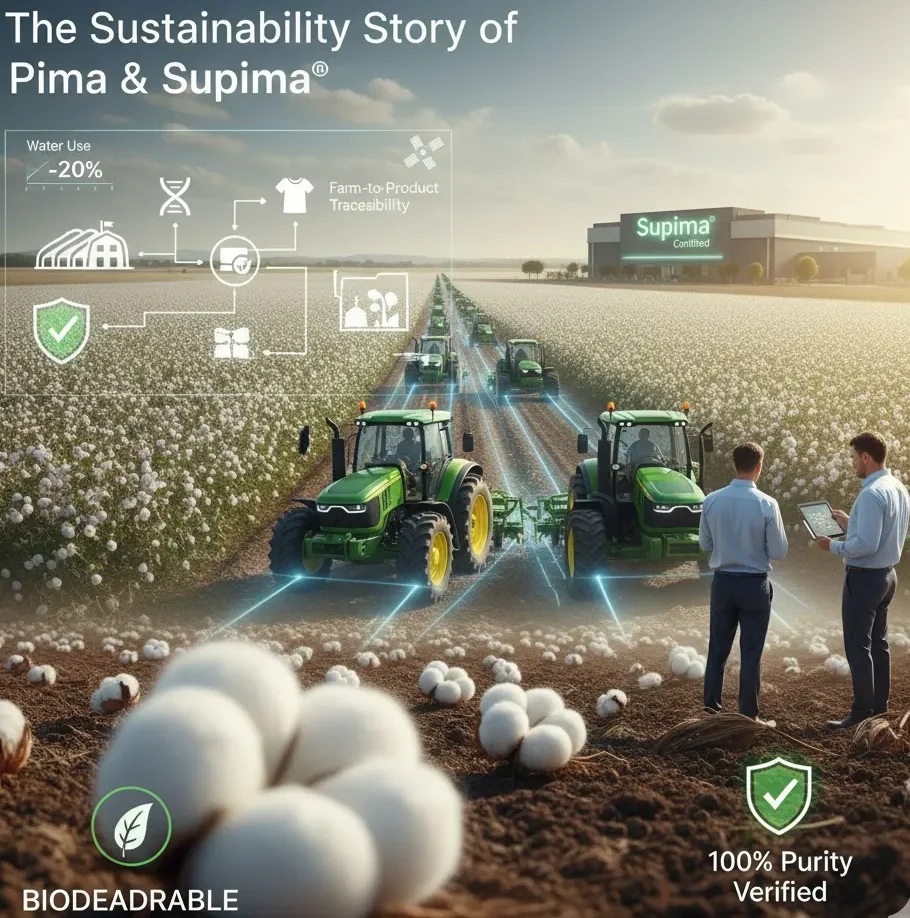
The Sustainability Story of Pima & Supima®
Sustainability is a key consideration for premium materials.
Pima’s Natural Edge
As a natural fiber, Pima cotton is biodegradable.
Supima’s Responsible Farming
American Pima cotton growers (Supima® licensees) utilize advanced and increasingly sustainable farming practices. This includes GPS-guided tractors for precise planting and fertilizing, satellite technology for optimized irrigation (reducing water waste), and integrated pest management to minimize pesticide use.
Traceability
The Supima® system allows for traceability back to the farm level, providing transparency often lacking in global supply chains.
The Sustainability Story Of Pima And Supima® Cotton.
Today, sophisticated buyers from North America and Europe don’t just ask ‘Is it organic?. They ask, Can you provide farm-level traceability? or What are your documented water management practices? The verifiable data within the Supima® system allows us, as suppliers, to answer these crucial questions confidently, something much harder to do with generic ‘Pima’ sourced globally.”
So, what is Pima cotton? It’s a type of cotton defined by its exceptional Extra-Long Staple fibers, offering inherent advantages in softness, strength, and color retention.
However, in a market where labels can be ambiguous, the Supima® trademark stands apart. It isn’t just Pima cotton; it’s the guarantee of 100% pure, American-grown Pima cotton, verified and traced from farm to finished product.
Choosing Supima® isn’t just selecting a fiber; it’s choosing confidence, consistency, and a verifiable mark of quality that resonates with discerning consumers and justifies a premium positioning. If guaranteed excellence and authenticity are paramount for your brand, investing in Supima® is the clearest path.
(Interested in sourcing verified Supima® or high-quality Pima cotton fabrics for your brand? Contact us to speak with our fiber specialists and discuss your specific requirements.)
FAQ
Is Pima cotton the same as Supima?
No. Pima refers to the type of Extra-Long Staple cotton fiber (Gossypium barbadense). Supima® is a licensed trademark guaranteeing the product contains 100% Pima cotton that was grown in the USA and meets specific quality standards, verified through a rigorous process including DNA testing. All Supima® is Pima, but not all Pima can be called Supima®.
Is Pima cotton worth the extra cost compared to regular cotton?
Generally, yes, for applications where softness, durability, and color retention are key. High-quality Pima (especially Supima®) lasts significantly longer, feels noticeably softer, resists pilling better, and holds color more vibrantly than regular Upland cotton. The higher upfront cost often translates to better long-term value and customer satisfaction.
How does Pima cotton compare to Egyptian cotton?
Both are premium Extra-Long Staple cottons derived from the Gossypium barbadense species, offering similar potential for softness and strength.
The key difference lies in origin and verification: Supima® guarantees 100% American Pima through rigorous licensing and DNA testing. Egyptian Cotton refers to cotton grown in Egypt, but the term itself doesn’t offer the same level of verifiable authenticity guarantee across the market, leading to more variability.
Like all 100% cotton fabrics, Pima cotton can shrink, particularly if exposed to high heat in washing or drying. However, because its longer fibers create a more stable yarn, high-quality Pima fabrics that have been properly finished (sanforized) typically exhibit minimal shrinkage (often less than 3%) when cared for correctly (washed cool, dried low).
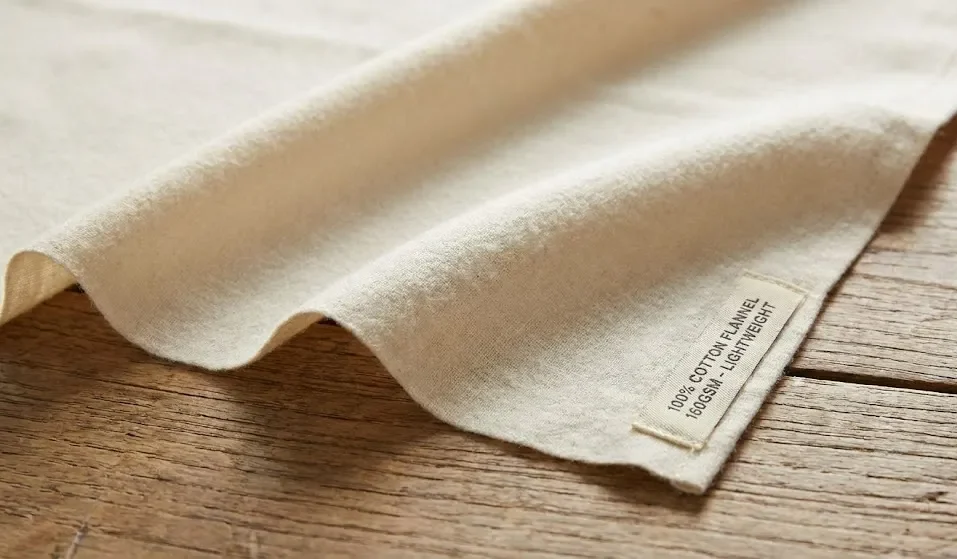
Don’t rely on GSM alone. Our factory guide explains how to read flannel specs (yarn count, density, brushing) to predict pilling, warmth, and durability.




 English
  Arabic
  Spanish
  French
  German
  Azerbaijani
  Vietnamese
  Bengali
  Japanese
  Hindi
Hindi  Turkish
  Russian