

👖 Introduction: The Redline Heritage
Turn up the cuff of a premium pair of jeans, and you might see it: a crisp, white edge with a signature colored line running through it. For denim enthusiasts, this Redline is a badge of honor, a symbol of heritage and quality. But for a fabric manufacturer like myself, it represents something far more tangible: a completely different production philosophy.
In a world of high-speed mass production, Selvedge Denim stands apart. It’s not just a look; it’s a relic of textile history kept alive by dedication.
But what is selvedge denim exactly? Is it just marketing hype? Or is there real substance behind the higher price tag?
🏭 From the Factory Floor
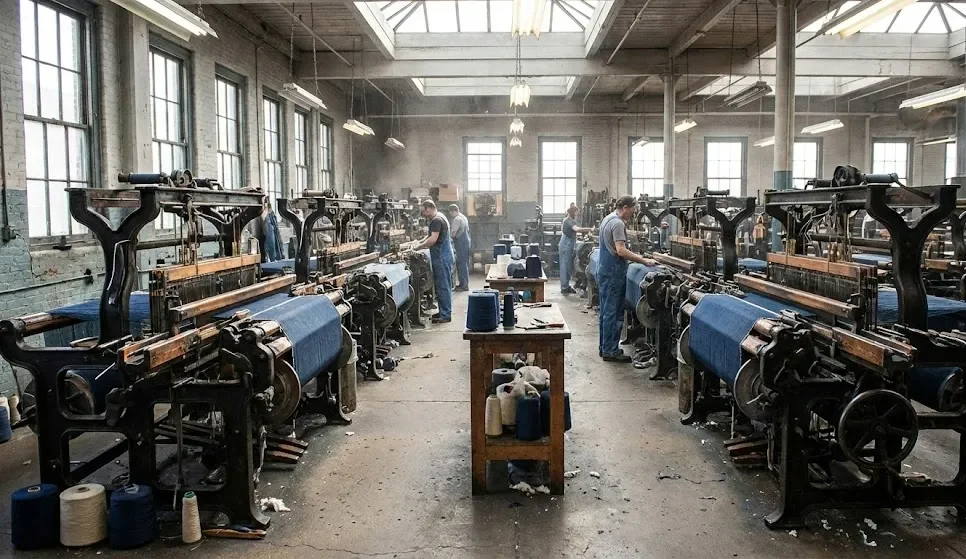
As a fabric factory with 20 years of experience, we not only possess modern high-speed looms, but we also preserve traditional old-fashioned shuttle looms. Today, I will take you deep into the mysteries of selvedge denim, explore the mechanics of the shuttle loom, and break down the hard economic reality of why selvedge denim costs 3x more to produce.
(To understand the broader context of denim types, start with our foundational article: what-is-denim-fabric)
🧵 The basics of selvedge denim
To understand the selvedge denim meaning, you have to look at the word itself. “Selvedge” comes from “Self-Edge.”
🔍 What is Self-Edge?
Technically, it refers to the self-finished edge of a piece of fabric. In modern weaving, the weft yarn (the horizontal thread) is cut at every pass, leaving a frayed edge that must be stitched (overlocked) to prevent unraveling.
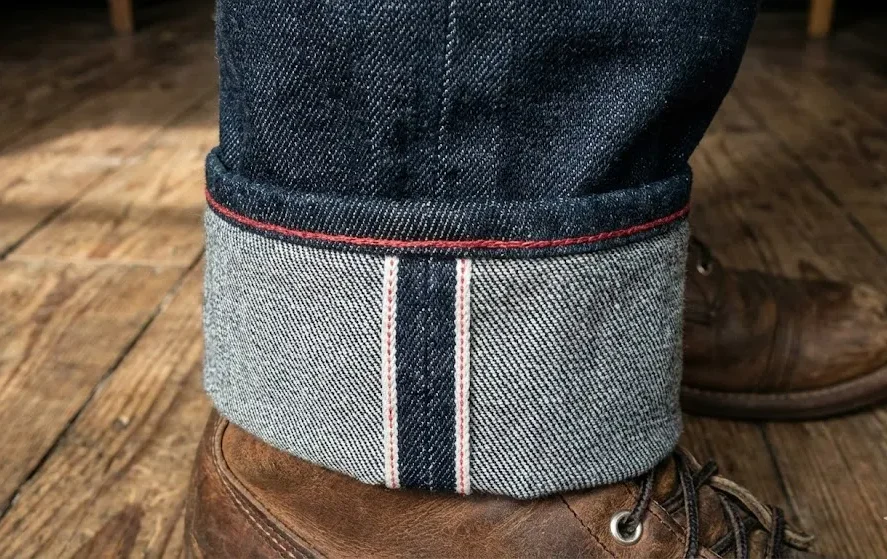
On older shuttle looms, however, the weft thread is not cut. It is one continuous thread that is passed back and forth across the loom. As it turns back at the edge of the fabric, it loops around the warp yarns, creating a tightly woven, sealed band that will never fray or unravel. This clean, finished edge is the “Self-Edge.”
👖 What Is Selvedge Denim?
After understanding what Self-Edge is, then, it can be easily explained What Is Selvedge Denim?
The so-called Selvedge denim is denim fabric woven on old-school shuttle looms that has a tightly finished, “self-edge” that doesn’t unravel. That clean edge is what makes it special and gives it its name.
🌟 What Makes Selvedge Denim Special? (The Redline)
If the self-edge is the technical definition of selvedge denim, then the red line is its cultural symbol and the reason it’s so expensive.
🔴 What is the “Redline Selvedge”?

Before the 19th century, mills needed a way to differentiate fabrics for different clients. The Cone Mills White Oak plant (the legendary American mill) famously added a colored thread to the selvedge to identify specific production runs for Levi’s (Redline), Lee (Blue/Green line), and others.
Now, the red line selvedge has evolved into a symbol of denim quality. Famous denim brands also use a variety of selvedge ID colors—gold, pink, silver, even rainbow—as a unique brand signature.
🖐️ The Texture Factor
Beyond the edge, what makes selvedge denim special is the fabric itself. Shuttle looms weave under lower tension than modern machines. This creates a fabric with a slightly looser, more irregular surface texture (often called “slubby” or “chatter”). This irregularity is prized because it leads to more interesting, vertical fading patterns over time compared to the flat, uniform surface of mass-market denim.
⚙️ The Machine: Shuttle Loom vs. Modern Projectile Loom
The difference between selvedge denim and regular denim lies not only in the edge but also in the machine used to manufacture it.
Below is a summary of the differences between the two, based on our factory’s experience using both old-fashioned shuttle looms and modern high-speed spinning machines to produce selvedge denim.
🕰️ The Vintage Shuttle Loom
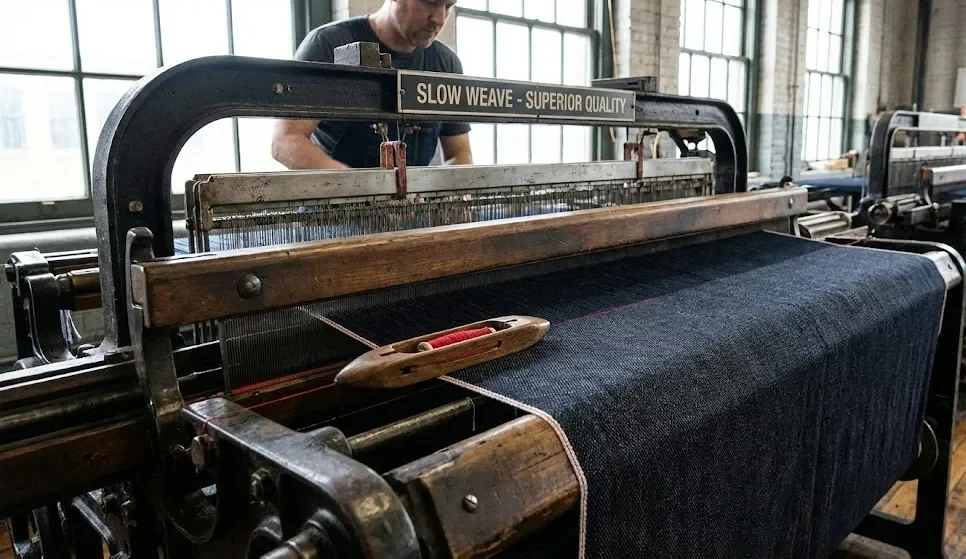
- The Principle: The shuttle loom uses a wooden device called a “shuttle” (about the size of a shoe) that carries a bobbin of weft yarn inside it. This shuttle is physically thrown across the loom, through the shed of warp yarns, and then caught and thrown back.
- The Clack-Clack: This physical throwing action is violent and loud. It limits the speed significantly.
- The Tension: Because the shuttle has weight and momentum, the loom operates at low tension. The yarns are not pulled as tight. This allows the cotton to retain its natural loft and softness.
- The Flaw is the Feature: The vibration of the wooden shuttle creates the unique irregularities—slubs and neps—that give selvedge denim its character. We often adjust our shuttle loom yarn settings specifically to enhance this texture.
- Roll Size: Produces narrow width selvedge 30 inch fabric rolls.
🚀 The Modern Projectile/Air-Jet Loom (Modern shuttleless loom)
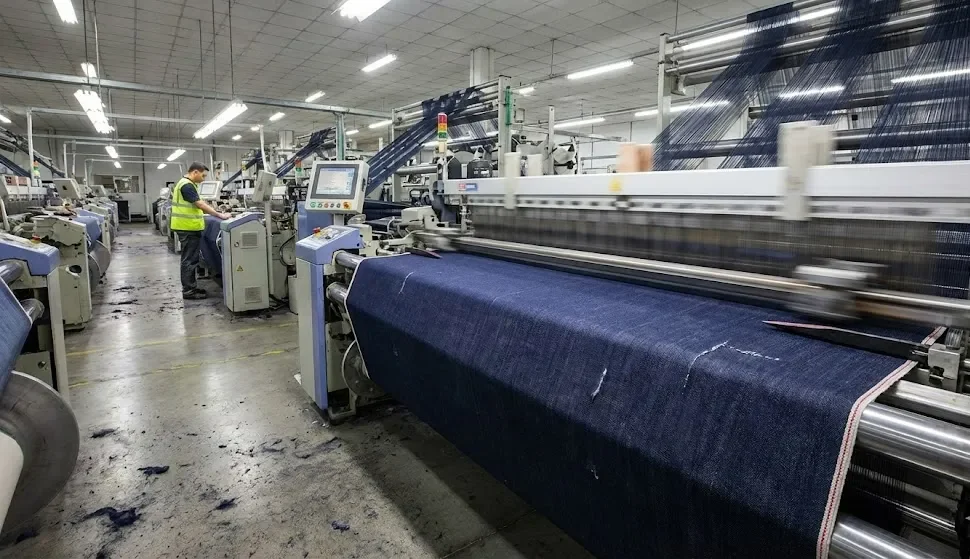
- The Principle: Air jet loom or projectile looms do not use a shuttle. They shoot the weft yarn across using a blast of air or a small metal gripper (projectile).
- The Edge: Since the yarn isn’t carried back, it is cut at both ends after every insertion. This creates a frayed edge (Cut Edge) or a fringe.
- The Speed: These machines are built for speed and consistency. Projectile loom vs shuttle loom speed ppm is a massive gap. A shuttle loom might do 130-150 ppm; an air jet loom can exceed 800-1000 ppm.
- The Result: Wide width denim 60 inch production with a uniform, flat, and flawless surface. Great for mass market, but lacks the “soul” of the shuttle loom.
📊 Industry data — Loom speed & width gap
At ITMA, Tsudakoma demonstrated air-jet weaving at a record ~2,105 picks per minute on a ~159 cm width prototype—an order-of-magnitude faster than vintage shuttle looms that operate at much lower speeds and narrower widths.
Head-to-Head: Loom Comparison Table
| Feature | Vintage Shuttle Loom | Modern Air-Jet / Projectile Loom |
|---|---|---|
| Edge Finish | Self-Edge (Selvedge) | Cut Edge / Fringe (Requires Overlock) |
| Fabric Width | Narrow (28″ – 32″) | Wide (58″ – 62″) |
| Production Speed | Low (~150 PPM) | High (~1000 PPM) |
| Weaving Tension | Low Tension (Lofty, Slubby) | High Tension (Flat, Uniform) |
| Fabric Character | Irregular, Organic, Textured | Consistent, Smooth, Flawless |
| Cost to Produce | High | Low |
💰 The Economics: Why Does Selvedge Cost 3x More?
I’m often asked by newcomers to the purchasing industry: “Why is your 14oz selvedge $6.00/yard when your 14oz regular denim is $2.50/yard?”
At this time, I always patiently answer them. The answer lies in the selvedge denim cost factors: Speed, Width, and Yield.
1. Production Speed (The Time Factor)
As mentioned earlier, old-fashioned shuttle loom produce selvedge denim at about 1/10 the speed of modern high-speed shuttleless loom.
To produce the same 1000 meters of fabric, we need 10 times the machine hours (and operator attention). This labor cost is baked into the price.
2. Fabric Width & Consumption (The Yield Factor)
This is the biggest hidden cost for brands.
- Modern Wide Denim (60″): You can nest pattern pieces efficiently side-by-side. A standard pair of jeans typically consumes about 1.3 to 1.5 meters of fabric.
- Selvedge Denim (30″): The fabric is half the width. Furthermore, to show off the selvedge ID on the outseam of the jeans, the pattern pieces must be placed along the straight edge of the fabric. This limits marker efficiency (“nesting”).
The Calculation: Using a narrow width fabric consumption calculator, a pair of selvedge jeans typically requires 2.5 to 3.0 meters of fabric.
The Impact: You are buying twice as much fabric per garment, and that fabric costs twice as much per meter.
3. Defect Rate (The Difficulty Factor)
Shuttle looms are vintage machines (often 50+ years old). They break down. They are temperamental. The defect rate on shuttle looms is higher, meaning we have to discard more fabric or sell it as “seconds.” This yield allowance must be factored into the first-grade price.
(For a deep dive on how to calculate these costs for your brand, read our denim-fabric-sourcing-guide].)
🤔 Raw Denim vs. Selvedge Denim: Clearing the Confusion
This is the single most common misunderstanding in the industry. Let’s clarify the raw vs selvedge difference using [Principle #3 – Answer Synthesis].
Raw Denim

Refers to the State of the fabric. It means “Unwashed.” The fabric has come off the loom and has not been treated with water or chemicals. It is stiff and dark.
Selvedge Denim
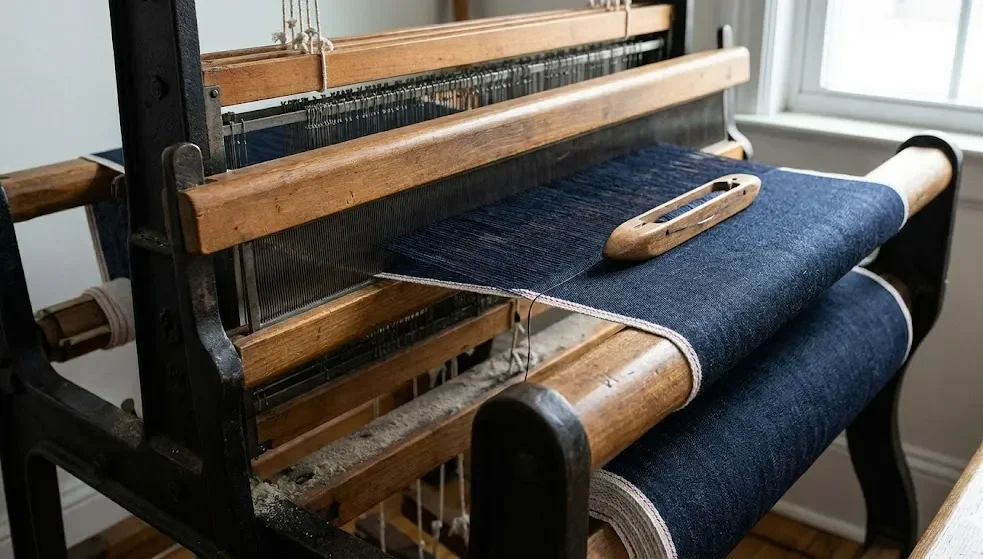
Refers to the Weave of the fabric. It means it was woven on a shuttle loom with a finished edge.
🧩 The Logic Matrix
- Raw Selvedge: The holy grail. Unwashed fabric with a self-edge. (Most common for heritage brands).
- Washed Selvedge: Selvedge fabric that has been factory washed for softness. (Common for premium fashion brands).
Washed selvedge vs raw selvedge explained: One is soft, one is stiff; both have the cool edge.
Conclusion: “Raw” and “Selvedge” are independent variables. You can have one without the other.
(To understand how raw denim is transformed into soft jeans, read our process guide: how-raw-denim-becomes-washed-denim-process.)
💎 Why Brands Choose Selvedge? (The Value Proposition)
Despite the cost, why do brands invest in it?
1. Durability
The continuous weft yarn and the self edge outer seam benefit mean the side seams of the jeans are structurally stronger. They are less likely to fray or burst open over years of wear compared to an overlocked seam on regular denim.
2. Fading Potential
The low tension weaving benefits combined with ring spun rope dye warp yarns create a fabric that fades more beautifully.
The irregularities in the weave (slubs) wear down unevenly, creating “atari” (fading depth) and vertical falling patterns (“tate-ochi”) that modern flat denim cannot replicate. This fading potential is the primary selling point for enthusiasts.
3. The Heritage Marketing Story
Selvedge allows a brand to tell a story of craftsmanship, slow fashion, and history. It justifies a premium denim price point strategy. Details like the chain stitch hem (often done on a vintage Union Special 43200G machine) are part of this package.
According to a Reuters report:
Recent market reporting shows Levi’s expanding a premium line inspired by Japanese selvedge, with jeans priced around €250–€350 / ~$300 and plans to scale distribution—evidence that the market is actively rewarding heritage construction and elevated materials.
🌍 Global Selvedge Powerhouses: A Guide to Top Mills
We respect our peers in the industry. High-quality selvedge is produced in a few key regions, each with its own distinct character.
🇨🇳 China (The Emerging Premium Player)
Chinese selvedge denim characteristics: While often associated with mass production, China’s top-tier mills have heavily invested in selvedge capacity. Leading manufacturers in regions like Shandong and Guangdong utilize both vintage-style and modernized shuttle looms.
They excel at producing high-quality, consistent redline denim that rivals mid-tier Japanese fabrics but at a significantly more accessible price point. For brands looking to enter the selvedge market with a competitive retail price, China is the strategic sourcing choice.
🇯🇵 Okayama, Japan (The Artisanal Leaders)
Okayama selvedge denim mills characteristics: Japan is the world leader in high-end selvedge. Mills like Kurabo, Momotaro (Collect), and Kaihara are famous for their obsession with texture, natural indigo, and heavyweight (16oz, 18oz, 21oz+) options. They mastered the vintage Toyoda looms.
🇮🇹 Italy (The Fashion Innovators)
Italian selvedge denim mills craftsmanship: Mills like Candiani blend the heritage of the shuttle loom with modern sustainability and fashion. They are known for softer selvedge, stretch selvedge, and innovative sustainable dyeing methods.
🇺🇸 USA (The Historic Home)
While the giants like Cone Mills White Oak have closed, USA shuttle loom denim small mills (like Vidalia Mills) are keeping the tradition alive, using the original Draper X3 looms to produce authentic American heritage denim.
(For a complete comparison of these regions, see our regional-denim-characteristics-comparison].)
🕵️♀️ How to Identify Real Selvedge (A Buyer’s Anti-Counterfeit Guide)
As selvedge became popular, “Fake Selvedge” entered the market. Here is how to spot real selvedge vs fake.
1. The Cuff Check
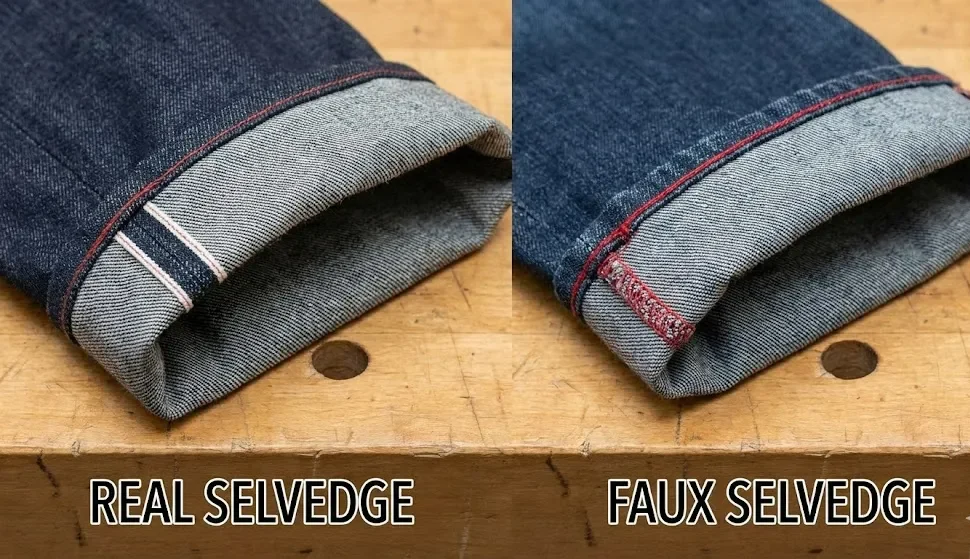
Turn up the cuff. A real selvedge jean has a clean fabric edge on both sides of the seam (the outseam). It is not stitched or surged; it is the finished edge of the fabric itself.
A self edge vs overlock faux selvedge comparison is easy: fake selvedge often uses an overlock stitch with red thread to mimic the look.
2. The Belt Loop / Coin Pocket
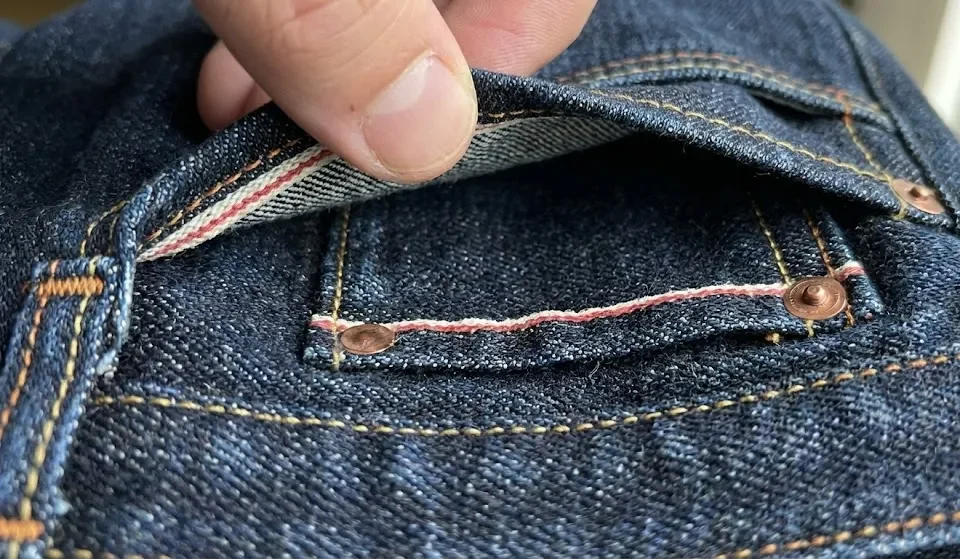
Look inside the coin pocket. Premium brands often cut the coin pocket opening along the selvedge line, leaving the ID visible inside. This is a detail hard to fake cheaply.
3. The Outseam Feel
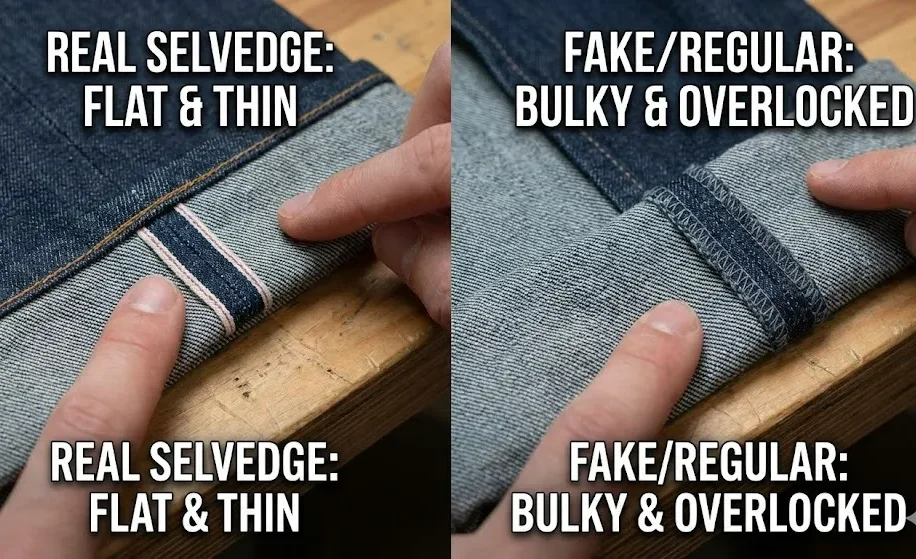
Run your finger along the inside of the outer leg seam. Real selvedge is flat and thin. Fake selvedge, or regular denim, will have a bulkier, overlocked seam allowance.
4. Check the Roll (For Fabric Buyers)
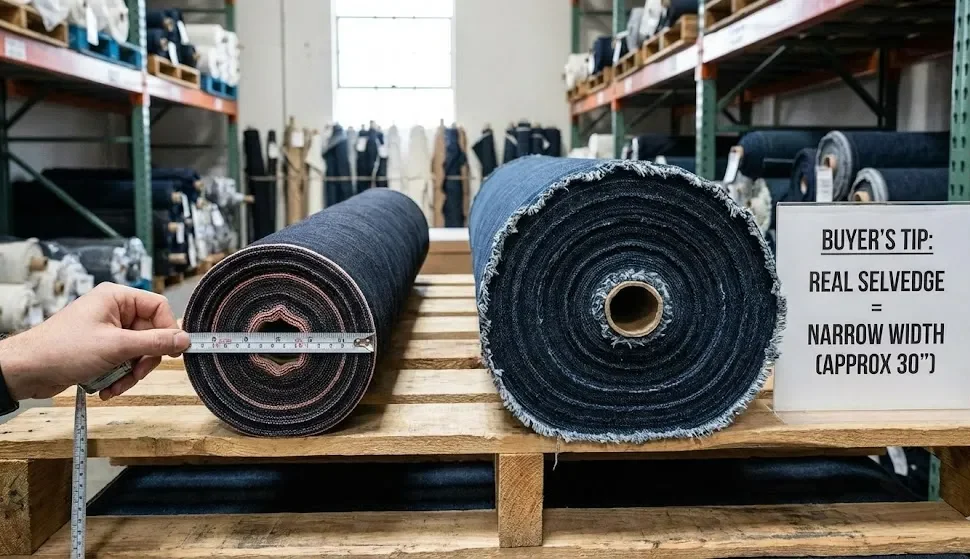
If you are buying fabric, check the roll width. If a supplier claims to sell Selvedge but the roll is 60 inches wide, it is likely a modern loom fabric with a “tucked-in” edge or a fake border. Real selvedge must be narrow width roll (approx 30″).
🏁 Conclusion
Selvedge denim is the “Slow Food” of the textile world. It creates a product that is technically inefficient but aesthetically and structurally superior. For a brand, choosing selvedge is a declaration of values: valuing quality over quantity, and character over uniformity.
As a factory equipped with both vintage shuttle looms and modern air-jets, we understand the place for both. But if you want to create a jean that tells a story, develops a personal patina, and commands respect in the market, the shuttle loom is the only way to go.
Ready to source authentic selvedge?
We have a curated collection of 12oz, 14oz, and 16oz redline, blueline, and custom ID selvedge ready for your next heritage collection. [Internal Link: /contact-us/] to request our Selvedge Swatch Book.
❓ FAQ (Frequently Asked Questions)
Can you get selvedge denim in the US wholesale?
Yes, while domestic US production is limited (Vidalia Mills being a key player), many US-based wholesalers stock Japanese and Italian selvedge. However, for the best pricing and custom production, sourcing directly from mills in specialized regions (like our facility) is often more viable for brands.
Does selvedge denim shrink?
It depends on the finish. Does selvedge denim shrink? Yes.
- If it is Unsanforized (Loomstate), it will shrink 7-10%.
- If it is Sanforized (which most commercial selvedge is), it will shrink less than 3%, similar to regular denim. Always check the spec sheet.
Does selvedge denim stretch?
Traditionally, no. Classic selvedge is 100% cotton. However, modern innovation has led to stretch selvedge, which incorporates 1-2% elastane for comfort while maintaining the shuttle loom look. So, you can find 100 cotton vs stretch selvedge depending on your comfort needs.
How to wash selvedge denim (First Wash)?
For raw selvedge, we recommend a cold soak. Turn jeans inside out, soak in cold water with mild detergent for 45 minutes, rinse, and hang dry. This removes starch without stripping too much indigo. Avoid the dryer at all costs to prevent unwanted creases and shrinkage.
What is the best ounce weight for selvedge jeans?
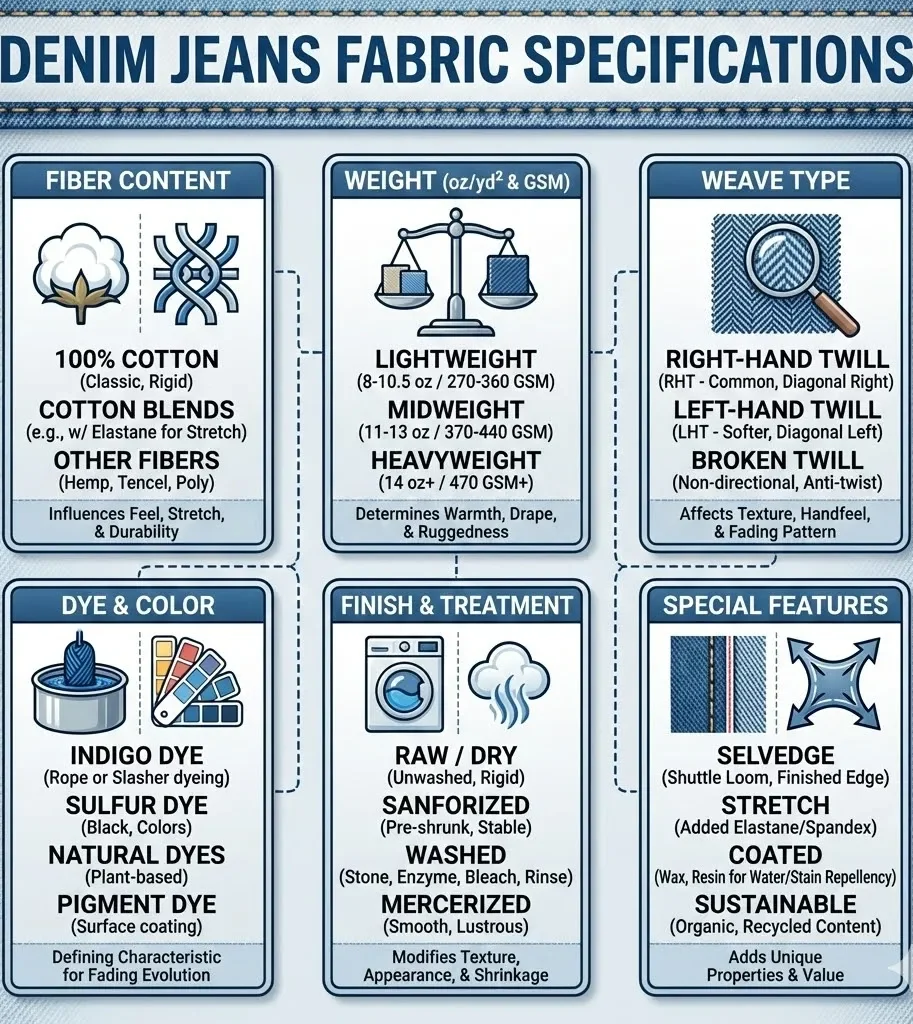
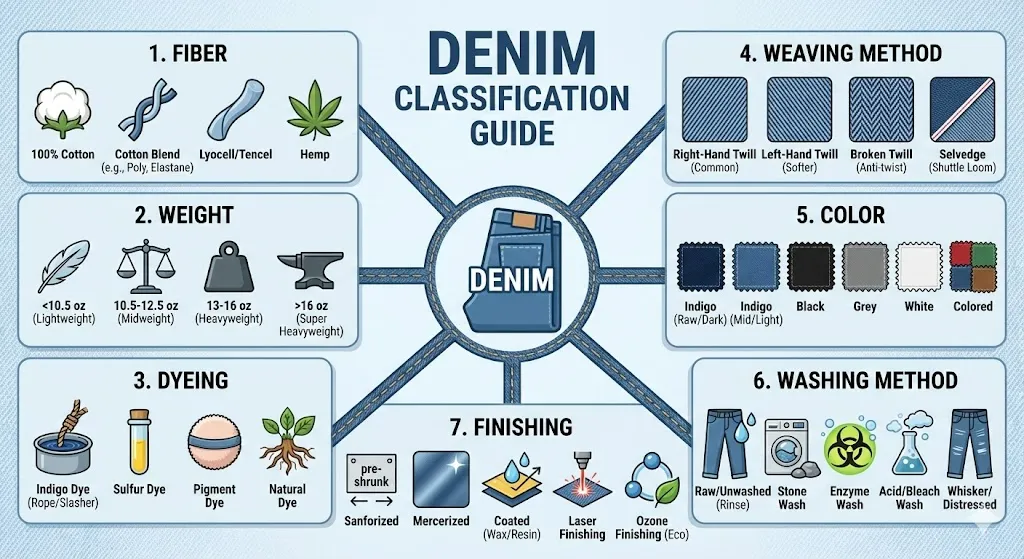
For a year-round “daily driver,” 12–14 oz is the sweet spot. It breaks in relatively quickly but feels substantial. For hardcore enthusiasts who want high-contrast fades, 16 oz and above (Heavyweight) is preferred, though it requires a longer, more uncomfortable break-in period.
 English
  Arabic
  Spanish
  French
  German
  Azerbaijani
  Vietnamese
  Bengali
  Japanese
  Hindi
Hindi  Turkish
  Russian