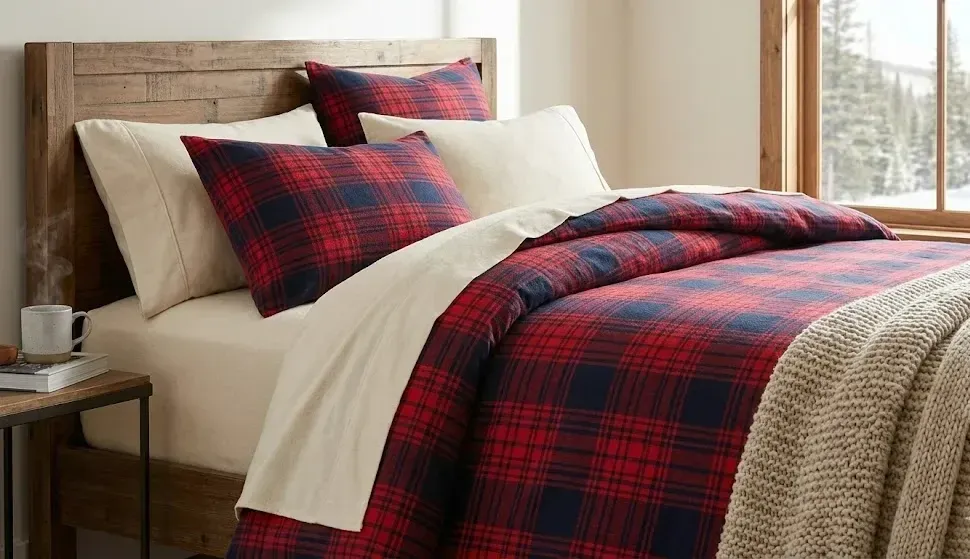
Brushed Cotton · Yarn-Dyed Plaid · Printed · Poly Flannel

Flannel Fabric Wholesale — Brushed & Plaid Flannel from Our China Mill

We are a flannel fabric manufacturer for shirt, sleepwear and bedding brands. Yarn, weaving, brushing and pre-shrinking are set together — so the bulk you receive is as warm, as soft and as stable as the sample you approved.

MOQ
500 m
Lead time
20–35 days
Weights
120–300 gsm
Samples
Free, you pay shipping
↔ Brush the surface
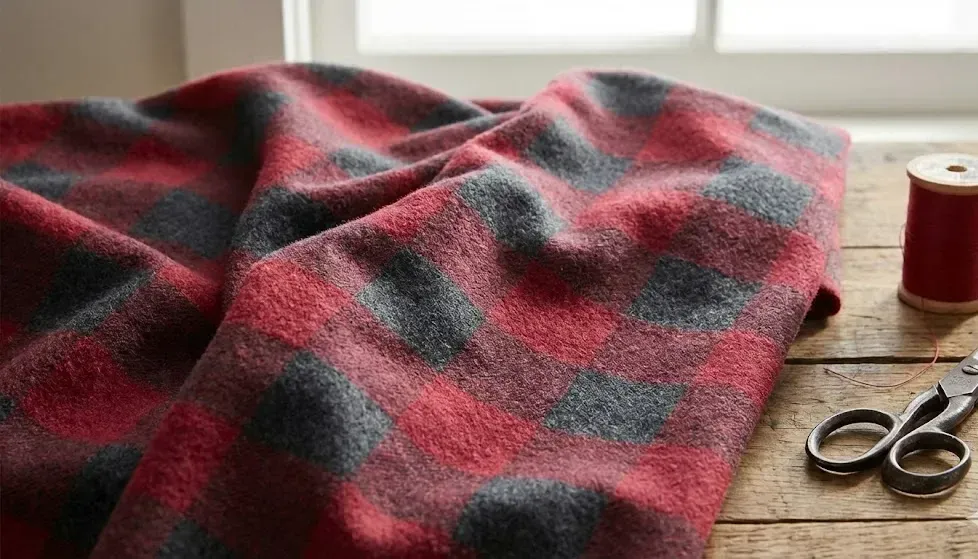
FL-2010Yarn-dyed buffalo check170 gsm · double brushed
Product Range

Flannel Fabrics We Manufacture

Six flannel families, all sold as wholesale flannel fabric in full rolls. Pull a fabric out of the stack to see what it is made for.

100% Cotton Flannel
WHOLESALE · FULL ROLLS

100% Cotton Flannel

Soft, breathable and warm — the classic for sleepwear, bedding and baby products. Brushed on one or both sides.

  • Weight140–200 gsm
  • Width150 / 250 cm
  • BrushingSingle or double
  • Best forPajamas, sheets, baby wraps
Please confirm this family is in production
Choose by Product

Which Flannel for Your Product?

Recommended for Shirts

Flannel Shirts

Light-to-mid weight keeps a shirt breathable and easy to sew; yarn-dyed checks keep their color wash after wash.

GSM130–160
BrushingSingle (face)
Yarn20s × 10s or 40s × 40s
FabricYarn-dyed plaid
Weight & Warmth

Flannel Weight & Warmth Guide

GSM measures mass, not warmth. Brushing traps air, so a double-brushed 150 gsm can feel warmer than an unbrushed 180 gsm. Use the scale to find the usual range for your product, then confirm brushing in the PO.

Write a tolerance in the PO: ±5% — brushing pulls fibers from the yarn, so rolls vary slightly (a 170 gsm target may read 165–175).

Brushing (Napping)

Brushed Cotton Flannel Fabric: Single vs Double Brushed

Wire rollers raise fibers from the yarn to build loft. More brushing means warmer and softer — but also more lint, more pilling risk and lower tear strength. Drag the slider to see the trade-off.

UnbrushedSingle, lightSingleDoubleHeavy double
Warmth (loft)80
Tear strength68
Pilling / lint risk58

Relative values, for comparison only.

Fsp-Flannel-F-Single
Single brushed — face only
Fsp-Flannel-F-Double
Double brushed — face & back
Single brushedDouble brushed
SurfaceNap on the face; back stays smoothNap on both sides
Hand feelClean, crisp, less fuzzySofter, lofty, cozy
Warmth at same GSMStandardHigher — more trapped air
Lint & pilling riskLowerHigher — needs shearing
Typical useShirts, blouses, liningsPajamas, sheets, baby wraps
Yarn-Dyed Checks

Flannel Shirt Fabric: Yarn-Dyed Plaids & Checks

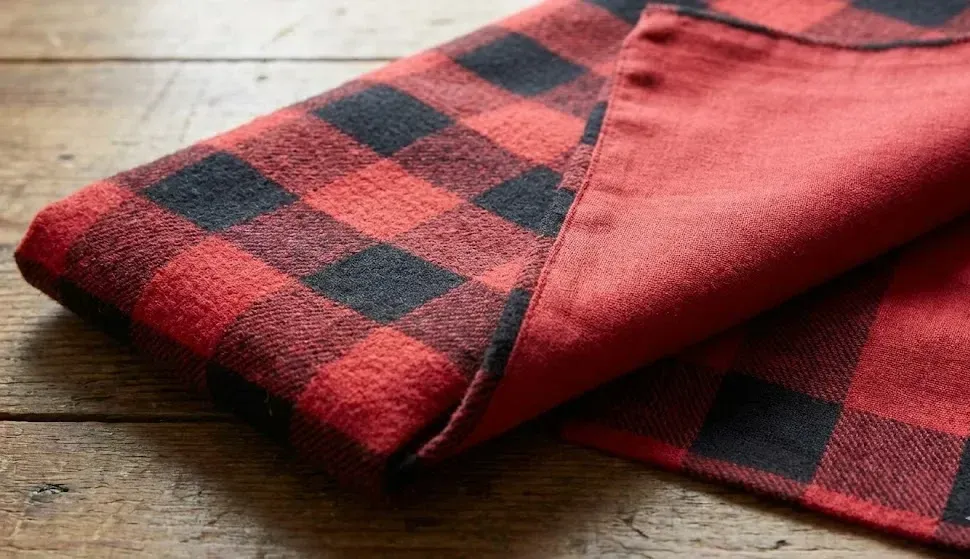
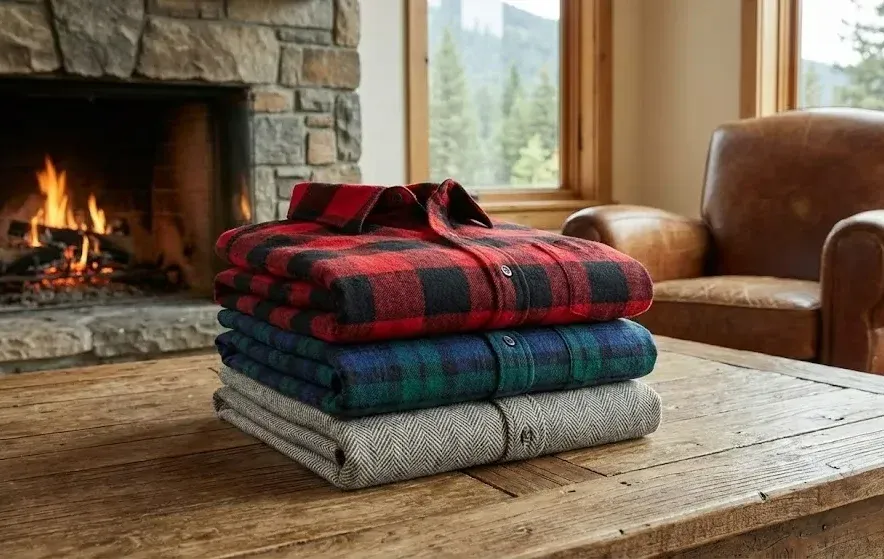
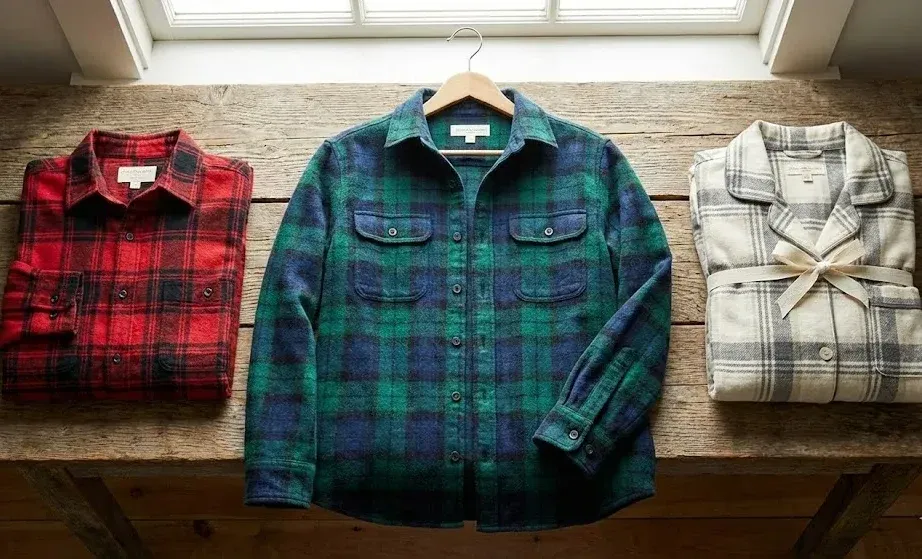
Classic flannel shirts are yarn-dyed: the yarn is colored before weaving, so the check goes through the cloth and never fades like a print. Build a check — we weave it to your sett and Pantone colors.

Pattern

Ground
Block
See our yarn-dyed fabric range
Customization

Custom Flannel Fabric Options

Fill in the spec the way you would write it in a purchase order. The note writes itself; send it and we reply within 24 hours with a price, a feasibility check and a hand-loom or lab-dip sample.

Fiber choose one
Color method choose one
Weight & width type your target
Brushing choose one
Finishes select any
Tests in the PO select any

Flannel PO — draft

  1. Fiber: 100% cotton
  2. Color: Yarn-dyed plaid
  3. Weight: 170 gsm ±5%
  4. Width: 150 cm cuttable
  5. Brushing: Double brushed (face + back)
  6. Finish: compacted / pre-shrunk, sheared after brushing
  7. Tests: shrinkage AATCC 135, pilling ISO 12945-2
  8. Quantity: 8,000 m
  9. Lead time 20–35 days after approval
After you send it
  1. Within 24 hPrice per meter, feasibility of weight, width and brushing, and the earliest ship date.
  2. Day 2–7Free swatches of the closest existing flannels; courier paid by you.
  3. Day 5–12Hand-loom sample for a new plaid, or a lab dip for solids — approved before bulk.
Fsp-Flannel-F-Ceylon
What a sample kit containsA4 swatches in your weight range, a spec card with GSM / yarn / density, and our shrinkage result for each article.
Quality Risks

Common Flannel Fabric Problems & How We Prevent Them

Flannel is judged after the first wash, not on the roll. These are the four issues behind most flannel claims — what causes each one, how we control it at the mill, and the line to write in your PO so it can be checked.

01

Shedding & Pilling

Brushing pulls fibers out of the yarn on purpose. If it goes too far, or the yarn is carded short-staple cotton, loose fibers keep coming out in the dryer filter and roll into pills on cuffs, elbows and pillowcases. Over-brushed fabric also feels softer at first — which is why it often wins the sample round and fails in use.

Over-brushed, carded yarn
— g lint
Controlled brushing, combed yarn
— g lint
Cause
Too many brushing passes, short fibers, no shearing after napping.
Control
Brushing passes fixed per article and logged; shearing to an even nap height; combed or ring-spun weft for premium programs.
Result
Pilling ≥ 3–4 (ISO 12945-2, 2,000 rubs).
In your PO
“Double brushed, sheared; pilling ≥ 3–4 ISO 12945-2”
02

Shrinkage After the First Wash

A lofty, napped structure relaxes in water, and cotton flannel is often dried under tension in finishing. Without compacting, the first home wash takes back the stretch — pajamas lose a size and sheets no longer fit the mattress. Polyester flannel shrinks much less, which is one reason it is used for blankets.

Cause
Fabric dried under length tension; no compacting or sanforizing.
Control
Compacting after brushing; AATCC 135 after 3 washes, head and tail of every lot; result printed in the shipment report.
Result
Shrinkage ≤ 3–5% as agreed.
In your PO
“Shrinkage L/W ≤ 3% after 3 washes, AATCC 135”
03

Plaid Skew & Bowing

On a yarn-dyed check the weft must run at a right angle to the selvedge. If it is pulled off-grain on the stenter, the checks will not line up across the shirt placket, pockets and side seams — the cutting room either wastes fabric matching them or ships shirts that look crooked.

Left: straight grain · Right: skewed weft — the placket line shows the mismatch.
Cause
Weft pulled off-grain in stentering; uneven tension across the width.
Control
Automatic weft straightener; skew and bow measured on every roll (ASTM D3882) and written on the roll ticket.
Result
Skew & bow ≤ 2%.
In your PO
“Skew ≤ 2%, bow ≤ 2%, ASTM D3882, per roll”
04

Color Bleeding on Plaids

Red, navy and black yarns carry a lot of dye. If the yarn is not fully soaped after dyeing, the color runs into the white or cream stripes in the first wash — the plaid looks muddy and other laundry is stained. It is the most common complaint on red buffalo checks.

Grade —
The white cloth was washed together with the plaid at 40 °C.
Cause
Insufficient soaping after yarn dyeing; dark shades with poor fixation.
Control
Reactive yarn dyeing with full wash-off; ISO 105-C06 with a multifiber strip on each dye lot.
Result
Staining ≥ 4.
In your PO
“Washing fastness ≥ 4, staining ≥ 4, ISO 105-C06”
Compliance · USA

Flannel for Children's Sleepwear: Flammability Rules

In the US, children’s sleepwear (sizes 9 months to 14) falls under 16 CFR 1615 / 1616. Loose cotton flannel pajamas cannot be sold as sleepwear without passing the flame test, so brands choose one of two paths. Tell us which one, and we spec the fabric for it.

Path A

Tight-Fitting Sleepwear

  • Garment cut snug to body dimensions in the regulation
  • Cotton flannel allowed without FR treatment
  • Needs the yellow hang tag: “Wear snug-fitting, not flame resistant”
Fabric we supply: cotton flannel with stretch knit trims
or
Path B

Flame-Resistant Fabric

  • Loose-fitting styles such as nightgowns and robes
  • Fabric must pass the vertical flame test before and after 50 washes
  • Usually inherently flame-resistant polyester flannel
Fabric we supply: FR polyester flannel — please confirm

This is a sourcing summary, not legal advice — your importer of record confirms compliance for the target market.

Production

How Our Flannel Is Made

Six stations between the yarn cone and the packed roll. Scroll or click a station — the roll moves along the line.

Yarn &Amp; Dyeing
Station 1 / 6

Yarn & Dyeing

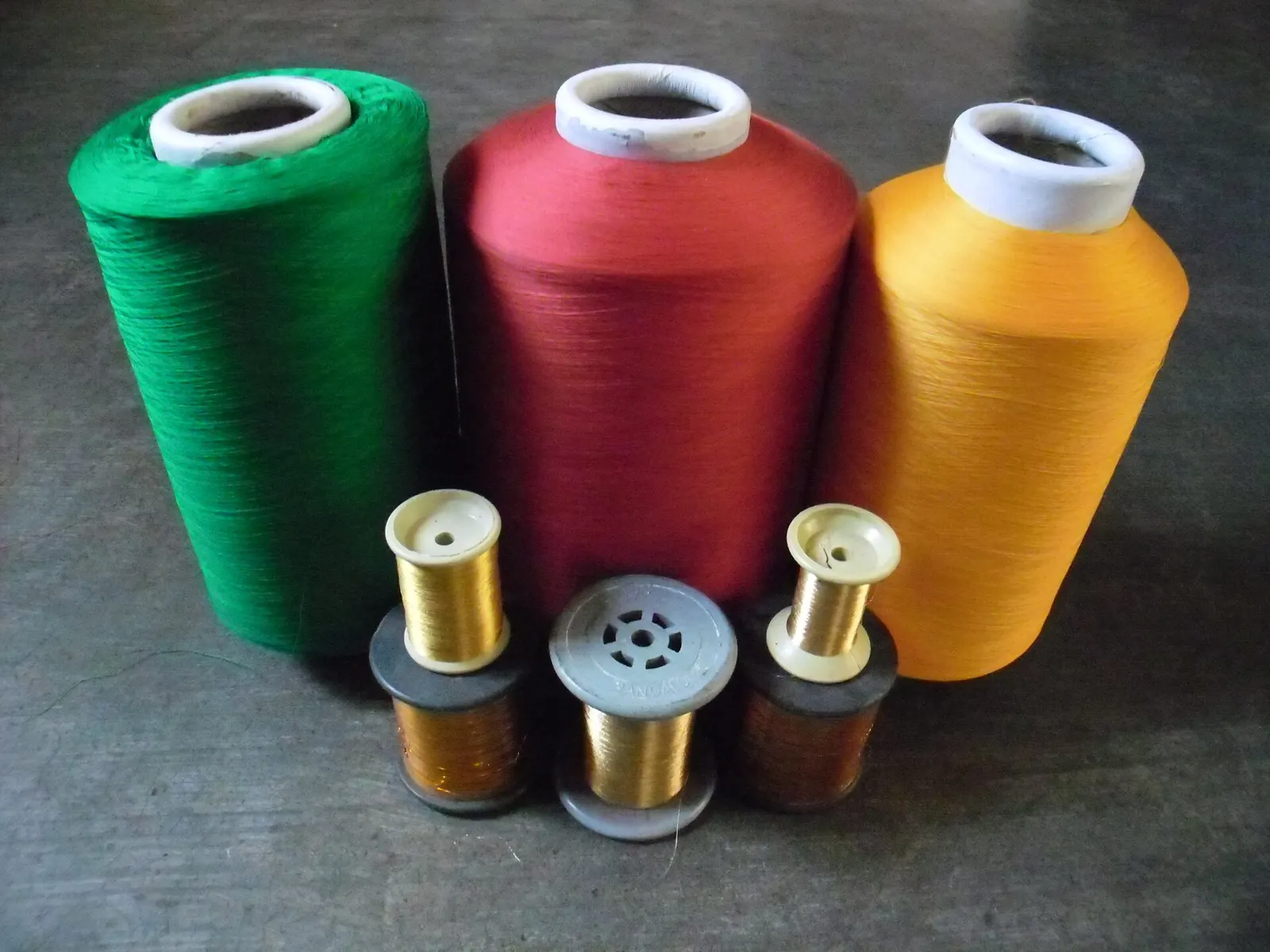
Carded or combed cotton, or polyester. For plaids, the yarn is dyed first (reactive) and wound onto cones by color.

CHECK · yarn count, color vs lab dip
Specifications

Flannel Fabric Specifications

Typical constructions by end use. GSM ranges are from our weight guide; yarn and density columns are reference values — please confirm.

ArticleCompositionYarn (warp × weft)DensityWeightWidthBrushingUse
Plaid Shirt Flannel100% cotton, yarn-dyed20s × 10s64 × 54130–160 gsm150 cmSingleShirts
Fine Shirt Flannel100% cotton, yarn-dyed40s × 40s110 × 80120–140 gsm150 cmSingle, lightDress shirts, blouses
Pajama Flannel100% cotton, printed20s × 10s40 × 42140–170 gsm150 cmDoublePajamas, kidswear
Bedding Flannel100% cotton20s × 16s44 × 40160–190 gsm230–280 cmDoubleSheets, duvet covers
Shacket Flannel100% cotton, yarn-dyed10s × 10s40 × 36200–240 gsm150 cmHeavy doubleShirt-jackets
Polyester Flannel100% polyester75D/150D—120–300 gsm150–280 cmDoubleThrows, linings, FR sleepwear
CVC Flannel60% cotton / 40% poly21s × 21s60 × 56150–200 gsm150 cmSingle or doubleWork shirts, linings
Laboratory

Flannel Fabric Testing Standards

Every lot is tested to the method named in your PO. Typical requirements below; stricter values can be agreed.

AATCC 135 / ISO 6330

Shrinkage

≤ 3–5% after 3 washes

Measured on head and tail of each lot.

ISO 12945-2

Pilling

Grade ≥ 3–4

Martindale on the brushed face.

ASTM D3882

Skew & bow

≤ 2%

Critical for yarn-dyed plaids.

ISO 105-C06

Washing fastness

Grade ≥ 4

With multifiber strip for bleeding.

ISO 105-X12

Rubbing fastness

Dry 4 · Wet 3

Dark plaids rub more when wet.

ISO 13937-2

Tear strength

Per weight class

Brushing lowers strength — we check it.

ISO 3801

Fabric weight

± 5% of PO

Brushing makes rolls vary slightly.

16 CFR 1610 / 1615–1616

Flammability

As required by market

For apparel and children's sleepwear.

Applications

What Our Flannel Becomes

Shirts and jackets on the rail, sleepwear and bedding on the shelf. Hover to see the usual spec.

Fsp-Flannel-F-Shirts
Shirts130–160 gsm · yarn-dyed · single brushed
Fsp-Flannel-F-Trio
Shackets200+ gsm · double brushed
Fsp-Flannel-F-Pj
Pajamas140–170 gsm · double brushed
Fsp-Flannel-F-Sheets
Sheets & duvets160–190 gsm · wide width
Fsp-Flannel-F-Warm
Throws & blankets200–300+ gsm
Fsp-Flannel-F-Ceylon
Linings & baby wraps120–150 gsm · soft, light
Our Advantages

Why Choose Us as Your Flannel Fabric Supplier

What changes when the mill controls brushing and finishing itself, compared with buying through a trading office.

Trading supplierFabric-Supplier mill
Brushing level“Brushed” — side and passes unknownSingle / double, passes logged per lot
ShrinkageVaries by whichever mill has capacityCompacted, AATCC 135 report per lot
Plaid matchingSkew found at the cutting tableSkew & bow measured on every roll
Repeat ordersNew mill, new hand feelSame yarn source and brushing recipe
Season timingNo visibility on productionWeekly photos, ship date confirmed in writing
SamplesPaid, slowFree swatches — you pay shipping
Ordering

Bulk Flannel Fabric Order Timeline

Flannel is a fall–winter product. Pick the month your garments must be in store — we count back to the date your fabric order has to be placed.

Sampling & approval15 days
Fabric production30 days
Garment making30 days
Ocean shipping35 days
Start sampling byJun 13
Place fabric PO byJun 28
Garments ship byAug 27
MOQ500 mLead time20–35 daysSamplesFree, buyer pays shippingPaymentBank transfer via XTransferPackingRolls on tubes, poly + woven bag
Pricing

What Determines Flannel Fabric Price

We quote every flannel per meter, FOB, from the exact spec — a list price would be wrong for most orders. These six choices move the price the most; send them and you get a firm quote within 24 hours.

①

Fiber

100% cotton costs the most; CVC and TC blends cost less and shrink less; polyester flannel is the most economical and the usual base for flame-resistant fabric.

Cotton CVC Polyester
②

Color method

Yarn-dyed plaids cost more than prints and solids: every color is dyed as yarn, and each new check needs warping set-up and a hand-loom sample.

Yarn-dyed Printed Solid
③

Weight

More grams per meter means more yarn. A 240 gsm shacket flannel uses roughly 50% more yarn than a 160 gsm shirt flannel.

240 gsm 190 130
④

Brushing & finishing

Double brushing, shearing, compacting and anti-pilling each add a pass through the finishing line. Flame-resistant finishing adds the most.

FR Double + shear Single
⑤

Width

Wide 230–280 cm bedding flannel is woven on wide looms with lower output, so the price per meter is higher — but it saves the center seam in sheets.

280 cm 230 150
⑥

Quantity & colors

The MOQ of 500 m can be split across colors of the same article; the more meters per color, the lower the set-up cost per meter.

Many small colors Few large colors

Send these 7 lines for an exact flannel quote

  1. End product and market
  2. Fiber content
  3. Solid, printed or yarn-dyed (photo of the check)
  4. Weight in gsm and cuttable width
  5. Single or double brushed
  6. Quantity per color
  7. Tests and certificates required

Already have a spec sheet or a sample? Send a photo — we read it for you.

Can you share FOB price ranges per article? Then we can show real numbers here.
FAQ

Wholesale Flannel Fabric — Buyers Ask

Tap a question to see how our team usually answers it on WhatsApp.

What is your MOQ for wholesale flannel fabric?
Single or double brushed — which should I choose?
What GSM is best for shirts, pajamas and bedding?
Are you a flannel fabric manufacturer or a trader?
Can you copy a plaid from my sample?
How is the flannel fabric price calculated?
How much does cotton flannel shrink?
Get a Quote

Request a Flannel Fabric Wholesale Quote

Product, weight, brushing and quantity are enough to start. MOQ 500 m · free swatches · 20–35 days.

Who Are You

Contact Us

Who Are You