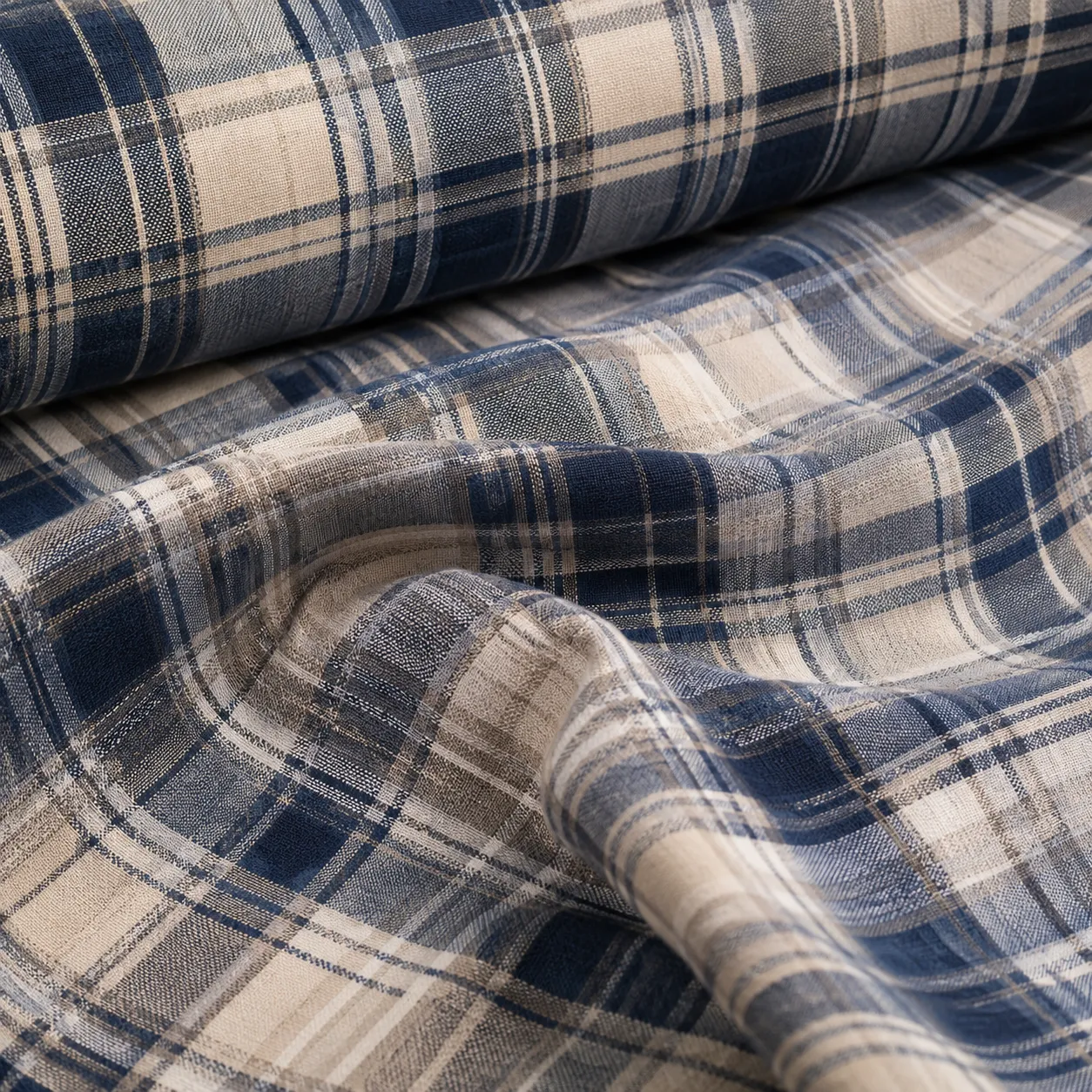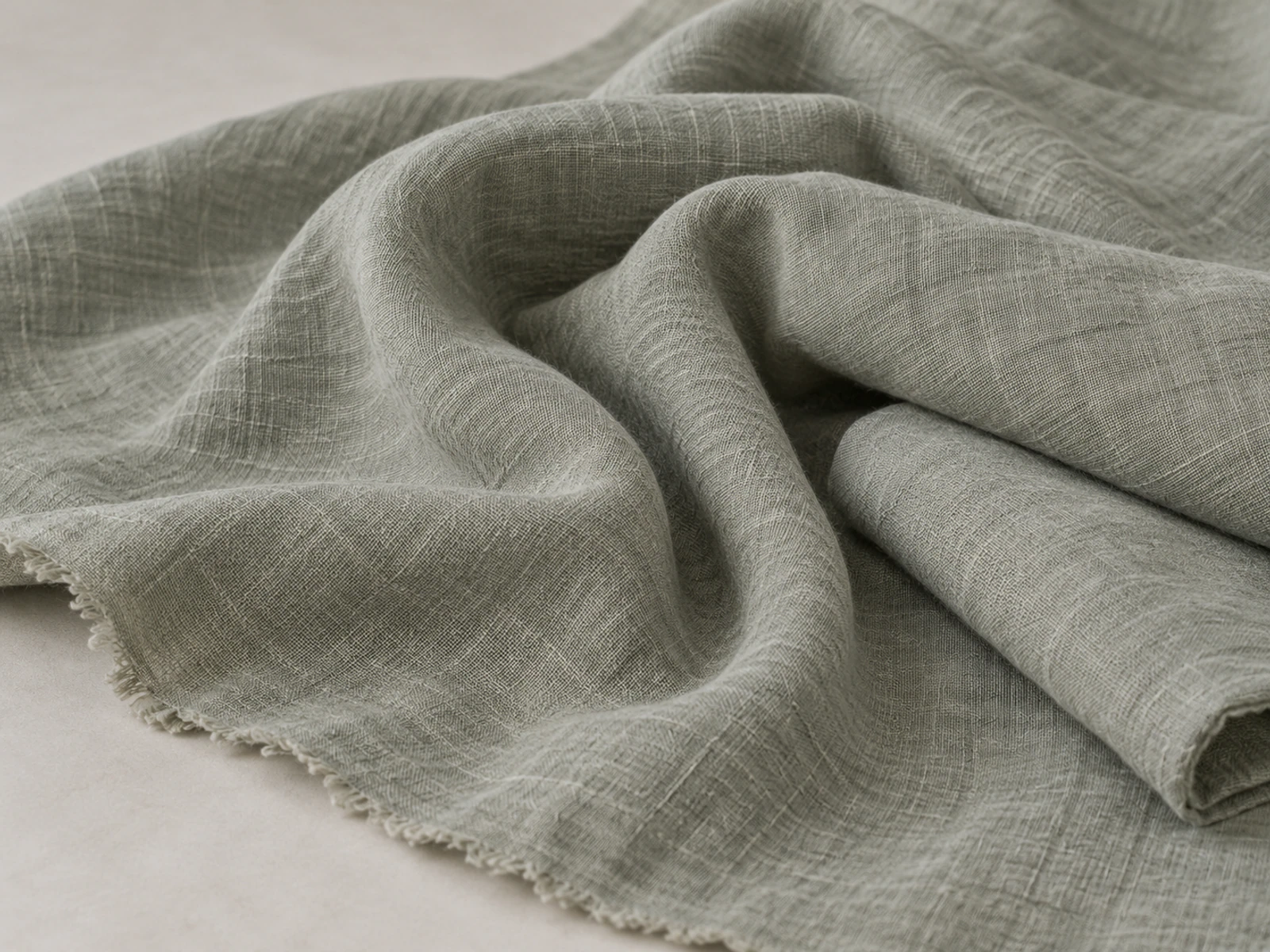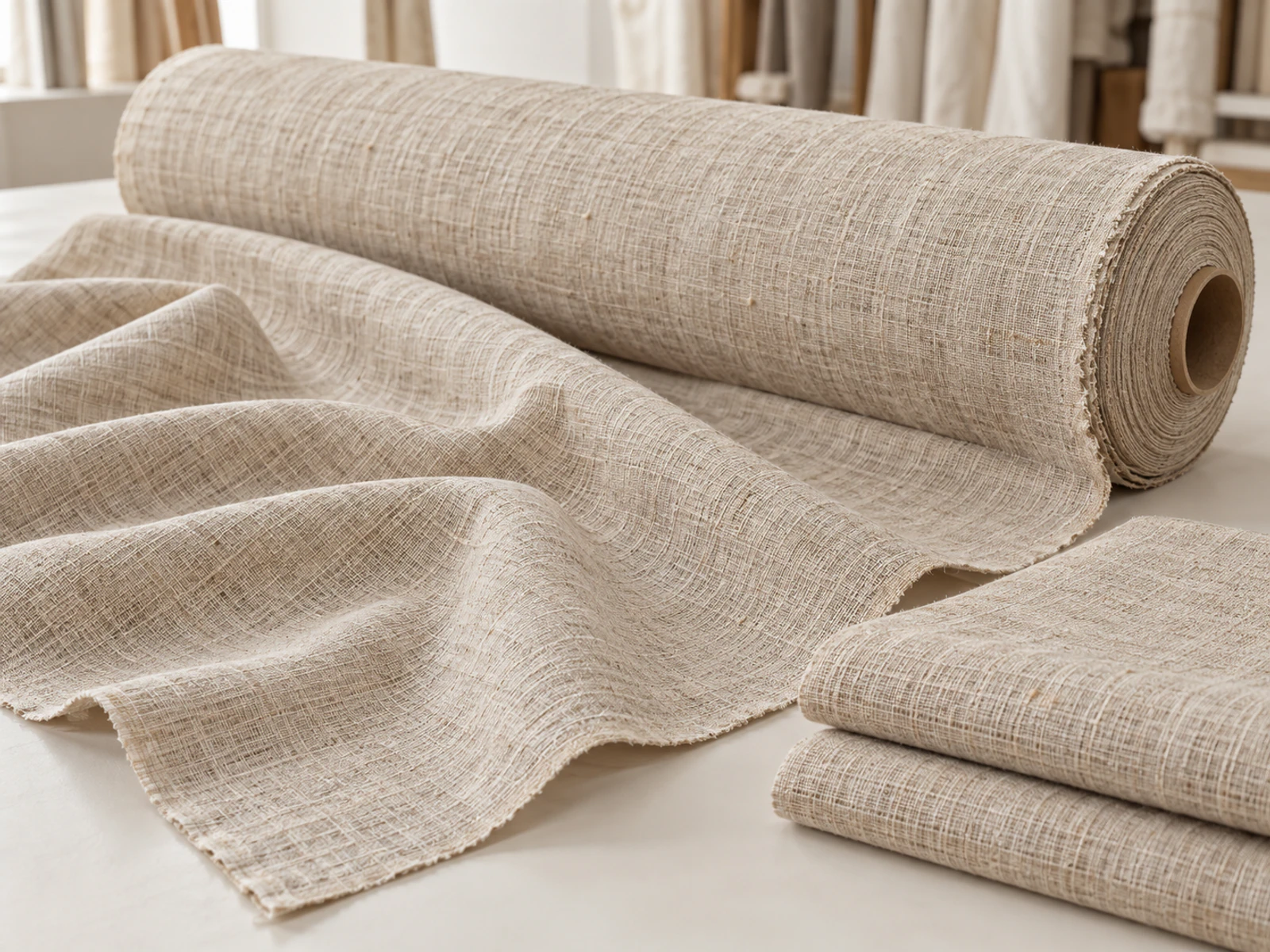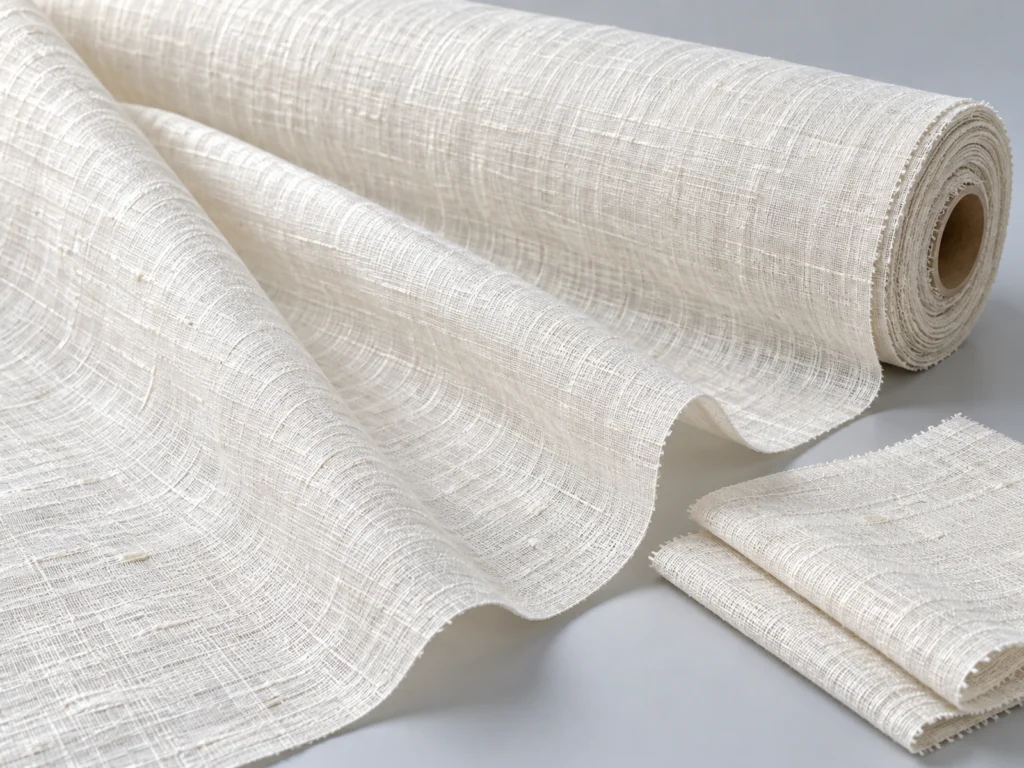

What is ramie fabric? Ramie fabric is a natural textile woven from the stem fibers of the ramie plant, a member of the nettle family grown mainly in East Asia. It is one of the strongest plant fibers used in clothing, with a bright natural luster, a crisp hand and excellent breathability — and, like linen, it wrinkles easily.
For dress makers, shirt factories and home-textile manufacturers, ramie is a useful but often misunderstood material. It looks like linen, is frequently blended with cotton, and can feel anything from silky and cool to stiff and slightly prickly depending on how the fiber was prepared and finished. Two fabrics both described as “ramie” can behave very differently on the cutting table and in the customer’s wardrobe.
This guide explains what ramie is made of, how ramie fabric is made, its main properties, advantages and disadvantages, the types of ramie fabric available and how ramie compares with linen. It finishes with a practical checklist for specifying and approving ramie fabric for bulk orders, based on the ramie and ramie-blend programs we develop for apparel and home-textile customers.
Ramie is a natural cellulose bast fiber from the stems of Boehmeria nivea. Ramie fabric is very strong, highly breathable and naturally lustrous, with a crisp, cool hand. It has low elasticity, so it wrinkles and can wear at sharp folds, and it is often blended with cotton, linen or viscose for a softer feel.
Typical uses: summer shirts, blouses and dresses (about 110–160 GSM), structured skirts and trousers, curtains and table linen. For bulk orders, specify composition, GSM, width, finish, shrinkage limit and seam performance — and check transparency in light colors.
What Is Ramie Fabric?
Ramie fabric — also called ramie material or ramie textile — is cloth woven from ramie yarn, which is spun from the bast fibers of the ramie plant. In textile terms, the ramie meaning is simple: the word comes from the Malay name for the plant, and today it refers both to the plant and to the fiber and fabric made from it.
What Is Ramie Fabric Made From?
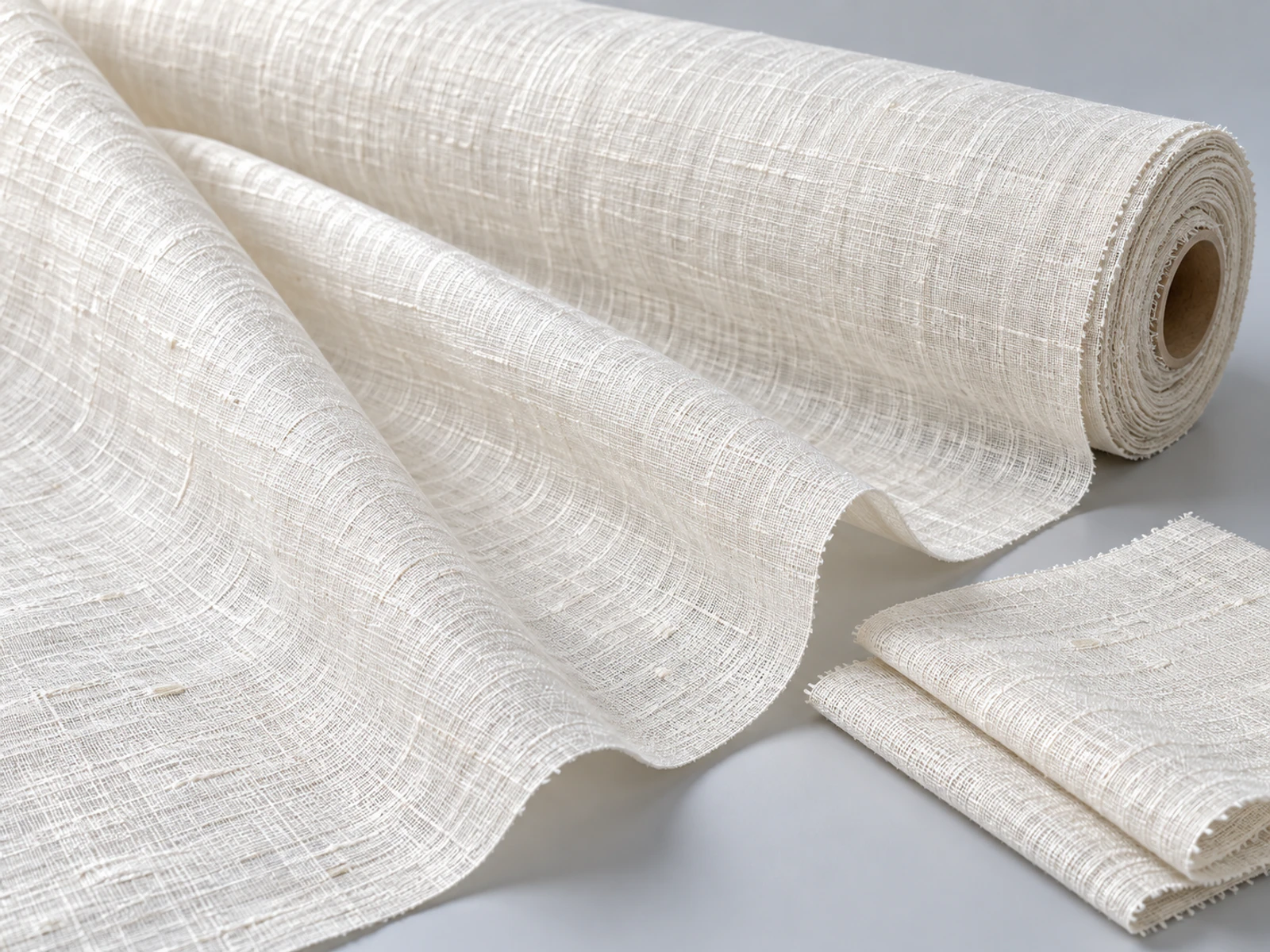
What is ramie fabric made of? It is made of ramie fiber, the long cellulose fibers found in the inner bark of the stems of Boehmeria nivea, often called “China grass”. The ramie plant is a perennial that regrows from its roots, so the same field can be harvested several times a year. China produces most of the world’s ramie, with smaller production elsewhere in Asia and South America.
Individual ramie fiber cells are exceptionally long for a plant fiber — much longer than cotton and individual flax cells — which helps explain ramie’s strength and luster. The fiber is almost pure cellulose once the natural gums are removed, so it behaves chemically much like cotton and linen in dyeing and finishing.
Is Ramie a Natural or Synthetic Fiber?
Is ramie a natural fiber? Yes. Ramie is a natural plant fiber, not a synthetic or a regenerated cellulose like viscose. Raw ramie does, however, need a chemical degumming step before it can be spun (see below), and many ramie fabrics on the market are blends with cotton, viscose or polyester. The fiber content on the specification and care label is the only reliable guide to what you are buying.
Is Ramie the Same as Linen?
No. Ramie and linen are both bast fibers taken from plant stems, and they look similar in fabric form, but they come from different plants: linen from flax, ramie from a nettle-family shrub. Ramie is usually brighter, crisper and somewhat stiffer than linen; linen tends to be softer after washing and more forgiving at folds. Many mills that weave linen also work with hemp and ramie, and buyers often sample them side by side; our range of linen, hemp and ramie fabrics shows the constructions and blends we produce.
| Question | Short answer |
|---|---|
| What is ramie? | A natural bast fiber from the stems of the ramie plant (Boehmeria nivea) |
| What is ramie material like? | Strong, lustrous, breathable, crisp; wrinkles easily |
| Is it natural? | Yes — a plant cellulose fiber, though it needs degumming |
| Is it the same as linen? | No — different plant; similar look, different hand and luster |
| Typical uses | Summer shirts, blouses, dresses, structured garments, curtains, table linen |
How Is Ramie Fabric Made?
Ramie needs more fiber preparation than cotton and, in some ways, more than linen. The quality of each step — and especially degumming — decides whether the finished ramie yarn and fabric feel smooth or harsh.
Harvesting and Extracting Ramie Fibers
Ramie stems are cut when they reach full height, typically one to two meters, and the plant regrows for the next harvest. The bark is stripped from the woody core, a process called decortication, either by hand or by machine. What comes off is a ribbon of raw fiber, sometimes called China grass, still bound together by natural gums, pectin and waxes.
Fiber quality starts in the field. Stems harvested too late become woody and yield coarser fiber; stems from the first, often uneven harvest of a new planting are usually lower grade. Raw ramie is graded by color, length, cleanliness and fineness before it is sold to degumming plants, and that grade sets a ceiling on how fine and smooth the final yarn can be. For buyers, the practical point is that two suppliers quoting the same blend ratio may be using very different fiber grades — which shows up later as differences in hairiness, evenness and hand.
Degumming and Fiber Preparation
Unlike flax, which is loosened in the field by retting, ramie’s gums are removed mainly by chemical degumming: the raw fiber is boiled in alkaline solutions, washed, sometimes bleached, and then softened. Degumming must remove enough gum to free and soften the fibers without weakening them. Under-degummed fiber stays stiff and gives a harsh, prickly fabric; over-degummed fiber loses strength and luster. After degumming, the fibers are dried, opened and combed, and long fibers are separated from short ones for spinning.
When you assess a ramie supplier, ask a few direct questions about this step:
- Who degums the fiber — the spinner, a dedicated degumming plant or a trader?
- Is the fiber fully degummed and softened before spinning, or is the fabric softened later only by finishing?
- What residual gum or hand-feel standard is used to accept fiber lots?
- How is wastewater from degumming handled? Buyers with environmental requirements increasingly ask for this.
Spinning, Weaving and Finishing
Degummed ramie can be spun alone or blended with cotton, linen or viscose. Because ramie fiber is stiff and has little cohesion, spinning ramie yarn is more difficult than spinning cotton; long-fiber ramie is often processed on worsted-type or long-staple systems, while blended yarns use cotton-type spinning. On the loom, ramie yarn’s low stretch means more breaks, so weaving speed and humidity are controlled. Finishing typically includes desizing, dyeing or printing, and softening; enzyme and mechanical softening are common for apparel because they reduce stiffness and surface prickle.
What Are the Main Properties of Ramie Fabric?
Ramie’s properties come directly from its long, stiff, highly crystalline cellulose fiber. The table below summarizes them; the sections that follow explain what each means for garment and home-textile production.
| Property | What it means for buyers | What to specify |
|---|---|---|
| Very high strength | Durable fabric; resists tearing and abrasion | Tensile or grab strength, warp and weft |
| Moisture absorption | Absorbs sweat and dries quickly; cool feel | Fiber content and blend ratio |
| Natural luster | Silky sheen; holds bright colors well | Shade and luster approved on a reference |
| Low elasticity | Wrinkles easily; poor crease recovery | Finish (softening, easy-care) and appearance after wash |
| Stiffness | Crisp hand, structured drape; can feel prickly | Softening finish, hand feel on sealed swatch |
| Fold wear | Can crack along repeated sharp folds | Garment design, pressing and storage guidance |
Strength and Durability
Ramie is among the strongest natural fibers, and like flax and cotton it becomes even stronger when wet. Ramie fabrics resist tearing and hold their shape through repeated laundering. The limitation is flexibility: because the fiber is stiff and brittle, it tolerates repeated sharp bending poorly, so durability depends partly on how the product is designed and cared for.
Moisture Absorption and Breathability
Ramie absorbs moisture readily and releases it quickly, and its stiff yarns create an open, airy fabric that does not cling to the skin. That makes ramie comfortable in hot, humid weather. Its moisture regain is broadly similar to linen’s and higher than cotton’s, which is why ramie is traditionally associated with summer clothing in East Asia.
Natural Luster and Texture
Ramie has a bright, almost silky luster that linen does not have, and it takes dyes well, producing clear, saturated colors. Its yarn can be very even or slightly slubbed depending on spinning, giving a crisp, refined surface that suits shirts, blouses and decorative textiles.
Dyeing and Printing Behavior
Degummed ramie is nearly pure cellulose, so it dyes with the same reactive and vat dyes used for cotton and linen. Its smooth, lustrous surface makes colors look clean and bright, but it also shows unevenness clearly: poorly prepared fabric can dye streaky, and blends can show a slight two-tone effect if ramie and cotton take up dye differently. Approve lab dips on the actual blend, check shade under D65 and a store light, and set shade bands per lot for programs cut from several rolls.
Elasticity and Wrinkle Recovery
Ramie fiber stretches only a few percent before breaking and recovers poorly, so ramie fabric wrinkles easily and holds creases. Blending with cotton, viscose or polyester, and using easy-care or softening finishes, improves recovery. For garments sold on a crisp, relaxed look, some creasing can be part of the appeal; for travel and workwear it is a drawback.
Hand Feel and Drape
Untreated ramie feels crisp and firm, and fabrics made from coarse or under-degummed fiber can feel slightly prickly on the skin. Well-degummed, softened ramie feels cool and smooth. Ramie drapes in a structured, slightly stiff way — useful for tailored shapes and gathered skirts that hold volume, less suitable where a fluid drape is required unless blended with viscose.
What Are the Advantages of Ramie Fabric?
Is ramie a good fabric? For the right products, yes. The main advantages of ramie are comfort in heat, a distinctive appearance and the flexibility to blend it into many constructions.
Comfort for Warm-Weather Clothing
Ramie keeps air moving next to the skin and absorbs moisture quickly, so garments feel cool and dry in summer. It is also resistant to mildew and bacterial growth, which helps in humid climates. Lightweight ramie and ramie-cotton fabrics are popular for shirts, blouses and summer dresses for exactly these reasons.
A Distinctive Natural Appearance
Ramie’s luster gives natural-fiber garments a slightly dressy finish that sets them apart from matte linen and cotton. Colors look clear and bright, and the crisp hand gives collars, pleats and structured silhouettes a clean line. For brands, ramie offers a natural-fiber story with a different look from the linen most competitors use.
Versatility Through Blending
Ramie blends easily with cotton, linen, viscose and synthetics. Cotton adds softness and reduces prickle; linen adds a classic slubbed texture; viscose adds drape; polyester adds wrinkle resistance. This makes it possible to fine-tune hand feel, price and care for each program while keeping the ramie character.
| Advantage | Why it matters | Best products |
|---|---|---|
| Breathable and absorbent | Cool, dry comfort in heat | Shirts, blouses, summer dresses |
| Very strong | Long service life | Table linen, curtains, structured garments |
| Natural luster | Premium, bright appearance | Blouses, dresses, decorative textiles |
| Holds shape | Crisp silhouettes and pleats | Skirts, tailored trousers, shirts |
| Blends well | Adjust hand, drape and cost | Almost any apparel or home-textile program |
What Are the Disadvantages of Ramie Fabric?
Ramie’s weaknesses are the other side of its stiff, strong fiber. Understanding them helps you design products and write specifications that avoid complaints. Buyers also ask is ramie fabric expensive: it generally costs more than standard cotton because of its extra processing, while often costing less than comparable linen.
Wrinkling and Limited Elasticity
Ramie creases readily and does not bounce back, so garments need pressing or must be sold with a relaxed look. Blends and finishes help, but they also change the hand. Decide early whether wrinkling is acceptable for the product, and test appearance after washing on the approved sample.
Potential Stiffness and Skin Discomfort
Coarse or poorly degummed ramie can feel harsh, and protruding stiff fiber ends can prickle sensitive skin. Good degumming, finer yarns, softening finishes and blending with cotton reduce this. For next-to-skin garments, always evaluate hand feel on a washed sample and, if possible, in a wear trial.
Wear at Repeated Fold Lines
Because ramie fiber is brittle, repeated sharp folding in the same place — pressed creases, folded storage, collar points — can eventually break fibers along the fold. Design softer folds where possible, recommend varying fold lines in storage, and avoid hard creasing in finishing for 100% ramie products.
Processing Complexity and Quality Variations
Ramie quality depends heavily on degumming, combing and spinning, and these vary between suppliers and even between lots. Shade, luster, stiffness and hairiness can all shift. Approve a sealed reference for hand and appearance, ask how the fiber is prepared, and inspect bulk against the reference rather than against a description.
| Disadvantage | Effect on product | How to manage it |
|---|---|---|
| Wrinkles easily | Creased look, more ironing | Blend, easy-care finish, relaxed styling |
| Stiffness / prickle | Discomfort next to skin | Good degumming, softening, cotton blend |
| Fold wear | Breaks along sharp creases | Soft folds, careful pressing and storage |
| Quality variation | Hand and shade differ by lot | Sealed reference, lot-by-lot inspection |
| Cost above cotton | Higher fabric price | Blend ratio and construction planning |
What Is Ramie Fabric Used For?
Most ramie goes into apparel, where its coolness and luster are valued, and into decorative home textiles. Ramie clothing — also sold as ramie apparel or ramie fabric clothing — ranges from shirts and blouses to dresses and trousers.
Shirts, Blouses and Summer Dresses
A ramie shirt or ramie blouse is cool, crisp and slightly lustrous, which suits summer and resort collections. Ramie-cotton blends of roughly 110–160 GSM are common for shirts and blouses; a ramie dress — or any ramie fabric dress with gathers or a flared skirt — often uses a ramie-cotton or ramie-viscose blend for more drape. A ramie fabric blouse usually sits at the lighter end of the range, around 110–130 GSM. Light colors need special attention to transparency, especially for unlined dresses.
For shirts and blouses, also plan collar and cuff construction around ramie’s stiffness: interlinings can be lighter than for cotton because the fabric already has body, and topstitching should avoid very tight curves where stiff yarns can pucker. Pre-wash samples before fitting so that pattern measurements reflect the finished, relaxed fabric.
Skirts, Trousers and Structured Garments
Ramie’s stiffness becomes an advantage in garments that need structure: A-line and pleated skirts, wide-leg ramie pants, summer jackets and workwear-style shirts. Heavier ramie and ramie-linen fabrics around 160–220 GSM hold shape well. For trousers, test seam performance, because stiff, low-stretch fabrics put more stress on seams.
Curtains, Table Linens and Decorative Textiles
In home textiles, ramie and ramie blends are used for curtains, tablecloths, napkins, runners and decorative panels. Their luster gives a refined look, their strength handles regular laundering, and their natural texture suits contemporary interiors. For curtains, also consider light fading and shrinkage after cleaning.
Applications Where Ramie May Be Less Suitable
- Close-fitting knitwear and activewear, where stretch and recovery are essential.
- Very soft baby products, unless a high-cotton blend and thorough softening are used.
- Products folded sharply in the same place for long periods, such as some packaged goods.
- Low-maintenance travel wear, where wrinkle resistance is the selling point.
| Product | Typical ramie option | Approx. GSM | Key check |
|---|---|---|---|
| Shirt / blouse | Ramie-cotton or 100% ramie | 110–160 | Hand feel, shrinkage |
| Summer dress | Ramie-cotton or ramie-viscose | 120–170 | Transparency, drape |
| Skirt / trousers | Ramie-linen or ramie-cotton | 160–220 | Seam performance, wrinkling |
| Curtains | Ramie or ramie-linen | 150–250 | Shrinkage, light fading |
| Table linen | Ramie or ramie-linen | 180–250 | Fold wear, wash appearance |
What Types of Ramie Fabric Are Available?
Ramie is sold as pure ramie and in many blends. Each type changes hand feel, drape, wrinkling and price.
100% Ramie Fabric
100 ramie (100% ramie) fabric shows the fiber’s full character: maximum luster, crispness, strength and breathability — and the most wrinkling and stiffness. It suits structured shirts, decorative textiles and products where a premium natural look matters. Specify the softening finish and approve hand feel carefully.
Ramie-Cotton Blends
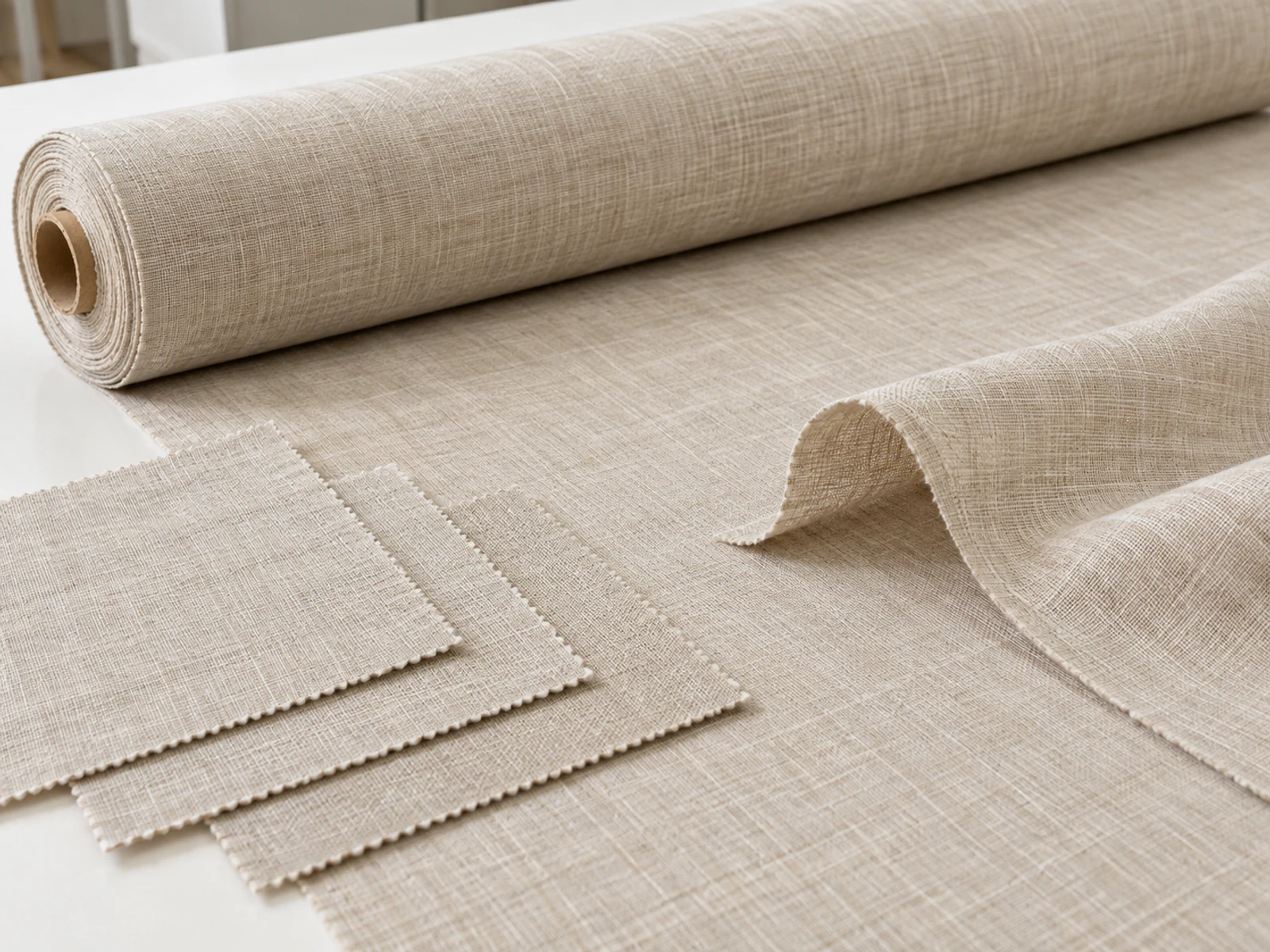
Ramie cotton blends are the most common ramie fabrics in apparel. Cotton’s soft, flexible fibers reduce stiffness and prickle, improve wrinkle recovery and make the fabric easier to sew and dye evenly. The higher the cotton share, the softer and more familiar the hand; if you want to understand what cotton contributes, our guide to cotton fabric properties explains its feel, absorbency and care.
| Blend (ramie/cotton) | Hand feel | Typical use |
|---|---|---|
| 100/0 | Crisp, lustrous, firm | Structured shirts, decorative textiles |
| 55/45 | Ramie character with a softer hand | Shirts, blouses, dresses |
| 45/55 | Softer, smoother, less prickle | Next-to-skin shirts and dresses |
| 30/70 and lower | Mostly cotton feel with ramie sheen | Price-driven apparel programs |
Ramie-Linen Blends
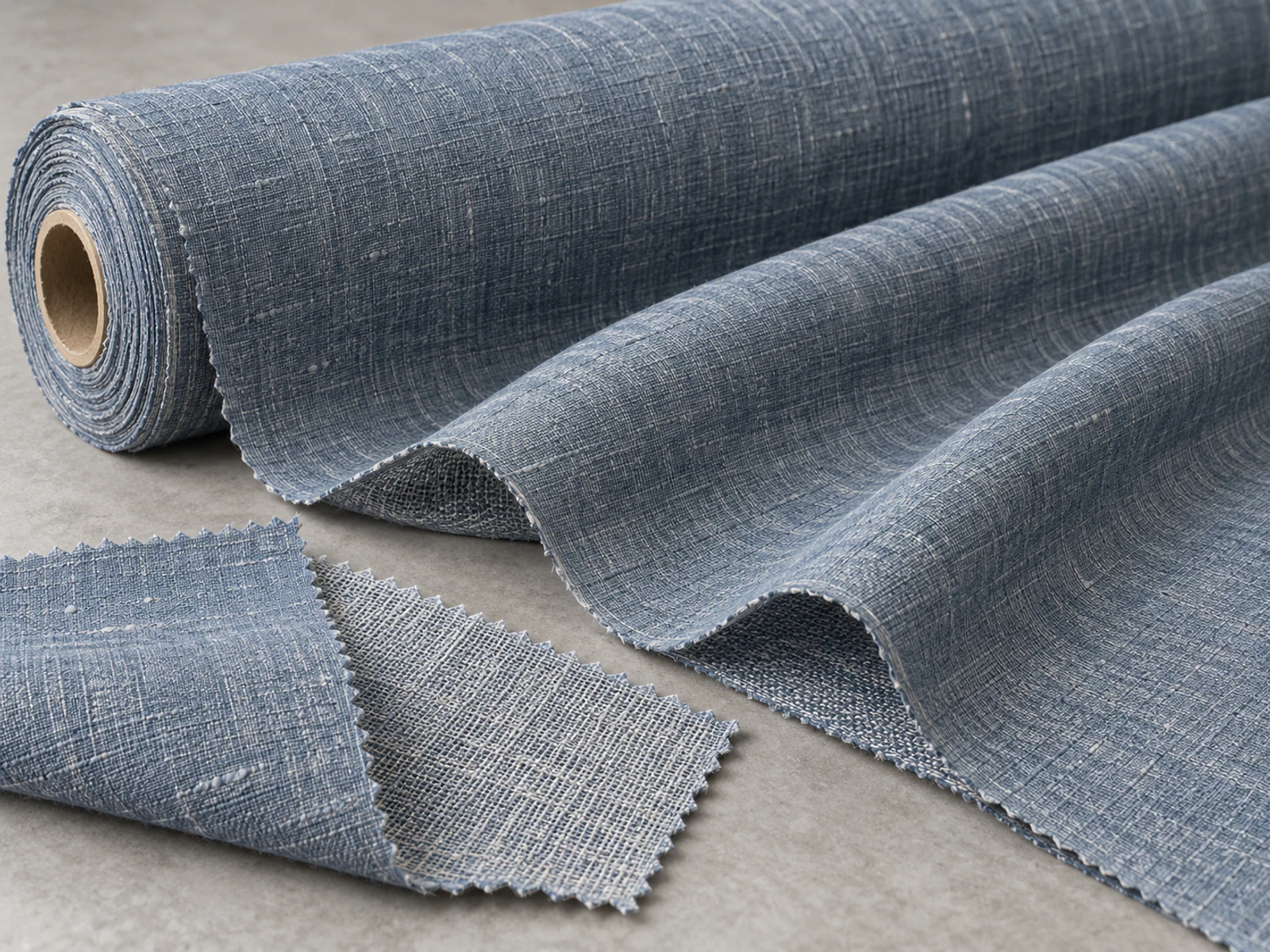
Ramie linen blends combine linen’s slubbed texture with ramie’s luster and stiffness. They suit shirting, summer suiting, curtains and table linen. Because both fibers have low elasticity, ramie-linen fabrics wrinkle readily and need the same care with shrinkage and fold wear as pure linen.
For a natural-fiber range, sampling 100% ramie, a ramie-cotton blend and a ramie-linen blend on the same construction lets your team compare luster, hand and wrinkling side by side before choosing.
Ramie-Viscose and Other Blends
Ramie-viscose adds fluid drape and softness for dresses and blouses. Ramie-polyester improves wrinkle resistance and reduces cost for uniforms and easy-care products. Ramie-silk and ramie-wool blends exist in niche, higher-end ranges. For any blend, state the ratio by weight on the specification and label.
Ramie vs Linen: How Do They Compare?
Ramie vs linen is the comparison buyers ask about most, because ramie and linen look alike in many fabrics. Both are strong, breathable bast fibers, but they differ in source, processing, luster, hand and behavior at folds.
| Feature | Ramie | Linen |
|---|---|---|
| Plant | Ramie (Boehmeria nivea), nettle family | Flax (Linum usitatissimum) |
| Main producing region | China and East Asia | Flax grown mainly in Western Europe |
| Fiber extraction | Decortication + chemical degumming | Field retting, scutching, hackling |
| Luster | High, silky | Soft, matte to low luster |
| Hand when new | Crisp, can be stiff or prickly | Crisp, softens noticeably with washing |
| Strength | Very high | Very high |
| Elasticity | Very low; brittle at folds | Low; more tolerant of folding |
| Breathability | Excellent | Excellent |
| Price (typical) | Above cotton; often below linen | Above cotton |
Fiber Sources and Production Processes
Flax is pulled, retted in the field and mechanically processed; ramie is cut, decorticated and chemically degummed. That makes ramie quality more dependent on chemical processing and linen quality more dependent on harvest and retting conditions. For more on how flax becomes fabric, see our guide to what linen fabric is and how it is made.
Texture, Luster and Softness
Ramie is brighter and crisper; linen is more matte and becomes softer and more supple with use. Fabrics woven from fine, well-degummed ramie can feel smooth and cool, while coarse ramie feels harsher than most linen. If a soft, lived-in hand is the goal, linen or a ramie-cotton blend is usually easier to achieve.
Breathability and Moisture Absorption
Both fibers absorb moisture well and breathe excellently, and both feel cool in hot weather. In practice, differences in weave, weight and finish matter more than the difference between the fibers.
Strength, Wrinkling and Care
Both are very strong and both wrinkle. Ramie is more brittle at sharp folds, so pure ramie products need more care with pressing and storage. Both should be pre-shrunk and tested for dimensional change before cutting.
Cost and Availability
Because most ramie is grown and processed in China, ramie supply and lead times for Asian mills are often more predictable than for linen, which depends on European flax harvests. Ramie fabric is usually priced above cotton and often below comparable linen, although fine, well-softened ramie yarns can be expensive. For price-driven programs, ramie-cotton blends offer a natural-fiber look at a moderate cost.
Choosing Ramie or Linen for Your Product
- Choose ramie for lustrous shirts and blouses, structured skirts and decorative textiles where a crisp, bright look is wanted.
- Choose linen for relaxed shirts, bedding and table linen where softness after washing and a matte natural look matter.
- Choose a ramie-linen or ramie-cotton blend when you want ramie’s luster with a softer hand or a lower cost.
For apparel, we usually suggest sampling ramie, linen and a blend on the same base construction. For home textiles, linen remains the default for bedding, while ramie and ramie-linen work well for curtains and table linen. You can compare options in our wholesale ramie and linen fabrics range before requesting swatches.
How to Choose Ramie Fabric for Bulk Orders
Retail ramie fabric by the yard is sold for sampling and small projects; production programs are specified and bought by the roll. These five checks are the ones we walk buyers through before a ramie order goes into bulk.
Confirm Fiber Composition and Blend Ratio
Write the exact composition by weight — for example “55% ramie / 45% cotton” — and confirm whether the blend is intimate (fibers blended in the yarn) or a union fabric (for example ramie warp with cotton weft). The two behave differently in shrinkage, dyeing and hand. Ask the supplier for a fiber-content test report for labeling.
Specify Fabric Weight, Width and Construction
Specify finished GSM with a tolerance (commonly ±5%), cuttable width, weave, yarn counts and ends/picks per inch. A 120 GSM and a 150 GSM ramie-cotton can look similar on a swatch card but differ greatly in opacity and drape. If you need a refresher on how GSM and yarn count interact, our explainer on fabric weight and yarn count covers how weight is measured and converted.
Evaluate Hand Feel, Drape and Transparency
Judge hand feel on a washed sample, check drape by hanging a large piece, and check transparency in the actual color, ideally over skin tone and in the intended garment. Light-colored ramie blends are especially likely to show through.
Check Shrinkage, Colorfastness and Seam Performance
Shrinkage should be tested, not assumed. As defined by AATCC TM135, Test Method for Dimensional Changes of Fabrics after Home Laundering, specimens are measured, laundered and dried under stated conditions and re-measured in length and width; the method offers several wash temperatures, agitation cycles and drying procedures, so the PO should state which condition applies along with a limit such as ≤ 3%.
Colorfastness to washing, rubbing (dry and wet) and light should be specified with grades, particularly for dark and bright shades on ramie’s lustrous surface. Our guide to colorfastness test methods explains which tests and grades to request.
Seam performance matters because stiff, low-stretch ramie fabrics can slip or tear at seams. ASTM D1683/D1683M, Standard Test Method for Failure in Sewn Seams of Woven Fabrics measures sewn seam strength by applying force perpendicular to the seam, and can be used to evaluate seam slippage and rupture — useful for trousers, fitted dresses and upholstery.
Common Ramie Constructions to Start From
| Construction | Composition | GSM | Width | Typical use |
|---|---|---|---|---|
| Plain-weave shirting | 55% ramie / 45% cotton | 120–150 | 145–160 cm | Shirts, blouses |
| Plain-weave dress fabric | 45% ramie / 55% cotton | 130–160 | 145–150 cm | Summer dresses |
| Pure ramie shirting | 100% ramie | 110–150 | 145–150 cm | Structured shirts |
| Ramie-linen suiting | Ramie / linen blend | 180–220 | 145–150 cm | Skirts, trousers, jackets |
| Decorative weave | Ramie or ramie-linen | 150–250 | Up to wide widths on request | Curtains, table linen |
These are typical starting points, not limits. Use them to brief a supplier, then adjust weight and blend after the first garment or home-textile prototype.
Approve Samples Before Bulk Production
- Request lab dips and a pre-production sample from the bulk process.
- Wash one half of the approval swatch; approve hand, shade and size on the washed half.
- Seal both halves and keep one at each side.
- Write composition, GSM, width, finish, shrinkage, colorfastness and seam limits into the PO.
- Inspect bulk rolls against the sealed reference and record results by lot.
Weight: 150 GSM ± 5% (finished) · Cuttable width: 150 cm
Dimensional change: ≤ 3% L/W, AATCC TM135, agreed wash/dry condition
Colorfastness: washing ≥ 4, rubbing dry ≥ 4 / wet ≥ 3 · Seam test: ASTM D1683
How to Wash and Care for Ramie Fabric
Does ramie shrink? Untreated ramie can shrink, mainly at the first wash, so care depends on how the fabric was pre-shrunk and finished. Care labels should always match the conditions used in shrinkage testing.
Washing According to Composition and Finish
Most pre-shrunk ramie and ramie-cotton fabrics can be machine washed at 30–40 °C on a gentle cycle with mild detergent. Avoid chlorine bleach, which weakens cellulose fibers. Ramie-viscose blends and softened, lustrous finishes may need cooler, gentler washing or dry cleaning; follow the tested care instruction for each article.
Drying and Shrinkage Control
Does ramie fabric shrink in the dryer? High-heat tumble drying increases both shrinkage and creasing. Line drying or low-heat tumble drying, removing items while slightly damp, keeps dimensions more stable. For production, control shrinkage at the mill through pre-shrinking and verify it with testing, so the customer’s care routine does not have to compensate.
Ironing and Storage
Iron ramie while slightly damp at a medium-high setting; press dark shades on the reverse to avoid shine. Because ramie is brittle at sharp folds, avoid pressing hard creases into the same place repeatedly, and store garments and table linen hanging or loosely folded with varied fold lines.
Care Label Wording Examples
Clear care labels reduce returns. For a pre-shrunk ramie-cotton shirt, typical wording is: “Machine wash cold to warm, gentle cycle. Do not bleach. Line dry or tumble dry low. Warm iron. Natural fiber – some creasing is normal.” For pure ramie table linen: “Wash 40 °C. No chlorine bleach. Iron damp. Store loosely folded; vary fold lines.” Whatever you print should match the wash and dry conditions used in your shrinkage test.
| Care step | Recommendation |
|---|---|
| Washing | 30–40 °C, gentle cycle, mild detergent (per tested label) |
| Bleach | No chlorine bleach |
| Drying | Line dry or low tumble; remove slightly damp |
| Ironing | Medium-high while damp; reverse side for dark colors |
| Storage | Hang or fold loosely; vary fold lines |
Free samples
Get Free Fabric Samples — Shipped Within 5 Days
Tell us the fabric you need and roughly how much. We reply within 24 hours and ship free samples within 5 days. Linen, hemp, ramie and linen-cotton blends · MOQ 500 m · bulk in 20–35 days.
Prefer chat? Message us on WhatsApp: +86 188-2515-3652
Frequently Asked Questions About Ramie Fabric
Is ramie fabric good for summer?
Yes. Ramie is breathable, absorbs moisture quickly and does not cling to the skin, so it feels cool in hot weather. Lightweight ramie and ramie-cotton fabrics around 110–160 GSM are common for summer shirts, blouses and dresses.
Is ramie fabric soft or itchy?
It depends on processing. Well-degummed, softened ramie feels cool and smooth, while coarse or under-processed ramie can feel stiff and slightly prickly. Blending with cotton and using a softening finish makes ramie comfortable next to the skin.
Does ramie fabric wrinkle easily?
Yes. Ramie has very low elasticity, so it creases easily and holds creases. Blends with cotton, viscose or polyester and easy-care finishes reduce wrinkling.
Does ramie fabric shrink?
Untreated ramie can shrink at the first wash. Pre-shrunk fabric can be held to about 3% or less; specify the limit and the test condition, such as AATCC TM135 with an agreed wash and dry cycle, in the PO.
Is ramie better than linen?
Neither is better in every case. Ramie is brighter, crisper and often less expensive; linen is softer after washing and more tolerant of folding. Choose ramie for lustrous, structured garments and linen for relaxed shirts and bedding.
Why is ramie blended with cotton?
Cotton softens ramie’s crisp hand, reduces prickle, improves wrinkle recovery and makes the fabric easier to sew and dye evenly. Ramie-cotton blends such as 55/45 keep ramie’s look with a more comfortable feel.
Is ramie a good fabric?
Yes, for the right uses. Ramie is strong, breathable and lustrous, which suits summer apparel, structured garments and decorative home textiles. It is less suitable where stretch, very soft hand or wrinkle resistance is essential.
Is ramie fabric expensive?
Ramie usually costs more than standard cotton because degumming and spinning are more complex, but it is often less expensive than comparable linen. Blend ratio, yarn quality, weight and finish all affect the final price.
Is ramie a natural fiber?
Yes. Ramie is a natural plant cellulose fiber from the stems of Boehmeria nivea. It requires chemical degumming before spinning, and many ramie fabrics are blends, so check the fiber content on the specification.
What is ramie fabric made of?
Ramie fabric is made of ramie fiber, the long cellulose fibers in the inner bark of the ramie plant. The fibers are decorticated, degummed, spun into ramie yarn and woven, alone or blended with cotton, linen or viscose.
Planning a Ramie Program?
We develop ramie, ramie-cotton and ramie-linen fabrics for shirts, dresses and home textiles, and can sample several blends on the same construction so you can compare hand, drape and transparency. Tell us the product, target GSM, width and test limits, and request ramie fabric samples and a quotation.