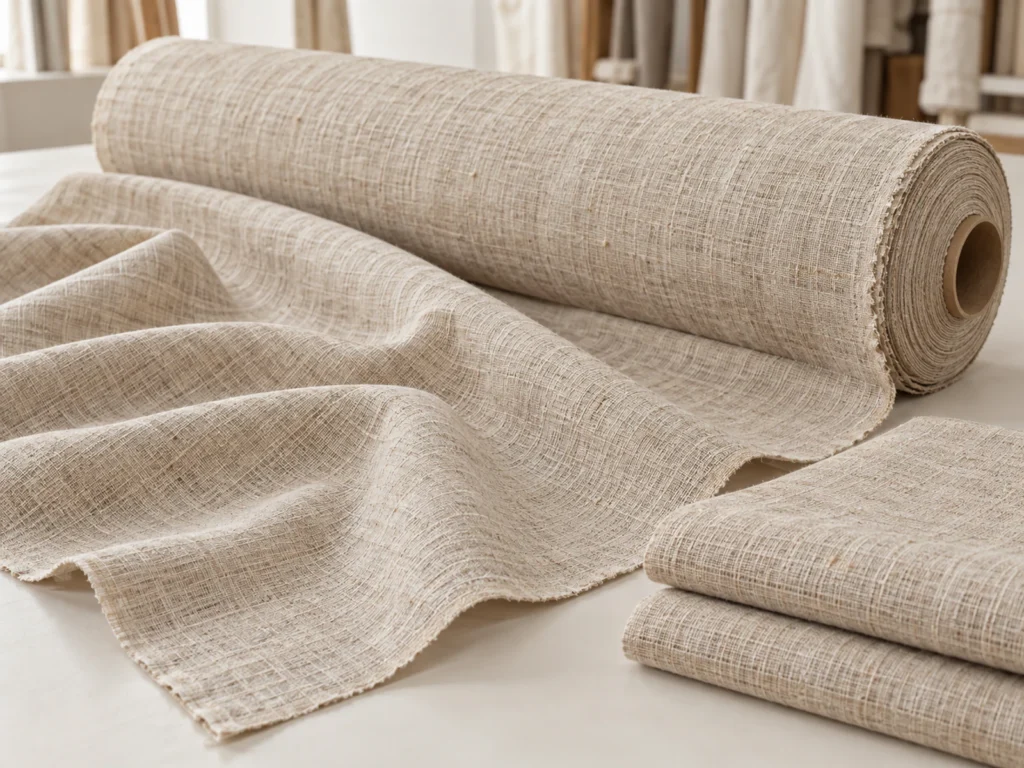

Linen vs cotton is a question we answer almost every week for bedding brands, shirt makers and fabric wholesalers. Both are natural plant fibers, both breathe, and both are sold as “premium” in the right context. But they come from different parts of different plants, they are spun and woven differently, and they behave differently in the wash, on the cutting table and in the customer’s hands.
In short: linen is made from the long stem fibers of the flax plant, so it is stronger, cooler and drier to the touch, but it wrinkles easily and costs more. Cotton is made from the short seed fibers of the cotton plant, so it is softer, smoother, easier to dye and print, and much cheaper and more available. Many buyers end up comparing linen vs linen cotton blends rather than choosing a pure fiber at all.
This guide is written from the mill side. We weave and finish linen, linen-cotton and cotton fabrics for apparel and home-textile customers, so alongside the usual comparison of breathability and softness you will find the specifications, test methods and purchase-order wording that decide whether a bulk order actually performs.
Linen (from flax stems) is stronger, more breathable and cooler, with a dry, textured hand that softens with washing — but it wrinkles and costs more. Cotton (from seed bolls) is softer, smoother, easier to dye and print, and more affordable — but it holds more heat when humid and wears out sooner.
Choose linen for hot-climate shirts, relaxed-look bedding and premium home textiles. Choose cotton for everyday shirts, printed products and price-driven programs. Choose a linen-cotton blend when you want linen’s look with easier care and a lower price.
What Is the Difference Between Linen and Cotton?
The basic difference between linen and cotton is where the fiber grows. Linen fiber comes from inside the stem of the flax plant; cotton fiber grows around the seeds inside the cotton boll. That one fact explains most of the differences buyers notice later: fiber length, strength, luster, wrinkling, absorbency and cost.
Linen Comes From the Flax Plant Stem
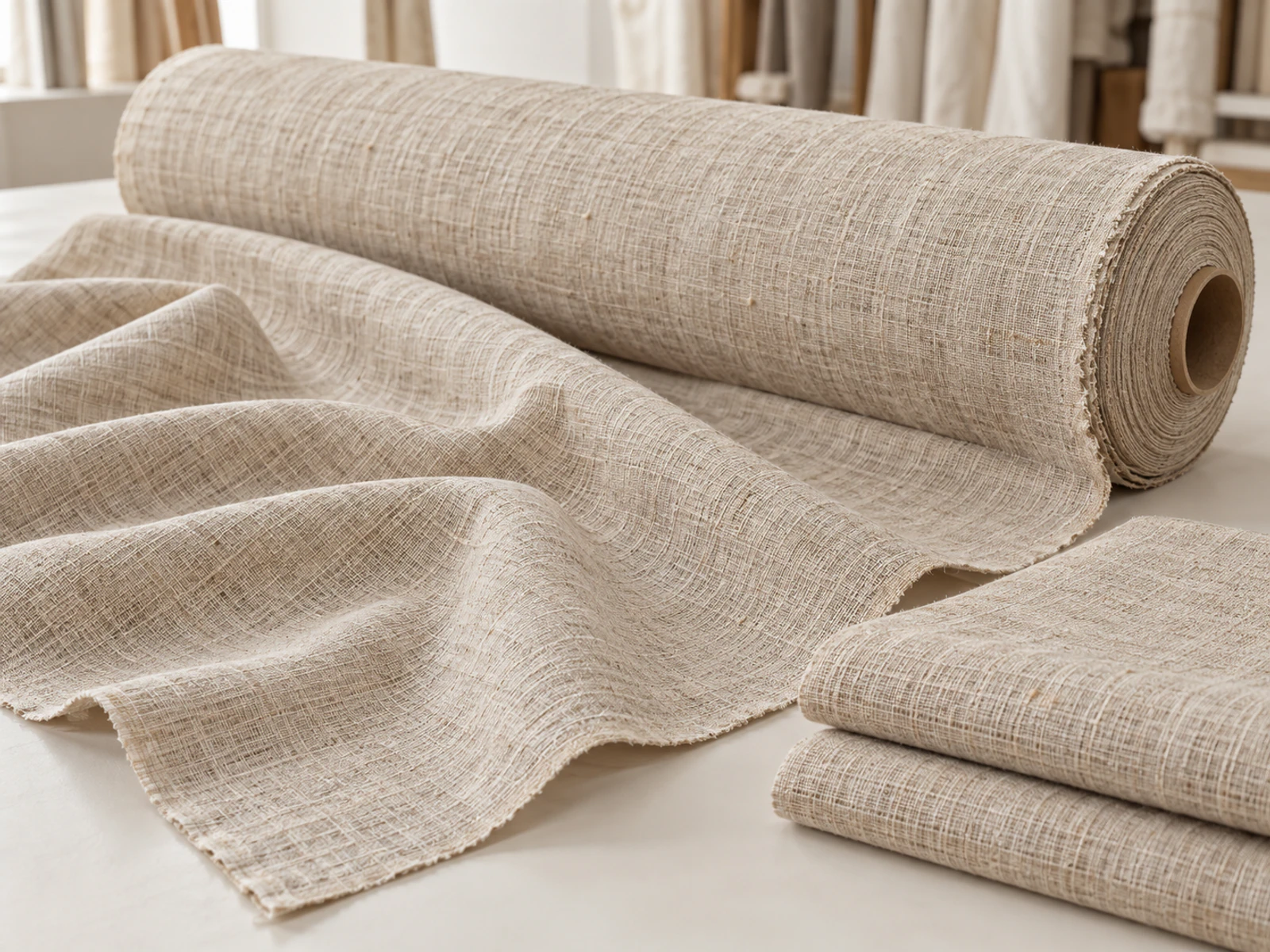
Flax is a bast fiber. After harvest, the stalks are retted — traditionally left in the field so moisture and microbes loosen the fiber bundles from the woody core. They are then scutched to remove the straw, and hackled (combed) to separate long “line” fibers from short “tow”. Line flax is usually wet-spun into fine, smooth yarn for shirting and bedding; tow is dry-spun into coarser yarn for heavier, more rustic fabrics.
Because flax fibers are long, stiff and naturally irregular, linen yarn has slubs — small thick places — that give linen its characteristic texture. Buyers should see those slubs as part of the fabric, but they still need to agree on how many are acceptable.
Cotton Comes From the Seed Boll
Cotton fibers grow from the surface of the seed inside the boll. After ginning separates fiber from seed, the fibers are cleaned, carded and, for finer yarns, combed, then spun into yarn. Cotton fibers are short and naturally twisted, which makes them soft, flexible and easy to spin into very even yarns of almost any count.
That evenness is why cotton is the default for smooth poplins, sateens, twills and knits, and why it takes reactive dyes and prints so cleanly.
Is Linen Cotton? (Why Buyers Confuse Them)
Is cotton and linen the same? No — but the confusion is understandable. Retailers often use “linen” loosely for any household textile (“bed linen”, “table linen”), even when the product is 100% cotton. Many fabrics sold as “linen-look” are actually cotton or polyester woven with slub yarns, and many “linen” products on the market are linen-cotton blends.
For a bulk order, the fiber content must be stated on the spec sheet and the care label, with the blend ratio by weight. If you are sourcing flax linen, hemp or ramie for apparel or home textiles, our linen fabric wholesale page lists the constructions, weights and blends we produce.
Hemp and Ramie: Linen’s Close Relatives
Linen is not the only bast fiber buyers meet. Hemp and ramie are also stem fibers and are often discussed alongside linen. Hemp gives a slightly coarser, very durable fabric with a similar dry hand; ramie has a high natural luster and is often blended with cotton or linen for shirting and summer apparel. Both behave more like linen than like cotton: high strength, good breathability, a tendency to crease and a need for careful pre-shrinking. If a supplier offers “linen-look” fabric at a surprisingly low price, check whether it is flax, hemp, ramie, a blend, or simply cotton or polyester woven with slub yarns — each will perform differently in use.
Fiber Availability and Commercial Use
Linen vs Cotton: Quick Comparison
The table below summarizes linen vs cotton fabric on the properties buyers most often ask about. The notes that follow explain what each line means for a production order and how to judge linen vs cotton material on a sample.
| Property | Linen (flax) | Cotton |
|---|---|---|
| Fiber source | Stem (bast) of the flax plant | Seed hair of the cotton boll |
| Fiber length | Long line fibers, often tens of centimeters | Short staple, roughly 2–4 cm |
| Strength | Very high; strong when wet | Good; also stronger when wet |
| Breathability | Excellent; open, airy hand | Good; depends on weave and weight |
| Moisture regain | About 12% | About 8.5% |
| Feel when new | Crisp, dry, textured | Soft, smooth |
| Wrinkling | High | Moderate |
| Shrinkage (untreated) | High; needs pre-shrinking | Moderate to high; needs pre-shrinking |
| Dyeing & printing | Good; prints look slightly rustic | Excellent; sharp prints, wide color range |
| Price | Higher | Lower |
| Typical uses | Summer shirts, bedding, tablecloths, curtains | Shirts, sheets, knits, workwear, prints |
Fiber Length and Strength
Long flax fibers make strong yarn with little hairiness, so linen resists abrasion and tearing well. Short cotton fibers need more twist to hold together, which makes the yarn softer but less strong. On a spec sheet, ask for tensile or grab strength in both directions rather than assuming either fiber is “strong”.
Breathability and Moisture
Linen yarns are stiffer and less tightly packed, so air moves freely through the fabric and it does not cling to damp skin. Cotton absorbs moisture well too, but a dense cotton weave holds more of it close to the body in humid heat.
Hand Feel and Wrinkling
New linen feels crisp and dry; cotton feels soft immediately. Linen fiber has very low elongation, so it creases easily and keeps the crease. Washing and finishing narrow the hand-feel gap; wrinkling is part of linen’s character and should be priced and marketed accordingly.
Shrinkage and Care
Both fibers shrink if the fabric is not pre-shrunk, because yarns relax after the tension of weaving and finishing. Linen generally needs more careful control than cotton. Agree a test method and a limit before bulk — more on this below.
Price and Availability
Cotton is produced in far larger volumes, spun on faster systems and available in almost any count and color. Linen comes from a smaller crop, needs more processing and is more sensitive to harvest quality, so it costs more and lead times can stretch when flax is short.
Which Is More Breathable and Cooler: Linen or Cotton?
Is linen cooler than cotton? In most hot-weather situations, yes. And is linen or cotton more breathable? Linen again, especially in plain weaves and lighter weights. That is why linen vs cotton for hot weather is usually decided in linen’s favor for shirts and summer bedding.
Why Linen Feels Cooler
- Open structure: stiff flax yarns do not pack tightly, so linen weaves leave more space for air to pass.
- Less contact with skin: linen stands slightly away from the body instead of draping flat, which reduces the clammy feeling in humid heat.
- Fast moisture transfer: flax absorbs moisture (regain about 12%) and releases it quickly, so the fabric feels dry sooner.
- Smooth fiber surface: fewer protruding fiber ends than cotton means less trapped warm air at the surface.
Where Cotton Performs Well
Lightweight cotton voile, poplin and seersucker breathe very well and feel softer than linen. Cotton is often more comfortable in dry heat or air-conditioned spaces where people want softness more than crispness. Dense cotton twills and sateens, on the other hand, run warmer.
Weight and Weave Matter More Than the Label
A 220 GSM tightly woven linen canvas can feel warmer than a 110 GSM cotton voile. When breathability is the selling point, compare samples of similar weight and weave, and ask for air-permeability data if your brand uses it as a claim.
How to Verify Breathability on a Sample
Breathability claims are easy to make and hard to compare unless they are measured. If coolness is part of your product story, ask the mill for air-permeability results on the finished fabric (common methods include ASTM D737 and ISO 9237) and compare suppliers at the same test pressure. Alongside the number, do a simple practical check: hold the fabric over your mouth and breathe through it, then compare how quickly a damp patch disappears on each sample after a few drops of water. Linen usually releases the water noticeably faster. Record results with the GSM and weave, because a heavier or denser version of the same fiber can lose much of its advantage.
| Climate / use | Better choice | Typical spec |
|---|---|---|
| Hot and humid, daytime wear | Linen | Plain-weave linen, 120–160 GSM |
| Hot and dry or office wear | Cotton or linen-cotton | Cotton poplin 100–130 GSM or 30/70 linen-cotton |
| Summer bedding | Linen or linen-cotton | Stone-washed linen 160–190 GSM |
| All-season bedding | Cotton | Cotton percale or sateen |
Which Is Softer: Linen or Cotton?
On the first touch, cotton wins on linen vs cotton softness. Cotton’s short, crimped fibers create a smooth, cushioned surface. Linen starts crisp and becomes softer with every wash. When buyers ask for “soft linen vs cotton”, what they usually want is a washed or enzyme-finished linen that feels broken-in from day one.
Why New Linen Feels Crisp
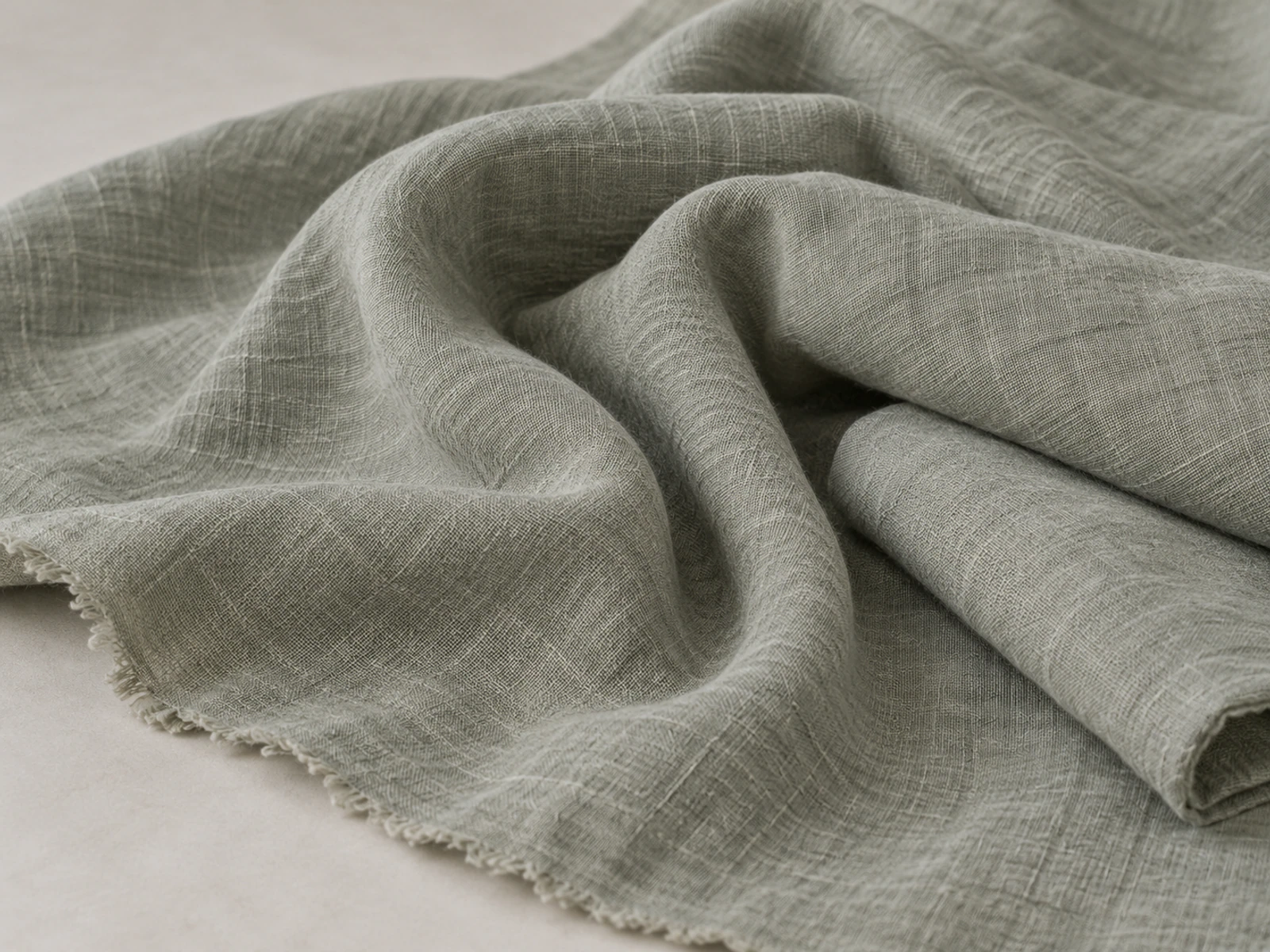
Flax fibers are stiff and have a natural pectin and wax content that binds them together. Unfinished linen therefore feels firm and slightly papery. Each laundering removes some of that stiffness and opens the yarn structure, which is why linen bedding is often described as getting better with age.
How Washing and Enzyme Finishing Soften Linen
Mills use several finishes to bring that softness forward:
- Garment or fabric washing (often called stone-washed or pre-washed): tumbling with water and sometimes stones relaxes the fibers and creates a soft, crinkled look.
- Enzyme washing: cellulase enzymes remove surface fibers and loosen the structure for a smoother, softer hand with less fuzz.
- Mechanical softening: airflow or tumble finishing machines beat the fabric to break the stiffness without full washing.
- Softener finishes: add an initial soft hand but can wash out; ask whether softness is durable.
Can Linen Be Made Softer?
Yes — through finishing, yarn selection and blending. Finer wet-spun yarns feel smoother than coarse tow yarns, and adding cotton changes the hand significantly.
Why Softness Should Be Approved on a Washed Sample
A linen that feels perfect at sampling may change after home laundering, and a softener-heavy cotton may lose its hand. Wash one half of the approval swatch and keep both halves as references. Approve softness, appearance and color on the washed half, because that is what the end customer will live with.
Durability, Pilling and Wrinkling
On linen vs cotton durability, linen usually lasts longer, pills less and survives more washes — but it creases more and can wear at sharp folds. Understanding linen vs cotton wrinkles and abrasion helps you set realistic specifications and customer expectations.
Strength and Abrasion Resistance
Flax is one of the strongest natural fibers, and long-fiber linen yarn resists tearing and abrasion well. Cotton is strong enough for most uses but wears thinner over many washes, especially in lighter weights. For bedding and tablecloths that are laundered often, linen’s strength is a genuine advantage.
Pilling
Long, smooth flax fibers have few loose ends, so pure linen rarely pills. Cotton can pill, particularly with short-staple, open-end or loosely twisted yarns, and blends of cotton with synthetics pill more because the stronger fiber holds the pills on. Linen-cotton blends sit between the two; the cotton component is usually where pilling starts.
Wrinkling and Fold Wear
Linen’s low elasticity means it creases easily and keeps the crease. Repeated sharp folding in the same place — for example tablecloths stored folded, or pressed shirt collars — can eventually weaken the fibers along the fold. Cotton wrinkles less and recovers better. Easy-care resin finishes can reduce wrinkling on both, but they change hand feel and must be specified carefully.
Color and Dyeing Differences
Durability also means how color holds up. Cotton takes reactive dyes evenly and produces deep, saturated shades and sharp prints. Linen dyes well too, but its slubby yarn and lower absorbency at the fiber surface can give a slightly heathered, uneven look — which many buyers prefer as part of the linen character. Dark linen shades need careful washing-off to avoid poor wet rubbing results, and pale linen can show slub-to-slub variation more clearly. For both fibers, approve color under D65 and a store light, set shade bands per lot, and specify colorfastness to washing and rubbing on the finished, washed fabric.
What to Specify for Durability
- Tensile or grab strength in warp and weft, measured on the finished fabric.
- Pilling grade after a stated test method (for example ≥ Grade 3–4).
- Appearance after laundering: wrinkle and surface appearance against an approved washed reference.
- Seam slippage for loosely woven linens used in garments.
Shrinkage: Linen vs Cotton
Linen vs cotton shrinkage is the single biggest cause of size complaints in natural-fiber bedding and shirts. Does linen shrink more than cotton? Untreated linen generally shrinks more and less predictably, but both fibers must be pre-shrunk and tested before bulk.
Why Both Fibers Shrink
During spinning, weaving and finishing, yarns are held under tension. The first wet treatment lets them relax, and the fabric contracts — mostly in length (warp), and partly in width. Cotton fibers also swell when wet. Linen is stiffer and more variable, so its relaxation can be larger and less uniform across a lot.
Which Fabric Shrinks More?
Without pre-shrinking, linen usually shrinks more than cotton. With proper pre-shrinking or washing, both can be held to a few percent. What matters for the buyer is the finished-fabric figure after an agreed test, not the fiber name.
How Shrinkage Should Be Tested
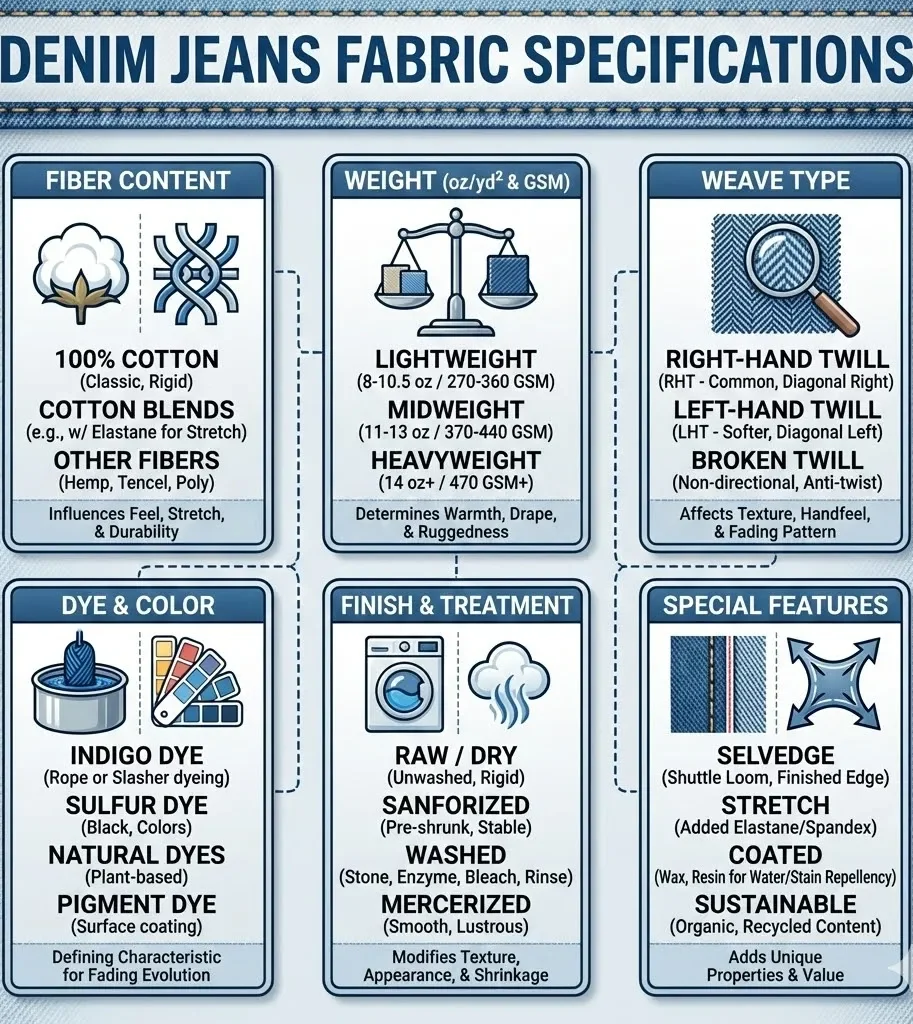
As defined by AATCC TM135, Test Method for Dimensional Changes of Fabrics after Home Laundering, specimens are marked with benchmarks, laundered and dried under specified conditions, and re-measured to calculate dimensional change in length and width. Agree the wash temperature, drying method and number of cycles in advance — results from a cold wash and line dry are not comparable with a hot wash and tumble dry.
Shrinkage is one part of a wider quality picture. Our guide to cotton quality tests explains how dimensional change fits together with colorfastness, strength and pilling testing for natural-fiber fabrics.
| Fabric | Typical risk without pre-shrinking | Common finished target* |
|---|---|---|
| 100% linen | High; uneven across the lot | ≤ 3% length and width |
| Linen-cotton blend | Moderate to high | ≤ 3% length and width |
| 100% cotton woven | Moderate | ≤ 3% length and width |
| Stone-washed / pre-washed linen | Low (already relaxed) | ≤ 2–3% |
*Typical targets on apparel and bedding programs; confirm the final limit with your brand standard.
Test on finished fabric from beginning, middle and end of each lot
Bulk to match approved washed reference for size, hand and appearance
Linen vs Cotton Sheets and Bedding
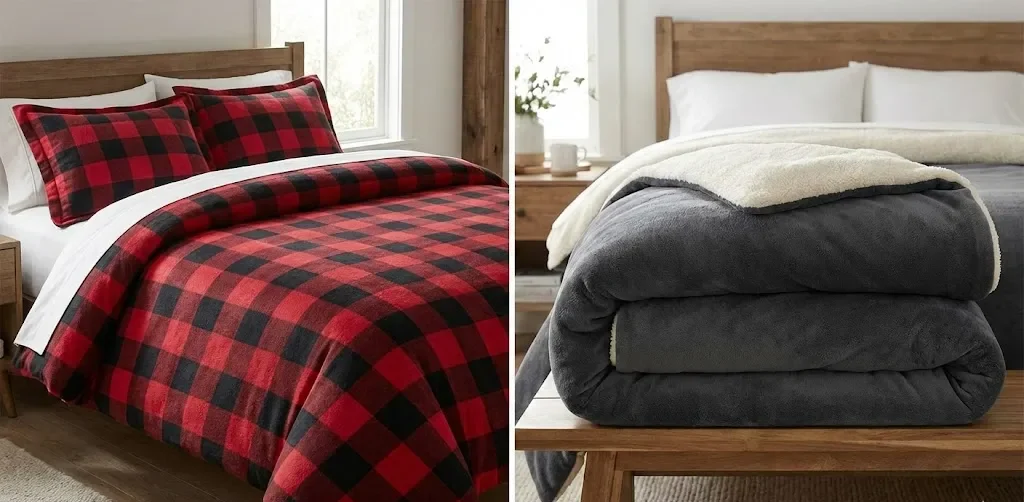
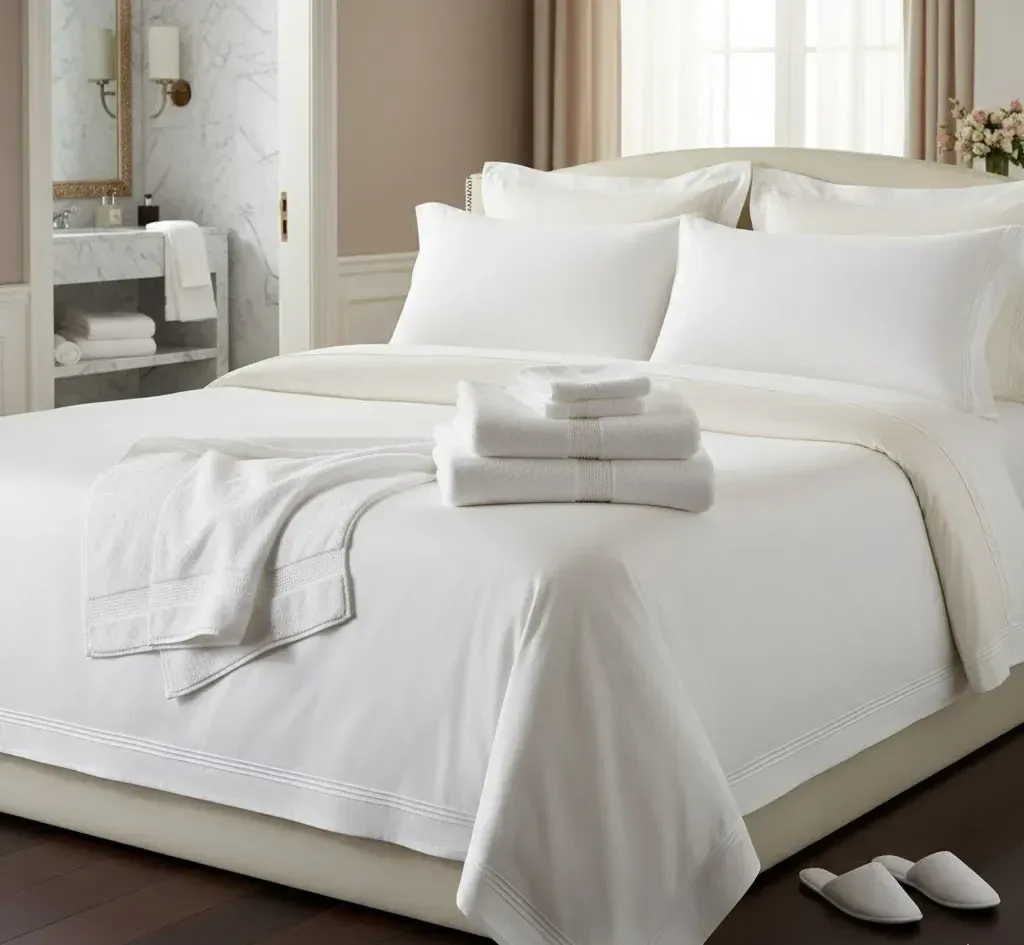
Linen vs cotton sheets is one of the most searched comparisons in home textiles, and for bedding brands it is a real product decision. Linen vs cotton bedding differs in feel, temperature, appearance, price and the specifications a mill must hold.
How Linen and Cotton Sheets Feel
Linen sheets feel cool, dry and textured, with a relaxed, slightly rumpled look that many premium brands now market as a feature. Cotton sheets feel smoother and softer: percale is crisp and matte, sateen is silky with a slight sheen. Linen suits warm sleepers and relaxed interiors; cotton suits customers who want a smooth, pressed look.
What Bedding Buyers Should Compare
For a linen vs cotton sheet program, that translates into four comparisons on finished, washed fabric: grab strength, dimensional change, pilling grade and appearance after laundering. Thread count is meaningful for fine cotton percale and sateen, but it is not a useful quality measure for linen, whose yarns are much thicker.
Fabric Width for Sheets and Duvet Covers
Flat sheets and duvet covers for queen and king beds are wider than standard apparel fabric. Using wide-width fabric avoids a center seam, saves sewing time and looks more premium.
GSM, Width and Pre-Washed Finishes for Bedding
| Product | Linen spec | Cotton spec | Notes |
|---|---|---|---|
| Flat / fitted sheets | Stone-washed linen 160–190 GSM | Percale or sateen 110–150 GSM | Wide width 230–280 cm avoids center seams |
| Duvet covers | Linen or 55/45 linen-cotton 160–200 GSM | Percale, sateen or yarn-dyed 120–160 GSM | Pre-washed finish reduces shrinkage after sewing |
| Pillowcases | Same as sheet set | Same as sheet set | Cut from the same lot for shade match |
| Tablecloths / napkins | Linen 180–240 GSM | Cotton or linen-cotton 160–220 GSM | Specify fold-wear and wash appearance |
GSM is the most reliable way to compare weight across suppliers and constructions; our explainer on fabric weight (GSM) covers how it is measured and how to convert it to oz/yd².
Care Instructions to Put on the Label
Care labels should be written after testing, not before. For linen and linen-cotton bedding, a typical instruction is a 40 °C machine wash, mild detergent, no chlorine bleach, low tumble dry or line dry, and a warm iron if a pressed look is wanted. Cotton percale and sateen can usually tolerate higher wash temperatures. Whatever you print on the label must match the conditions used in the shrinkage test; otherwise the label promises a result the fabric was never tested for.
Pre-washed or stone-washed finishes are especially valuable for linen bedding: the fabric is already relaxed, so finished sheets keep their size better and arrive with the soft, lived-in hand customers expect.
Linen vs Cotton for Shirts and Summer Apparel
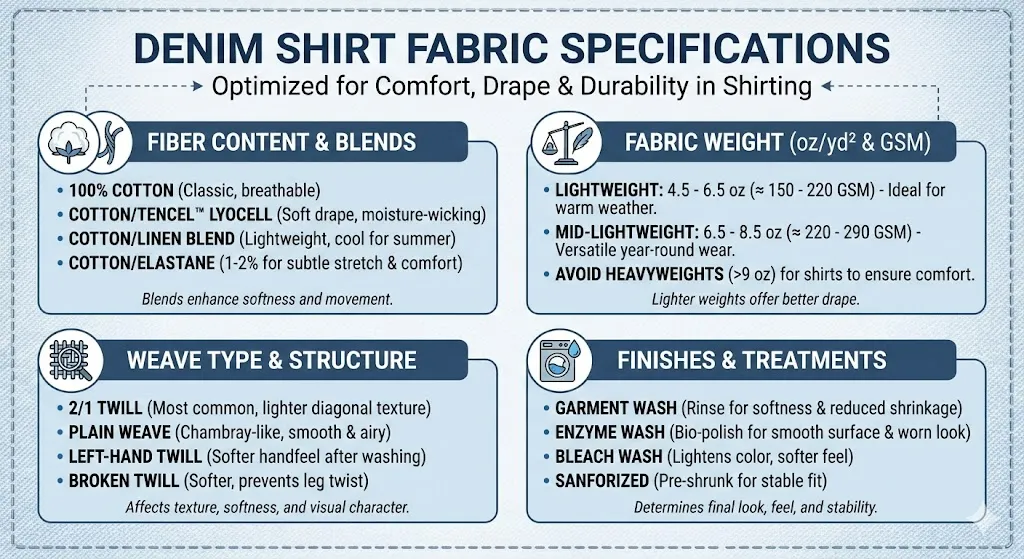
For linen vs cotton shirts, the choice depends on the look, the climate and how much ironing the end customer will tolerate. When brands compare linen vs cotton for summer, linen usually leads on coolness while cotton leads on softness, price and easy care.
Linen Shirts
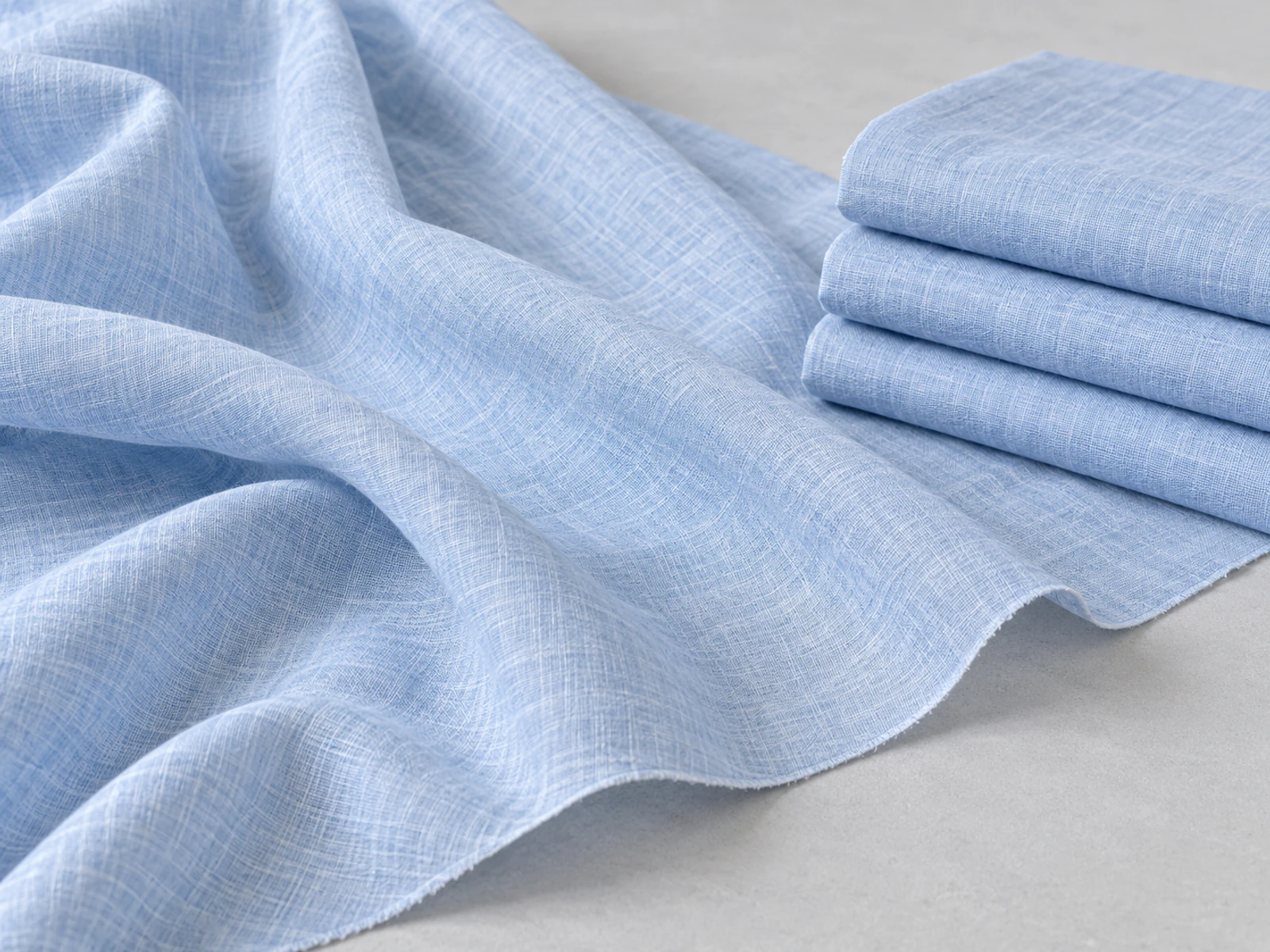
Linen shirts are associated with summer, resort and relaxed tailoring. They breathe well, dry fast and look better slightly creased. Lightweight plain-weave linen around 120–160 GSM is typical for shirts and blouses; heavier linen for overshirts and trousers. Fine wet-spun yarns give a smoother, more refined shirt; coarser yarns a more casual look.
Cotton Shirts
Cotton dominates everyday shirting: poplin, oxford, twill and seersucker in 100–160 GSM. It is softer from the start, wrinkles less, prints sharply and costs less. For uniforms and corporate wear, cotton or cotton-blend shirting remains the practical choice.
Summer Apparel Beyond Shirts
- Trousers and shorts: heavier linen or linen-cotton 180–240 GSM keeps shape better than lightweight linen.
- Dresses: linen-viscose or linen-cotton blends add drape and reduce creasing.
- Children’s wear: cotton or high-cotton blends are easier to wash and softer for sensitive skin.
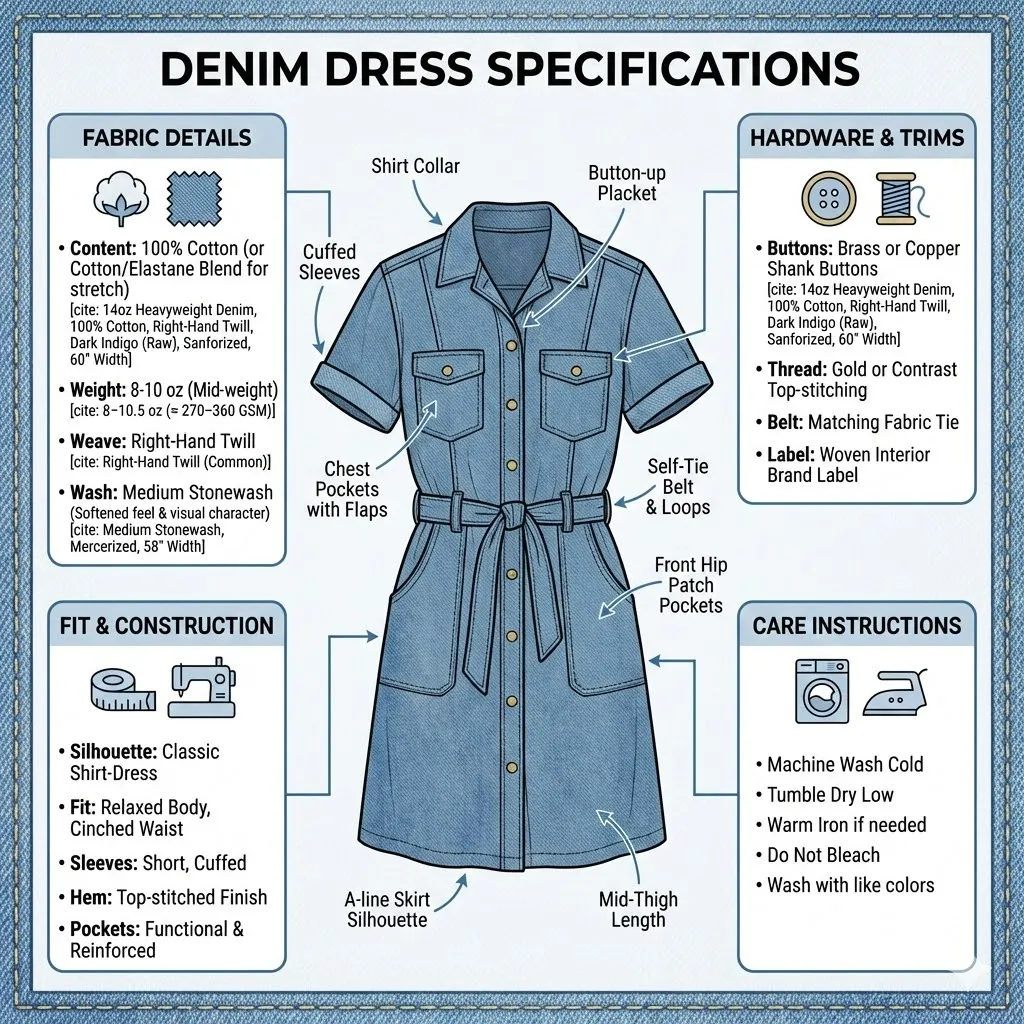
| Garment | Linen option | Cotton option |
|---|---|---|
| Summer shirt | Plain-weave linen 120–160 GSM | Cotton poplin or voile 100–130 GSM |
| Overshirt / jacket | Linen or linen-cotton 200–260 GSM | Cotton twill 180–240 GSM |
| Trousers | Linen-cotton 180–240 GSM | Cotton twill or chino 200–260 GSM |
| Dress / blouse | Linen-viscose or 55/45 linen-cotton | Cotton lawn, voile or poplin |
What About Linen-Cotton Blends?
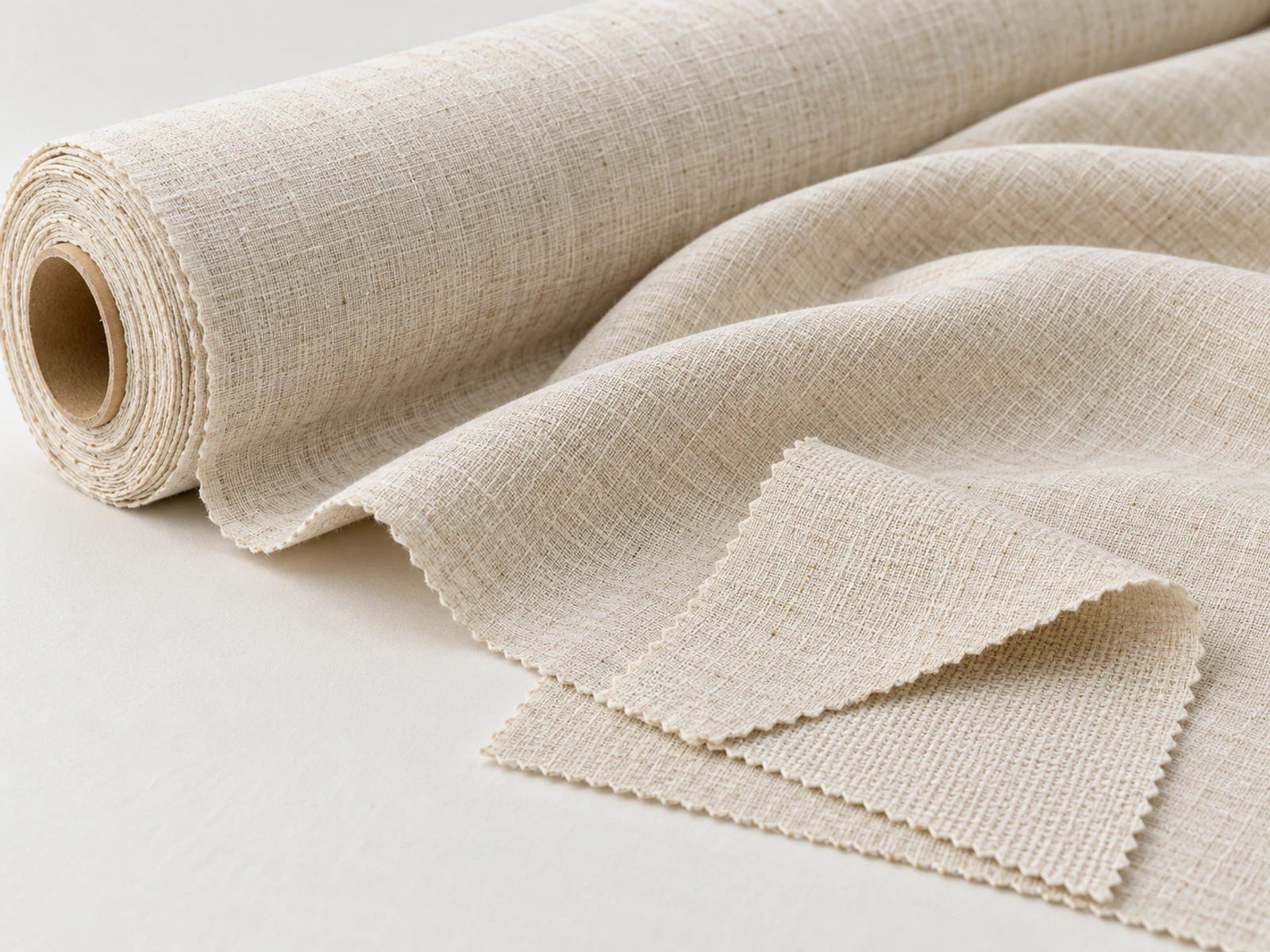
A linen cotton blend combines linen’s texture and breathability with cotton’s softness, lower shrinkage variability and lower price. For many programs, the real decision is not linen vs cotton but linen vs linen cotton: how much flax the product actually needs.
Why Brands Choose Blends
- Lower cost than 100% linen while keeping a visible linen texture.
- Softer hand from the first wear, with less finishing needed.
- Fewer wrinkles and better recovery than pure linen.
- More consistent dyeing and easier printing.
55/45, 30/70 and Other Common Blend Ratios
| Blend (linen/cotton) | Look & hand | Typical GSM | Best for |
|---|---|---|---|
| 100% linen | Crisp, dry, strong slub texture | 120–240 | Premium shirts, bedding, tablecloths |
| 55/45 | Clear linen texture, slightly softer | 160–220 | Shirts, trousers, bedding, home textiles |
| 50/50 | Balanced linen look and softness | 150–220 | Apparel and home textiles |
| 30/70 | Smoother, softer, subtle linen look | 150–200 | Shirts, dresses, children’s wear |
| 20/80 and lower | Mostly cotton feel with a hint of slub | 120–180 | Price-driven programs |
Two practical points: state the ratio by weight on the spec sheet and the care label, and check whether the blend is intimate (fibers blended in the yarn) or a union fabric (for example cotton warp with linen weft). The two behave differently in shrinkage, dyeing and hand feel.
Linen vs Linen Cotton: How to Decide
If the selling point is “pure linen” or the customer specifically wants maximum coolness and longevity, choose 100% linen. If the product needs a linen look at a lower price, with less ironing and a softer hand, a 55/45 or 30/70 blend is usually the better commercial choice.
Cost: Why Linen Usually Costs More Than Cotton
On linen vs cotton price, linen fabric almost always costs more than cotton of a similar weight. Buyers ask why is linen more expensive than cotton because the difference can be large — and the reasons are structural, not just branding.
A Smaller, More Concentrated Crop
As the Textile Exchange figures above show, flax is a tiny share of world fiber output compared with cotton. Most high-quality long flax fiber comes from a narrow coastal belt in Western Europe, so supply depends heavily on one region’s weather.
More Processing Steps
Flax must be retted, scutched and hackled before spinning, and fine linen yarn is usually wet-spun on slower systems than cotton. Each step adds cost and yield loss. Linen yarn is also more prone to breaks during weaving, which reduces loom efficiency.
When the Harvest Fails: The 2023 European Flax Shortage
How to Control Linen Cost Without Losing the Look
- Use a linen-cotton blend where the product does not need 100% linen.
- Choose tow linen (dry-spun, coarser) for rustic home textiles instead of fine line linen.
- Fix width and GSM to suit the marker and avoid paying for weight the product does not need.
- Plan yarn booking early for seasonal programs.
How to Choose Between Linen and Cotton for Bulk Orders
Choosing linen vs cotton for a bulk program is easier with a fixed sequence. These six steps are the process we walk bedding and apparel buyers through before quoting, so that the fabric decision, the spec and the test plan are agreed at the same time.
Step 1 — Define the End Product and Customer
Write down what the fabric becomes, who uses it and how it will be cared for: “queen flat sheet, machine wash 40 °C, tumble dry low, premium relaxed look” leads to a very different decision from “men’s summer shirt, cold wash, line dry”. This is the fastest way to decide linen or cotton.
Step 2 — Choose Fiber or Blend Ratio
Decide between 100% linen, a linen-cotton blend or 100% cotton, using the comparisons above. Write the composition by weight (for example “55% linen / 45% cotton”) and, for linen, whether it is line or tow yarn.
Step 3 — Set GSM, Width and Construction
Set a finished GSM with tolerance (for example 170 GSM ±5%), the cuttable width and the weave. For bedding, decide whether you need wide width (230–280 cm) to avoid center seams. For shirts, standard 145–150 cm widths are usually enough.
Step 4 — Define the Finish and Hand Feel
Specify stone-washed, enzyme-washed, softened or plain finish. Seal a reference swatch for hand feel and color, and keep one half at the mill and one half with your team.
Step 5 — Check Shrinkage and Wash Stability Before Production
Measure, wash and re-measure before you approve the production standard — on the approval sample and again on bulk.
- Cut specimens from the beginning, middle and end of the lot.
- Mark length and width benchmarks.
- Launder and dry under the agreed conditions.
- Re-measure and calculate dimensional change.
- Compare appearance and hand with the washed reference.
- Record results by lot number.
Step 6 — Approve Samples and Write the PO
Approve a pre-production sample from the bulk process, then write every agreed value into the PO. Our cotton fabric sourcing guide walks through supplier selection, sampling and inspection in more detail, and the same steps apply to linen and linen-cotton.
Weight: 180 GSM ± 5% (finished) · Cuttable width: 260 cm
Dimensional change: ≤ 3% L/W, AATCC TM135, 3 cycles
Pilling ≥ Grade 3–4 · Color: match approved lab dip under D65
If your program is cotton-led, our cotton fabric wholesale range covers poplin, percale, sateen, twill and yarn-dyed constructions on the same terms.
Linen vs Cotton: Which One Should You Choose?
Is linen better than cotton? Not universally. Linen is better for coolness, strength and a premium natural look; cotton is better for softness, smoothness, printing and price. The right linen or cotton choice comes from the product and the customer.
| If you need… | Choose | Why |
|---|---|---|
| Maximum coolness in hot, humid climates | Linen | Most breathable, dries fast |
| Soft, smooth hand from day one | Cotton | Short crimped fibers feel softer |
| Long-lasting bedding and table linen | Linen | Strongest natural fiber, pills little |
| Sharp prints and wide color range | Cotton | Even yarns, excellent dye uptake |
| Linen look at a lower price | Linen-cotton blend | 55/45 or 30/70 |
| Low-maintenance shirts | Cotton | Wrinkles less, recovers better |
Choose Linen When…
the product is sold on coolness, natural texture and longevity: summer shirts, premium sheets and duvet covers, tablecloths and curtains. Budget for the higher fiber cost, specify pre-washing and approve hand feel on washed samples.
Choose Cotton When…
softness, price, printing and easy care matter more: everyday shirts, uniforms, printed bedding, children’s wear and high-volume programs. Specify staple and yarn quality, because cotton quality varies widely.
Choose a Blend When…
you want linen’s look with a softer hand, fewer wrinkles and a lower price. Compare 55/45 and 30/70 side by side before deciding.
Frequently Asked Questions About Linen vs Cotton
Is linen better than cotton?
It depends on the use. Linen is cooler, stronger and longer-lasting, which suits summer shirts and premium bedding. Cotton is softer, smoother, easier to print and cheaper, which suits everyday shirts and price-driven programs.
Is cotton and linen the same?
No. Linen is made from flax stem fibers and cotton from the seed fibers of the cotton plant. They differ in strength, breathability, softness, wrinkling and price, although linen-cotton blends combine both.
Is linen cooler than cotton?
Usually, yes. Linen’s stiff, open yarns let more air through and it releases moisture quickly, so it feels cooler in hot, humid weather. A very light cotton voile can feel as cool as a heavy linen, so compare similar weights.
Is linen or cotton more breathable?
Linen is generally more breathable. Its looser structure allows more airflow, and it does not cling to damp skin. Dense cotton weaves such as sateen and heavy twill breathe noticeably less.
Does linen shrink more than cotton?
Untreated linen usually shrinks more than cotton and less uniformly. With pre-shrinking or a washed finish, both can be held to about 3% or less; specify the limit and the test method, such as AATCC TM135, in the PO.
Which lasts longer, linen or cotton?
Linen usually lasts longer. Flax is one of the strongest natural fibers, it pills very little and it softens rather than wears out with washing. Avoid storing linen sharply folded in the same place, which can weaken fibers along the crease.
Linen vs cotton sheets: which is better?
Linen sheets are better for warm sleepers and a relaxed, textured look; cotton sheets are better for a smooth, soft feel and a lower price. For either, compare strength, shrinkage, pilling and washed appearance rather than softness alone.
Why is linen more expensive than cotton?
Flax is a much smaller crop than cotton, it needs extra processing (retting, scutching, hackling and often wet spinning), and supply depends heavily on European harvests. Poor harvests, such as 2023’s, push linen prices up sharply.
Can linen and cotton be blended?
Yes. A linen cotton blend such as 55/45 or 30/70 keeps the linen look while adding softness, reducing wrinkles and lowering cost. State the ratio by weight and whether it is an intimate blend or a union fabric.
Does linen get softer over time?
Yes. Each wash removes some of the natural stiffness in flax, so linen becomes softer and more supple with use. Stone-washed or enzyme-washed linen gives that softness from the first use.
Need Linen or Cotton for Your Next Program?
We weave and finish linen, linen-cotton and cotton fabrics for apparel and home textiles, including wide widths for bedding. Send us the product, target GSM, width and test limits, and we will reply with matching options, swatches and test reports.
Linen Fabric Wholesale →Cotton Fabric WholesaleContact Our Team